Maddy summaryThis bill designates the month of March as Sleep Apnea Awareness Month in California. It directly affects state officials and the public by encouraging the recognition of sleep apnea during this specific time. The measure requires the state to issue a formal proclamation to highlight the importance of this health condition. No new laws or funding are created; the change is purely symbolic and commemorative.
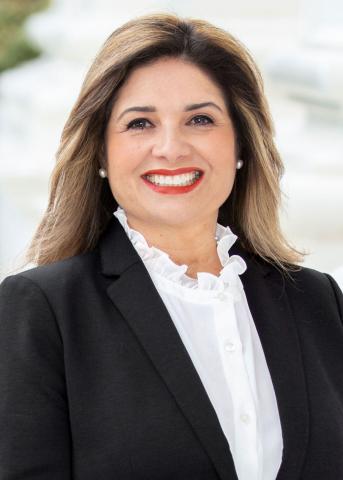
Sen. Marie Alvarado-Gil
Sponsored bills
The Farmer Equity Act of 2017 requires the Department of Food and Agriculture to ensure the inclusion of socially disadvantaged farmers and ranchers in the development, adoption, implementation, and enforcement of food and agriculture laws, regulations, and policies and programs, as specified. Existing law defines socially disadvantaged farmers and ranchers as members of a socially disadvantaged group whose members have been subjected to racial, ethnic, or gender prejudice because of their identity as members of a group without regard to their individual qualities. This bill would amend the definition of socially disadvantaged farmers and ranchers to instead mean farmers and ranchers who experiences barriers to agricultural viability due to economic or structural factors, as demonstrated by meeting one or more specified criteria. The bill would also make conforming changes.
This measure would proclaim the month of March 2026 as California Down Syndrome Awareness Month. The measure would also proclaim March 21, 2026, as California Down Syndrome Awareness Day, and would encourage all Californians to support and participate in related activities.
Existing law designates specific days as holidays in this state, including Cesar Chavez Day on March 31, and requires the Governor to annually proclaim March 31 as Cesar Chavez Day. This bill would instead designate March 31 as Farmworkers Day and would require the Governor to annually proclaim March 31 as Farmworkers Day. This bill would declare that it is to take effect immediately as an urgency statute.
Existing law, the Motor Vehicle Fuel Tax Law, imposes a tax upon each gallon of motor vehicle fuel removed from a refinery or terminal rack in this state, entered into this state, or sold in this state, at a specified rate per gallon. Existing unfair competition laws establish a statutory cause of action for unfair competition, including any unlawful, unfair, or fraudulent business act or practice and unfair, deceptive, untrue, or misleading advertising and acts prohibited by false advertisement laws. This bill would suspend the imposition of the tax on motor vehicle fuels for one year. The bill would require that all savings realized based on the suspension of the motor vehicle fuels tax by a person other than an end consumer, as defined, be passed on to the end consumer, and would make the violation of this requirement an unfair business practice, in violation of unfair competition laws, as provided. The bill would require a seller of motor vehicle fuels to provide a receipt to a purchaser that indicates the amount of tax that would have otherwise applied to the transaction. This bill would also direct the Controller to transfer a specified amount from the General Fund to the Motor Vehicle Fuel Account in the Transportation Tax Fund. By transferring General Fund moneys to a continuously appropriated account, this bill would make an appropriation. This bill would declare that it is to take effect immediately as an urgency statute.
Maddy summarySenate Resolution 89 designates March 17, 2026, as Profound Autism Day in California to raise awareness for individuals with severe autism who require 24-hour care. The resolution highlights the historical context of autism classification and notes that current research and support systems often overlook those with the most intensive needs. By recognizing this specific day, the Senate aims to encourage increased research, improved services, and greater dignity for people living with profound autism.
Existing law makes it a crime to intentionally disturb or disquiet an assemblage of people met for religious worship by profane discourse, rude or indecent behavior, or by any unnecessary noise. Existing law makes a violation of this crime a misdemeanor punishable by a fine not exceeding $1,000, by imprisonment in a county jail for a period not exceeding one year, or by both that fine and imprisonment. This bill would additionally make a violation of the above-described crime a felony punishable by a fine not exceeding $5,000, by imprisonment in a county jail for 16 months, or 2 or 3 years, or by both that fine and imprisonment. By making an existing crime punishable as either a misdemeanor or a felony, the bill would impose a state-mandated local program. The California Constitution requires the state to reimburse local agencies and school districts for certain costs mandated by the state. Statutory provisions establish procedures for making that reimbursement. This bill would provide that no reimbursement is required by this act for a specified reason.

The California Constitution authorizes the Governor to grant a reprieve, pardon, or commutation after sentence has been entered, except as specified. This measure would prohibit the Governor from granting a pardon or commutation to specified relatives.
Maddy summaryThis Senate Resolution formally declares March 2026 as Women's History Month in California to honor the historical and ongoing contributions of women across all fields of society. The measure recognizes women's roles in building the nation and state while acknowledging that many of their achievements have been overlooked or undocumented. By joining the United States Congress and state organizations in this observance, the resolution aims to raise awareness of women's accomplishments and encourage continued efforts to address gender inequity. The text is a commemorative proclamation rather than a law that changes specific regulations or mandates new programs.
Existing law, the Municipal Water District Law of 1911, provides for the formation of municipal water districts and grants to those districts specified powers. Existing law permits a district to acquire, control, distribute, store, spread, sink, treat, purify, recycle, recapture, and salvage any water for the beneficial use of the district, its inhabitants, or the owners of rights to water in the district. Existing law, upon the request of certain Indian tribes and the satisfaction of certain conditions, requires a district to provide service of water at substantially the same terms applicable to the customers of the district to the Indian tribe's lands that are not within a district, as prescribed. Existing law also authorizes a district, until January 1, 2027, under specified circumstances, to apply to the applicable local agency formation commission to provide this service of water to Indian lands, as defined, that are not within the district and requires the local agency formation commission to approve that application. This bill would extend the above provisions regarding the application to the applicable local agency formation commission to January 1, 2032. By imposing new duties on local officials, the bill would create a state-mandated local program. The California Constitution requires the state to reimburse local agencies and school districts for certain costs mandated by the state. Statutory provisions establish procedures for making that reimbursement. This bill would provide that no reimbursement is required by this act for a specified reason.