

Passed Mar 14, 2024
1 co-sponsor
Total votes
25,558
all sessions
Attendance
98%
496 missed
Near the chamber average
With party
99%
of cast votes
Near the chamber average
Bipartisan score
0%
crosses aisle rarely
Near the chamber average
Sponsored
233
bills & resolutions
Near the chamber average
Committees
0
assignments
233 bills and resolutions
Sponsored bills
Total
233
Primary
55
Co-sponsor
178
This page
233
matching current filters
Passed Mar 7, 2024
1 co-sponsor
Relative to National Human Trafficking Awareness Month.
This measure would recognize the month of January 2024 as National Human Trafficking Awareness Month.
Signed into law Feb 15, 2024
1 co-sponsor
Passed Feb 5, 2024
0 co-sponsors
Housing: homelessness programs: report.
Existing law establishes various programs to provide assistance to persons experiencing homelessness, including, among others, the CalWORKS Housing Support Program, the Bringing Families Home Program, and the Home Safe Program. Existing law establishes the California Interagency Council on Homelessness to oversee the implementation of Housing First guidelines and regulations, and, among other things, identify resources, benefits, and services that can be accessed to prevent and end homelessness in California. Existing law also establishes various programs to provide rental assistance to help eligible households, including, among others, the state rental assistance program. On or before December 30, 2024, and annually thereafter, this bill would require an agency that funds, implements, or administers a program that provides housing or housing-based services to persons experiencing homelessness or at risk of homelessness, including rental assistance programs, to provide prescribed information to specified committees of the Legislature. This bill would authorize an agency to request a city, county, or city and county to provide specified information to that agency if the city, county, or city and county has received state funds from the agency to fund, implement, or administer the program, as defined.
In committee Feb 1, 2024
0 co-sponsors
Workforce development: Interagency High Road Act.
Existing law, the California Workforce Innovation and Opportunity Act, establishes the California Workforce Development Board as the body responsible for assisting the Governor in the development, oversight, and continuous improvement of California's workforce investment system and the alignment of the education and workforce investment systems to the needs of the 21st century economy and workforce. Existing law requires the board to assist the Governor in promoting the development of a well-educated and highly skilled 21st century workforce, and the development of a high road economy that offers an educated and skilled workforce with fair compensation and treatment in the workplace. Existing law also requires the board to assist in developing standards, procedures, and criteria for high road employers, high road jobs, high road workforce development, and high road training partners, as specified. Existing law defines "high road" for these purposes to mean a set of economic and workforce development strategies to achieve economic growth, economic equity, shared prosperity, and a clean environment. This bill would require the Department of Industrial Relations and the California Workforce Development Board, within the Labor and Workforce Development Agency, to collectively be responsible for among other duties, creating high road evaluation metrics, consulting with stakeholders, and providing for meaningful public input on the development and evaluation of high road evaluation metrics. The bill would require the board to also assist in developing standards, procedures, and criteria for high road contracting and high road procurement, as specified. The bill would require, upon request by a state agency, the board to establish memorandums of understanding to incorporate high road evaluation metrics in the state agency's procurement processes, contracts, and incentive programs. The bill would make these provisions effective only until January 1, 2030, and repeal them as of that date. This bill would also require specified state agencies, by January 1, 2025, to enter into a memorandum of understanding with the California Workforce Development Board to incorporate high road evaluation metrics in the state agency's procurement processes, contracts, and incentive programs. The bill would require these agreements to draw upon the experience of the California Workforce Development Board to ensure the state has the workforce and industry-based training partnerships necessary to meet its broadband, clean energy, and clean transportation goals, as specified. The bill would require these agreements to include advice and recommendations to ensure state agency policies and regulated programs create or support high-quality jobs in the broadband, energy, resources, and transportation sectors and expand access to those jobs for priority populations through high-quality education and training.
Vetoed Jan 25, 2024
1 co-sponsor
Minor league baseball players.
Existing law provides that 8 hours of labor constitute a day's work unless it is otherwise expressly stipulated in a collective bargaining agreement, and requires that any work in excess of specified hours in one workday or one workweek be compensated at a rate higher than the regular rate of pay for the employee, as specified. Existing law authorizes, upon the proposal of an employer, employees of an employer to adopt a regularly scheduled alternative workweek that authorizes work by the affected employees for no longer than 10 hours per day within a 40-hour workweek without the payment to the affected employees of an overtime rate of compensation, as specified. Existing law prohibits an employer from employing an employee for a work period of more than 5 hours per day without providing the employee with a meal period, as specified, but, notwithstanding these provisions, existing law authorizes the Industrial Welfare Commission to adopt a working condition order permitting a meal period to commence after 6 hours of work if specified conditions are met. Under existing law, the Industrial Welfare Commission issues wage orders that regulates wages, hours, and working conditions in various occupations, including Wage Order No. 10-2001, which regulates the amusement and recreation industry. This bill would provide that these provisions do not apply to a person who is covered by a contract to play baseball at the minor league level with a labor organization that has at least 10 years of experience representing baseball players and who is compensated pursuant to the terms of a valid collective bargaining agreement that expressly provides for the wages, hours of work, working conditions of employees, payment for time worked during the off-season and spring training, and final and binding arbitration of disputes. The bill would require the Department of Industrial Relations to amend and republish Wage Order No. 10-2001 to provide that specified provisions of the wage order do not apply to a person subject to these provisions, as specified. Existing law requires an employer, semimonthly or at the time of payment of wages, to furnish an employee an accurate, itemized, written statement containing specified information regarding the amounts earned, hours worked, and the employee's identity, among other things, subject to certain variations. Existing law provides that an itemized wage statement furnished by an employer pursuant to these provisions is not required to show total hours worked by the employee if, among other things, the employee is exempt from the payment of minimum wage and overtime under specified law. This bill would provide that an itemized wage statement furnished by an employer pursuant to these provisions is not required to show total hours worked by an employee if the employee is exempt from the payment of minimum wage and overtime under the bill's provisions described above. Existing law, the Administrative Procedure Act, governs, among other things, the procedures for the adoption, amendment, or repeal of regulations by state agencies. Existing law also describes procedures for the promulgation of regulations by the Industrial Welfare Commission. This bill would exempt these provisions from the rulemaking procedures described above. Existing constitutional provisions require that a statute that limits the right of access to the meetings of public bodies or the writings of public officials and agencies be adopted with findings demonstrating the interest protected by the limitation and the need for protecting that interest. This bill would make legislative findings to that effect. This bill would declare that it is to take effect immediately as an urgency statute.
Signed into law Oct 13, 2023
1 co-sponsor
Digital financial asset transaction kiosks.
Existing law requires a bank, savings association, credit union, industrial loan company, savings bank, or other business entity, or a person who operates an automated teller machine to adopt procedures for evaluating the safety of an automated teller machine, including the incidence of crimes of violence in the immediate neighborhood of the automated teller machine as reflected in the records of the local law enforcement agency and of which the operator has actual knowledge. This bill would provide for the regulation of digital financial asset transaction kiosks, as defined, by the Department of Financial Protection and Innovation. The bill would, among other things, prohibit an operator, as defined, from accepting or dispensing more than $1,000 in a day from or to a customer via a digital financial asset transaction kiosk. The bill would require, on or after January 1, 2025, an operator, before a digital financial asset transaction, to provide a written disclosure in English and in the same language principally used by the operator to advertise, solicit, or negotiate with a customer containing the terms and conditions of the transaction, including the amount of a digital financial asset involved in the transaction. The bill would require an operator to provide a customer with a receipt for any transaction made at the operator's digital financial asset transaction kiosk that includes certain information, including the name of the customer and the date and time of the transaction. The bill would require an operator to provide to the department a list of all locations of digital financial asset transaction kiosks that the operator owns, operates, or manages in this state and would require the department to make that list for each operator available to the public on the department's internet website. This bill would become operative only if AB 39 of the 2023–24 Regular Session is enacted and takes effect on or before January 1, 2024.
Signed into law Oct 13, 2023
1 co-sponsor
Digital financial asset businesses: regulatory oversight.
Existing law, the Money Transmission Act, generally prohibits a person from engaging in the business of money transmission, as defined, without a license from the Commissioner of Financial Protection and Innovation. This bill, the Digital Financial Assets Law, would, on and after July 1, 2025, prohibit a person from engaging in digital financial asset business activity, or holding itself out as being able to engage in digital financial asset business activity, with or on behalf of a resident unless any of certain criteria are met, including the person is licensed with the Department of Financial Protection and Innovation, as prescribed. The bill would define "digital financial asset" to mean a digital representation of value that is used as a medium of exchange, unit of account, or store of value, and that is not legal tender, whether or not denominated in legal tender, except as specified. The bill would exempt activity by specified entities, and would authorize the commissioner, by regulation or order, to further exempt any person or transaction, if the commissioner finds the exemption to be in the public interest, as provided. This bill would, among other things, authorize the department to conduct examinations of a licensee, as prescribed, and would require a licensee to maintain, for all digital financial asset business activity with, or on behalf of, a resident for 5 years after the date of the activity, certain records, including a general ledger maintained at least monthly that lists all assets, liabilities, capital, income, and expenses of the licensee. This bill would authorize the department to take an enforcement measure against a licensee or person that is not a licensee but has engaged, is engaging, or is about to engage in digital financial asset business activity with, or on behalf of, a resident in any of certain instances, including the licensee or person materially violates the provisions of the bill, a rule adopted or order issued under the bill, or a law of this state other than the bill that applies to digital financial asset business activity of the violator with, or on behalf of, a resident. The bill would prescribe certain civil penalties for violations of its provisions. This bill would require a covered person, before engaging in digital financial asset business activity with a resident, to make certain disclosures to the resident, including a schedule of fees and charges the covered person may assess, the manner by which fees and charges will be calculated if they are not set in advance and disclosed, and the timing of the fees and charges. The bill would define "covered person" to mean a person required to obtain a license under the Digital Financial Assets Law. This bill would require an applicant, before submitting an application, to create and, during licensure, maintain in a record policies and procedures for, among other things, an information security program and an operational security program. This bill would become operative only if SB 401 of the 2023–24 Regular Session is enacted and takes effect on or before January 1, 2024.
Signed into law Oct 13, 2023
1 co-sponsor
Literacy: libraries: Local Public Library Partnership Program.
Existing law declares that it is in the interest of the people and of the state that there be a general diffusion of knowledge and intelligence through the establishment and operation of public libraries. Existing law authorizes the State Librarian to give advisory, consultive, and technical assistance with respect to public libraries to librarians and library authorities, and assist all other authorities, state and local, in assuming their full responsibility for library services. This bill would establish the Local Public Library Partnership Program, under the administration of the State Librarian, for purposes of ensuring that all pupils have access to a local public library by 3rd grade. The bill would require the State Librarian to offer resources to assist each local public library, as defined, to find student success card dispensing strategies that work best for their communities, coordinate with each local public library to determine the most effective means to ensure each pupil in each local educational agency, as defined, is issued a student success card by 3rd grade, and, ensure, on or before January 1, 2026, that partnerships between local public libraries and local educational agencies have been established to enable each pupil enrolled at a schoolsite of each local educational agency to be issued a student success card by 3rd grade, as provided. To the extent these provisions impose additional duties on public libraries and local educational agencies, the bill would impose a state-mandated local program. The bill would require, on or before January 1, 2029, and each year thereafter, the State Librarian to report to the Legislature on the Local Public Library Partnership Program, as provided. The California Constitution requires the state to reimburse local agencies and school districts for certain costs mandated by the state. Statutory provisions establish procedures for making that reimbursement. This bill would provide that, if the Commission on State Mandates determines that the bill contains costs mandated by the state, reimbursement for those costs shall be made pursuant to the statutory provisions noted above.
Signed into law Oct 8, 2023
1 co-sponsor
Ask Maddy
·
AI policy assistant
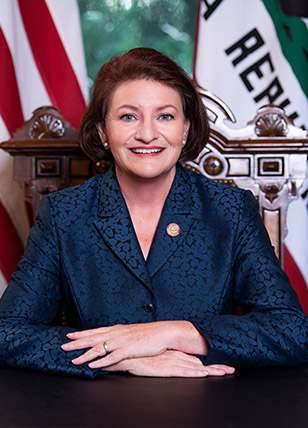
Ask Maddy about Toni Atkins
Scope: california
Hi! I can help you understand Toni Atkins's legislative record. What would you like to know?
Try one of these
i
Maddy answers using official bill text and legislative records. Always verify before sharing.
Sources cited inline