

Relative to Better Hearing and Speech Month.
This measure would recognize May 2016 as Better Hearing and Speech Month.
Signed into law Jun 1, 2016
1 co-sponsor
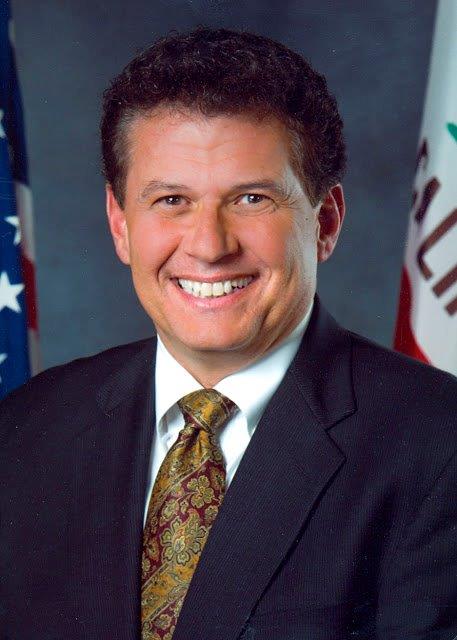
This measure would recognize May 2016 as Better Hearing and Speech Month.
(1) Existing law generally prohibits the possession or transfer of assault weapons, except for the sale, purchase, importation, or possession of assault weapons by specified individuals, including law enforcement officers. Under existing law, "assault weapon" means, among other things, a semiautomatic centerfire rifle or a semiautomatic pistol that has the capacity to accept a detachable magazine and has any one of specified attributes, including, for rifles, a thumbhole stock, and for pistols, a second handgrip. This bill would revise this definition of "assault weapon" to mean a semiautomatic centerfire rifle or a semiautomatic pistol that does not have a fixed magazine but has any one of those specified attributes. The bill would also define "fixed magazine" to mean an ammunition feeding device contained in, or permanently attached to, a firearm in such a manner that the device cannot be removed without disassembly of the firearm action. By expanding the definition of an existing crime, the bill would impose a state-mandated local program. (2) Existing law requires that any person who, within this state, possesses an assault weapon, except as otherwise provided, be punished for a felony or for a period not to exceed one year in a county jail. This bill would exempt from punishment under that provision a person who possessed an assault weapon prior to January 1, 2017, if specified requirements are met. (3) Existing law requires that, with specified exceptions, any person who, prior to January 1, 2001, lawfully possessed an assault weapon prior to the date it was defined as an assault weapon and that was not specified as an assault weapon at the time of lawful possession, must register the firearm with the Department of Justice. Existing law permits the Department of Justice to charge a fee for registration of up to $20 per person but not to exceed the actual processing costs of the department. Existing law, after the department establishes fees sufficient to reimburse the department for processing costs, requires fees charged to increase at a rate not to exceed the legislatively approved annual cost-of-living adjustment for the department's budget or as otherwise increased through the Budget Act. Existing law requires those fees to be deposited into the Dealers' Record of Sale Special Account. Existing law, the Administrative Procedure Act, establishes the requirements for the adoption, publication, review, and implementation of regulations by state agencies. This bill would require that any person who, from January 1, 2001, to December 31, 2016, inclusive, lawfully possessed an assault weapon that does not have a fixed magazine, as defined, including those weapons with an ammunition feeding device that can be removed readily from the firearm with the use of a tool, register the firearm with the Department of Justice before January 1, 2018, but not before the effective date of specified regulations. The bill would permit the department to increase the $20 registration fee as long as it does not exceed the reasonable processing costs of the department. The bill would also require registrations to be submitted electronically via the Internet utilizing a public-facing application made available by the department. The bill would require the registration to contain specified information, including, but not limited to, a description of the firearm that identifies it uniquely and specified information about the registrant. The bill would permit the department to charge a fee of up to $15 per person for registration through the Internet, not to exceed the reasonable processing costs of the department to be paid and deposited, as specified, for purposes of the registration program. The bill would require the department to adopt regulations for the purpose of implementing those provisions and would exempt those regulations from the Administrative Procedure Act. The bill would also make technical and conforming changes. (4) The California Constitution requires the state to reimburse local agencies and school districts for certain costs mandated by the state. Statutory provisions establish procedures for making that reimbursement. This bill would provide that no reimbursement is required by this act for a specified reason.
This measure would proclaim the month of February 2016 as Teen Dating Violence Awareness and Prevention Month, and would encourage all Californians to observe Teen Dating Violence Awareness and Prevention Month with programs and activities that raise awareness about teen dating violence.
Existing law requires that a person who willfully threatens to commit a crime that will result in death or great bodily injury to another person, with the specific intent that the statement, made verbally, in writing, or by means of an electronic communication device, is to be taken as a threat, even if there is no intent of actually carrying it out, which, on its face and under the circumstances in which it is made, is so unequivocal, unconditional, immediate, and specific as to convey to the person threatened, a gravity of purpose and an immediate prospect of execution of the threat, and thereby causes that person reasonably to be in sustained fear for his or her own safety or for his or her immediate family's safety, be punished by imprisonment in a county jail not to exceed one year, or by imprisonment in the state prison. This bill would instead require that any person who willfully threatens to commit a crime against another person or at a location or event that will result in death or great bodily injury to another person, with the specific intent that the statement, made verbally, in writing, or by means of an electronic communication device, is to be taken as a threat, even if there is no intent of actually carrying it out, be punished by imprisonment in a county jail not to exceed one year, or by imprisonment in the state prison. The bill would provide that a person threatens to commit a crime against another person if, on its face and under the circumstances in which a threat is made, the threat is so unequivocal, unconditional, immediate, and specific as to convey to the person threatened, a gravity of purpose and an immediate prospect of execution of the threat, and thereby causes that person reasonably to be in sustained fear for his or her own safety or for his or her immediate family's safety. The bill would also provide that a person threatens to commit a crime at a location or event, whether a public or private location event, if, on its face and under the circumstances in which a threat is made, the threat is so unequivocal, unconditional, immediate, and specific as to convey to a reasonable person perceiving the threat a gravity of purpose and an immediate prospect of execution of the threat, such that the evacuation, lockdown, or closure of a location, or the cancellation, evacuation, lockdown, or closure of an event appears to be reasonably necessary for the protection of the public. By expanding the scope of a crime, the bill would impose a state-mandated local program. The California Constitution requires the state to reimburse local agencies and school districts for certain costs mandated by the state. Statutory provisions establish procedures for making that reimbursement. This bill would provide that no reimbursement is required by this act for a specified reason.
Existing law establishes the California Community Colleges, under the administration of the Board of Governors of the California Community Colleges, as one of the segments of public postsecondary education in this state. Existing law requires community college district governing boards to charge students an enrollment fee of $46 per unit per semester. Existing law, the Ortiz-Pacheco-Poochigian-Vasconcellos Cal Grant Program, establishes the Cal Grant A and B Entitlement awards, the California Community College Transfer Cal Grant Entitlement awards, the Competitive Cal Grant A and B awards, the Cal Grant C awards, and the Cal Grant T awards under the administration of the Student Aid Commission, and establishes eligibility requirements for awards under these programs for participating students attending qualifying institutions. This bill would establish the California Community Colleges Assistance Grant Program. Commencing with the 2017–18 award year, the bill would require the Student Aid Commission to annually augment the awards of all recipients of Cal Grant B Entitlement awards and Competitive Cal Grant B awards who are enrolled as students at campuses of the California Community Colleges by $1,500. The bill would specify that the amounts awarded under the bill would supplement, and not supplant, the Cal Grant B awards and other student financial aid received by those community college students. The bill would further specify that these awards would be funded by appropriations from the General Fund in the annual Budget Act.
This measure would commend Muslim Americans for their economic, political, and cultural impact on California and the United States. This measure would call upon Members of the United States Congress to respect the First Amendment, and to speak out against and reject efforts to monitor mosques, efforts to police and profile Muslim Americans, and efforts to prohibit Muslims from immigrating to the United States, and to speak out against and reject any efforts to pursue an immigration policy based on religion.
This measure would recognize Nowrūz, the Persian New Year celebration.
This measure would designate the month of April 2016 as Sexual Assault Awareness Month, and would recognize April 27, 2016, as Denim Day California.
This measure would designate April 2016 as California Congenital Diaphragmatic Hernia Awareness Month.