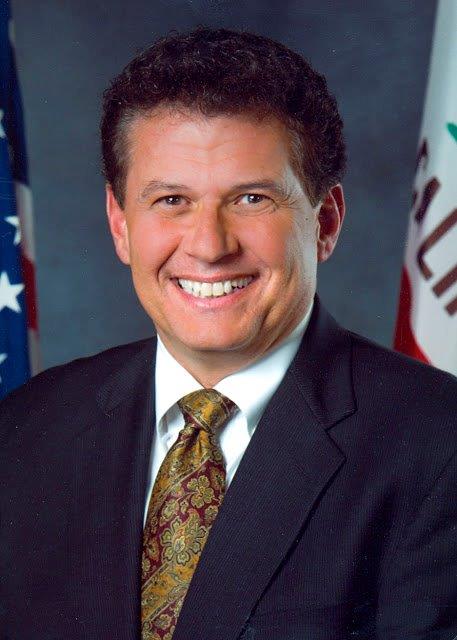
Photo of Marty Block
D California Senate · District 39

Sen. Marty Block

Compare
Total votes
16,898
all sessions
Attendance
95%
778 missed
Higher than 79% of chamber peers
With party
99%
of cast votes
Near the chamber average
Bipartisan score
0%
crosses aisle rarely
Near the chamber average
Sponsored
725
bills & resolutions
Higher than 87% of chamber peers
Committees
0
assignments
725 bills and resolutions

Sponsored bills

Total
725
Primary
166
Co-sponsor
559
This page
725
matching current filters
Co-sponsor SB 651
Signed into law · California Senate · Co-sponsor
Family law: domestic partnerships.

Existing law provides that 2 unmarried, unrelated adults who have chosen to share one another's lives in an intimate and committed relationship of mutual caring may establish a domestic partnership by filing a declaration with the Secretary of State if certain requirements are met, including that both persons have a common residence and that both persons are at least 18 years of age. Existing law authorizes 2 unmarried persons, not minors, who have been living together as husband and wife to obtain a confidential marriage license, as specified. This bill would eliminate the requirement that domestic partners have a common residence. This bill would also permit a person who is under 18 years of age who otherwise meets the requirements for establishing a domestic partnership to do so upon obtaining a court order that provides that authority to the underage person. The bill would also provide for the consent of the underage person's parent or guardian, except as specified, and would require that the court order and the written consent be filed with the court clerk and submitted to the Secretary of State with a Declaration of Domestic Partnership. The bill would also require the Secretary of State to establish a process by which 2 persons could enter into a confidential domestic partnership and maintain each confidential Declaration of Domestic Partnership, as specified, and permit the Secretary of State to charge a reasonable fee in this regard. Existing law prohibits a judgment of dissolution of marriage from being entered unless one of the parties to the marriage has been a resident of this state for 6 months and of the county in which the proceeding is filed for 3 months before the filing of the petition. This bill would authorize a judgment for dissolution, nullity, or legal separation of a marriage between persons of the same sex to be entered if the marriage was entered in California and neither party to the marriage resides in a jurisdiction that will dissolve the marriage.

Signed into law Oct 9, 2011 1 co-sponsor
Co-sponsor AB 1417
Signed into law · California Assembly · Co-sponsor
Tribal gaming: local agencies.

Existing law creates in the State Treasury the Indian Gaming Special Distribution Fund for the receipt and deposit of moneys received by the state from certain Indian tribes pursuant to the terms of gaming compacts entered into with the state. Existing law authorizes moneys in that fund to be used for specified purposes, including for grants for the support of state and local government agencies impacted by tribal government gaming. This bill would appropriate $9,100,000 from the Indian Gaming Special Distribution Fund to the California Gambling Control Commission to provide grants to local agencies.

Signed into law Oct 9, 2011 1 co-sponsor
Primary AB 795
Signed into law · California Assembly · Lead sponsor
Public postsecondary education: smoke-free campuses.

Existing law establishes the University of California, under the administration of the Regents of the University of California, the California State University, under the administration of the Trustees of the California State University, and the California Community Colleges, under the administration of the Board of Governors of the California Community Colleges, as the public segments of postsecondary education. Existing law prohibits public employees or members of the public from smoking any tobacco product inside a public building or in an outdoor area, as specified. Existing law states that provision does not preempt the authority of the California Community Colleges, the California State University, or the University of California from adopting and enforcing additional smoking and tobacco control regulations and policies. This bill would provide that the governing bodies of the California State University and each community college district have the authority to enforce these requirements by citation and fine, as specified. The bill would provide that if a campus adopts the enforcement and fine authority, it may post signs stating its tobacco use policy and inform employees and students of the policy, as specified. This bill would authorize the Regents of the University of California to adopt the above provisions.

Signed into law Oct 8, 2011 0 co-sponsors
Primary AB 684
Signed into law · California Assembly · Lead sponsor
Community college districts: trustee elections.

(1) Existing law establishes the California Community Colleges, which are administered by the Board of Governors of the California Community Colleges. The board of governors provides general supervision over each community college district and performs specified functions. Each community college district is under the control of a board of trustees. Existing law provides various procedures for the nomination and election of the governing boards of community college districts. Existing law specifies the number of members on the board, residency requirements, length of terms, and the drawing of trustee boundaries. This bill would authorize the governing board of a community college district to change election systems, as specified, in accordance with the provisions of this bill and the California Voting Rights Act of 2001, subject to approval by the Board of Governors of the California Community Colleges. The bill would authorize the governing board of a community college district to establish elections by trustee areas. In establishing trustee areas, the territory of a district would be divided into trustee areas, and one member of the governing board would be elected from each trustee area. A candidate for election as a member of the governing board would be required to reside in, and be registered to vote in, the trustee area he or she seeks to represent. The governing board would be authorized to set the initial boundaries of each trustee area to reflect the population enumerated in the most recent decennial federal census. Thereafter, the boundaries of trustee areas would be adjusted, abolished, or rearranged as specified. This bill would authorize the governing board of a community college district to determine the number of trustees, and would require the governing board to be composed of 5 to 9 members. The board would be authorized to establish, abolish, or adjust trustee areas and terms of office, as specified. The bill would specify that the act would not apply to any community college district that is authorized by statute to provide for its own trustee elections. (2) This bill would establish a procedure for the number of members, the election of members, and the reapportionment of trustee areas of the governing board of the Grossmont-Cuyamaca Community College District in accordance with the provisions of this bill and the California Voting Rights Act of 2001. The bill would provide that candidates for election to the board be nominated by trustee area, as defined, at a primary election held on the date of the statewide direct primary election. The 2 candidates receiving the highest number of votes would be the nominees for the general election for that trustee area. The candidate receiving a majority of the votes cast in the general election would be elected to represent that district, and would hold office for a 4-year term, as specified. Members of the board holding office on the effective date of this bill would continue to hold office, as specified. The bill would require the governing board to be composed of 5 to 9 members, as determined by the board, and to establish, abolish, or adjust trustee areas and terms of office, as specified. This bill would require the boundaries for trustee areas established by resolution of the governing board of the district, or adopted by the county committee on school district organization prior to January 1, 2012, to reflect population changes enumerated in the 2010 decennial federal census, to be in effect when the bill becomes operative. The bill would require the boundaries to be set so that the population of each area is in proportion to the other districts. The bill would thereafter require the boundaries to be adjusted, abolished, or rearranged, as specified. (3) By imposing the above requirements on the Grossmont-Cuyamaca Community College District, the bill would impose a state-mandated local program. The California Constitution requires the state to reimburse local agencies and school districts for certain costs mandated by the state. Statutory provisions establish procedures for making that reimbursement. This bill would provide that no reimbursement is required by this act for a specified reason. (4) This bill would declare that it is to take effect immediately as an urgency statute.

Signed into law Oct 8, 2011 0 co-sponsors
Primary AB 743
Signed into law · California Assembly · Lead sponsor
California Community Colleges: common assessment system.

Existing law establishes the California Community Colleges, under the administration of the Board of Governors of the California Community Colleges, as one of the segments of public postsecondary education in this state. The Seymour-Campbell Matriculation Act of 1986 requires, contingent on the appropriation of funds for the purposes of the act, matriculation services to be made available by the colleges. The act requires those services to include assessment and counseling upon enrollment, including administration of assessment instruments to determine student competency in computational and language skills. This bill would require the board to establish a common assessment system with specified objectives, including selection of an existing commercially available and centrally delivered system of student assessment, to be used as one of multiple measures, consistent with specified law, for the purposes of community college placement and advisement. The bill would require the Office of the Chancellor of the California Community Colleges to work in collaboration with the State Department of Education and the California State University when developing a common college-readiness standard that will be reflected in the creation of assessment instruments. The bill would require the Office of the Chancellor of the California Community Colleges to submit a report to the Legislature and the Governor on the progress of implementation of the common assessment system by December 31, 2012, and would require the above provisions to become operative upon the receipt of state, federal, or philanthropic funds to cover the costs of the common assessment system.

Signed into law Oct 8, 2011 0 co-sponsors
Primary AB 620
Signed into law · California Assembly · Lead sponsor
Public postsecondary education: nondiscrimination and training: sexual orientation, gender identity, and gender expression.

(1) Existing law, known as the Donahoe Higher Education Act, establishes the missions and functions of the state's 3 segments of public postsecondary education, which are the University of California, the California State University, and the California Community Colleges. The provisions of the Donahoe Higher Education Act apply to the University of California only to the extent that the Regents of the University of California, by resolution, make them applicable. Existing provisions of the Donahoe Higher Education Act require the Regents of the University of California, the Trustees of the California State University, and the governing boards of community college districts to adopt or provide for the adoption of rules and regulations governing student behavior, known as rules of student conduct. This bill would request the Trustees of the California State University, the Regents of the University of California, and the governing board of each community college district to adopt and publish policies on harassment, intimidation, and bullying to be included within the rules of student conduct governing their respective segments of public postsecondary education. The bill would express the intent of the Legislature that rules and regulations governing student conduct be published, at a minimum, on the Internet Web sites of each public postsecondary educational campus and as part of any printed material covering those rules and regulations within the respective public postsecondary education systems. (2) The Equity in Higher Education Act, a part of the Donahoe Higher Education Act, provides that it is the policy of the state to afford all persons, regardless of disability, gender, nationality, race or ethnicity, religion, sexual orientation, or other specified bases, equal rights and opportunities in the postsecondary educational institutions of the state. For these purposes, the act defines "gender" to include gender identity. This bill would revise the definition of gender to include "gender expression" for purposes of the Equity in Higher Education Act. The bill would request the Trustees of the California State University, the Regents of the University of California, and the governing board of each community college district to designate an employee at each of their respective campuses as a point of contact to address the needs of lesbian, gay, bisexual, and transgender faculty, staff, and students. The bill would request each segment to collect aggregate demographic information regarding sexual orientation and gender identity of staff and students within other aggregate demographic data collected, and would require annual transmittal of any report to the Legislature, as specified, and posting of the information on the Internet Web site of each respective institution. The bill would encourage the Legislative Analyst to conduct an assessment of the campuses of each of the segments of public postsecondary education to develop recommendations to improve the quality of life on those campuses for lesbian, gay, bisexual, and transgender faculty, staff, and students, and to publish a summary of those recommendations on its Internet Web site. The bill would make various conforming changes to existing nondiscrimination laws affecting postsecondary educational institutions and programs, and requirements related to reporting hate violence, as defined, to additionally include sexual orientation, gender identity, and gender expression within the scope of those programs and requirements.


Signed into law Oct 8, 2011 0 co-sponsors
Co-sponsor AB 131
Signed into law · California Assembly · Co-sponsor
Student financial aid.

(1) The Donahoe Higher Education Act sets forth, among other things, the missions and functions of California's public and independent segments of higher education, and their respective institutions of higher education. Provisions of the act apply to the University of California only to the extent that the Regents of the University of California, by appropriate resolution, act to make a provision applicable. Existing law requires that a student, other than a nonimmigrant alien, as defined, who has attended high school in California for 3 or more years, who has graduated from a California high school or attained the equivalent thereof, who has registered at or attends an accredited institution of higher education in California not earlier than the fall semester or quarter of the 2001–02 academic year, and who, if he or she is an alien without lawful immigration status, has filed a prescribed affidavit is exempt from paying nonresident tuition at the California Community Colleges and the California State University. This bill would amend the Donahoe Higher Education Act, as of January 1, 2013, to require the Trustees of the California State University and the Board of Governors of the California Community Colleges, and to request the regents, to establish procedures and forms that enable students who are exempt from paying nonresident tuition under the above-described provision, or who meet equivalent requirements adopted by the regents, to apply for, and participate in, all student aid programs administered by these segments to the full extent permitted by federal law, except as provided. This provision would apply to the University of California only if the regents, by appropriate resolution, act to make it applicable. This bill would provide that students who are exempt from paying nonresident tuition under the above provision, or who meet equivalent requirements adopted by the regents, are eligible to apply for, and participate in, any student financial aid program administered by the State of California to the full extent permitted by federal law. This bill would require the Student Aid Commission to establish procedures and forms that enable those students who are exempt from paying nonresident tuition under the above provision to apply for, and participate in, all student financial aid programs administered by the State of California to the full extent permitted by federal law. This bill would prohibit students who are exempt from paying nonresident tuition under the provision described above from being eligible for Competitive Cal Grant A and B Awards unless specified conditions are met. The bill would make these provisions operative as of January 1, 2013. (2) Existing federal law requires that a state may provide that an alien who is not lawfully present in the United States is eligible for any state or local public benefit for which that alien would otherwise be ineligible under a specified federal law only through enactment of a state law that affirmatively provides for that eligibility. This bill would find and declare that the amendments to the Donahoe Higher Education Act described above are state laws within the meaning of this federal provision. (3) Existing law establishes the California Community Colleges under the administration of the Board of Governors of the California Community Colleges. Existing law authorizes the establishment of community college districts under the administration of community college governing boards, and authorizes these districts to provide instruction, for prescribed fees, at community college campuses throughout the state. Existing law authorizes the waiver of these fees for, among others, students who are eligible under income standards established by the board of governors. This bill, as of January 1, 2013, would require community college districts to waive the fees of students who are exempt from nonresident tuition under the provision described in (1) above, and who otherwise qualify for a waiver under this provision, under regulations and procedures adopted by the board of governors. Because the bill would impose new duties on community college districts with respect to determining eligibility for fee waivers, the bill would constitute a state-mandated local program. (4) The California Constitution requires the state to reimburse local agencies and school districts for certain costs mandated by the state. Statutory provisions establish procedures for making that reimbursement. This bill would provide that, if the Commission on State Mandates determines that the bill contains costs mandated by the state, reimbursement for those costs shall be made pursuant to these statutory provisions.

Signed into law Oct 8, 2011 1 co-sponsor
Primary AB 668
Signed into law · California Assembly · Lead sponsor
California State University: examinations: undue hardship.

Existing law establishes the California State University, which is administered by the Trustees of the California State University. Existing law requires the state universities, in administering any test or examination, to permit any student who is eligible to undergo the test or examination to do so, without penalty, at a time when that activity would not violate the student's religious creed, except when it would impose an undue hardship that could not reasonably have been avoided. This bill would define the term "undue hardship" for that purpose.

Signed into law Oct 8, 2011 0 co-sponsors
Co-sponsor AB 651
Vetoed · California Assembly · Co-sponsor
Initiatives: paid circulators.

Existing law regulates the process of proposing initiative measures to the people and sets forth qualifications for persons who circulate initiative petitions in the state. This bill would require a firm that engages in the business of paying individuals to circulate petitions and gather signatures for state or local ballot initiatives to register with the Secretary of State and pay a registration fee to be established by the Secretary of State. Failure to register would be punishable by a fine, as specified. The bill would require the Secretary of State to use the fees collected to maintain a directory of these firms on its Internet Web site, as well as to defray costs associated with other requirements of the bill, as specified. This bill also would require a member of the firm to review the law relating to obtaining petition signatures with each paid petition circulator before the paid petition circulator obtains any signatures for the firm, and to submit to the Secretary of State a statement signed by each petition circulator and the member who conducted the review that the petition circulator has received the review, as well as a copy of the training materials provided to the petition circulator in connection with the review. Failure to submit the required training or verification materials would be punishable by a fine, as specified.

Vetoed Oct 7, 2011 1 co-sponsor
Showing 411 to 420 of 725 bills
Previous 1 … 41 42 43 … 73 Next