

Existing law requires local educational agencies to provide certain documents to parents and post certain documents on an Internet Web site. This bill would require a local educational agency, as specified, or a person, firm, association, partnership, or corporation offering or conducting private school instruction at the elementary or high school level, as specified, that maintains an employee code of conduct with pupils to, commencing July 1, 2017, provide a written copy of the code of conduct to the parent or guardian of each enrolled pupil at the beginning of each school year and, commencing January 1, 2017, to post the code of conduct, or provide a link to it, on each of its schools' Internet Web sites, or, if a school of a local educational agency does not have its own Internet Web site, on the local educational agency's Internet Web site, in a publicly accessible manner. The bill would also provide that a local educational agency may satisfy the individual parent notification requirement by including a copy of the code of conduct with other specified notifications that are required at the beginning of the first semester or quarter of the regular school term.
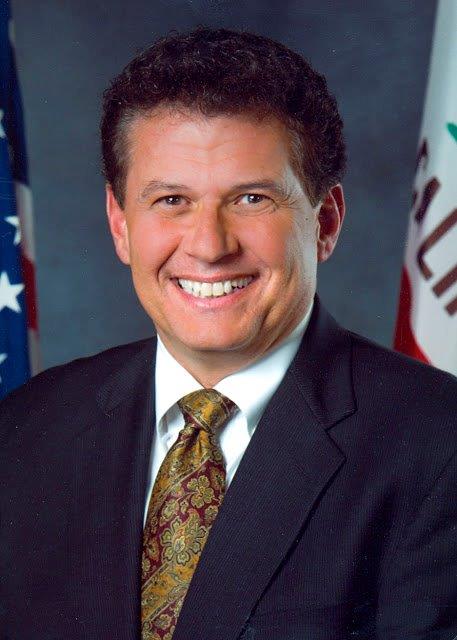
Sponsored bills
Existing law authorizes probation and mandatory supervision, which in each case is a period of time when a defendant is released from incarceration and is subject to specified conditions and supervision by county probation authorities. This bill would, until January 1, 2021, allow a court to authorize the use of flash incarceration, as defined, to detain the offender in county jail for not more than 10 days for a violation of his or her conditions of probation or mandatory supervision, as specified. These provisions would not apply to persons convicted of certain drug possession offenses. The bill would, until January 1, 2021, allow a person to receive credits earned for a period of flash incarceration pursuant to these provisions if his or her probation or mandatory supervision is revoked.
Existing law defines and proscribes the crimes of human trafficking, solicitation, and prostitution. Existing law provides that if a defendant has been convicted of solicitation or prostitution and has completed any term of probation for that conviction, the defendant may petition the court for relief if the defendant can establish by clear and convincing evidence that the conviction was the result of his or her status as a victim of human trafficking. Existing law authorizes a court to issue an order that (1) sets forth a finding that the defendant was a victim of human trafficking, as specified, (2) dismisses the accusation or information against the defendant, or orders other relief, and (3) notifies the Department of Justice that the defendant was a victim of human trafficking when he or she committed the crime and the relief that has been ordered. Existing law authorizes a person who was adjudicated a ward of the juvenile court for solicitation or prostitution to, upon reaching 18 years of age, petition the court to have his or her record sealed, as specified. This bill would establish a separate petition process for a person who has been arrested for, convicted of, or adjudicated a ward of the juvenile court for, committing a nonviolent offense, as defined, while he or she was a victim of human trafficking. The bill would require the petitioner to establish that the arrest, conviction, or adjudication was the direct result of being a victim of human trafficking in order to obtain relief. The bill would require the petition for relief to be submitted under penalty of perjury, thereby expanding the scope of a crime. The bill would authorize the court, upon making specified findings, to vacate the conviction or adjudication and issue an order that provides the relief described above and also provides for the sealing and destruction of the petitioner's arrest and court records, as specified. The bill would require that the petition be made within a reasonable time after the person has ceased to be a victim of human trafficking, or within a reasonable time after the person has sought services for being a victim of human trafficking, whichever is later. The bill would provide that official documentation, as defined, of a petitioner's status as a victim of human trafficking may be introduced as evidence that his or her participation in the offense was the result of the petitioner's status as a victim of human trafficking. The bill would provide that a petitioner or his or her attorney is not required to appear in person at a hearing for the relief described above if the court finds a compelling reason why the petitioner cannot attend the hearing and may appear via alternate specified methods. The bill would prohibit the disclosure of the full name of a petitioner in the record of a proceeding related to his or her petition that is accessible by the public. The bill would authorize a petitioner who has obtained the relief described above to lawfully deny or refuse to acknowledge an arrest, conviction, or adjudication that is set aside pursuant to that relief. By expanding the scope of a crime and increasing the number of records local agencies would be required to seal and destroy, this bill would impose a state-mandated local program. The California Constitution requires the state to reimburse local agencies and school districts for certain costs mandated by the state. Statutory provisions establish procedures for making that reimbursement. This bill would provide that with regard to certain mandates no reimbursement is required by this act for a specified reason. With regard to any other mandates, this bill would provide that, if the Commission on State Mandates determines that the bill contains costs so mandated by the state, reimbursement for those costs shall be made pursuant to the statutory provisions noted above. Existing constitutional provisions require that a statute that limits the right of access to the meetings of public bodies or the writings of public officials and agencies be adopted with findings demonstrating the interest protected by the limitation and the need for protecting that interest. This bill would make legislative findings to that effect.
Existing law authorizes a court in a criminal proceeding, upon written notice by the prosecutor made at least 3 days prior to the date of the preliminary hearing or trial date on which the testimony of the minor is scheduled or during the course of the proceeding on the court's own motion, to order that the testimony of a minor 13 years of age or younger at the time of the motion be taken by contemporaneous examination and cross-examination in another place and out of the presence of the judge, jury, defendant or defendants, and attorneys, and communicated to the courtroom by means of closed-circuit television, if the court makes specified findings. One of the findings required by existing law requires is that the minor's testimony will involve a recitation of the facts of specified crimes, including an alleged violent felony of which the minor is a victim. This bill would authorize, under specified conditions, a minor 15 years of age or younger to testify by contemporaneous examination and cross-examination in another place and out of the presence of the judge, jury, defendant or defendants, and attorneys if the testimony will involve the recitation of the facts of an alleged offense of human trafficking.
Existing law governs the procurement process for contracts of specified public entities. Existing law, the Unruh Civil Rights Act, states that all persons within this state are free and equal and, no matter what their sex, race, color, religion, ancestry, national origin, disability, medical condition, genetic information, marital status, sexual orientation, citizenship, primary language, or immigration status, are entitled to full and equal accommodations, advantages, facilities, privileges, or services in all business establishments. Existing law, the California Fair Employment and Housing Act, protects and safeguards the right and opportunity of all persons to seek, obtain, and hold employment without discrimination, abridgment, or harassment on account of race, religious creed, color, national origin, ancestry, physical disability, mental disability, medical condition, genetic information, marital status, sex, gender, gender identity, gender expression, age, sexual orientation, or military and veteran status. This bill would, with certain exceptions, require a person that submits a bid or proposal to, or otherwise proposes to enter into or renew a contract with, a state agency with respect to any contract in the amount of $100,000 or more to certify, under penalty of perjury, at the time the bid or proposal is submitted or the contract is renewed that they are in compliance with the Unruh Civil Rights Act and the California Fair Employment and Housing Act, and that any policy that they have adopted against any sovereign nation or peoples recognized by the government of the United States, including, but not limited to, the nation and people of Israel, is not used to discriminate in violation of the Unruh Civil Rights Act or the California Fair Employment and Housing Act. By requiring a person to certify under penalty of perjury, this bill would expand the definition of a crime, thereby imposing a state-mandated local program. The California Constitution requires the state to reimburse local agencies and school districts for certain costs mandated by the state. Statutory provisions establish procedures for making that reimbursement. This bill would provide that no reimbursement is required by this act for a specified reason.
Existing law, the Knox-Keene Health Care Service Plan Act of 1975, provides for the licensure and regulation of health care service plans by the Department of Managed Health Care and makes a willful violation of the act a crime. Existing law also provides for the regulation of health insurers by the Department of Insurance. Existing law also provides for the Medi-Cal program, which is administered by the State Department of Health Care Services, under which qualified low-income individuals receive health care services through, among other things, managed care plans licensed under the act that contract with the State Department of Health Care Services. Existing law requires a health care service plan contract or health insurance policy issued, amended, or renewed on or after January 1, 2016, to provide coverage for women for all prescribed and FDA-approved female contraceptive drugs, devices, and products, as well as voluntary sterilization procedures, contraceptive education and counseling, and related followup services. This bill would require a health care service plan or a health insurance policy issued, amended, renewed, or delivered on or after January 1, 2017, to cover up to a 12-month supply of FDA-approved, self-administered hormonal contraceptives when dispensed at one time for an enrollee or insured at one time by a provider, pharmacist, or at a location licensed or authorized to dispense drugs or supplies. The bill would specifically provide that a health care service plan contract or an insurance policy is not required to cover contraceptives provided by an out-of-network provider, pharmacy, or other location, except as authorized by state or federal law or by the plan or insurer's policies governing out-of-network coverage. The bill would also prohibit a health care service plan or health insurer, in the absence of clinical contraindications, from imposing utilization controls limiting the supply of FDA-approved, self-administered hormonal contraceptives that may be furnished by a provider or pharmacist, or at a location licensed or otherwise authorized to dispense drugs or supplies to an amount that is less than a 12-month supply. The bill would include Medi-Cal managed care plans, as specified, in the definition of a health care service plan for purposes of these provisions, and would require the State Department of Health Care Services to seek federal approval, if necessary, and to issue all-plan letters or similar instructions to implement these provisions. Because a willful violation of the bill's requirements by a health care service plan would be a crime, the bill would impose a state-mandated local program. Existing law authorizes a pharmacist to dispense not more than a 90-day supply of a dangerous drug other than a controlled substance pursuant to a valid prescription that specifies an initial quantity of less than a 90-day supply followed by periodic refills of that amount if the patient has met specified requirements, including having completed an initial 30-day supply of the drug. Existing law prohibits a pharmacist from dispensing a greater supply of a dangerous drug if the prescriber indicates "no change to quantity" on the prescription. Existing law authorizes a pharmacist to furnish self-administered hormonal contraceptives in accordance with standardized procedures or protocols developed and approved by both the board and the Medical Board of California, as specified. This bill would require a pharmacist to dispense, at a patient's request, up to a 12-month supply of an FDA-approved, self-administered hormonal contraceptive pursuant to a valid prescription that specifies an initial quantity followed by periodic refills. The bill would authorize a pharmacist furnishing an FDA-approved, self-administered hormonal contraceptive, pursuant to the authorization described above, to furnish up to a 12-month supply at one time at the patient's request. This bill would incorporate changes to Section 4064.5 of the Business and Professions Code proposed by both this bill and SB 253, which would become operative only if both bills are enacted and become effective on or before January 1, 2017, and this bill is chaptered last. The California Constitution requires the state to reimburse local agencies and school districts for certain costs mandated by the state. Statutory provisions establish procedures for making that reimbursement. This bill would provide that no reimbursement is required by this act for a specified reason.
Existing law authorizes an individual to contribute amounts in excess of his or her personal income tax liability for the support of specified funds, including the School Supplies for Homeless Children Fund. Existing law requires the moneys deposited in the School Supplies for Homeless Children Fund, upon appropriation by the Legislature, to be allocated to the State Department of Social Services for distribution to a designated nonprofit organization for the sole purpose of assisting pupils in California pursuant to the federal McKinney-Vento Homeless Assistance Act, as provided. Existing law provides that this voluntary contribution remain in effect only until January 1 of the 5th taxable year in which the fund appears on the tax return or when the amount of contributions by taxpayers does not meet the minimum contribution amount, whichever occurs first. This bill would authorize the designated nonprofit organization to provide school supplies and health-related products to homeless children and homeless youth residing in or receiving services from specified living centers and would extend the time period for the School Supplies for Homeless Children Fund to appear on the tax return to January 1, 2022, or when the amount of contributions by taxpayers does not meet the minimum contribution amount, whichever occurs first.
Existing law, to be repealed on January 1, 2017, provides for the establishment of California American Indian education centers by any tribal group or incorporated American Indian association to meet specified objectives, and further provides for the administration of grants, upon application, by the State Department of Education for those purposes in accordance with specified provisions. Existing law requires each center to annually submit specified data to the department that reflects each center's ability to meet its stated objectives, and requires the department, on or before January 1, 2011, and again on or before January 1, 2016, to report consolidated results for all California American Indian education centers, provide information required to evaluate the results, and make recommendations for program improvement. This bill would instead require each center to submit data that reflects the center's progress toward meeting its stated objectives and any other objectives chosen by the center. The bill would require the department to report the information on or before January 1, 2021, and every 5 years thereafter, and would specify that the information shall be reported to the appropriate fiscal and policy committees of the Legislature. The bill would also delete the January 1, 2017, repeal date.
(1) Existing law, the Ortiz-Pacheco-Poochigian-Vasconcellos Cal Grant Program, establishes the Cal Grant A and B Entitlement Awards, the California Community College Transfer Entitlement Awards, and the Competitive Cal Grant A and B Awards and eligibility requirements for these awards for participating students attending qualifying institutions. This bill would provide that community college students participating in specified baccalaureate degree programs who also satisfy specified eligibility requirements shall receive these awards for upper division coursework fees. (2) Under existing law, the Middle Class Scholarship Program provides that an undergraduate student enrolled at the University of California or the California State University, and meeting certain requirements, is eligible for a scholarship award that, combined with other federal, state, and institutionally administered grants and fee waivers, totals up to 40% of the systemwide tuition and fees. Under existing law, to receive an award under the Middle Class Scholarship Program, a student is required to have an annual household income that does not exceed $150,000 as adjusted to reflect changes in the cost of living, satisfy specified requirements for a Cal Grant award, be a California resident or exempt from paying nonresident tuition, file specified financial aid forms, timely apply for publicly funded student financial aid for which he or she is eligible, maintain at least a 2.0 grade point average, be pursuing his or her first undergraduate baccalaureate degree or be enrolled in a specified professional teacher preparation program, and be enrolled at least part time. Existing law requires the University of California and the California State University to provide the Student Aid Commission with any financial aid data that are necessary for the determination of award amounts. Existing law transfers $117,000,000 from the General Fund to the Middle Class Scholarship Fund and appropriates that sum to the Student Aid Commission for purposes of the scholarship program for the 2017–18 fiscal year, and each fiscal year thereafter. This bill would extend awards under the Middle Class Scholarship Program to community college students enrolled in upper division coursework of a baccalaureate degree program, as specified, and would require the Office of the Chancellor of the California Community Colleges to provide the commission with any financial data that are necessary for the determination of award amounts for these students. By expanding the appropriation described above, the bill would make an appropriation. (3) This bill would incorporate additional changes to Section 69436 of the Education Code proposed by AB 1449 that would become operative if this bill and AB 1449 are both enacted and this bill is chaptered last.
(1) Existing law requires the California State University and each community college district, and requests the University of California, with respect to each campus in their respective jurisdictions that administers a priority enrollment system, to grant priority for registration for enrollment to foster youth or former foster youth, as defined. Existing law repeals these requirements on January 1, 2017. This bill would revise the definition of foster youth or former foster youth for these provisions. This bill would extend the operation of these provisions indefinitely. By extending the operation of requirements relating to student eligibility for priority registration at community college districts, the bill would impose a state-mandated local program. (2) Existing law requires each community college district, with respect to each campus in its jurisdiction that administers a priority enrollment system, to grant priority for registration for enrollment to students in the Community College Extended Opportunity Programs and Services program and to disabled students who are determined to be eligible for disabled student programs and services, as provided. Existing law repeals these requirements on January 1, 2017. This bill would extend the operation of those provisions indefinitely. By extending the operation of requirements relating to student eligibility for priority registration at community college districts, the bill would impose a state-mandated local program. (3) This bill would incorporate additional changes in Section 66025.9 of the Education Code, proposed by AB 801, to be operative only if AB 801 and this bill are both chaptered and become effective on or before January 1, 2017, and this bill is chaptered last. (4) The California Constitution requires the state to reimburse local agencies and school districts for certain costs mandated by the state. Statutory provisions establish procedures for making that reimbursement. This bill would provide that, if the Commission on State Mandates determines that the bill contains costs mandated by the state, reimbursement for those costs shall be made pursuant to these statutory provisions.