

Existing law authorizes an adult to give an individual health care instruction and to appoint an attorney to make health care decisions for that individual in the event of his or her incapacity pursuant to a power of attorney for health care. This bill would enact the End of Life Option Act authorizing an adult who meets certain qualifications, and who has been determined by his or her attending physician to be suffering from a terminal disease, as defined, to make a request for a drug prescribed pursuant to these provisions for the purpose of ending his or her life. The bill would establish the procedures for making these requests. The bill would also establish the forms to request an aid-in-dying drug and, under specified circumstances, an interpreter declaration to be signed subject to penalty of perjury, thereby creating a crime and imposing state-mandated local program. This bill would require specified information to be documented in the individual's medical record, including, among other things, all oral and written requests for an aid-in-dying drug. This bill would prohibit a provision in a contract, will, or other agreement from being conditioned upon or affected by a person making or rescinding a request for the above-described drug. The bill would prohibit the sale, procurement, or issuance of any life, health, or annuity policy, health care service plan, contract, or health benefit plan, or the rate charged for any policy or plan contract, from being conditioned upon or affected by the request. The bill would prohibit an insurance carrier from providing any information in communications made to an individual about the availability of an aid-in-dying drug absent a request by the individual or his or her attending physician at the behest of the individual. The bill would also prohibit any communication from containing both the denial of treatment and information as to the availability of aid-in-dying drug coverage. This bill would provide immunity from civil, criminal, administrative, employment, or contractual liability or professional disciplinary action for participating in good faith compliance with the act, and would specify that the immunities and prohibitions on sanctions of a health care provider are solely reserved for conduct provided for by the bill. The bill would make participation in activities authorized pursuant to its provisions voluntary, and would make health care providers immune from liability for refusing to engage in activities authorized pursuant to its provisions. The bill would authorize a health care provider to prohibit its employees, independent contractors, or other persons or entities, including other health care providers, from participating in activities under the act while on the premises owned or under the management or direct control of that prohibiting health care provider, or while acting within the course and scope of any employment by, or contract with, the prohibiting health care provider. This bill would make it a felony to knowingly alter or forge a request for drugs to end an individual's life without his or her authorization or to conceal or destroy a withdrawal or rescission of a request for a drug, if it is done with the intent or effect of causing the individual's death. The bill would make it a felony to knowingly coerce or exert undue influence on an individual to request a drug for the purpose of ending his or her life or to destroy a withdrawal or rescission of a request. By creating a new crime, the bill would impose a state-mandated local program. The bill would provide that nothing in its provisions is to be construed to authorize ending a patient's life by lethal injection, mercy killing, or active euthanasia, and would provide that action taken in accordance with the act shall not constitute, among other things, suicide or homicide. This bill would require the State Public Health Officer to adopt regulations establishing additional reporting requirements for physicians and pharmacists to determine the use of, and compliance with, the act, and would require the State Public Health Officer to annually review a sample of certain records and the State Department of Public Health to make a statistical report of the information collected. Existing constitutional provisions require that a statute that limits the right of access to the meetings of public bodies or the writings of public officials and agencies be adopted with findings demonstrating the interest protected by the limitation and the need for protecting that interest. This bill would make legislative findings to that effect. The California Constitution requires the state to reimburse local agencies and school districts for certain costs mandated by the state. Statutory provisions establish procedures for making that reimbursement. This bill would provide that no reimbursement is required by this act for a specified reason.
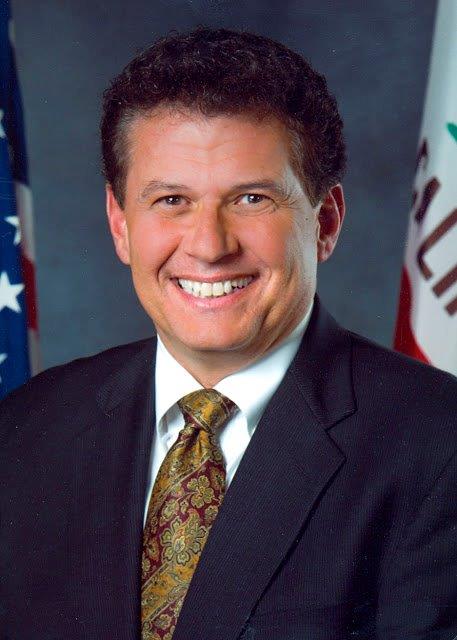
Sponsored bills
This measure would proclaim and acknowledge the month of June 2015 and June of every year thereafter as Elder and Vulnerable Adult Abuse Awareness Month.
This measure would recognize June 12, 2015, as the 117th Anniversary of Philippine Independence and would call upon the people of the state to observe the month of June with appropriate ceremonies, programs, and activities.
Existing law authorizes school districts and county superintendents of schools to provide transportation services to pupils. Existing law, among other things, requires each school district or county office of education that provides transportation to receive the same home-to-school and special education transportation allowances that it received in the prior fiscal year and prohibits the transportation allowances from exceeding the prior year's approved transportation costs, increased by the amount provided in the annual Budget Act. This bill would, notwithstanding any other law, require the Superintendent of Public Instruction, for the 2015–16 fiscal year to the 2021–22 fiscal year, inclusive, to apportion to each school district, county office of education, entity providing services under a school transportation joint powers agreement, or a regional occupational center or program that provides pupil transportation services, an amount equal to a specified annually increasing percentage of its approved transportation costs for the prior fiscal year or 100% of its school transportation apportionment for the 2014–15 fiscal year, annually adjusted as specified, whichever is greater. The bill would provide that implementation of its provisions is subject to an appropriation being made for purposes of those provisions in the annual Budget Act or another statute.
Existing law prohibits the governing authority of a school or other institution from unconditionally admitting any person as a pupil of any public or private elementary or secondary school, child care center, day nursery, nursery school, family day care home, or development center, unless prior to his or her admission to that institution he or she has been fully immunized against various diseases, including measles, mumps, and pertussis, subject to any specific age criteria. Existing law authorizes an exemption from those provisions for medical reasons or because of personal beliefs, if specified forms are submitted to the governing authority. Existing law requires the governing authority of a school or other institution to require documentary proof of each entrant's immunization status. Existing law authorizes the governing authority of a school or other institution to temporarily exclude a child from the school or institution if the authority has good cause to believe that the child has been exposed to one of those diseases, as specified. This bill would eliminate the exemption from existing specified immunization requirements based upon personal beliefs, but would allow exemption from future immunization requirements deemed appropriate by the State Department of Public Health for either medical reasons or personal beliefs. The bill would exempt pupils in a home-based private school and students enrolled in an independent study program and who do not receive classroom-based instruction, pursuant to specified law from the prohibition described above. The bill would allow pupils who, prior to January 1, 2016, have a letter or affidavit on file at a private or public elementary or secondary school, child day care center, day nursery, nursery school, family day care home, or development center stating beliefs opposed to immunization, to be enrolled in any private or public elementary or secondary school, child day care center, day nursery, nursery school, family day care home, or development center within the state until the pupil enrolls in the next grade span, as defined. Except as under the circumstances described above, on and after July 1, 2016, the bill would prohibit a governing authority from unconditionally admitting to any of those institutions for the first time or admitting or advancing any pupil to the 7th grade level, unless the pupil has been immunized as required by the bill. The bill would specify that its provisions do not prohibit a pupil who qualifies for an individualized education program, pursuant to specified laws, from accessing any special education and related services required by his or her individualized education program. The bill would narrow the authorization for temporary exclusion from a school or other institution to make it applicable only to a child who has been exposed to a specified disease and whose documentary proof of immunization status does not show proof of immunization against one of the diseases described above. The bill would make conforming changes to related provisions.
This measure would state that the Legislature recognizes May 2015 as Jewish American Heritage Month, encourages all Californians to participate in appropriate observances with activities that celebrate and commemorate Jewish American Heritage Month, and commends Jewish Americans for their notable accomplishments and outstanding service to the state and the nation.
This measure would proclaim the week of May 17, 2015, to May 23, 2015, inclusive, as Emergency Medical Services Week.
(1) The Cal Grant Program establishes the Cal Grant A and B Entitlement awards, the California Community College Transfer Entitlement awards, the Competitive Cal Grant A and B awards, the Cal Grant C awards, and the Cal Grant T awards under the administration of the Student Aid Commission, and establishes eligibility requirements for awards under these programs for participating students attending qualifying institutions. Existing law establishes the total number of Competitive Cal Grant A and B awards granted annually at 22,500 and the maximum tuition award amount for each Cal Grant A and B award for new students attending private nonprofit postsecondary educational institution at $9,084 for the 2014–15 award year and $8,056 for the 2015–16 award year and each award year thereafter. This bill would increase the total number of Competitive Cal Grant A and B awards granted annually to 30,000 and would increase the maximum tuition award amount for Cal Grant A and B for students at private nonprofit postsecondary educational institutions to $9,084 for the 2015–16 award year and each award year thereafter. (2) Existing law establishes the California State University, under the administration of the Trustees of the California State University, and the University of California, under the administration of the Regents of the University of California, as 2 of the segments of public postsecondary education in this state. This bill would establish, commencing with the 2015–16 academic year, the Graduation Incentive Grant program to provide eligible matriculating undergraduate students of California State University with financial need attending a campus of the California State University with financial aid for up to 3 college years, as specified. The bill would specify the eligibility criteria and the award amounts of the Graduation Incentive Grant program. The bill would require the California State University to make an annual report, containing specified data about the program, to the Legislature. The program would only be operative in a fiscal year if the Trustees of the California State University determine that sufficient funding has been provided for purposes of the program for that fiscal year in the annual Budget Act or another statute. The bill would express the intent of the Legislature to appropriate funds, for the 2015–16 fiscal year, to the University of California to eliminate a specified tuition increase and to appropriate funds to both the University of California and the California State University to provide additional course offerings and support services for students.
This measure would recognize the month of May 2015 as National Military Appreciation Month.