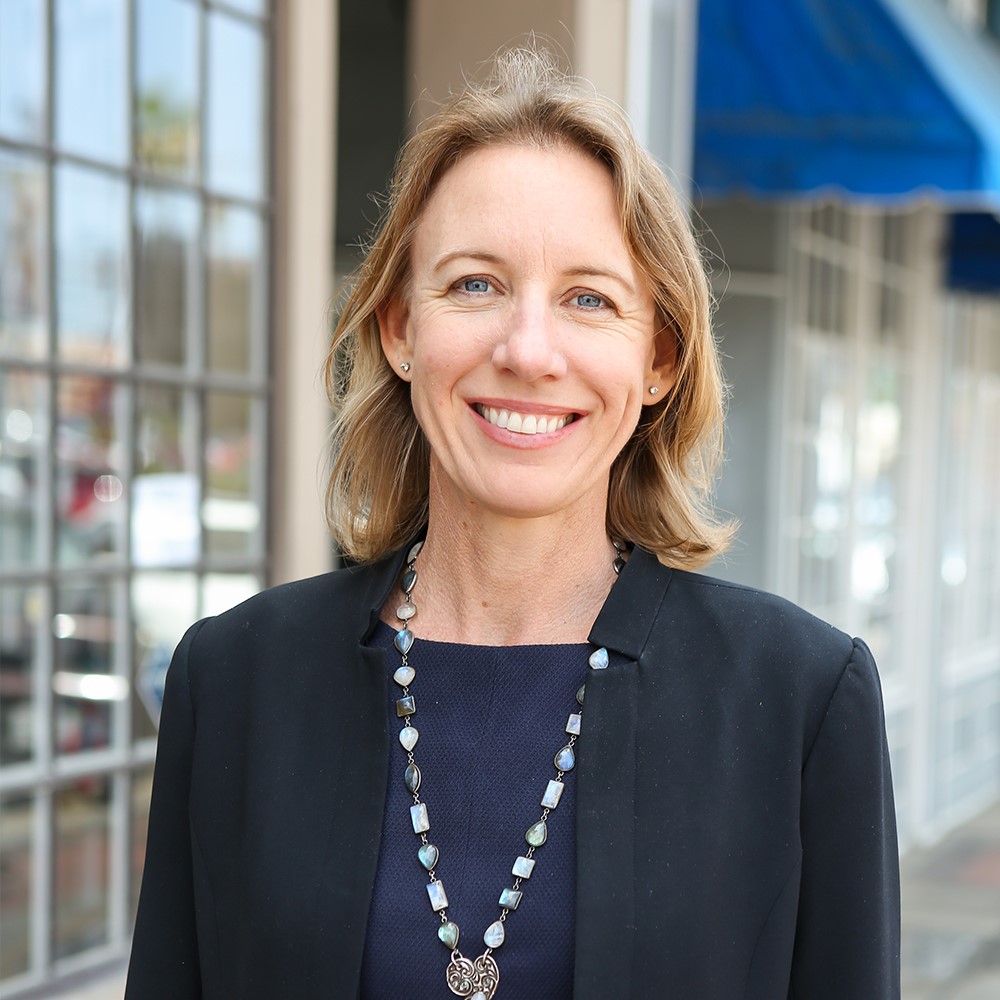
Photo of Catherine Blakespear
D California Senate · District 38 On the 2026 ballot

Sen. Catherine Blakespear

Compare
Total votes
8,860
all sessions
Attendance
96%
295 missed
Near the chamber average
With party
99%
of cast votes
Near the chamber average
Bipartisan score
0%
crosses aisle rarely
Near the chamber average
Sponsored
334
bills & resolutions
Near the chamber average
Committees
7
assignments
334 bills and resolutions

Sponsored bills

Total
334
Primary
88
Co-sponsor
246
This page
334
matching current filters
Co-sponsor SCR 133
Signed into law · California Senate · Co-sponsor
Relative to American Muslim Appreciation and Awareness Month.

Maddy summaryThis bill, Senate Concurrent Resolution 133, officially designates April 2024 as American Muslim Appreciation and Awareness Month in California. The resolution aims to highlight the contributions of the state's Muslim community, which includes over one million residents, and to foster greater understanding among students and the public. By moving the observance from August to April, the measure ensures the event aligns with the K-12 school year to facilitate educational engagement. The text also acknowledges the historical and contemporary challenges faced by Muslims in California, including hate crimes and past government surveillance, while celebrating their diverse roles in society.

Signed into law May 31, 2024 1 co-sponsor
Primary SR 87
Passed · California Senate · Lead sponsor
Relative to Tardive Dyskinesia Awareness Week.

Maddy summaryThis Senate Resolution designates the week of May 6, 2024, as Tardive Dyskinesia Awareness Week in California to highlight a movement disorder caused by long-term use of certain medications. The bill aims to educate residents about the condition, which affects the face, torso, and limbs, and emphasizes the importance of regular medical screening for patients taking dopamine receptor blocking agents. By raising public awareness, the resolution encourages individuals experiencing abnormal movements to consult their healthcare providers for proper diagnosis and treatment options.

Passed May 30, 2024 0 co-sponsors
Co-sponsor SR 92
Passed · California Senate · Co-sponsor
Relative to Lupus and Fibromyalgia Awareness Month.

Maddy summarySenate Resolution 92 officially designates May 2024 as Lupus and Fibromyalgia Awareness Month in California. This legislative measure aims to increase public understanding of these conditions by highlighting their symptoms, diagnostic challenges, and prevalence among specific demographics. The resolution does not alter laws or funding but serves to encourage education and research into these chronic health issues.

Passed May 30, 2024 1 co-sponsor
Co-sponsor SR 94
Passed · California Senate · Co-sponsor
Relative to animals.

Maddy summarySenate Resolution 94 officially designates June 1, 2024, as California Adopt-a-Pet Day to encourage pet adoptions across the state. This proclamation aims to help shelters find homes for 2,024 animals during a special event organized by animal welfare groups. The resolution does not change any laws or policies but serves as a formal declaration to support a one-day campaign. It is intended to raise awareness and facilitate adoptions without altering existing regulations or funding.

Passed May 28, 2024 1 co-sponsor
Co-sponsor SB 233
Signed into law · California Senate · Co-sponsor
Practice of medicine: Arizona physicians: abortions and abortion-related care for Arizona patients.

Existing law, the Medical Practice Act, establishes the Medical Board of California and the Osteopathic Medical Board of California to license and regulate the practice of medicine, and establishes examination, training, and other requirements for licensure as a physician and surgeon. A violation of the act is a misdemeanor. This bill, through November 30, 2024, would authorize a physician licensed to practice medicine in Arizona who meets certain requirements to practice medicine in California for the purpose of providing abortions and abortion-related care to patients who are Arizona residents traveling from Arizona, upon application for registration with the Medical Board of California or the Osteopathic Medical Board of California, as applicable. The bill would prohibit the physician from providing care or consultation for other purposes or to other patients, except under specified circumstances. The bill would require an Arizona physician, before practicing in California, to submit specified information to the Medical Board of California or the Osteopathic Medical Board of California, as applicable, including, among other information, written verification from the Arizona Medical Board or the Arizona Board of Osteopathic Examiners in Medicine and Surgery, or documentation printed from an online licensing system, that the physician's Arizona license to practice medicine is in good standing and confers on the physician the authority to practice abortions and abortion-related care. The bill would require the applicant to provide an affidavit attesting that, among other things, the applicant meets all of the requirements for registration, as specified, and would make it a misdemeanor for a person to provide false information. The bill would limit the information the California boards are required to disclose about a registrant. The bill would deem a physician registered pursuant to the bill's provisions a licensee of the applicable board, would authorize the applicable board to take enforcement against a person registered pursuant to the bill's provisions, and would prohibit the applicable boards from collecting any fees for registration. By creating a new crime, the bill would impose a state-mandated local program. The bill would repeal the bill's provisions on January 1, 2025. The California Constitution requires the state to reimburse local agencies and school districts for certain costs mandated by the state. Statutory provisions establish procedures for making that reimbursement. This bill would provide that no reimbursement is required by this act for a specified reason. This bill would declare that it is to take effect immediately as an urgency statute. Existing constitutional provisions require that a statute that limits the right of access to the meetings of public bodies or the writings of public officials and agencies be adopted with findings demonstrating the interest protected by the limitation and the need for protecting that interest. This bill would make legislative findings to that effect.

Signed into law May 23, 2024 1 co-sponsor
Primary SB 1236
In committee · California Senate · Lead sponsor
Medicare supplement coverage: open enrollment periods.

Existing federal law provides for the Medicare Program, which is a public health insurance program for persons 65 years of age and older and specified persons with disabilities who are under 65 years of age. Existing federal law specifies different parts of Medicare that cover specific services, such as Medicare Part B, which generally covers medically necessary services and supplies and preventive services. Existing law, the Knox-Keene Health Care Service Plan Act of 1975, provides for the licensure and regulation of health care service plans by the Department of Managed Health Care, and makes a willful violation of the act a crime. Existing law provides for the regulation of health insurers by the Department of Insurance. Existing federal law additionally provides for the issuance of Medicare supplement policies or certificates, also known as Medigap coverage, which are advertised, marketed, or designed primarily as a supplement to reimbursements under the Medicare Program for the hospital, medical, or surgical expenses of persons eligible for the Medicare Program, including coverage of Medicare deductible, copayment, or coinsurance amounts, as specified. Existing law, among other provisions, requires supplement benefit plans to be uniform in structure, language, designation, and format with the standard benefit plans, as prescribed. Existing law prohibits an issuer from denying or conditioning the offering or effectiveness of any Medicare supplement contract, policy, or certificate available for sale in this state, or discriminating in the pricing of a contract, policy, or certificate because of the health status, claims experience, receipt of health care, or medical condition of an applicant in the case of an application that is submitted prior to or during the 6-month period beginning with the first day of the first month in which an individual is both 65 years of age or older and is enrolled for benefits under Medicare Part B. Existing law requires an issuer to make available specified Medicare supplement benefit plans to a qualifying applicant under those circumstances who is 64 years of age or younger who does not have end stage renal disease. This bill would delete the exclusion of otherwise qualified applicants who have end stage renal disease, thereby making the specified Medicare supplement benefit plans available to those individuals. The bill, on and after January 1, 2025, would prohibit an issuer of Medicare supplement coverage in this state from denying or conditioning the issuance or effectiveness of any Medicare supplement coverage available for sale in the state, or discriminate in the pricing of that coverage because of the health status, claims experience, receipt of health care, medical condition, or age of an applicant, if an application for coverage is submitted during an open enrollment period, as specified in the bill. The bill would entitle an individual enrolled in Medicare Part B to a 90-day annual open enrollment period beginning on January 1 of each year, as specified, during which period the bill would require applications to be accepted for any Medicare supplement coverage available from an issuer, as specified. The bill would require the open enrollment period to be a guaranteed issue period. Because a violation of the bill's requirements by a health care service plan would be a crime, the bill would impose a state-mandated local program. The California Constitution requires the state to reimburse local agencies and school districts for certain costs mandated by the state. Statutory provisions establish procedures for making that reimbursement. This bill would provide that no reimbursement is required by this act for a specified reason.


In committee May 16, 2024 0 co-sponsors
Primary SB 1302
In committee · California Senate · Lead sponsor
The California Beverage Container Recycling and Litter Reduction Act: recycling machines: pilot projects.

The California Beverage Container Recycling and Litter Reduction Act requires a beverage distributor to pay to the Department of Resources Recycling and Recovery a redemption payment for each beverage container, as defined, sold or offered for sale in the state. The act requires the department to deposit the redemption payment into the California Beverage Container Recycling Fund. Moneys in the fund are continuously appropriated for specified purposes, including to pay refund values, processing payments, administrative fees, and handling fees to certain types of recyclers to provide incentives for the redemption of empty beverage containers in the state. A violation of the act is a crime. This bill would, until January 1, 2034, authorize up to 3 recycling machine pilot projects, as specified. The bill would define "recycling machine" as a mechanical device that accepts empty machine acceptable beverage containers for redemption, as provided. The bill would authorize the department to select a jurisdiction for a pilot project based on certain criteria, and would specify the requirements for the operation of a pilot project. The bill would authorize the department to issue probationary certificates of operation to operators of recycling machine pilot projects, as specified. The bill would make an operator of a recycling machine pilot project operator eligible for processing payments and handling fees. By authorizing these additional expenditures from a continuously appropriated fund, the bill would make an appropriation. By creating new requirements under the act, a violation of which would be a crime, this bill would impose a state-mandated local program. The California Constitution requires the state to reimburse local agencies and school districts for certain costs mandated by the state. Statutory provisions establish procedures for making that reimbursement. This bill would provide that no reimbursement is required by this act for a specified reason.
In committee May 16, 2024 0 co-sponsors
Primary SB 1038
In committee · California Senate · Lead sponsor
Firearms.

(1) Existing law, as enacted by the Safety for All Act of 2016, an initiative statute approved by voters as Proposition 63 at the November 8, 2016, statewide general election, requires a person to report the loss or theft of a firearm that the person owns or possesses to a local law enforcement agency in the jurisdiction in which the theft or loss occurred within 5 days of the time that the owner or possessor knew or should have known that the firearm had been stolen or lost, as specified. Proposition 63 allows its provisions to be amended by a vote of 55% of the Legislature so long as the amendments are consistent with, and further the intent of, the act. This bill would amend Proposition 63 by requiring a person to report the loss or theft within 48 hours of the time that the owner or possessor knew or should have known that the firearm had been stolen or lost. (2) Existing law directs law enforcement agencies to submit the description of a firearm that has been reported stolen, lost, found, recovered, or under observation directly to an automated Department of Justice system. Existing law requires these law enforcement agencies to report to the Department of Justice any information in their possession necessary to identify and trace the history of a recovered firearm that is illegally possessed, has been used in a crime, or is suspected of having been used in a crime. Existing law requires the department to analyze this data and to submit an annual report to the Legislature summarizing this analysis, as specified. This bill would require the department to inspect the 25 firearm dealer locations in the annual report that are the source or origin of the highest gross number of firearms that were illegally possessed, used in a crime, or suspected to have been used in a crime, as specified. (3) Existing law generally regulates the sale and transfer of firearms, including, among other requirements, that every dealer keep a record of electronic or telephonic transfers of firearms. This bill would require a firearm dealer to annually certify their inventory to the Department of Justice, as specified. Upon request by a local law enforcement agency, the bill would require the Department of Justice to send a copy of the annual certifications to the agency. The bill would authorize the Attorney General, a city attorney, or county counsel to impose a civil penalty on a person who violates this provision in the amount of $3,000 per day for the first violation, $5,000 per day for a 2nd violation, and $10,000 per day for a 3rd and subsequent violation, as specified. (4) Existing law requires, with certain exceptions, a firearm dealer to report an acquisition of a firearm to the Department of Justice, as specified. This bill would, commencing January 1, 2027, remove specified exceptions to those provisions.

In committee May 16, 2024 0 co-sponsors
Co-sponsor SB 1056
In committee · California Senate · Co-sponsor
Elementary education: kindergarten.

Under existing law, a person between 6 and 18 years of age who is not exempted by law is subject to compulsory full-time education. Existing law excludes a child under 6 years of age from the public schools, subject to specified exceptions. Existing law requires a school district maintaining a kindergarten to admit a child who will have their 5th birthday on or before September 1 of the school year. Existing law also requires a child who will have their 6th birthday on or before September 1 of the school year to be admitted to the first grade of an elementary school. Existing law authorizes a child who has been lawfully admitted to a public school kindergarten or a private school kindergarten in California and who is judged by the administration of the school district to be ready for first-grade work to be admitted to the first grade, as specified. This bill, beginning with the 2026–27 school year, would require a child to have completed one year of kindergarten before that child may be admitted to the first grade at a public elementary school, except for a child who has been lawfully admitted to a public school kindergarten or a private school kindergarten in California, but has not yet completed one school year, and is judged to be ready for first-grade work, as specified, thereby imposing a state-mandated local program. The California Constitution requires the state to reimburse local agencies and school districts for certain costs mandated by the state. Statutory provisions establish procedures for making that reimbursement. This bill would provide that, if the Commission on State Mandates determines that the bill contains costs mandated by the state, reimbursement for those costs shall be made pursuant to the statutory provisions noted above.

In committee May 16, 2024 1 co-sponsor
Co-sponsor AB 3136
In committee · California House · Co-sponsor
Attorney General: Bureau of Environmental Justice.

Existing law establishes various programs for the enforcement of environmental protection. Existing law defines environmental justice, for certain purposes, as the fair treatment of people of all races, cultures, and incomes with respect to the development, adoption, implementation, and enforcement of environmental laws, regulations, and policies. Existing law makes legislative findings and declarations that it is in the public interest to provide the people of the state through the Attorney General with adequate remedy to protect the natural resources of the state from pollution, impairment, or destruction. Existing law authorizes the Attorney General to intervene in any judicial or administrative proceeding in which facts are alleged concerning pollution or adverse environmental effects that could affect the public generally. This bill would continue in existence, within the Department of Justice, the Bureau of Environmental Justice for the purpose of protecting people and communities that endure a disproportionate share of environmental pollution and public health hazards. The bill would require the bureau to ensure fair treatment of people of all races, cultures, and incomes with respect to the development, adoption, implementation, and enforcement of environmental laws, regulations, and policies, pursuant to the existing authority of the Attorney General, as specified. The bill would require the Attorney General to ensure the bureau is staffed with a minimum of 12 attorneys and an appropriate number of support staff.

In committee May 16, 2024 1 co-sponsor
Showing 231 to 240 of 334 bills
Previous 1 23 24 25 34 Next