

Under existing law, the Public Utilities Commission has the exclusive power to, among other things, determine and prescribe the manner and the terms of installation, operation, maintenance, use, and protection of specified railroad crossings and to authorize on an application-by-application basis and supervise the operation of pilot projects to evaluate proposed crossing warning devices, new technology, or other additional safety measures at designated crossings, with the consent of the local jurisdiction, the affected railroad, and other interested parties, including, but not limited to, represented railroad employees. This bill would require the commission, if a city or county develops and adopts, by resolution upon a majority vote of the city council or the board of supervisors, a plan to improve mobility for multimodal access that calls for new or modified railroad crossings, to make an engineer available from the Rail Crossings and Engineering Branch to assist and advise that city or county on the safety of the planned railroad crossings before the filing of an application to the commission for the approval of the new or modified railroad crossings.
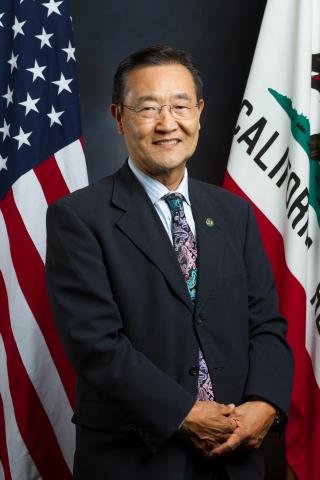
Sponsored bills
This measure would declare August 2019 as Valley Fever Awareness Month.
This measure would call for groups and organizations across the United States who act under the banner of Antifa to be designated as domestic terrorist organizations, would unequivocally condemn the violent actions of Antifa groups as unacceptable acts for anyone in the United States, would express the need for peaceful communication of varied ideas, and would urge any group or organization in the United States to voice its opinions without using violence or threatening the health, safety, or well-being of other persons, groups, or law enforcement officers in the United States. The measure would further call upon the President of the United States, the United States Congress, and the Governor to redouble efforts, using all available and appropriate tools, to combat the spread of all forms of domestic terrorism, including White supremacist terrorism.
This measure would endorse activities in public schools that instruct pupils in upholding and sustaining American democracy, encourage, in the strongest terms, California schools to pursue certain recognized designations that reflect specified ethos and values, and encourage publicly elected officials to conduct themselves in ways that strengthen civic engagement and participation in civil society.
(1) Existing law permits a pawnbroker to charge a loan setup fee of the greater of $5 or 3% of the loan amount, not to exceed $30. This bill would adjust the permitted loan setup fee to the greater of either $7.50 or 3.5% of the loan amount, not to exceed $90. (2) Existing law permits a pawnbroker to collect a handling and storage charge for pawned articles at the time property is redeemed or a replacement loan is issued. Existing law establishes the maximum amount that may be charged based on the size of pawned articles, as specified. This bill would increase the permitted handling and storage charges depending on the size of the pawned articles, as specified. (3) Existing law permits a pawnbroker to impose a processing charge in the amount of $4 for each pawned firearm. This bill would increase the processing charge to $20 for each pawned firearm. (4) Existing law permits a pawnbroker to charge a fee in the amount of up to $3 for preparing a 10-day notice when a pledged item is not redeemed during the loan period. This bill would increase that maximum noticing fee to up to $5. (5) Existing law requires pawnbrokers to provide written notice to a pledgor when a pledged item is not redeemed during the loan period and extends the pledgor's right of redemption 10 days from the date of the notice. Under existing law, the pawnbroker becomes vested with all right, title, and interest to the pledged article upon the expiration of the 10-day notice period. This bill would make nonsubstantive changes to those provisions.
Existing law establishes the Department of Veterans Affairs within state government and sets forth its powers and duties, including, but not limited to, the administration of various programs providing benefits to veterans. This bill would require the department to establish an education assistance program to provide housing and tuition assistance to disabled veterans attending graduate school in the State of California if their eligibility for federal education assistance has expired. The bill would, upon appropriation by the Legislature, require the department to provide tuition assistance and a housing allowance to disabled veterans while they attend specified graduate schools in the State of California, as specified. The bill would additionally require the department, upon appropriation by the Legislature, to provide a housing allowance to a disabled veteran in a graduate internship or fellowship program that earns credits toward a graduate degree.
(1) Existing law establishes a low-income housing tax credit program pursuant to which the California Tax Credit Allocation Committee (CTCAC) provides procedures and requirements for the allocation, in modified conformity with federal law, of state insurance, personal income, and corporation tax credit amounts to qualified low-income housing projects that have been allocated, or qualify for, a federal low-income housing tax credit, and farmworker housing. Existing law limits the total annual amount of the state low-income housing credit for which a federal low-income housing credit is required to the sum of $70,000,000, as increased by any percentage increase in the Consumer Price Index for the preceding calendar year, any unused credit for the preceding calendar years, and the amount of housing credit ceiling returned in the calendar year, and authorizes CTCAC, for calendar years beginning in 2020, to allocate an additional $500,000,000 to specified low-income housing projects and, for calendar years beginning in 2021, requires this additional amount only to be available for allocation pursuant to an authorization in the annual Budget Act or related legislation, and specified regulatory action by CTCAC. This bill would remove the requirement that, beginning in the 2021 calendar year, the above-described additional $500,000,000 allocation only be available pursuant to an authorization in the annual Budget Act or related legislation, and specified regulatory action by CTCAC. (2) This bill would take effect immediately as a tax levy.
The California Building Standards Law provides for the adoption of building standards by state agencies by requiring all state agencies that adopt or propose adoption of any building standard to submit the building standard to the California Building Standards Commission for approval and adoption. This bill would require the Department of Housing and Community Development, with the assistance of the Office of the State Fire Marshal, to investigate possible changes to the building standards that would require provision of a 2nd method of egress from a newly constructed residential garage or a newly constructed detached garage located adjacent to a single-family dwelling. The bill would authorize the department to submit proposed building standards to the commission for approval and adoption if, after its investigation, the department determines that changes that mandate provision of a 2nd method of egress from a newly constructed residential garage or a newly constructed detached garage located adjacent to a single-family dwelling can be incorporated into the code without significantly increasing construction costs.
The Personal Income Tax Law authorizes various credits against the taxes imposed by that law, including a credit for qualified renters in the amount of $120 for spouses filing joint returns, heads of household, and surviving spouses if adjusted gross income is $50,000, as adjusted, or less, and in the amount of $60 for other individuals if adjusted gross income is $25,000, as adjusted, or less. Existing law requires the Franchise Tax Board to annually adjust for inflation these adjusted gross income amounts. For 2018, the adjusted gross income limit is $83,282 and $41,641, respectively. Existing law requires any bill authorizing a new tax credit to contain, among other things, specific goals, purposes, and objectives that the tax credit will achieve, detailed performance indicators, and data collection requirements. Existing law establishes the continuously appropriated Tax Relief and Refund Account in the General Fund and provides that payments required to be made to taxpayers or other persons from the Personal Income Tax Fund are to be paid from that account, including any amount allowable as an earned income tax credit in excess of any tax liabilities. This bill, for taxable years beginning on or after January 1, 2020, and before January 1, 2025, and only when specified in a bill relating to the Budget Act, would increase the credit amount for a qualified renter to $220 and $434, as provided. In the event the increased credit amount is not specified in a bill relating to the Budget Act, the existing credit amounts of $120 and $60, as described above, respectively, would be the credit amounts for that taxable year. The bill would require the Franchise Tax Board to annually recompute for inflation the credit amount for taxable years on or after January 1, 2021, and before January 1, 2025, unless otherwise provided. The bill would provide findings and declarations relating to the goals, purposes, and objectives of this credit. The bill, for credits allowable for taxable years beginning on or after January 1, 2020, and before January 1, 2025, would provide that the credit amount in excess of the qualified renter's liability would be refundable and paid from the Tax Relief and Refund Account to the qualified renter upon appropriation by the Legislature. This bill would take effect immediately as a tax levy.