

Passed Feb 8, 2021
1 co-sponsor
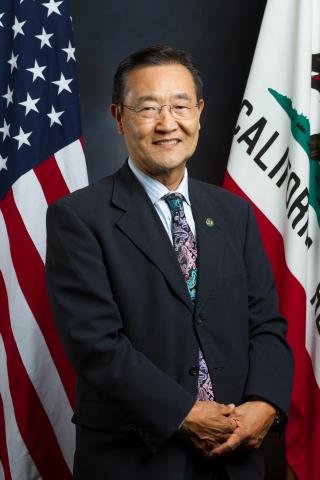
Total votes
16,057
all sessions
Attendance
84%
2,232 missed
Lower than 85% of chamber peers
With party
98%
of cast votes
Lower than 80% of chamber peers
Bipartisan score
1%
crosses aisle rarely
Higher than 95% of chamber peers
Sponsored
1,211
bills & resolutions
Near the chamber average
Committees
5
assignments
1,211 bills and resolutions
Sponsored bills
Total
1,211
Primary
190
Co-sponsor
1,021
This page
1,211
matching current filters
Passed Feb 4, 2021
1 co-sponsor
Passed Feb 4, 2021
1 co-sponsor
Passed Feb 4, 2021
1 co-sponsor
Passed Feb 1, 2021
1 co-sponsor
Passed Jan 15, 2021
1 co-sponsor
Price gouging.
Under existing law, upon the proclamation of a state of emergency, as defined, by the President of the United States or the Governor, or upon the declaration of a local emergency, as defined, by the executive officer of any county, city, or city and county, and for 30 days following the proclamation or declaration of emergency, it is a misdemeanor for a person, contractor, business, or other entity to sell or offer to sell certain goods or services for a price 10% greater than the price charged by that person immediately prior to the proclamation or declaration of emergency. Existing law makes a greater price increase lawful under these provisions if the person can prove that the increase in price was directly attributable to additional costs imposed on it by the supplier of the goods, or directly attributable to additional costs for the labor or materials used to provide the services, during the state of emergency or local emergency, and the price is no more than 10% greater than the total of the cost to the seller plus the markup customarily applied by the seller. Existing law authorizes the local legislative body, local official, Governor, or Legislature, to extend the duration of this prohibition for additional 30 day periods, if deemed necessary to protect the lives, property, or welfare of the citizens. This bill would expand that crime to also include selling or offering to sell those goods or services for a price 10% greater than the price charged immediately prior to a date set by the proclamation or declaration of emergency. The bill would also make it a crime for a person, contractor, business, or other entity who did not charge a price for the goods or services immediately prior to the proclamation or declaration of emergency to charge a price that is more than 50% greater than the seller's existing costs, as specified. The bill would authorize the Governor or the Legislature to extend the duration of these prohibitions for periods greater than 30 days, and during the extension, authorize specified price increases that exceed the otherwise permissible amount, as specified. This bill would make those crimes punishable as a misdemeanor. By expanding the scope of a crime, this bill would create a state-mandated local program. The California Constitution requires the state to reimburse local agencies and school districts for certain costs mandated by the state. Statutory provisions establish procedures for making that reimbursement. This bill would provide that no reimbursement is required by this act for a specified reason.
Signed into law Sep 30, 2020
1 co-sponsor
Private postsecondary education: California Private Postsecondary Education Act of 2009.
Existing law, the California Private Postsecondary Education Act of 2009, provides, among other things, for student protections and regulatory oversight of private postsecondary institutions in the state. The act is enforced by the Bureau for Private Postsecondary Education within the Department of Consumer Affairs. The act exempts an institution from its application if any of a list of specific criteria are met. Existing law requires an out-of-state private postsecondary educational institution to comply with specified requirements, including providing the bureau evidence of the institution's accreditation. Existing law repeals the act on January 1, 2021. If the operation of the act is extended by another measure, existing law, effective July 1, 2022, requires additional duties by an out-of-state private postsecondary educational institution. This bill would define nonprofit corporation and public institution of higher education specially for purposes of the act. The bill would specify that only an institution of higher education meeting the act's definition of nonprofit corporation or public institution of higher education is exempt from the requirements imposed on an out-of-state private postsecondary educational institution. The bill, commencing January 1, 2022, would prohibit the bureau from verifying the exemption of, or contracting to handle complaints for, a nonprofit institution that operated as a for-profit institution during any period on or after January 1, 2010, unless the Attorney General verifies specified information, and would require the Attorney General to provide written notification to the institution and the bureau of its verification within 90 days of receipt of all information the Attorney General determines is necessary for the verification. The bill, commencing January 1, 2022, would authorize appeal of actions taken by the bureau and the Attorney General to the superior court. The provisions of this bill would be implemented only if the operation of the act is extended by another measure. Under existing law, the act specifies conduct by regulated institutions that, if undertaken, is a crime. Because this bill would extend the application of those criminal provisions, it would impose a state-mandated local program. The California Constitution requires the state to reimburse local agencies and school districts for certain costs mandated by the state. Statutory provisions establish procedures for making that reimbursement. This bill would provide that no reimbursement is required by this act for a specified reason.
Signed into law Sep 25, 2020
1 co-sponsor
Relative to the Deputy Sheriff Brian "Ish" Ishmael Memorial Highway.
This measure would designate a specified portion of State Route 50 in the County of El Dorado as the Deputy Sheriff Brian "Ish" Ishmael Memorial Highway. The measure would request that the Department of Transportation determine the cost of appropriate signs showing this special designation and, upon receiving donations from nonstate sources covering that cost, erect those signs.
Signed into law Sep 11, 2020
1 co-sponsor
Sales and use taxes: consumer designation: all volunteer fire department.
Existing sales and use tax laws, among other things, impose a tax on retailers measured by the gross receipts from their sales of tangible personal property sold at retail in this state. The Sales and Use Tax Law designates that certain sellers of tangible personal property are consumers, and not retailers, of the tangible personal property they sell, including, until January 1, 2021, that an all volunteer fire department, as defined, is a consumer, and not a retailer, of all tangible personal property sold by it, if the profits are used solely and exclusively in furtherance of the purposes of the all volunteer fire department, subject to specified limitations, so that the retail sale subject to tax is the sale of tangible personal property to the all volunteer fire department. This bill would extend the operation of that consumer designation for all volunteer fire departments until January 1, 2026. Existing law requires any bill authorizing a new tax expenditure to contain, among other things, specific goals, purposes, and objectives that the tax expenditure will achieve, detailed performance indicators, and data collection requirements. The bill also would include additional information required for any bill authorizing a new tax expenditure. The Bradley-Burns Uniform Local Sales and Use Tax Law authorizes counties and cities to impose local sales and use taxes in conformity with the Sales and Use Tax Law, and existing laws authorize districts, as specified, to impose transactions and use taxes in accordance with the Transactions and Use Tax Law, which generally conforms to the Sales and Use Tax Law. Amendments to the Sales and Use Tax Law are automatically incorporated into the local tax laws. Existing law requires the state to reimburse counties and cities for revenue losses caused by the enactment of sales and use tax exemptions. This bill would provide that, notwithstanding Section 2230 of the Revenue and Taxation Code, no appropriation is made and the state shall not reimburse any local agencies for sales and use tax revenues lost by them pursuant to this bill. This bill would take effect immediately as a tax levy.
Signed into law Sep 11, 2020
1 co-sponsor
Ask Maddy
·
AI policy assistant
Ask Maddy about Steve Choi
Scope: CA
Hi! I can help you understand Steve Choi's legislative record. What would you like to know?
Try one of these
i
Maddy answers using official bill text and legislative records. Always verify before sharing.
Sources cited inline