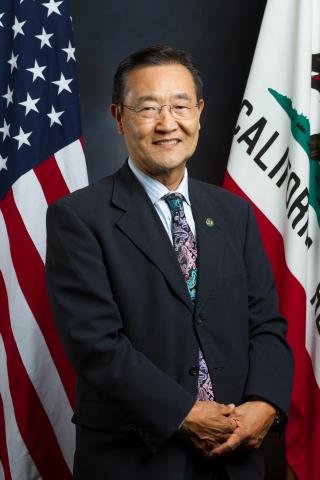
Photo of Steve Choi
R California Senate · District 37

Sen. Steve Choi

Compare
Total votes
16,057
all sessions
Attendance
84%
2,232 missed
Near the chamber average
With party
98%
of cast votes
Near the chamber average
Bipartisan score
1%
crosses aisle rarely
Near the chamber average
Sponsored
1,211
bills & resolutions
Near the chamber average
Committees
5
assignments
1,211 bills and resolutions

Sponsored bills

Total
1,211
Primary
190
Co-sponsor
1,021
This page
1,211
matching current filters
Primary SCR 6
Signed into law · California Senate · Lead sponsor
Relative to Korean American Day.

Maddy summarySenate Concurrent Resolution 6 proclaims January 13, 2025, as Korean American Day in California. The resolution recognizes the historical significance of the first Korean immigrants arriving in the U.S. on January 13, 1903, and honors Korean Americans' contributions to California's cultural, economic, and social landscape. It does not create new laws or policies but serves as a symbolic declaration by the state legislature. The resolution specifically highlights Korean American communities in Los Angeles and Orange County, which have the largest concentrations of Korean Americans in the U.S.

Signed into law Feb 13, 2025 0 co-sponsors
Co-sponsor SCR 10
Signed into law · California Senate · Co-sponsor
Relative to National Human Trafficking Awareness Month.

Maddy summarySCR 10 is a California state resolution recognizing January 2025 as National Human Trafficking Awareness Month. It does not create new laws or policies but serves as a symbolic gesture to raise public awareness about human trafficking - a crime involving exploitation through force, fraud, or coercion. The resolution highlights the severity of trafficking through statistics on global and California victim numbers but does not directly affect any specific groups or alter legal frameworks. This non-binding measure aligns with broader efforts to combat trafficking through education and community engagement.

Signed into law Feb 13, 2025 1 co-sponsor
Co-sponsor SR 7
Passed · California Senate · Co-sponsor
Relative to school governance.

Maddy summaryThis resolution designates January 2025 as "School Board Recognition Month" in California to honor school board members and county education officials. It formally declares the state's appreciation for their work in guiding public schools and meeting students' academic and health needs. The resolution urges community members to recognize these locally elected officials and collaborate with them to support California's education system. As a non-binding resolution, it does not create new laws or policies.

Passed Jan 30, 2025 1 co-sponsor
Co-sponsor AB 1603
Failed · California Assembly · Co-sponsor
Theft: shoplifting: amount.

Existing law, the Safe Neighborhoods and Schools Act, enacted as an initiative statute by Proposition 47, as approved by the electors at the November 4, 2014, statewide general election, makes the theft of money, labor, or property petty theft punishable as a misdemeanor, whenever the value of the property taken does not exceed $950. Under existing law, if the value of the property taken exceeds $950, the theft is grand theft, punishable as a misdemeanor or a felony. Proposition 47 requires shoplifting, defined as entering a commercial establishment with the intent to commit larceny if the value of the property taken does not exceed $950, to be punished as a misdemeanor. Under existing law, entering a commercial establishment with the intent to take property exceeding $950 is burglary, punishable as a misdemeanor or a felony. This bill would amend Proposition 47 by reducing the threshold amount for petty theft and shoplifting from $950 to $400. The bill would provide that it shall become effective only when submitted to, and approved by, the voters of California.

Failed Oct 24, 2022 1 co-sponsor
Co-sponsor AB 2333
Failed · California Assembly · Co-sponsor
Hate crimes: peace officers.

Existing law defines "hate crime" as a criminal act committed, in whole or in part, because of actual or perceived characteristics of the victim, including, among other things, race, religion, disability, and sexual orientation. Under existing law, that definition applies unless an explicit provision of law or the context clearly requires a different meaning. Existing law provides punishments for hate crimes that range from misdemeanors with specified penalties to felonies with additional terms of one to 3 years in state prison, depending on the underlying criminal act and other circumstances. Existing law requires, with conditions, the Attorney General to direct local law enforcement agencies to report specified information relative to hate crimes to the Department of Justice. Local law enforcement entities are required by existing law to provide a brochure on hate crimes to victims of these crimes and to the public, and the Department of Fair Employment and Housing is required by existing law to revise those brochures as needed and to provide those brochures to local law enforcement agencies upon request. This bill would add status as a peace officer to the list of actual or perceived characteristics necessary to determine whether a criminal act qualifies as a hate crime. By expanding the scope of an existing crime and by expanding the information that law enforcement agencies report to the Department of Justice and disseminate to crime victims and the public, this bill would impose a state-mandated local program. The California Constitution requires the state to reimburse local agencies and school districts for certain costs mandated by the state. Statutory provisions establish procedures for making that reimbursement. This bill would provide that with regard to certain mandates no reimbursement is required by this act for a specified reason. With regard to any other mandates, this bill would provide that, if the Commission on State Mandates determines that the bill contains costs so mandated by the state, reimbursement for those costs shall be made pursuant to the statutory provisions noted above.

Failed Oct 24, 2022 1 co-sponsor
Primary AB 1596
Failed · California Assembly · Lead sponsor
Unemployment: federal unemployment account: advances repayment.

Existing law authorizes the Director of Employment Development to apply for an advance to the Unemployment Fund and accept the responsibility for the repayment of the advance in accordance with the conditions specified in Title XII of the Social Security Act, as amended, to secure the advantages available under the provisions of that title. Existing law authorizes the federal government to make advances to the states from the federal unemployment account in the federal Unemployment Trust Fund and requires repayment of those advances, with interest, as specified. Existing law authorizes the governor of any state to request that funds be transferred from a state account to the federal unemployment account in repayment of part or all of the balance of advances, as specified. This bill would appropriate $19,300,000,000 from the General Fund to the Employment Development Department for the purpose of repaying all advances from the federal unemployment account, as specified.

Failed Oct 24, 2022 0 co-sponsors
Primary AB 2027
Failed · California Assembly · Lead sponsor
Criminal sentencing: dismissal of enhancements.

Existing law prescribes certain criminal sentencing enhancements that increase the term of imprisonment for specified criminal offenses committed under circumstances including those committed using a firearm, those committed for the benefit of a criminal street gang, those committed by a repeat offender, and those determined to be hate crimes. Existing law requires a sentencing court to dismiss an enhancement if, after considering specified mitigating circumstances, the court determines that it is in the furtherance of justice to do so. This bill would exempt from this requirement an enhancement imposed for an offense determined to be a hate crime.

Failed Oct 24, 2022 0 co-sponsors
Co-sponsor AB 1599
Failed · California Assembly · Co-sponsor
Proposition 47: repeal.

The Safe Neighborhoods and Schools Act, enacted as an initiative statute by Proposition 47, as approved by the electors at the November 4, 2014, statewide general election, made various changes relating to theft and the possession of controlled substances, including by, among other things, generally reducing the penalty for those crimes, including reducing the penalty for possession of concentrated cannabis, establishing a procedure by which individuals convicted of those crimes prior to the passage of the act may petition for resentencing under the act, and creating the crime of shoplifting. The act also requires the Director of Finance to calculate the savings accruing to the state as a result of the implementation of the act and requires the Controller to transfer that sum from the General Fund to the Safe Neighborhoods and Schools Fund, which was created by the act. The act specifies the manner of distribution of those funds and the purposes for which they may be used. This bill would repeal the changes and additions made by Proposition 47, except those related to reducing the penalty for possession of concentrated cannabis. Existing law makes it a crime for a caretaker of an elder or a dependent adult, or a person who is not a caretaker and who knows or reasonably should know that the victim is an elder or a dependent adult, to violate specified laws proscribing theft, embezzlement, forgery, fraud, or identity theft with respect to the property or personal identifying information of that elder or dependent adult. Existing law makes a violation of those provisions punishable as a misdemeanor or a felony when the moneys, labor, goods, services, or real or personal property taken or obtained is of a value exceeding $950. This bill would reduce the value threshold for a violation of those provisions to be punishable as a felony from $950 to $400. Existing law defines grand theft as the wrongful taking of money, labor, or property of a value exceeding $950, except as specified. Existing law also makes it grand theft where the money, labor, or real or personal property is taken by a servant, agent, or employee from their principal or employer and aggregates $950 or more in any consecutive 12-month period. This bill would reduce the value threshold for committing grand theft under those provisions from $950 to $400. This bill would provide that it would become effective only upon approval of the voters, and would provide for the submission of this measure to the voters for approval at the next statewide general election.


Failed Oct 24, 2022 1 co-sponsor
Co-sponsor AB 1810
Signed into law · California Assembly · Co-sponsor
Pupil health: seizure disorders.

Existing law requires the governing board of any school district to give diligent care to the health and physical development of pupils and authorizes the governing board of a school district to employ properly certified persons for the work. Existing law authorizes school districts, county offices of education, and charter schools to provide emergency naloxone hydrochloride or another opioid antagonist to school nurses or trained personnel who have volunteered, and authorizes school nurses or trained personnel to use naloxone hydrochloride or another opioid antagonist to provide emergency medical aid to persons suffering, or reasonably believed to be suffering, from an opioid overdose, as provided. Existing law authorizes any pupil who is required to take, during the regular schoolday, medication to be assisted by the school nurse or other designated school personnel, as provided. This bill would, if a pupil diagnosed with seizures, a seizure disorder, or epilepsy has been prescribed an emergency anti-seizure medication by the pupil's health care provider, authorize the pupil's local educational agency, upon receipt of a request from the pupil's parent or guardian, to designate one or more volunteers at the pupil's school to receive initial and annual refresher training regarding the emergency use of anti-seizure medication. The bill would require the Superintendent of Public Instruction to establish minimum standards of training for the administration of emergency anti-seizure medication, as provided. The bill would authorize a school nurse or, if the school does not have a school nurse or the school nurse is not onsite or available, a volunteer who has been designated and received training regarding the emergency use of anti-seizure medication, to administer emergency anti-seizure medication to a pupil diagnosed with seizures, a seizure disorder, or epilepsy if the pupil is suffering from a seizure. The bill would require any local educational agency or school upon receipt of a parent or guardian's request to distribute a related notice at least once per school year to all staff. Before administering emergency anti-seizure medication or therapy prescribed to treat seizures in a pupil diagnosed with seizures, a seizure disorder, or epilepsy, the bill would require a local educational agency to obtain from the pupil's parent or guardian a seizure action plan that includes specified information. By imposing new duties on school districts, county offices of education, and charter schools, the bill would impose a state-mandated local program. The California Constitution requires the state to reimburse local agencies and school districts for certain costs mandated by the state. Statutory provisions establish procedures for making that reimbursement. This bill would provide that, if the Commission on State Mandates determines that the bill contains costs mandated by the state, reimbursement for those costs shall be made pursuant to the statutory provisions noted above.

Signed into law Sep 30, 2022 1 co-sponsor
Co-sponsor AB 2949
Signed into law · California Assembly · Co-sponsor
Vehicles: toll exemptions.

Under existing law, a person who enters a vehicular crossing becomes liable for any tolls imposed. Existing law prescribes the means by which a toll may be collected or paid, including by the use of an electronic transponder or by means of capturing a license plate number and billing the registered owner. Existing law prohibits a person from evading, or attempting to evade, the payment of tolls on any vehicular crossing or toll highway. A violation of this prohibition is subject to civil penalties, but it is not a crime. This bill would exempt a vehicle that is registered to a veteran, displaying a specialized veteran license plate, as specified, and registered to a transponder or other electronic toll payment device from payment of a toll or related fines on a toll road, toll bridge, toll highway, vehicular crossing, or any other toll facility, except a high-occupancy toll lane. The bill would also make conforming changes. Because this bill would create a new duty by requiring locally owned and operated toll facilities to recognize and exempt eligible vehicles, this bill would impose a state-mandated local program. The California Constitution requires the state to reimburse local agencies and school districts for certain costs mandated by the state. Statutory provisions establish procedures for making that reimbursement. This bill would provide that, if the Commission on State Mandates determines that the bill contains costs mandated by the state, reimbursement for those costs shall be made pursuant to the statutory provisions noted above.

Signed into law Sep 30, 2022 1 co-sponsor
Showing 161 to 170 of 1,211 bills
Previous 1 … 16 17 18 … 122 Next