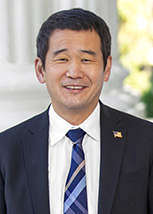
This measure would join Asian and Pacific Islander communities throughout the state, nation, and world in celebrating April 13, 2024, to April 15, 2024, as the Songkran New Year Festival.
Sponsored bills
Maddy summarySenate Resolution 81 formally recognizes May 2024 as Asian and Pacific Islander American Heritage Month in California. This legislative measure honors the historical contributions, diverse backgrounds, and ongoing achievements of Asian and Pacific Islander communities within the state. The resolution does not create new laws or alter government operations but serves as an official statement of appreciation and acknowledgment. It was adopted by the California Senate to align with the federal designation of May for this observance.
This measure would designate the interchange at State Highway Route 405 and State Route 39 in the County of Orange at Beach Boulevard as the "Surf City USA" interchange. The measure would request the Department of Transportation to determine the cost of appropriate signs showing this special designation and, upon receiving donations from nonstate sources covering that cost, to erect those signs.
Existing law vests the Public Utilities Commission with regulatory jurisdiction over public utilities, including electrical and gas corporations. Existing law authorizes the commission to fix the rates and charges for public utilities and requires those rates and charges to be just and reasonable. This bill would prohibit, except as provided, an electrical or gas corporation from recording various expenses associated with political influence activities, as defined, or with advertising, as defined, to accounts that contain expenses that the electrical or gas corporation recovers from ratepayers. The bill also would require an electrical or gas corporation, for each business unit of the corporation that performs work associated with political influence activities or advertising, to annually file with the commission a report containing specified information. The bill would require the commission to make the report publicly available. The bill would require the commission to assess a civil penalty against an electrical or gas corporation that violates the prohibition described above, or that fails or neglects to comply with any part or provision of any order, decision, decree, rule, direction, demand, or requirement of the commission related to implementing the prohibition, as provided. The bill would require 34 of the moneys collected pursuant to any settlement or penalties collected by the commission for a violation of the prohibition to be deposited into the Zero-Emission Equity Fund, which the bill would establish in the State Treasury. The bill would authorize the moneys in the Zero-Emission Equity Fund, upon appropriation by the Legislature, to be allocated for purposes of assisting low-income households in transitioning to zero-emission appliances to mitigate air quality and public health impacts of using combustion appliances. The bill would require the balance of the moneys collected, upon appropriation by the Legislature, to be used by the commission to increase resources for enforcing the bill's requirements. Under existing law, a violation of the Public Utilities Act or any order, decision, rule, direction, demand, or requirement of the commission is a crime. Because the above provisions would be part of the act and a violation of a commission action implementing this bill's requirements would be a crime, the bill would impose a state-mandated local program. The California Constitution requires the state to reimburse local agencies and school districts for certain costs mandated by the state. Statutory provisions establish procedures for making that reimbursement. This bill would provide that no reimbursement is required by this act for a specified reason.

Existing law prescribes the time after the commission of a crime in which a criminal action is required to be commenced, referred to as a statute of limitation. Existing law also prescribes situations in which a statute of limitation is tolled or extended, including tolling the time to prosecute until the discovery or reasonable discovery of an offense involving the construction or maintenance of a fire protection system in any structure with specified intent so as to threaten the safety of any occupant or user of the structure in the event of a fire. This bill would toll the statute of limitation for specified offenses, including the willful or negligent cutting, destroying, mutilating, or removing of plant material growing upon state or county highway rights-of-way or the unlawful importation, transportation, possession, or release into this state of specified wild animals, until the offenses have been discovered or could have reasonably been discovered.
Existing law provides that a person commits a sexual battery who, among other things, acts with the intent to cause a harmful or offensive contact with an intimate part, as defined, of another that directly or indirectly results in a sexually offensive contact with that person. The law makes a person who commits a sexual battery pursuant to those provisions liable for damages and equitable relief. Existing law establishes the defense of consent in civil actions. This bill would prohibit the defense that the adult congregant consented to sexual contact in a civil action involving sexual contact between a member of the clergy and an adult congregant. Existing law prohibits the touching of an intimate part, as defined, of another person if the touching is against the will of the person touched and is for the specific purpose of sexual arousal, sexual gratification, or sexual abuse. Existing law makes a physician and surgeon, psychotherapist, or alcohol and drug abuse counselor who engages in specified sexual acts or sexual contact with a patient or client guilty of sexual exploitation and makes a violation of those provisions a crime, except as specified. A violation of this prohibition is punishable as a misdemeanor or a felony. This bill would make a member of the clergy, as defined, who engages in specified sexual acts or contact with an adult congregant, as specified, guilty of sexual exploitation by a member of the clergy. The bill would specify that consent is not a defense to a violation of that provision and would make the crime punishable as a misdemeanor or a felony. The bill would also specify that it does not apply to sexual contact between a member of the clergy and their spouse or person in an equivalent domestic relationship. By creating a new crime, this bill would impose a state-mandated local program. The California Constitution requires the state to reimburse local agencies and school districts for certain costs mandated by the state. Statutory provisions establish procedures for making that reimbursement. This bill would provide that no reimbursement is required by this act for a specified reason.