

Existing law generally regulates the sale and transfer of firearms, including, among other things, requiring transactions of firearms to be completed through a licensed firearms dealer. Existing law generally makes a violation of the requirements relating to the sale, lease, or transfer of a firearm a misdemeanor. This bill would prohibit an officer, employee, operator, lessee, or licensee of the 32nd District Agricultural Association, as defined, from contracting for, authorizing, or allowing the sale of any firearm, firearm precursor part, or ammunition on the property or in the buildings that comprise the OC Fair and Event Center, as specified. The bill would exempt from its provisions a gun buyback event held by a law enforcement agency, the sale of a firearm by a public administrator, public guardian, or public conservator within the course of their duties, a sale that occurs pursuant to a contract that was entered into before January 1, 2022, and the purchase of ammunition on state property by a law enforcement agency in the course of its regular duties. Because a violation of this prohibition would be a crime, this bill would impose a state-mandated local program. The California Constitution requires the state to reimburse local agencies and school districts for certain costs mandated by the state. Statutory provisions establish procedures for making that reimbursement. This bill would provide that no reimbursement is required by this act for a specified reason.
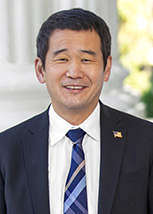
Sponsored bills
Existing law establishes the Comprehensive Statewide Domestic Violence Program in the Office of Emergency Services to, among other things, provide local assistance to existing service providers and to establish a targeted or directed program for the development and establishment of domestic violence services in currently unserved and underserved areas. Existing law requires the Office of Emergency Services to provide financial and technical assistance to local domestic violence centers in implementing specified services. This bill would require that the portion of any grant funding awarded pursuant to this provision that is funded by the state be distributed to the recipient in a single disbursement at the beginning of the grant period. This bill would incorporate additional changes to Section 13823.15 of the Penal Code proposed by AB 689 to be operative only if this bill and AB 689 are enacted and this bill is enacted last.
Existing law authorizes the City and County of San Francisco (San Francisco) and, until January 1, 2022, the Alameda-Contra Transit District, to enforce parking violations in specified transit-only traffic lanes through the use of video imaging and to install automated forward facing parking control devices on city-owned public transit vehicles for the purpose of video imaging parking violations occurring in transit-only traffic lanes, as specified. Existing law requires a designated employee, who is qualified by San Francisco, or a contracted law enforcement agency for the Alameda-Contra Costa Transit District, who is qualified by the city and county or the district to issue parking citations, to review video image recordings for the purpose of determining whether a parking violation occurred in a transit-only traffic lane and to issue a notice of violation to the registered owner of a vehicle within 15 calendar days, as specified. Existing law makes these video image records confidential, and provides that these records are available only to public agencies to enforce parking violations. Existing law provides that if the Alameda-Contra Costa Transit District implements an automated enforcement system as described above, the district is required to submit a report to specified committees of the Legislature by no later than January 1, 2021. This bill would extend the authorization described above to any public transit operator in the state until January 1, 2027, and to the City and County of San Francisco indefinitely, if the examiner or issuing agency, as specified, of a violation allows for the reduction or waiver of parking penalties for indigent individuals, as defined. The bill would authorize a designated employee or law enforcement agency to decline to issue a ticket, if there is evidence in the video of hardship. The bill would expand the authorization to enforce parking violations to include violations occurring at transit stops. The bill would repeal the obsolete reporting requirement of the Alameda-Contra Costa Transit District but would, except as specified, require an operator who implements an automated enforcement system to report to specified committees of the Legislature on the system's effectiveness and impact on traffic outcomes, among other things. Existing constitutional provisions require that a statute that limits the right of access to the meetings of public bodies or the writings of public officials and agencies be adopted with findings demonstrating the interest protected by the limitation and the need for protecting that interest. This bill would make legislative findings regarding the need to make certain video image records confidential. This bill would make legislative findings and declarations as to the necessity of a special statute for the City and County of San Francisco.
(1) Existing law, the Private Investigator Act, provides for the licensure and regulation of private investigators by the Director of Consumer Affairs, and makes a violation of its provisions a crime. Existing law requires a licensee or qualified manager of a licensee who carries a deadly weapon in the course of that person's employment or business to complete a training course in the exercise of the power to arrest. This bill, on and after January 1, 2023, would eliminate that requirement. (2) Existing law, the Proprietary Security Services Act, provides for the licensure and regulation of proprietary private security officers by the director, and makes a violation of its provisions a crime. Existing law requires proprietary private security officers to complete a course of training in security officer skills developed by the Department of Consumer Affairs that includes power-to-arrest training. This bill, on and after January 1, 2023, would instead require the course in security officer skills to include training in the exercise of the power to arrest and the appropriate use of force. (3) (A) Existing law, the Private Security Services Act, provides for the regulation and licensure of private patrol operators and the registration of security guards by the director, and makes a violation of its provisions a crime. The act prohibits a person who is required to be registered as a security guard from carrying or using a firearm or baton unless they possess a valid and current permit, and makes a first violation subject to a $500 fine and each subsequent violation subject to a $1,000 fine. This bill would also prohibit a person required to be registered as a security guard from carrying or using a firearm or baton unless the security guard is an employee of a private patrol operator, the state, or a political subdivision of the state. By expanding the scope of a crime, the bill would impose a state-mandated local program. (B) The act requires a licensed private patrol operator to deliver to the director within 7 days a written report describing the circumstances surrounding the discharge of any firearm or physical altercation with a member of the public while on duty by a licensee and specified others while acting within the course and scope of their employment. Existing law makes a violation of that provision subject to a $1,000 fine for a first violation and a $2,500 fine for each subsequent violation. This bill would instead require the report to be delivered to the director within 7 business days and would revise the types of incidents required to be reported, including, among other things, requiring any physical use of force or violence on any person while on duty to be reported. The bill would increase the amount of the fine for any violation to $5,000. (C) The act requires each applicant for registration as a security guard to complete training in security officer skills, and requires the Bureau of Security and Investigative Services to develop a standard course and curriculum for the training. This bill, on and after January 1, 2023, would require the bureau to develop an outline for the course and curriculum for security officer skills training in consultation with the Commission on Peace Officer Standards and Training. (D) The act requires an applicant for a security guard registration to complete a course of training in the exercise of the power to arrest as a condition of the issuance of the registration, and specifies topics to be included in that course, including responsibilities and ethics in citizen arrest. The act requires a registrant and employing licensee to maintain the certificate of completion for the training course for at least 2 years. The act requires a private patrol operator to provide a copy of a department guidebook in the exercise of the power to arrest to employees. This bill would instead require a registrant to maintain the certificate of completion for the course until their registration expires or has been canceled, and would require a licensee to maintain the certificate for the duration of the registrant's employment. The bill would require a registrant who is unable to provide their employing licensee with a certificate of completion to complete the training within 6 months of the registrant's employment date. The bill, on and after January 1, 2023, would require each applicant to complete a course of training in the exercise of the power to arrest and the appropriate use of force, would require the subject of appropriate use of force to include specified topics, including legal standards for the use of force, and would require appropriate use of force to be conducted through traditional classroom instruction. The bill, on and after January 1, 2023, would authorize the department to review and provide more guidance on courses of training when best practices are updated and would delete the requirement that private patrol operators provide copies of the department guidebook to their employees. (E) The act authorizes the director to deny, suspend, or revoke a license, firearm qualification card, or baton permit if the licensee or the licensee's manager, officer, director, or partner commits specified acts, including committing assault, battery, or kidnaping or for using force or violence on any person without proper justification. This bill, on and after January 1, 2023, would also authorize the director deny, suspend, or revoke a license, firearm qualification card, or baton permit for use of force in violation of standards prescribed by the bureau by regulation. (4) The Private Security Services Act and the Private Investigator Act require a private patrol operator, security guard, or private investigator to complete a course of training in the carrying and usage of firearms in order to obtain a firearms qualification card or firearms permit. Existing law requires the course of training in the carrying and usage of firearms to be in a format prescribed by the department and delineated in the Firearms Training Manual of the Bureau of Security and Investigative Services. Existing law requires any course textbook or manual to be used as a course in the carrying and usage of firearms to include aspects of employee restraint and defensive missions of security guards. This bill, on and after January 1, 2023, would include appropriate use of force in the course of training and would delete the provision requiring the textbook or manual to include aspects of employee restraint and defensive missions. (5) Existing law, the Alarm Company Act, provides for the regulation and licensure of alarm company operators, the registration of alarm agents, and the certification of qualified managers by the director. The act requires a person who is licensed, registered, or designated as a branch office manager who carries a firearm in the course of their employment to complete a course of training in the carrying and use of firearms and obtain a firearms qualification card from the director. Existing law also requires those individuals to complete a course of training in the exercise of the power to arrest that is approximately 2 hours in length and covers various topics, including responsibilities and ethics in citizen arrest. Existing law requires every licensee and every person entering the employ of a licensee performing the function of an alarm agent to complete a course in the exercise of the power to arrest. This bill, on and after January 1, 2023, would instead require those licensed, registered, or designated persons to complete a course of training in the exercise of the power to arrest and the appropriate use of force that is approximately 4 hours in length and would require the subject of appropriate use of force to be conducted through traditional classroom instruction and include specified topics, including legal standards for the use of force. The bill, on and after January 1, 2023, would require every licensee and every person entering the employ of a licensee performing the functions of an alarm agent to complete a course in the exercise of the power to arrest and the appropriate use of force. (6) This bill would make conforming and other nonsubstantive changes. (7) The California Constitution requires the state to reimburse local agencies and school districts for certain costs mandated by the state. Statutory provisions establish procedures for making that reimbursement. This bill would provide that no reimbursement is required by this act for a specified reason. (8) This bill would incorporate additional changes to Section 7596.3 of the Business and Professions Code proposed by AB 830 to be operative only if this bill and AB 830 are enacted and this bill is enacted last.
Under existing law, classified employees of school districts and community college districts subject to layoff as a result of the expiration of a specially funded program at the end of a school year are required to be given written notice on or before April 29 informing them of certain rights. Existing law also requires that notice be given not less than 60 days before the effective layoff date if the termination date of a specially funded program is other than June 30, or if classified employees are subject to layoff as a result of a bona fide reduction or elimination of a service performed by a department. This bill instead would revise and recast provisions relating to the layoff of classified employees of school districts and community college districts to require certain notices and opportunities for a hearing when a permanent classified employee's services will not be required for the ensuing year due to lack of work or lack of funds. The bill would, for the purposes of specified notice and hearing rights, define "permanent classified employee" to include both an employee who was permanent at the time the notice or right to a hearing was required and an employee who became permanent after the date of the required notice. The bill would express the intent of the Legislature in enacting the bill to provide permanent classified school employees and those who become permanent classified school employees with the same rights to notice and hearing with respect to layoffs as are provided to certificated employees of school districts, including teachers and administrators, and academic employees of community college districts. If classified positions must be eliminated as a result of the expiration of a specially funded program, the bill would require written notice of the layoff date and certain rights be given to the classified employees not less than 60 days before the effective layoff date. If, after January 1, 2021, the Legislature provides certificated or academic employees with any additional rights to notice or hearing as to layoffs, the bill would require the respective permanent classified employees, as described, to be afforded the same rights by the school district or community college district, as applicable. To the extent school districts and community college districts are required to perform additional duties, the bill would impose a state-mandated local program. The California Constitution requires the state to reimburse local agencies and school districts for certain costs mandated by the state. Statutory provisions establish procedures for making that reimbursement. This bill would provide that, if the Commission on State Mandates determines that the bill contains costs mandated by the state, reimbursement for those costs shall be made pursuant to the statutory provisions noted above.
Existing law defines a "hate crime" as a criminal act committed, in whole or in part, because of actual or perceived characteristics of the victim, including, among other things, race, religion, disability, and sexual orientation. Existing law requires the Commission on Peace Officer Standards and Training (POST) to develop guidelines and a course of instruction and training for law enforcement officers addressing hate crimes. Existing law requires state law enforcement agencies to adopt a framework or other formal policy created by POST regarding hate crimes. Existing law requires any local law enforcement agency that adopts or updates a hate crime policy to include specified information in that policy, including information on bias motivation. This bill would include a statement of legislative findings and declarations and require the basic course curriculum on the topic of hate crimes to be developed in consultation with subject matter experts, as specified. The bill would, subject to an appropriation of funds for this purpose in the annual Budget Act or other statute, require POST to update the basic course to include the viewing of a specified video course developed by POST. The bill would also require POST to make the video available via the online learning portal, and would require all peace officers to complete specified training materials no later than one year after the commission makes the updated course available. The bill would require POST to develop and periodically update an interactive course on hate crimes for in-service peace officers, and require officers to take the course every 6 years. This bill would also require any local law enforcement agency that adopts or updates a hate crime policy to include specified information on recognizing religion-bias hate crimes, and would require those policies to include the discriminatory selection of victims as a form of bias motivation.
(1) Existing law requires a pupil to complete designated coursework while in grades 9 to 12, inclusive, in order to receive a diploma of graduation from high school. These graduation requirements include, among others, the completion of 3 years of courses in English and 3 years of courses in social studies, including one-year courses in United States history and geography and world history, culture, and geography, a one-semester course in American government and civics, and a one-semester course in economics. Existing law requires the Instructional Quality Commission to develop, and the State Board of Education to adopt, modify, or revise, a model curriculum in ethnic studies. Existing law also encourages each school district and charter school that maintains any of grades 9 to 12, inclusive, and that does not otherwise offer a standards-based ethnic studies curriculum to offer, beginning in the school year following the adoption of the model curriculum, a course of study in ethnic studies based on the model curriculum. This bill would add the completion of a one-semester course in ethnic studies, meeting specified requirements, to the graduation requirements commencing with pupils graduating in the 2029–30 school year, including for pupils enrolled in a charter school. The bill would expressly authorize local educational agencies, including charter schools, to require a full-year course in ethnic studies at their discretion. The bill would require local educational agencies, including charter schools, to offer an ethnic studies course commencing with the 2025–26 school year, as specified. The bill would authorize, subject to the course offerings of a local educational agency, including a charter school, a pupil to satisfy the ethnic studies course requirement by completing either (A) a course based on the model curriculum in ethnic studies developed by the commission, (B) an existing ethnic studies course, (C) an ethnic studies course taught as part of a course that has been approved as meeting the A–G requirements of the University of California and the California State University, or (D) a locally developed ethnic studies course approved by the governing board of the school district or the governing body of the charter school. The bill would prohibit a course that does not use ethnic studies content as the primary content through which the subject is taught from being used to satisfy the ethnic studies course requirement. The bill would require a pupil who completes a course described above to also accrue credit for coursework in the subject that the course is offered, including, if applicable, credit towards satisfying a course required for a diploma of graduation from high school. These provisions would become operative only upon an appropriation of funds by the Legislature for these purposes in the annual Budget Act or another statute. Because the bill would add new duties to local educational agencies, it would constitute a state-mandated local program. (2) The California Constitution requires the state to reimburse local agencies and school districts for certain costs mandated by the state. Statutory provisions establish procedures for making that reimbursement. This bill would provide that, if the Commission on State Mandates determines that the bill contains costs mandated by the state, reimbursement for those costs shall be made pursuant to the statutory provisions noted above.
Existing law establishes the Air Quality Improvement Program that is administered by the State Air Resources Board for purposes of funding projects related to, among other things, the reduction of criteria air pollutants and improvement of air quality. Pursuant to its existing statutory authority, the state board has established the Clean Vehicle Rebate Project, as a part of the Air Quality Improvement Program, to promote the use of zero-emission vehicles by providing rebates for the purchase of new zero-emission vehicles. Existing law, the California Pollution Control Financing Authority Act, establishes the California Pollution Control Financing Authority, with specified powers and duties, and authorizes the authority to approve financing for projects or pollution control facilities to prevent or reduce environmental pollution. This bill would establish the Medium- and Heavy-Duty Zero-Emission Vehicle Fleet Purchasing Assistance Program within the Air Quality Improvement Program to make financing tools and nonfinancial supports available to operators of medium- and heavy-duty vehicle fleets to enable those operators to transition their fleets to zero-emission vehicles. The bill would require the state board to designate the California Pollution Control Financing Authority as the agency responsible for administering the program and would require the state board and the authority to enter into an interagency working agreement for the development and administration of the program. The bill would require the state board and the authority, in developing and implementing the program, to consult with various stakeholders regarding specified program components, develop and design, in consultation with other relevant state agencies, as provided, financing tools and nonfinancial supports that are most appropriate for different sizes and sectors of medium- and heavy-duty vehicle fleets, and ensure that the financial tools and nonfinancial supports required pursuant to the program are available to operators of medium- and heavy-duty fleets by January 1, 2023, as provided. The bill would require the authority to develop, in consultation with the state board, a data collection and dissemination strategy for the program, as provided, and to track project implementation and report to the state board project outcomes no less than annually. The bill would require the state board to provide on its internet website information regarding the potential financing and grant options and other technical assistance available through the program. Existing constitutional provisions require that a statute that limits the right of access to the meetings of public bodies or the writings of public officials and agencies be adopted with findings demonstrating the interest protected by the limitation and the need for protecting that interest. This bill would make legislative findings to that effect.
(1) Existing law defines rape as an act of sexual intercourse accomplished with a person not the spouse of the perpetrator under certain circumstances, including where the victim is incapable of giving legal consent because of a mental disorder or developmental or physical disability, where the victim is not aware of the essential characteristics of the act due to the perpetrator's fraudulent representation that the act serves a professional purpose, and where the victim submits to the act under the belief that the perpetrator is someone known to the victim other than the perpetrator, and the perpetrator intentionally and fraudulently induces that belief. Existing law separately defines rape of a spouse as an act of sexual intercourse accomplished with the spouse of the perpetrator under similar circumstances as nonspousal rape, except that spousal rape does not include acts of sexual intercourse accomplished under the specific circumstances described above. This bill would repeal the provisions relating to spousal rape and make conforming changes, thereby making an act of sexual intercourse accomplished with a spouse punishable as rape if the act otherwise meets the definition of rape, except that sexual intercourse with a person who is incapable of giving legal consent because of mental disorder or developmental or physical disability would not be rape if the 2 people are married. By changing the definition of a crime, this bill would impose a state-mandated local program. (2) Existing law authorizes an employer to request from the Department of Justice records of all convictions or any arrest pending adjudication for specified offenses for a person who applies for a license, employment, or volunteer position, in which the person would have supervisory or disciplinary power over a minor and requires the employer to notify the parent or guardian of a child if a person with specified convictions will have supervisory or disciplinary power over that child. Existing law exempts certain convictions, including spousal rape, from that notification requirement. This bill would remove the exemption for spousal rape or any other felony conviction and would instead exempt only misdemeanor convictions from that notification. The bill would make numerous conforming changes. (3) This bill would incorporate additional changes to Section 1103 of the Evidence Code proposed by AB 939 to be operative only if this bill and AB 939 are enacted and this bill is enacted last. (4) This bill would incorporate additional changes to Section 3044 of the Family Code proposed by SB 320 and AB 1579 to be operative only if this bill and SB 320, AB 1579, or both, are enacted and this bill is enacted last. (5) This bill would incorporate additional changes to Section 13956 of the Government Code proposed by SB 299 to be operative only if this bill and SB 299 are enacted and this bill is enacted last. (6) The California Constitution requires the state to reimburse local agencies and school districts for certain costs mandated by the state. Statutory provisions establish procedures for making that reimbursement. This bill would provide that no reimbursement is required by this act for a specified reason.
(1) Existing law establishes the California State University, the California Community Colleges, and the University of California as the 3 segments of public postsecondary education in this state. Existing law requires the California State University and each community college district, and requests the University of California, with respect to each campus in their respective jurisdictions that administers a priority enrollment system, to grant priority in that system to certain foster youth or former foster youth whose dependency was established or continued by the court on or after the youth's 16th birthday and to certain homeless youth and former homeless youth. This bill would extend this requirement and request for enrollment priority for certain foster youth or former foster youth to those whose dependency was established or continued by a court of competent jurisdiction, including a tribal court, on or after the youth's 13th birthday. The bill would authorize a representative of a tribe or tribal organization to verify the homeless status of an American Indian student who is a homeless youth or former homeless youth, as specified. To the extent that the bill would impose duties on community college districts, it would constitute a state-mandated local program. (2) Existing law, the Cooperating Agencies Foster Youth Educational Support Program, authorizes the Office of the Chancellor of the California Community Colleges to enter into agreements with up to 20 community college districts to provide additional funds for services in support of postsecondary education for foster youth. Existing law provides that these services include, when appropriate, but are not necessarily limited to, outreach and recruitment, consultation and eligibility verification, consultation and referrals for students deemed ineligible, service coordination, counseling, book and supply grants, tutoring, independent living and financial literacy skills support, frequent in-person contact, career guidance, transfer counseling, childcare and transportation assistance, and referrals to health services, mental health services, housing assistance, and other related services. This bill would authorize the program to provide all of these services, and direct financial support, to enrolled students who meet all eligibility requirements but whose courses have not yet commenced, and who have completed required matriculation activities as described, if those services are deemed necessary to enable the student to be successful upon the commencement of the academic term. (3) Existing law requires a student participant in the Cooperating Agencies Foster Youth Educational Support Program to be a current or former foster youth in California whose dependency was established or continued by the court on or after the youth's 16th birthday. This bill would instead require a student participant in the program to be a current or former foster youth in California whose dependency was established or continued by a court of competent jurisdiction, including a tribal court, on or after the youth's 13th birthday. (4) Existing law requires the Board of Governors of the California Community Colleges, in consultation with the State Department of Social Services, to adopt regulations for the program and to be responsible for the administration of funds for the program. This bill would further require regulations adopted by the board of governors to ensure that program application and enrollment processes implemented by community college districts are streamlined, do not impose barriers to entry, and allow programs to exercise professional judgment to waive any income criteria specified in the regulations as a condition of eligibility, as specified. (5) This bill would incorporate additional changes to Section 66025.9 of the Education Code proposed by AB 1456 to be operative only if this bill and AB 1456 are enacted and this bill is enacted last. (6) The California Constitution requires the state to reimburse local agencies and school districts for certain costs mandated by the state. Statutory provisions establish procedures for making that reimbursement. This bill would provide that, if the Commission on State Mandates determines that the bill contains costs mandated by the state, reimbursement for those costs shall be made pursuant to the statutory provisions noted above.