

Passed Sep 4, 2019
1 co-sponsor
Total votes
46,261
all sessions
Attendance
93%
1,864 missed
Lower than 78% of chamber peers
With party
98%
of cast votes
Near the chamber average
Bipartisan score
2%
crosses aisle rarely
Higher than 81% of chamber peers
Sponsored
1,957
bills & resolutions
Near the chamber average
Committees
0
assignments
1,957 bills and resolutions
Sponsored bills
Total
1,957
Primary
271
Co-sponsor
1,686
This page
1,957
matching current filters
Relative to the Costa Mesa Fire Captain Michael Kreza Memorial Highway.
This measure would designate a specified portion of State Route 55 from 19th Street to MacArthur Boulevard in the County of Orange as the Costa Mesa Fire Captain Michael Kreza Memorial Highway. The measure would request the Department of Transportation to determine the cost of appropriate signs showing this special designation and, upon receiving donations from nonstate sources covering that cost, to erect those signs.
Signed into law Sep 3, 2019
0 co-sponsors
Public animal shelters: adoptions: veterans.
Existing law governs the operation of animal shelters by, among other things, setting a minimum holding period for stray dogs and cats and requiring animal shelters to ensure that dogs and cats, if adopted, are spayed or neutered. Existing law requires the word "VETERAN" to be printed on the face of a driver's license or identification card at the applicant's request, subject to certain requirements, including, among others, the verification of the applicant's veteran status, as specified, and payment of a fee. This bill would prohibit a public animal shelter from charging an adoption fee for a dog or cat if the person adopting the dog or cat presents to the public animal shelter a current and valid driver's license or identification card with the word "VETERAN" printed on its face pursuant to the above-described provision. The bill also would authorize a public animal shelter to limit the number of dogs and cats adopted from that public animal shelter by an eligible veteran to one dog and cat each 6-month period.
Signed into law Aug 30, 2019
1 co-sponsor
Veterans: education.
Existing law establishes the Department of Veterans Affairs within state government and sets forth its powers and duties, including, but not limited to, the administration of various programs providing benefits to veterans. This bill would require the department to establish an education assistance program to provide housing and tuition assistance to disabled veterans attending graduate school in the State of California if their eligibility for federal education assistance has expired. The bill would, upon appropriation by the Legislature, require the department to provide tuition assistance and a housing allowance to disabled veterans while they attend specified graduate schools in the State of California, as specified. The bill would additionally require the department, upon appropriation by the Legislature, to provide a housing allowance to a disabled veteran in a graduate internship or fellowship program that earns credits toward a graduate degree.
Passed Aug 30, 2019
1 co-sponsor
Health care coverage: anticancer medical devices.
Existing law, the Knox-Keene Health Care Service Plan Act of 1975, provides for the licensure and regulation of health care service plans by the Department of Managed Health Care, and makes a willful violation of the act a crime. Existing law requires health care service plan contracts and health insurance policies to cover certain medical services for particular types of cancer, including the screening, diagnosis, and treatment of breast cancer, and the screening and diagnosis of prostate cancer, if the contract or policy was issued, amended, or renewed after the applicable date. This bill would require health care service plan contracts and health insurance policies issued, amended, or renewed on or after January 1, 2020, that cover chemotherapy or radiation therapy for the treatment of cancer to also cover anticancer medical devices. The bill would define "anticancer medical device" as a medical device that has been approved for marketing by the federal Food and Drug Administration or is exempt from that approval, is primarily designed to be used outside of a medical facility, and has been prescribed by an authorized provider upon the provider's determination that the device is medically reasonable and necessary for the treatment of the patient's cancer. Because a violation of this bill's provisions by a health care service plan would be a crime, the bill would impose a state-mandated local program. The California Constitution requires the state to reimburse local agencies and school districts for certain costs mandated by the state. Statutory provisions establish procedures for making that reimbursement. This bill would provide that no reimbursement is required by this act for a specified reason.
Passed Aug 30, 2019
0 co-sponsors
Taxation: renters' credit.
The Personal Income Tax Law authorizes various credits against the taxes imposed by that law, including a credit for qualified renters in the amount of $120 for spouses filing joint returns, heads of household, and surviving spouses if adjusted gross income is $50,000, as adjusted, or less, and in the amount of $60 for other individuals if adjusted gross income is $25,000, as adjusted, or less. Existing law requires the Franchise Tax Board to annually adjust for inflation these adjusted gross income amounts. For 2018, the adjusted gross income limit is $83,282 and $41,641, respectively. Existing law requires any bill authorizing a new tax credit to contain, among other things, specific goals, purposes, and objectives that the tax credit will achieve, detailed performance indicators, and data collection requirements. Existing law establishes the continuously appropriated Tax Relief and Refund Account in the General Fund and provides that payments required to be made to taxpayers or other persons from the Personal Income Tax Fund are to be paid from that account, including any amount allowable as an earned income tax credit in excess of any tax liabilities. This bill, for taxable years beginning on or after January 1, 2020, and before January 1, 2025, and only when specified in a bill relating to the Budget Act, would increase the credit amount for a qualified renter to $220 and $434, as provided. In the event the increased credit amount is not specified in a bill relating to the Budget Act, the existing credit amounts of $120 and $60, as described above, respectively, would be the credit amounts for that taxable year. The bill would require the Franchise Tax Board to annually recompute for inflation the credit amount for taxable years on or after January 1, 2021, and before January 1, 2025, unless otherwise provided. The bill would provide findings and declarations relating to the goals, purposes, and objectives of this credit. The bill, for credits allowable for taxable years beginning on or after January 1, 2020, and before January 1, 2025, would provide that the credit amount in excess of the qualified renter's liability would be refundable and paid from the Tax Relief and Refund Account to the qualified renter upon appropriation by the Legislature. This bill would take effect immediately as a tax levy.
Passed Aug 30, 2019
1 co-sponsor
Open meetings.
The Bagley-Keene Open Meeting Act requires that all meetings of a state body, as defined, be open and public and that all persons be permitted to attend and participate in a meeting of a state body, subject to certain conditions and exceptions. This bill would specify that the definition of "state body" includes an advisory board, advisory commission, advisory committee, advisory subcommittee, or similar multimember advisory body of a state body that consists of 3 or more individuals, as prescribed, except a board, commission, committee, or similar multimember body on which a member of a body serves in their official capacity as a representative of that state body and that is supported, in whole or in part, by funds provided by the state body, whether the multimember body is organized and operated by the state body or by a private corporation. This bill would declare that it is to take effect immediately as an urgency statute.
Passed Aug 30, 2019
1 co-sponsor
Education finance: Higher Education Facilities Bond Act of 2020.
(1) Under the Higher Education Facilities Bond Act of 1986, the Higher Education Facilities Bond Act of 1988, and the Higher Education Facilities Bond Act of June 1992, the issuance, pursuant to the State General Obligation Bond Law, of bonds in an amount not to exceed $400,000,000, $600,000,000, and $900,000,000, respectively, and the expenditure of the revenues therefrom, were authorized for the purpose of aid to the University of California and the California State University for, among other things, the construction and equipping of educational facilities, as specified. Existing law establishes the Higher Education Facilities Finance Committee to administer those acts, and to authorize the issuance and sale of bonds to the extent necessary to fund the education facilities construction apportionments expressly authorized by the Legislature in the annual Budget Act. More recently, the Class Size Reduction Kindergarten-University Public Education Facilities Bond Act of 1998, the Kindergarten-University Public Education Facilities Bond Act of 2002, the Kindergarten-University Public Education Facilities Bond Act of 2004, and the Kindergarten-University Public Education Facilities Bond Act of 2006 authorized the issuance of bonds and the expenditure of revenues therefrom for the University of California and the California State University, as well as for the California Community Colleges and public elementary and secondary schools. This bill would enact the Higher Education Facilities Bond Act of 2020, which, upon approval by the state electorate, would authorize the issuance of state general obligation bonds in an amount not to exceed $8,000,000,000, with one-half of the amount designated for the University of California and the Hastings College of the Law and the other half designated for the California State University, for purposes similar to those specified in the Higher Education Facilities Bond Act of 1986, the Higher Education Facilities Bond Act of 1988, and the Higher Education Facilities Bond Act of June 1992, to be issued and sold in a manner similar to that provided under those acts. The bill would require that any request for funds from the bonds issued pursuant to the bond act enacted by this bill be accompanied by the 5-year capital outlay plan of the particular university or college and include a schedule that prioritizes the seismic retrofitting needed to significantly reduce seismic hazards in buildings identified as high priority by the university or college, as specified. (2) This bill would provide for the submission of the Higher Education Facilities Bond Act of 2020 to the voters at the March 3, 2020, statewide primary election, as specified.
Passed Aug 30, 2019
1 co-sponsor
San Onofre Nuclear Generating Station: emergency planning funding.
The Radiation Protection Act of 1999 requires local governments to develop and maintain radiological emergency preparedness and response plans to safeguard the public in the emergency planning zone around a nuclear powerplant. The California Emergency Services Act requires local costs to carry out activities under the Radiation Protection Act of 1999 that are not reimbursed by federal funds to be borne by an electrical corporation operating a nuclear powerplant with a generating capacity of 50 or more megawatts. The California Emergency Services Act requires each local government to submit to the Office of Emergency Services a statement of its costs in carrying out those activities. Existing law requires an electrical corporation, upon notification by the office of the amount of its share of the actual or anticipated local agency costs, to pay that amount to the Controller for deposit in the Nuclear Planning Assessment Special Account. The California Emergency Services Act requires the Controller, upon appropriation by the Legislature, to reimburse local governments for those costs. Existing law, until July 1, 2019, set the maximum annual amount available for disbursement for local costs for the San Onofre Nuclear Generating Station site, as specified. This bill would, until the date on which all nuclear waste and radiological fuel have been removed from the San Onofre Site and transported out of the Counties of San Diego and Orange, require the office and the controller to ensure that local governments receive continued funding for costs incurred by them in carrying out activities for the safety and welfare of the communities surrounding the San Onofre Nuclear Generating Station, as specified. The bill would require, by January 1, 2021, and every 3 years thereafter, an audit conducted by an independent entity on those activities. Existing law requires local jurisdictions within an emergency planning zone to coordinate nuclear power plant emergency response plans and procedures with local governments and to participate in training, drills, and exercises as needed. This bill would require local jurisdictions to plan for and respond to emergency situations at the San Onofre Nuclear Generating Station; maintain radiological response monitoring teams, alert and warning capabilities, and emergency response plans and procedures; and conduct training, drills, and exercises. This bill would make legislative findings and declarations as to the necessity of a special statute for the San Onofre Nuclear Generation Station.
Passed Aug 30, 2019
0 co-sponsors
Homeless Coordinating and Financing Council.
Existing law establishes various programs, including, among others, the Emergency Housing and Assistance Program, to provide assistance to homeless persons. Existing law requires a state agency or department that funds, implements, or administers a state program that provides housing or housing-related services to people experiencing homelessness or at risk of homelessness, except as specified, to revise or adopt guidelines and regulations to include enumerated Housing First policies. Existing law establishes the Homeless Coordinating and Financing Council to oversee the implementation of the Housing First guidelines and regulations and, among other things, to identify resources, benefits, and services that can be accessed to prevent and end homelessness in California. This bill would require the Homeless Coordinating and Financing Council, by July 1, 2021, to develop and implement a statewide strategic plan for addressing homelessness in the state, as specified. The bill would require the council, by January 1, 2021, to implement strategic plans to assist federal Housing and Urban Development Continuum of Care lead agencies in better implementing Housing and Urban Development recommended activities and meeting Housing and Urban Development requirements.
Passed Aug 30, 2019
1 co-sponsor
Ask Maddy
·
AI policy assistant
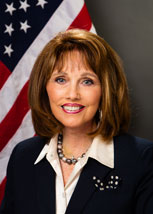
Ask Maddy about Patricia C. Bates
Scope: california
Hi! I can help you understand Patricia C. Bates's legislative record. What would you like to know?
Try one of these
i
Maddy answers using official bill text and legislative records. Always verify before sharing.
Sources cited inline