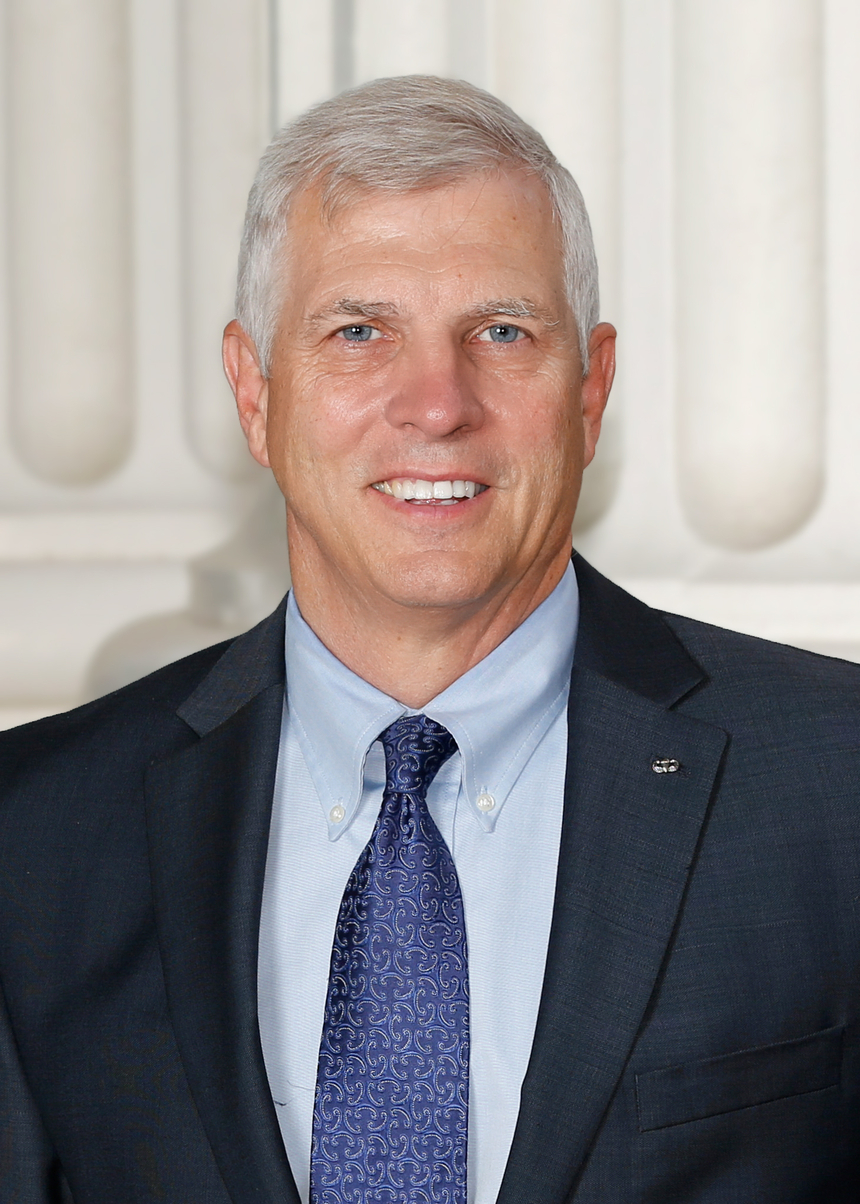
Photo of Tom Umberg
D California Senate · District 34

Sen. Tom Umberg

Compare
Total votes
17,276
all sessions
Attendance
97%
370 missed
Lower than 88% of chamber peers
With party
99%
of cast votes
Near the chamber average
Bipartisan score
0%
crosses aisle rarely
Near the chamber average
Sponsored
904
bills & resolutions
Near the chamber average
Committees
6
assignments
904 bills and resolutions

Sponsored bills

Total
904
Primary
196
Co-sponsor
708
This page
904
matching current filters
Primary SB 43
Passed · California Senate · Lead sponsor
Veterans cemetery: County of Orange.

Existing law requires the Department of Veterans Affairs to acquire, study, design, develop, construct, and equip a state-owned and state-operated Southern California Veterans Cemetery in the County of Orange at one of 2 possible sites, as specified. Existing law requires the department to, after completing acquisition studies on both sites, consult with the Department of General Services to determine which site to pursue based on the economic feasibility, benefits to veterans and City of Irvine residents, and availability of each location. Existing law makes honorably discharged veterans, their spouses, and dependent children eligible for interment in the cemetery, as specified. This bill would delete those site selection requirements and would instead require the department to acquire, study, design, develop, construct, and equip a state-owned and state-operated Southern California Veterans Cemetery in the County of Orange. The bill would require a site selected for these purposes to have been studied by the Department of Veterans Affairs and the Department of General Services. The bill would additionally create the Southern California Veterans Cemetery Study Donation Fund, and would authorize any local governmental entity or private organization in the County of Orange to donate to the fund. The bill would require the department, upon receipt of sufficient donations, to conduct a study of the feasibility of the Gypsum Canyon site in Anaheim for the purpose of establishing a Southern California Veterans Cemetery, as specified. The bill would continuously appropriate moneys in the fund to the department for these purposes.

Passed Aug 11, 2022 0 co-sponsors
Co-sponsor SB 286
Passed · California Senate · Co-sponsor
Elections: Orange County Board of Education.

Existing law authorizes, and in some circumstances requires, a political subdivision to consolidate its elections with statewide elections. This bill would require an election for Orange County Board of Education that is determined by the plurality of the votes cast for that office, with no possibility of a runoff, and is consolidated with a statewide election to be consolidated with the statewide general election in November. This bill would make legislative findings and declarations as to the necessity of a special statute for the Orange County Board of Education. By adding to the duties of local elections officials, this bill would impose a state-mandated local program. The California Constitution requires the state to reimburse local agencies and school districts for certain costs mandated by the state. Statutory provisions establish procedures for making that reimbursement. This bill would provide that, if the Commission on State Mandates determines that the bill contains costs mandated by the state, reimbursement for those costs shall be made pursuant to the statutory provisions noted above.


Passed Aug 11, 2022 1 co-sponsor
Primary SB 1069
Passed · California Senate · Lead sponsor
State grant programs: negotiated cost rate agreements.

Existing law establishes the Department of General Services in the Government Operations Agency for purposes of providing centralized services of state government. Existing law establishes various state grant programs. This bill would require, to the extent possible and permitted by federal law, the Department of General Services to establish, by July 1, 2023, a state standard negotiated cost agreement for awarding state grants that are created on or after July 1, 2023, to grantees that do not have an existing negotiated indirect cost rate agreement and cost allocation policy approved by the federal government. The bill would require, to the extent possible and permitted by federal law, any state grant program that is created on or after January 1, 2023, to require the state agency or other state entity administering the grant to use the same terms as contained in the grantee's existing negotiated indirect cost rate agreements and cost allocation policies approved by the federal government. The bill would require a state agency or other state entity administering those programs to use, commencing on and after July 1, 2023, the same terms as contained in the grantee's state standard negotiated cost agreement. The bill would require, to the extent possible and permitted by federal law, these state agencies or other state entities to authorize a grantee that is a nonprofit organization and that does not have an existing federal negotiated indirect cost rate agreement or existing state standard negotiated cost agreement to instead be compensated for indirect costs pursuant to specified methods.

Passed Aug 11, 2022 0 co-sponsors
Co-sponsor SB 364
Passed · California Senate · Co-sponsor
Pupil meals.

(1) Existing law establishes a system of public elementary and secondary schools in this state. This system comprises local educational agencies throughout the state that provide instruction to pupils in kindergarten and grades 1 to 12, inclusive, at schoolsites operated by these agencies. Existing law requires the governing board of a school district and the county superintendent of schools to make applications for free or reduced-price meals available to pupils at all times during each regular schoolday. Existing law authorizes the governing boards of school districts and county superintendents of schools to make applications for free or reduced-price meals electronically available online. Existing law specifies requirements to be met by the governing boards of school districts, county offices of education, and school food authorities that choose to provide access to an online application. This bill would require applications for free or reduced-price meals made electronically available online by school district governing boards or county offices of education to comply with specified requirements, including provisions prohibiting the misuse of information provided online by applicants. The bill would require applications for free and reduced-price meals, which are authorized to be submitted at any time during a schoolday, to be processed within 10 days of submission. To the extent that this provision would impose new duties on local educational agencies, it would constitute a state-mandated local program. The bill would make private third-party vendors who violate its provisions subject to specified civil penalties. The bill would specify that its provisions would not prevent the use of information provided by a school meal applicant from being used by a governmental entity to increase access to a government-administered anti-hunger program. The bill would authorize each school district and county superintendent of schools to establish a secured internet website providing access to an online data collection form as part of the annual enrollment process, and would require the department to host a sample application by July 1, 2024, unless the Superintendent of Public Instruction determines that use of the form would negatively impact the local control funding formula. (2) Existing law provides for the federal Supplemental Nutrition Assistance Program (SNAP) , administered in California as CalFresh, under which each county distributes nutrition assistance benefits provided by the federal government to eligible households. Existing law establishes the California Work Opportunity and Responsibility to Kids (CalWORKs) program, under which each county provides cash assistance and other benefits to qualified low-income families using federal, state, and county funds. Existing law establishes the Medi-Cal program, which is administered by the State Department of Health Care Services and under which qualified low-income persons receive health care benefits. Existing federal law provides for the Pandemic Electronic Benefit Transfer (P-EBT) program, under which the Secretary of Agriculture of the United States is authorized to approve state plans to provide eligible children with temporary emergency nutrition assistance benefits during fiscal years 2020 and 2021 in any case in which a school is closed or has reduced the number of days or hours that students attend the school during a public health emergency designation during which the school would otherwise be in session. This bill would establish the Better Out of School Time (BOOST) Nutrition EBT Program, to be administered by the State Department of Social Services, to provide benefits to eligible pupils during regularly scheduled summer breaks. The bill would make eligible pupils who receive benefits under Medi-Cal, CalFresh, or CalWORKs, or are in foster care. The bill would make implementation of the BOOST Nutrition EBT Program contingent upon an appropriation in the annual Budget Act or another statute for its purposes. The bill would require the department to seek all available funding for, and maximize participation in, the P-EBT program. The bill would also require the department to issue BOOST Nutrition EBT benefits to any pupil who was eligible to receive benefits under the P-EBT program, as of July 1, 2021, for the 5-month period following the end of the P-EBT program, and any child who was eligible to receive benefits under the P-EBT program, as of July 1, 2021, for the 5-month period following the end of the P-EBT program and who also receives benefits under Medi-Cal, CalFresh, or CalWORKs, or is in foster care. By imposing new duties on local educational agencies, the bill would impose a state-mandated local program. (3) The California Constitution requires the state to reimburse local agencies and school districts for certain costs mandated by the state. Statutory provisions establish procedures for making that reimbursement. This bill would provide that, if the Commission on State Mandates determines that the bill contains costs mandated by the state, reimbursement for those costs shall be made pursuant to the statutory provisions noted above.
Passed Aug 11, 2022 1 co-sponsor
Co-sponsor SB 1427
Passed · California Senate · Co-sponsor
Homeless and Mental Health Court and Transitioning Home Grant Programs.

Existing law establishes the Board of State and Community Corrections. Existing law charges the board with providing the statewide leadership, coordination, and technical assistance to promote effective state and local efforts and partnerships in California's adult and juvenile criminal justice system. Under existing law, the board administers several grant programs, including a mentally ill offender crime reduction grant program, a medication-assisted treatment grant program, and a violence intervention and prevention grant program. This bill would establish two new grant programs: the Homeless and Mental Health Court Grant Program that would, subject to an appropriation by the Legislature, be administered by the Judicial Council and provide grants to counties for the purpose of establishing or expanding homeless courts and mental health courts, as specified; and the Transitioning Home Grant Program that would, subject to an appropriation by the Legislature, be administered by the board and provide grants to county sheriffs and jail administrators to fund programs aimed at reducing homelessness among inmates released from custody, as specified. The bill would require the board and council to prepare and submit reports to the Legislature, as specified, regarding the impacts of the grant program under their jurisdiction.

Passed Aug 11, 2022 1 co-sponsor
Co-sponsor SCA 5
Passed · California Senate · Co-sponsor
A resolution to propose to the people of the State of California an amendment to the Constitution of the State, by amending Section 9 of Article IX thereof, relating to the University of California.

The California Constitution provides that the University of California constitutes a public trust, and requires the university to be administered by the Regents of the University of California, a corporation in the form of a board, with full powers of organization and government, subject to legislative control only for specified purposes. The California Constitution requires the board to consist of 7 ex officio members and 18 appointive members appointed by the Governor and approved by the Senate. The California Constitution authorizes the members of the board to appoint either a member of the faculty at a campus of the university or of another institution of higher education, or a person enrolled as a student at a campus of the university, or both, as members of the board serving for no less than one year with all rights of participation. This measure would require, rather than authorize, the members of the board to appoint 2 students enrolled at a campus of the university for each regular academic term during their service as members of the board, as provided.

Passed Aug 11, 2022 1 co-sponsor
Co-sponsor SB 1062
Passed · California Senate · Co-sponsor
The Fixing the Firefighter Shortage Act of 2022.

Existing law establishes the Department of Forestry and Fire Protection in the Natural Resources Agency to provide fire protection and prevention services, as specified. This bill would require the department to maintain a standard minimum level of staffing for each of its engines, as specified, without the regular practice of forcing overtime on its personnel. The bill would require the department to increase its existing firefighter fuel crews, as specified. The bill would require the department, on or before January 1, 2024, to provide to the Legislature a long-term staffing plan to meet the new era of wildfire firefighting.

Passed Aug 11, 2022 1 co-sponsor
Primary SB 1037
Signed into law · California Senate · Lead sponsor
Civil discovery: oral depositions: conduct of deposition.

Existing law establishes procedures for conducting oral depositions inside the state. Existing law provides that any party or attorney of record may, but is not required to, be physically present at the deposition at the location of the deponent, subject to any protective order issued by the court. This bill would require all physically present participants in a deposition to comply with local health and safety ordinances, rules, and orders.

Signed into law Jul 1, 2022 0 co-sponsors
Co-sponsor SCA 10
Signed into law · California Senate · Co-sponsor
A resolution to propose to the people of the State of California an amendment to the Constitution of the State, by adding Section 1.1 to Article I thereof, relating to fundamental rights.

The California Constitution declares that defending life and liberty, acquiring, possessing, and protecting property, and pursuing and obtaining safety, happiness, and privacy are inalienable rights, and that a person may not be deprived of life, liberty, or property without due process of law or equal protection of the laws. Existing law, the Reproductive Privacy Act, declares that every individual possesses a fundamental right of privacy with respect to personal reproductive decisions and prohibits the state from denying or interfering with a person's right to choose or obtain an abortion before viability of the fetus, or when the abortion is necessary to protect the life or health of the person. This measure would amend the California Constitution to prohibit the state from denying or interfering with an individual's reproductive freedom in their most intimate decisions, which includes their fundamental right to choose to have an abortion and their fundamental right to choose or refuse contraceptives.

Signed into law Jun 29, 2022 1 co-sponsor
Showing 391 to 400 of 904 bills
Previous 1 … 39 40 41 … 91 Next