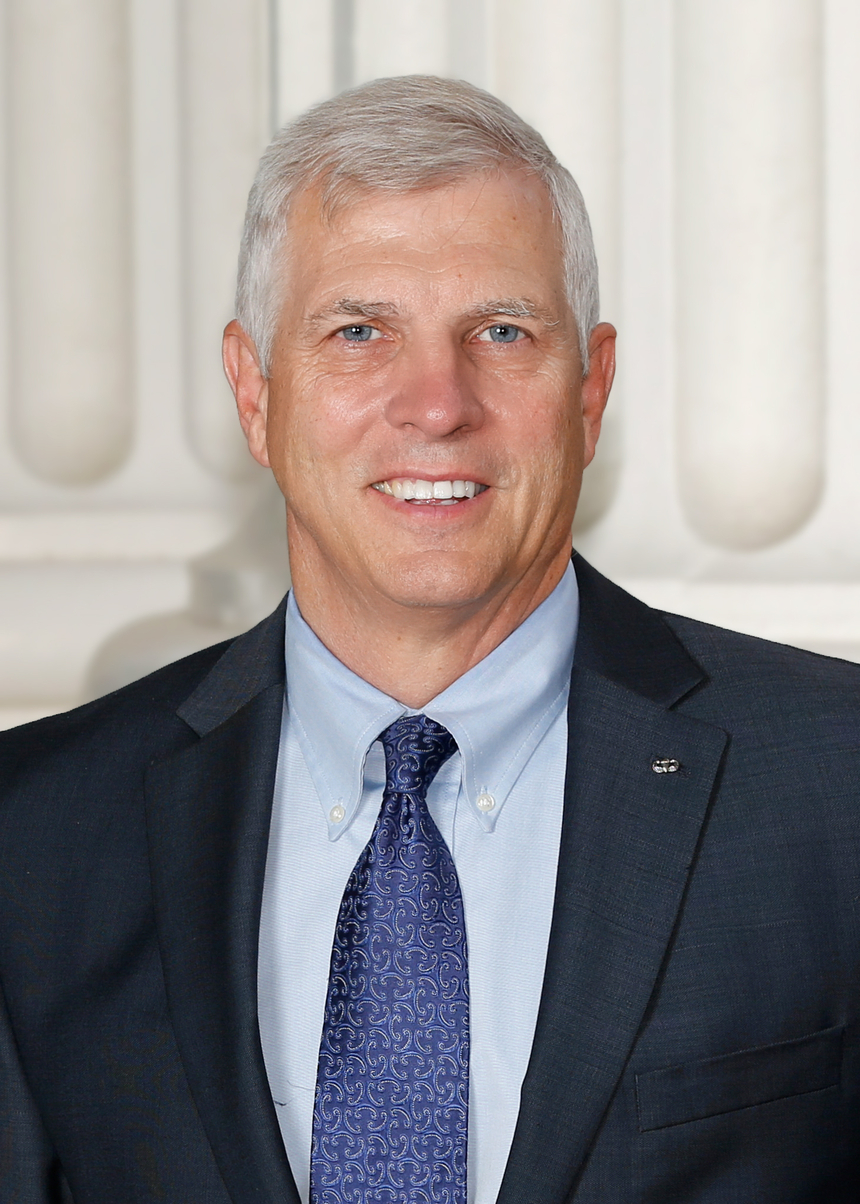
Photo of Tom Umberg
D California Senate · District 34

Sen. Tom Umberg

Compare
Total votes
17,276
all sessions
Attendance
97%
370 missed
Lower than 88% of chamber peers
With party
99%
of cast votes
Near the chamber average
Bipartisan score
0%
crosses aisle rarely
Near the chamber average
Sponsored
904
bills & resolutions
Near the chamber average
Committees
6
assignments
904 bills and resolutions

Sponsored bills

Total
904
Primary
196
Co-sponsor
708
This page
904
matching current filters
Co-sponsor SJR 13
Signed into law · California Senate · Co-sponsor
Navy North Hangar Fire: contamination cleanup.

This measure would, among other things, urge the United States Congress and President Joseph R. Biden to support a $100,000,000 supplemental funding request to address the ongoing impacts on public health, the environment, and the local economy caused by cross-jurisdictional pollution from the Navy North Hangar Fire. The measure would also urge President Biden to declare a national emergency due to those ongoing impacts, and would urge President Biden and the United States Congress to include in future federal budgets sufficient ongoing operational and maintenance funding for Navy North Hangar Fire remediation.

Signed into law Jul 17, 2024 1 co-sponsor
Co-sponsor SR 71
Passed · California Senate · Co-sponsor
Relative to Service Dog Appreciation Month.

Maddy summarySenate Resolution 71 officially designates September 2024 as Service Dog Appreciation Month in California to honor the vital contributions of service dogs and their handlers. This legislative measure does not alter laws or create new regulations but serves as a commemorative proclamation acknowledging the training, dedication, and life-improving benefits these animals provide to individuals with disabilities. The resolution highlights the significant challenges in obtaining service dogs, such as long wait times and rigorous training standards, while celebrating their role in enhancing health and independence for owners across the state.

Passed Jul 3, 2024 1 co-sponsor
Co-sponsor SB 867
Signed into law · California Senate · Co-sponsor
Safe Drinking Water, Wildfire Prevention, Drought Preparedness, and Clean Air Bond Act of 2024.

The California Drought, Water, Parks, Climate, Coastal Protection, and Outdoor Access For All Act of 2018, approved by the voters as Proposition 68 at the June 5, 2018, statewide primary election, authorizes the issuance of bonds in the amount of $4,100,000,000 pursuant to the State General Obligation Bond Law to finance a drought, water, parks, climate, coastal protection, and outdoor access for all program. Article XVI of the California Constitution requires measures authorizing general obligation bonds to specify the single object or work to be funded by the bonds and further requires a bond act to be approved by a 23 vote of each house of the Legislature and a majority of the voters. This bill would enact the Safe Drinking Water, Wildfire Prevention, Drought Preparedness, and Clean Air Bond Act of 2024, which, if approved by the voters, would authorize the issuance of bonds in the amount of $10,000,000,000 pursuant to the State General Obligation Bond Law to finance projects for safe drinking water, drought, flood, and water resilience, wildfire and forest resilience, coastal resilience, extreme heat mitigation, biodiversity and nature-based climate solutions, climate-smart, sustainable, and resilient farms, ranches, and working lands, park creation and outdoor access, and clean air programs. This bill would declare that it is to take effect immediately as an urgency statute.

Signed into law Jul 3, 2024 1 co-sponsor
Co-sponsor SR 99
Passed · California Senate · Co-sponsor
Relative to the Fourth of July.

Maddy summaryThis Senate Resolution formally recognizes July 4 as Independence Day and encourages Californians to celebrate the occasion with reverence and gratitude. The document highlights the historical significance of the date, noting its role in commemorating American independence and the principles of liberty and democracy. It serves as a symbolic gesture to honor the sacrifices of military service members and the contributions of citizens to the nation. The resolution does not create new laws or change existing policies but rather expresses the Senate's collective sentiment regarding the holiday.

Passed Jul 3, 2024 1 co-sponsor
Co-sponsor AB 247
Signed into law · California Assembly · Co-sponsor
Education finance: school facilities: Kindergarten Through Grade 12 Schools and Local Community College Public Education Facilities Modernization, Repair, and Safety Bond Act of 2024.

(1) The California Constitution prohibits the Legislature from creating a debt or liability that singly or in the aggregate with any previous debts or liabilities exceeds the sum of $300,000, except by an act that (1) authorizes the debt for a single object or work specified in the act, (2) has been passed by a 23 vote of all the Members elected to each house of the Legislature, (3) has been submitted to the people at a statewide general or primary election, and (4) has received a majority of all the votes cast for and against it at that election. This bill would set forth the Kindergarten Through Grade 12 Schools and Local Community College Public Education Facilities Modernization, Repair, and Safety Bond Act of 2024 as a state general obligation bond act that would provide $10,000,000,000 to construct and modernize education facilities, including $8,500,000,000 for elementary and secondary educational facilities and $1,500,000,000 for community college facilities, as specified. This bond act would become operative only if approved by the voters. (2) The Leroy F. Greene School Facilities Act of 1998 provides for the adoption of rules, regulations, and procedures, under the administration of the Director of General Services, for the allocation of state funds by the State Allocation Board for the construction and modernization of public school facilities. This bill would require a school district to submit to the Department of General Services a 5-year school facilities master plan as a condition of participating in the school facilities program under the act. The bill would amend the methodology for calculating the local contribution a school district is required to make in order to be eligible to receive state funding under the act, as specified. The bill would require a school district that seeks new construction or modernization funding under the act after November 5, 2024, to submit an updated report of the school district's existing school building capacity to the State Allocation Board. The bill would authorize the allocation of state funds under the act for the replacement of school buildings that are at least 75 years old, for specified assistance to school districts with a school facility located on a military installation, as specified, and small school districts, as defined, and for the testing and remediation of lead levels in water fountains and faucets used for drinking or preparing food on schoolsites, as provided. The bill would authorize new construction and modernization grants to be used for seismic mitigation purposes, certain health and safety projects, and, among other things, to establish schoolsite-based infrastructure to provide broadband internet access. The bill would also authorize modernization grants to be used for the control, management, or abatement of lead. The bill would increase the maximum level of total bonding capacity, as defined, that a school district could have and still be eligible for financial hardship assistance under the act from $5,000,000 to $15,000,000. The bill, commencing with the 2026–27 fiscal year, would increase that $15,000,000 maximum by a specified inflation adjustment each fiscal year. The bill would authorize the State Allocation Board to provide assistance for purposes of procuring interim housing to school districts and county offices of education impacted by a natural disaster for which the Governor has declared a state of emergency. The bill would also make conforming changes. The bill would make these provisions effective upon the adoption by the voters of the Kindergarten Through Grade 12 Schools and Local Community College Public Education Facilities Modernization, Repair, and Safety Bond Act of 2024. (3) This bill would declare that it is to take effect immediately as an urgency statute.


Signed into law Jul 3, 2024 1 co-sponsor
Co-sponsor SB 1169
Signed into law · California Senate · Co-sponsor
Los Angeles County Flood Control District: finances.

Existing law, the Los Angeles County Flood Control Act, establishes the Los Angeles County Flood Control District and authorizes the district to control and conserve the flood, storm, and other wastewaters of the district. Existing law authorizes the district to borrow money from certain entities for any flood control work authorized under the act and to repay the same, in annual installments, over a period not to exceed 20 years with an interest at a rate not to exceed 4.25% per annum. Existing law requires the district to annually levy a tax upon the taxable real property of the district clearly sufficient to pay the interest and installments of principal for those loans. Existing law limits the total amount the district may borrow not to exceed in the aggregate the sum of $4,500,000. Existing law also limits the total amount of bonds or other evidence of indebtedness in the aggregate that the district may issue and sell to not exceed $4,500,000. This bill would instead authorize the district to borrow money or obtain loan guarantees from those entities and to repay the same over a period not to exceed 35 years with interest at a rate not to exceed 5.5% annually. The bill would instead authorize the district to levy a tax, in compliance with the applicable provisions of Article XIIIC of the California Constitution, clearly sufficient to pay the interest and installments of principal for those loans. The bill would also delete the limits on the amount the district may borrow and the total amount of bonds or other evidence of indebtedness that the district may issue and sell. This bill would make legislative findings and declarations as to the necessity of a special statute for the Los Angeles County Flood Control District.

Signed into law Jul 2, 2024 1 co-sponsor
Primary SB 92
Signed into law · California Senate · Lead sponsor
Labor Code Private Attorneys General Act of 2004.

Existing law, the Labor Code Private Attorneys General Act of 2004 (PAGA) , authorizes an aggrieved employee, as defined, to bring a civil action, on behalf of that employee and other current or former employees, to enforce a violation of any provision of the Labor Code that provides for a civil penalty to be assessed and collected by the Labor and Workforce Development Agency or any of its departments, divisions, commissions, boards, agencies, or employees pursuant to certain notice and cure provisions, as prescribed. This bill would, among other things, authorize, on or after October 1, 2024, an employer that employed fewer than 100 employees in total during the period covered by the required notice to, within 33 days of receipt of the notice submit to the agency a confidential proposal to cure one or more of the alleged violations and, upon completing the cure, provide a sworn notification to the employee and agency that the cure is completed, as prescribed. By expanding the scope of the crime of perjury, this bill would impose a state-mandated local program. The bill would require the agency to verify whether the cure is complete within 20 days of receiving the employer's notification, as specified. This bill would also authorize an employer who employed at least 100 employees in total during the period covered by the required notice to, upon being served with a summons and complaint asserting a claim under PAGA, file a request and participate in, as prescribed, an early evaluation conference in the proceedings of the claim and a request for a stay of court proceedings before, or simultaneous with, that defendant's responsive pleading or other initial appearance in the action that includes the claim. This bill would apply its provisions to a civil action brought on or after June 19, 2024, except as specified. Existing constitutional provisions require that a statute that limits the right of access to the meetings of public bodies or the writings of public officials and agencies be adopted with findings demonstrating the interest protected by the limitation and the need for protecting that interest. This bill would make legislative findings to that effect. The California Constitution requires the state to reimburse local agencies and school districts for certain costs mandated by the state. Statutory provisions establish procedures for making that reimbursement. This bill would provide that no reimbursement is required by this act for a specified reason. This bill would become operative only if AB 2288 of the 2023–24 Regular Session is enacted and takes effect on or before January 1, 2025. This bill would declare that it is to take effect immediately as an urgency statute.
Signed into law Jul 1, 2024 0 co-sponsors
Co-sponsor AB 2288
Signed into law · California Assembly · Co-sponsor
Labor Code Private Attorneys General Act of 2004.

Existing law, the Labor Code Private Attorneys General Act of 2004 (PAGA) , authorizes an aggrieved employee, as defined, to bring a civil action, on behalf of that employee and other current or former employees, to enforce a violation of any provision of the Labor Code that provides for a civil penalty to be assessed and collected by the Labor and Workforce Development Agency or any of its departments, divisions, commissions, boards, agencies, or employees pursuant to certain notice and cure provisions, as prescribed. This bill would, among other things, instead authorize an aggrieved employee to bring a civil action as described above on behalf of the employee and other current or former employees against whom a violation of the same provision was committed. With respect to a violation by a person of a provision that does not provide for a civil penalty, PAGA makes that person liable for a civil penalty of $500 if, at the time of the alleged violation, the person does not employ one or more employees. If, at the time of the alleged violation, the person employed one or more employees, PAGA makes that person liable for a civil penalty of $100 for each aggrieved employee per pay period for the initial violation and $200 for each aggrieved employee per pay period for each subsequent violation. PAGA requires 75% of civil penalties recovered by aggrieved employees to be distributed to the Labor and Workforce Development Agency for enforcement of labor laws, including the administration of PAGA, and for education of employers and employees about their rights and responsibilities under the Labor Code, as specified, and requires 25% of civil penalties recovered by aggrieved employees to be distributed to the aggrieved employees, except as prescribed. This bill would instead, if, at the time of the alleged violation, the person employed one or more employees, make that person liable for a civil penalty of $100 for each aggrieved employee per pay period, except if certain mitigating factors apply, including that the alleged violation resulted from an isolated, nonrecurring event that did not extend beyond the lesser of 30 consecutive days or 4 consecutive pay periods, in which case the bill would make the civil penalty $25 or $50, except as provided. The bill would, subject to an exception, also reduce the civil penalties prescribed by PAGA by 15% or 30%, as specified, if a person accused of a violation has taken all reasonable steps to comply with the provisions alleged to have been violated in the required notice provided by the aggrieved employee, as prescribed. This bill would apply its provisions to a civil action brought on or after June 19, 2024, except as specified. This bill would become operative only if SB 92 of the 2023–24 Regular Session is enacted and takes effect on or before January 1, 2025. This bill would declare that it is to take effect immediately as an urgency statute.

Signed into law Jul 1, 2024 1 co-sponsor
Primary SCR 119
Signed into law · California Senate · Lead sponsor
Relative to National Fentanyl Awareness Day.

Maddy summaryThis Senate Concurrent Resolution designates May 7, 2024, as National Fentanyl Awareness Day to highlight the dangers of counterfeit pills containing lethal doses of fentanyl. The measure directly affects the general public by aiming to increase awareness of the risks posed by fake prescription pills and illicit fentanyl, which have caused a significant rise in overdose deaths across the United States and California. While the resolution includes statements supporting law enforcement efforts to combat the spread of these drugs, its primary function is symbolic recognition rather than establishing new laws or funding.

Signed into law Jun 20, 2024 0 co-sponsors
Co-sponsor SCR 141
Signed into law · California Senate · Co-sponsor
Relative to Mental Health Awareness Month.

Maddy summaryThis Senate Concurrent Resolution officially designates May 2024 as National Mental Health Awareness Month within the state of California. The measure does not alter laws or allocate funding but serves to formally recognize the importance of mental well-being and highlight statistics regarding mental illness prevalence and its impact on various communities. By establishing this designation, the resolution aims to encourage public focus on mental health issues during the month of May.

Signed into law Jun 20, 2024 1 co-sponsor
Showing 241 to 250 of 904 bills
Previous 1 … 24 25 26 … 91 Next