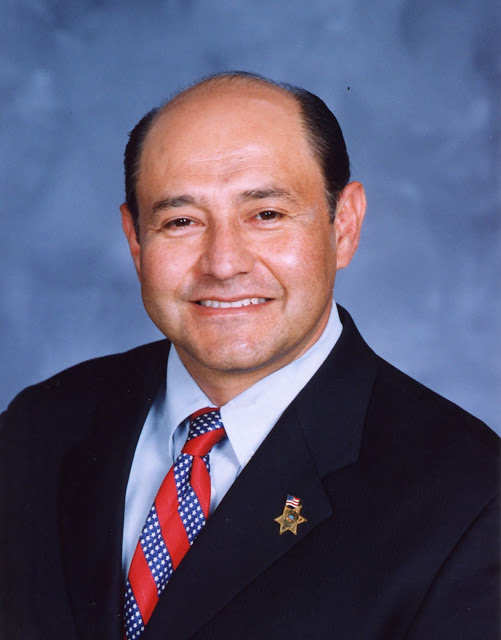
Photo of Lou Correa
D California Senate · District 34

Sen. Lou Correa

Compare
Total votes
37,695
all sessions
Attendance
94%
1,774 missed
Near the chamber average
With party
94%
of cast votes
Near the chamber average
Bipartisan score
3%
crosses aisle rarely
Near the chamber average
Sponsored
1,356
bills & resolutions
Near the chamber average
Committees
0
assignments
1,356 bills and resolutions

Sponsored bills

Total
1,356
Primary
347
Co-sponsor
1,009
This page
1,356
matching current filters
Co-sponsor SCR 123
Failed · California Senate · Co-sponsor
Relative to the Mexican bicentennial celebration.

This measure would recognize the importance of celebrating the birth and independence of Mexico and honoring and invigorating the spirit of friendship, understanding, and cooperation that characterizes the California-Mexico relationship.

Failed Nov 30, 2010 1 co-sponsor
Primary SB 967
Vetoed · California Senate · Lead sponsor
Public contracts: bid preferences.

Existing law imposes various requirements with respect to contracting by state agencies. This bill would require a state agency that accepts bids or proposals for contracts for goods or services exceeding $1,000,000, or for the distribution of funds pursuant to the federal American Recovery and Reinvestment Act of 2009, on or before July 1, 2011, to provide a 5% preference, as provided, to a business that directly provides the goods or services when 90% of the employees of the business performing work on the contract reside in the state. This bill would state that these bidding preferences are not applicable to contracts that are subject to the State Contract Act or to contracts for specified professional services.

Vetoed Nov 30, 2010 0 co-sponsors
Co-sponsor SB 261
Failed · California Senate · Co-sponsor
Water use: water management plans.

(1) Existing law requires the Department of Water Resources to convene an independent technical panel to provide information to the department and the Legislature on new demand management measures, technologies, and approaches. "Demand management measures" means those water conservation measures, programs, and incentives that prevent the waste of water and promote the reasonable and efficient use and reuse of available supplies. Existing law requires urban water suppliers to prepare and adopt urban water management plans with specified components. This bill would require a retail urban water supplier, as defined, to develop and implement an urban water conservation plan, including prescribed components, or achieve high-efficiency water use, as defined. The bill would impose various requirements for the contents of these plans, and would require a retail urban water supplier to update its water conservation plan on a specified schedule. The retail urban water supplier or other specified entities acting on behalf of the retail urban water supplier, would be required to submit reports for purposes of determining progress towards achieving a prescribed water conservation goal. The bill would require specified competitive grant and loan programs to provide financial incentives to retail urban water suppliers to support water use efficiency and local water resources management measures. The bill also would require the board and the department, not later than April 1, 2010, to convene a task force to develop best management practices for commercial, industrial, and institutional water uses for the purpose of achieving a specified reduction in water use by 2020. (2) The Agricultural Water Management Planning Act, until January 1, 1993, and thereafter only as specified, requires certain agricultural water suppliers to prepare and adopt water management plans. This bill would substantially revise the act to require an agricultural water supplier, as defined, to prepare and adopt an agricultural water management plan with specified components on or before December 31, 2012, and update that plan every 5 years, as specified. An entity, as defined, that becomes an agricultural water supplier after December 31, 2012, would be required to prepare and adopt an agricultural water management plan within 2 years after becoming an agricultural water supplier. The bill would require an agricultural water supplier to submit copies of the plan, or provide a specified written notice, to the department and other specified entities. The bill would provide that an agricultural water supplier is ineligible to receive specified state funds if the supplier does not prepare, adopt, and submit the plan in accordance with the requirements established by the bill.


Failed Nov 30, 2010 1 co-sponsor
Primary SB 501
died · California Senate · Lead sponsor
Local government: compensation disclosure.

Existing law provides for the compensation of local government officers and employees, as specified. This bill would require filers, as defined, to annually file a compensation disclosure form, as specified. This bill would require the Secretary of State to develop the form, which would provide for the disclosure of, among other things, salaries and stipends, automobile and equipment allowances, and incentive and bonus payments. This bill would also require a county, city, city and county, school district, special district, or joint powers agency that maintains an Internet Web site to post the information contained on the filed form on that Internet Web site, as specified. The bill would authorize a district attorney or any interested person to commence an action by mandamus to enforce the provisions of the bill, as specified. The duties imposed on local departmental agencies by the bill would create a state-mandated local program. The bill would express a legislative finding and declaration that, to ensure the statewide integrity of local government, disclosure of compensation paid to filers is an issue of statewide concern and not a municipal affair and that, therefore, all cities, including charter cities, would be subject to the provisions of the bill. The California Constitution requires the state to reimburse local agencies and school districts for certain costs mandated by the state. Statutory provisions establish procedures for making that reimbursement. This bill would provide that, if the Commission on State Mandates determines that the bill contains costs mandated by the state, reimbursement for those costs shall be made pursuant to these statutory provisions.

died Nov 30, 2010 0 co-sponsors
Co-sponsor AB 1581
died · California Assembly · Co-sponsor
California Environmental Quality Act: retail facilities: project review.

(1) The California Environmental Quality Act (CEQA) requires a lead agency to prepare, or cause to be prepared, and certify the completion of, an environmental impact report on a project, as defined, that it proposes to carry out or approve that may have a significant effect on the environment, as defined, or to adopt a negative declaration if it finds that the project will not have that effect. This bill would, until January 1, 2014, exempt from those CEQA requirements a project that consists of the alteration of a vacant retail structure that existed prior to January 1, 2008, is not more than 120,000 square feet in area, and meets specified requirements. (2) CEQA also requires the lead agency to call at least one scoping meeting for a project of statewide, regional, or areawide significance. CEQA requires the lead agency to provide to specified entities, including a city or county that borders the city or county within which the project is located, a responsible agency, a public agency with jurisdiction by law with respect to the project, and a transportation planning agency or public agency required to be consulted, a notice of at least one scoping meeting. This bill would additionally require the lead agency to provide a notice to other entities that have filed a written request for the notice. (3) By imposing various additional duties on a lead agency with regard to the implementation of CEQA requirements, this bill would increase the service provided by a local agency, thereby creating a state-mandated local program. (4) The California Constitution requires the state to reimburse local agencies and school districts for certain costs mandated by the state. Statutory provisions establish procedures for making that reimbursement. This bill would provide that no reimbursement is required by this act for a specified reason.

died Nov 30, 2010 1 co-sponsor
Primary SB 476
Failed · California Senate · Lead sponsor
Environment: California Environmental Quality Act: noncompliance allegations: public comment.

The California Environmental Quality Act (CEQA) requires a lead agency, as defined, to prepare, or cause to be prepared, and certify the completion of, an environmental impact report (EIR) on a project that it proposes to carry out or approve that may have a significant effect on the environment or to adopt a negative declaration if it finds that the project will not have that effect. CEQA also requires a lead agency to prepare a mitigated negative declaration for a project that may have a significant effect on the environment if revisions in the project would avoid or mitigate that effect and there is no substantial evidence that the project, as revised, would have a significant effect on the environment. CEQA provides for a public review period for the public to review a draft EIR, proposed negative declaration, or proposed mitigated negative declaration. CEQA requires a lead agency to evaluate and respond to comments on a draft EIR, proposed negative declaration, or proposed mitigated negative declaration made during the public review period and authorizes a lead agency to evaluate and respond to comments made on a draft EIR when the comments are submitted after the public review period. CEQA requires an action or proceeding alleging noncompliance with its requirements to be based on grounds that were presented to the public agency orally or in writing by any person, and prohibits a person from maintaining an action or proceeding unless the person objected to the approval of the project orally or in writing, during the public comment period provided under CEQA or prior to the close of the public hearing on the project before the issuance of the notice of determination. This bill instead would prohibit these actions or proceedings unless the oral or written presentation or objection occurs during the public comment period provided under CEQA or prior to the close of the public hearing on the project before the filing, rather than issuance, of the notice of determination.

Failed Nov 30, 2010 0 co-sponsors
Co-sponsor SB 968
Failed · California Senate · Co-sponsor
Unemployment insurance: training and retraining benefits.

Existing law provides for unemployment compensation benefits to eligible persons who are unemployed through no fault of their own. Existing law, until January 1, 2015, provides for retraining benefits to eligible individuals pursuant to the federal Trade Act of 1974, as amended by the federal Trade Act of 2002. Existing law authorizes an unemployed individual who files a claim for unemployment compensation benefits or extended duration benefits, or an application for federal-state extended benefits or any federally funded unemployment compensation benefits, to apply to the Employment Development Department for benefits during a period of training or retraining. This bill would establish the California Training Benefits Program, which, among other things, would, instead, specify that an unemployed individual shall be automatically eligible for those training and retraining benefits, regardless of whether the individual applies to the department for a determination of potential eligibility if specified criteria apply, or if the Director of Employment Development makes a determination of eligibility. Existing law requires that a determination of potential eligibility for specified training and retraining benefits be issued to an unemployed individual if the Director of Employment Development finds that specified conditions apply. This bill would delete those provisions, and instead specify that an unemployed individual who is able to work is eligible to receive training and retraining benefits if he or she certifies on the unemployment insurance claim form for benefits that he or she is enrolled in a training program that meets criteria specified by this bill, and a responsible person connected with the training or retraining program certifies that the individual is enrolled and is satisfactorily pursuing the training or retraining program. Existing law specifies that any unemployed individual receiving certain unemployment compensation benefits, who applies for a determination of potential eligibility for those benefits no later than the 16th week of his or her receiving those benefits, and is determined to be eligible for those benefits, is entitled to a training extension on his or her unemployment claim, if necessary, to complete approved training. This bill would eliminate that requirement that an individual apply for a determination of potential eligibility no later than the 16th week of his or her receiving those benefits, and would instead require that any unemployed individual receiving unemployment compensation benefits be entitled to a training extension on his or her unemployment compensation claim, if necessary, to complete approved training. Existing law requires the department to inform all individuals who claim unemployment insurance compensation benefits in this state of the benefits potentially available, as provided. This bill would require the department to also publicize and promote the benefits available under those provisions on its Internet Web site. Existing law specifies that, for purposes of provisions governing eligibility for work with respect to any week an individual is eligible for unemployment benefits, an unemployed individual who is able to work is eligible to receive benefits with respect to any week during a period of training or retraining, if the director finds that specified conditions apply. This bill would remove that requirement that the director make a specified finding for an unemployed individual who is able to work to be eligible to receive those benefits, if those specified conditions apply. Because the bill would make various changes to existing eligibility requirements for training and retraining benefits, which would result in additional amounts being payable from the Unemployment Fund, the bill would make an appropriation.

Failed Nov 30, 2010 1 co-sponsor
Co-sponsor AB 1790
Failed · California Assembly · Co-sponsor
Orange County Fair: sale of state property.

Existing law divides the state into agricultural districts within the boundaries of which agricultural associations may be formed. Existing law creates District 32a from real property commonly known as the Orange County Fair and authorizes the Department of General Services to sell all or any portion of the real property that composes District 32a. This bill would repeal the provision creating District 32a out of the Orange County Fair property and would repeal the provision authorizing its sale by the department. This bill would also repeal the creation of the District 32a Disposition Fund in the State Treasury. This bill would declare that it is to take effect immediately as an urgency statute.

Failed Nov 30, 2010 1 co-sponsor
Primary SB 1099
Failed · California Senate · Lead sponsor
Foster care funds: subsidized child care for foster parents.

Existing law establishes the Aid to Families with Dependent Children-Foster Care (AFDC-FC) program, under which counties provide payments to foster care providers on behalf of qualified children in foster care. Existing law requires the county to amend its foster care state plan to authorize counties that elect to subsidize child care for foster parents to use specified federal matching funds for that purpose. Under existing law, the county is responsible for 100% of the nonfederal share of payments to foster parents for this purpose. Existing law, the Child Care and Development Services Act provides child care and development services to children from birth to 13 years of age and their parents through full- and part-time programs. The act requires the Superintendent of Public Instruction to adopt rules and regulations on eligibility, enrollment, and priority of services needed to implement those programs, and gives priority to neglected or abused children who are recipients of child protective services, or children who are at risk of being neglected or abused, as specified. This bill would require the State Department of Social Services to amend its foster care state plan to authorize the use of designated state child care and development funds administered by the State Department of Education, in addition to county funds, as the nonfederal match for specified child care for children receiving protective services, foster children, and children at risk of abuse and neglect, pursuant to criteria specified in the bill. The bill would make conforming changes to the law relating to the payment of the nonfederal share of these costs.

Failed Nov 30, 2010 0 co-sponsors
Primary SB 1446
died · California Senate · Lead sponsor
Endangered and threatened species: habitat mitigation.

Existing law, the California Endangered Species Act (CESA) , prohibits the importation, exportation, taking, possession, purchase, or sale of any threatened or endangered species, except in certain situations. CESA, with exceptions, authorizes the Department of Fish and Game to authorize the take of threatened species, endangered species, or candidate species by permit if the take is incidental to an otherwise lawful activity, the impacts of the authorized take are minimized and fully mitigated, the permit is consistent with specified regulations, and the applicant ensures adequate funding to implement the minimization and mitigation measures and monitor compliance with, and effectiveness of, those measures. This bill would make several statements of legislative intent, relating to the establishment of alternatives for financial assurances under CESA for public agencies that would ensure that those agencies fully fund their obligations on an ongoing basis for habitat mitigation and the maintenance and monitoring of that mitigation.

died Nov 30, 2010 0 co-sponsors
Showing 311 to 320 of 1,356 bills
Previous 1 … 31 32 33 … 136 Next