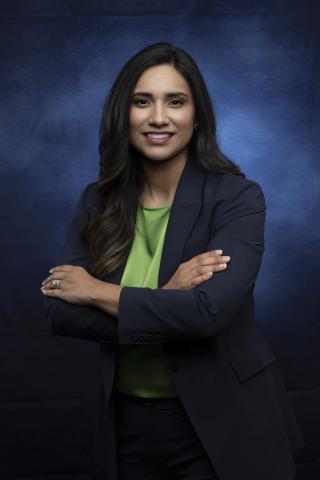
Photo of Sabrina Cervantes
D California Senate · District 31

Sen. Sabrina Cervantes

Compare
Total votes
21,764
all sessions
Attendance
86%
2,660 missed
Near the chamber average
With party
98%
of cast votes
Higher than 90% of chamber peers
Bipartisan score
1%
crosses aisle rarely
Near the chamber average
Sponsored
1,698
bills & resolutions
Higher than 75% of chamber peers
Committees
11
assignments
1,698 bills and resolutions

Sponsored bills

Total
1,698
Primary
203
Co-sponsor
1,495
This page
1,698
matching current filters
Co-sponsor ACR 206
Passed · California Assembly · Co-sponsor
Relative to India's Independence Day.

This measure would recognize August 15, 2022, as India's Independence Day and urge all Californians to join in celebrating India's independence.

Passed Aug 16, 2022 1 co-sponsor
Primary AB 2502
Passed · California Assembly · Lead sponsor
Foster care.

Existing law generally provides for the placement of foster youth in various placement settings. Existing law requires, for all youth in foster care, a county social worker to create a case plan within a specified timeframe after the child is introduced into the foster care system. Existing law requires, when appropriate, for a child who is 16 years of age or older and for a nonminor dependent, the case plan to include the transitional independent living plan (TILP) , a written description of the programs and services that will help the child, consistent with the child's best interests, to prepare for the transition from foster care to successful adulthood. This bill would additionally require the TILP to identify likely emergency situations a child or nonminor dependent may experience that would affect the child or nonminor dependent, and create a plan to address those potential emergencies, as specified. Existing law, the California Fostering Connections to Success Act, revises and expands the scope of various programs relating to the provision of cash assistance and other services to and for the benefit of certain foster and adopted children, and other children who have been placed in out-of-home care, including children who receive Aid to Families with Dependent Children-Foster Care (AFDC-FC) , Adoption Assistance Program, California Work Opportunity and Responsibility to Kids (CalWORKs) , and Kinship Guardianship Assistance Payment (Kin-GAP) benefits. Among other provisions, the act extends specified foster care benefits to nonminor dependents up to 21 years of age, if specified conditions are met. Existing law defines a nonminor dependent for these purposes as a foster child who is a current dependent child or ward of the juvenile court, or who is a nonminor under the transition jurisdiction of the juvenile court pursuant to a voluntary reentry agreement, and in accordance with a transitional independent living case plan who has attained 18 years of age while under an order of foster care placement by the juvenile court and is not older than 21 years of age. Existing law authorizes the juvenile court to retain jurisdiction over any person who is found to be a ward of the juvenile court until the ward attains 21 years of age. The bill would, for a state of emergency declared by the Governor, as specified, require that extended foster care support continue for 6 months from the date of the declaration for a nonminor dependent who turns 21 years of age while the state of emergency is in effect, unless the nonminor dependent objects. The bill would also, for any state of emergency declared by the Governor, require a nonminor dependent who is unable to meet certain participation conditions or to qualify for an exception, as specified, to continue to receive foster care support for 6 months from the date of the declaration, unless the nonminor dependent objects. The bill would authorize the Governor to extend these provisions under specified circumstances. The bill would also, for a ward or nonminor dependent, that meets the above criteria for expanded eligibility to receive foster care support, allow the court to retain jurisdiction over that ward or nonminor dependent, as specified. By expanding the application of the above county-administered programs and imposing additional duties on county employees, the bill would impose a state-mandated local program. Existing law continuously appropriates moneys from the General Fund to defray a portion of county costs under the CalWORKs program. This bill would provide that the continuous appropriation would not be made for purposes of implementing the bill. The California Constitution requires the state to reimburse local agencies and school districts for certain costs mandated by the state. Statutory provisions establish procedures for making that reimbursement. This bill would provide that with regard to certain mandates no reimbursement is required by this act for a specified reason. With regard to any other mandates, this bill would provide that, if the Commission on State Mandates determines that the bill contains costs so mandated by the state, reimbursement for those costs shall be made pursuant to the statutory provisions noted above.


Passed Aug 11, 2022 0 co-sponsors
Primary AB 2599
Passed · California Assembly · Lead sponsor
High-occupancy vehicle lanes: County of Riverside.

Existing law authorizes the Department of Transportation to designate certain lanes for the exclusive or preferential use of high-occupancy vehicles. When those exclusive or preferential use lanes are established and double parallel solid lines are in place to the right thereof, existing law prohibits any person driving a vehicle from crossing over those double lines to enter into or exit from the lanes, and entrance into or exit from those lanes is authorized only in areas designated for these purposes or where a single broken line is in place to the right of the lanes, except as specified. Existing law authorizes a regional transportation agency, in cooperation with the Department of Transportation, to apply to the California Transportation Commission to develop and operate high-occupancy toll (HOT) lanes, including administration and operation of a value pricing program and exclusive or preferential lane facilities for public transit. Existing law authorizes a value pricing and transit program involving HOT lanes to be developed and operated on State Highway Route 15 in the County of Riverside by the Riverside County Transportation Commission. Existing law requires the Department of Transportation to report to the transportation policy committees of the Legislature, on or before January 1, 2020, on the feasibility and appropriateness of limiting the use of high-occupancy vehicle lanes to high-occupancy vehicles and eligible vehicles, as defined, only during the hours of heavy commuter traffic on both State Route 91 between Interstate 15 and Interstate 215 in the County of Riverside, and State Route 60 in the County of Riverside. Separate from that report, this bill would require the Transportation Agency, on or before January 1, 2024, to report to the transportation policy committees of the Legislature on that same topic and on the feasibility and appropriateness of removing from high-occupancy vehicle lanes in the County of Riverside, except for certain high-occupancy toll lanes, any double parallel solid lines to restrict the entrance into or exit from those lanes, including the use of the appropriate markings and signage.

Passed Aug 11, 2022 0 co-sponsors
Co-sponsor AB 2266
Passed · California Assembly · Co-sponsor
Community colleges: California College Promise: fee waiver eligibility.

Existing law establishes the California College Promise, under the administration of the Chancellor of the California Community Colleges, to provide funding, upon appropriation by the Legislature, to each community college meeting prescribed requirements. Existing law authorizes a community college to use that funding to waive some or all of the fees for 2 academic years for certain first-time students at the college who are enrolled in 12 or more semester units or the equivalent, or less for students certified as "full time," as specified, and who complete and submit either a Free Application for Federal Student Aid or a California Dream Act application, except for students who have previously earned a degree or certificate from a postsecondary educational institution. This bill would make returning students, as defined, also eligible for the fee waiver.

Passed Aug 11, 2022 1 co-sponsor
Co-sponsor SB 1325
Passed · California Senate · Co-sponsor
California Techquity Innovation Program.

Existing law establishes the Office of Small Business Advocate (CalOSBA) within the Governor's Office of Business and Economic Development to advocate for causes of small business and to provide small businesses with the information they need to survive in the marketplace. Existing law prescribes the duties and functions of the Small Business Advocate, who is also the Director of CalOSBA. This bill would, upon appropriation by the Legislature for the purposes of these provisions, establish the California Techquity Innovation Program, to be administered by CalOSBA, to provide grants to advance equity in technology-based business and finance sectors in California. The bill would specify that grants would be awarded for expansion or operation of technology incubators, technical assistance, professional coaching, mentoring, workforce training initiatives, and research, as specified. The bill would establish the California Techquity Innovation Program Fund for purposes of supporting the program. The bill would require CalOSBA to establish guidelines in order to maintain oversight of the California Techquity Innovation Program, including, but not limited to, guidelines for grant approval, program operations, and reporting by grant recipients, as specified. The bill would require the office to annually report to the Legislature on programs and activities undertaken pursuant to these provisions and to post that report on its internet website.

Passed Aug 11, 2022 1 co-sponsor
Primary AB 1106
Passed · California Assembly · Lead sponsor
Employment Training Panel: pilot program: employment training needs.

Existing law establishes the Employment Training Panel within the Employment Development Department. Under existing law, the panel is charged with performing various duties, including establishing a 3-year plan based on the demand of employers for trained workers, changes in the state's economy and labor markets, and continuous reviews of the effectiveness of panel training contracts. Existing law establishes the California Community Colleges Economic and Workforce Development Program with the purpose of, among other things, using labor market information to advise the Chancellor's Office of the California Community Colleges and regional community college bodies on the workforce needs of the state's competitive and emerging industry sectors, and collaborating and coordinating investment with other state, regional, or local agencies involved in education and workforce training in California. This bill, upon appropriation by the Legislature, would require the Employment Training Panel to establish a pilot program to serve the employment training needs of small businesses. The bill would require the program to leverage the capacity of the existing statewide network of community college contract education centers operating with multiple employer contracts. The bill would require the Employment Training Panel to develop the pilot program to achieve specified purposes, including strengthening the linkages between higher education institutions and employers. This bill would require the Employment Training Panel, in developing the program, to work with key workforce and economic development partners, including the Chancellor's Office of the California Community Colleges, the Governor's Office of Business and Economic Development, the Labor and Workforce Development Agency, and the California Workforce Development Board. The bill would also authorize the Employment Training Panel to establish one or more ad hoc advisory groups of stakeholders. The bill would require all data collected from the pilot program to be inputted into the Employment Training Panel's data tracking system. The bill would require the Employment Training Panel to submit 2 reports to the appropriate legislative committees on the implementation of the program and program activities, as specified. This bill would repeal these provisions on January 1, 2026.

Passed Aug 11, 2022 0 co-sponsors
Showing 701 to 710 of 1,698 bills
Previous 1 … 70 71 72 … 170 Next