

Existing law, the Knox-Keene Health Care Service Plan Act of 1975 (hereafter the act) , provides for the licensure and regulation of health care service plans by the Department of Managed Health Care and makes a willful violation of the act a crime. Existing law requires the records, books, and papers of a health care service plan and other specified entities to be open to inspection by the director of the department during normal business hours. This bill would instead require the records, books, and papers of a health care service plan and other specified entities to be open to inspection by the director, including through electronic means. The bill would require a plan and other specified entities to furnish in electronic media records, books, and papers that are possessed in electronic media and to conduct a diligent review of records, books, and papers and make every effort to furnish those responsive to the director's request. The bill would require records, books, and papers to be furnished in a format that is digitally searchable, to the greatest extent feasible. The bill would require records, books, and papers to be preserved until furnished, if requested by the department. The bill would authorize the director to inspect and copy these records, books, and papers, and to seek relief in an administrative law proceeding if, in the director's determination, a plan or other specified entity fails to fully or timely respond to a duly authorized request for production of records, books, and papers. Because a willful violation of these requirements would be a crime, the bill would impose a state-mandated local program. Existing law requires the department to conduct periodically an onsite medical survey of the health delivery system of each plan. Existing law requires the director to publicly report survey results no later than 180 days following the completion of the survey, and requires a final report to be issued after public review of the survey. Existing law requires the department to conduct a followup review to determine and report on the status of the plan's efforts to correct deficiencies no later than 18 months following release of the final report. This bill would state that nothing in those provisions prohibits the director from taking any action permitted or required under the act in response to the survey results before the followup review is initiated or completed, including, but not limited to, taking enforcement actions and opening further investigations. The bill would declare that these provisions are declaratory of and clarify existing law with regard to the director's enforcement authority. Existing law enumerates acts or omissions by a health care service plan that constitute grounds for disciplinary action by the director. This bill would add to those enumerated acts or omissions the failure by a health care service plan to respond fully or timely, or both, to a duly authorized request for production of records. The California Constitution requires the state to reimburse local agencies and school districts for certain costs mandated by the state. Statutory provisions establish procedures for making that reimbursement. This bill would provide that no reimbursement is required by this act for a specified reason.
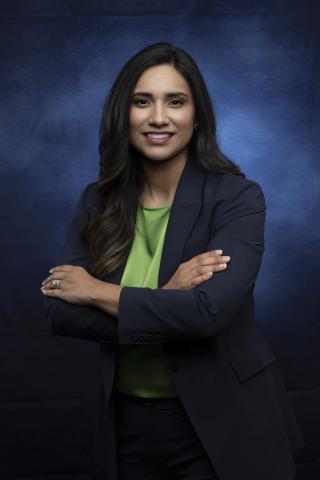
Sen. Sabrina Cervantes
Sponsored bills
Existing law makes it a crime for a person who, with the intent to place another person in reasonable fear for that other person's safety, or the safety of the other person's immediate family, by means of an electronic communication device, and without consent of the other person, and for the purpose of imminently causing that other person unwanted contact, injury, or harassment by a third party, distributes personal identifying information that would be likely to incite or produce that unlawful action. Existing law makes this a misdemeanor punishable by up to one year in a county jail or by a fine of not more than $1,000. This bill would create a private cause of action against a person who doxes, as defined, another person. The bill would entitle a prevailing plaintiff who suffers harm as a result of being doxed to specified damages, and would authorize the court to order equitable relief, as specified, and injunctive relief maintaining the confidentiality of a plaintiff using a pseudonym instead of their true name. The bill would authorize a plaintiff to proceed using a pseudonym and would require the plaintiff to file a confidential information form, as prescribed. The bill would require the court to keep the plaintiff's name and excluded or redacted characteristics confidential, as specified, and, upon request of the plaintiff, limit access to court records filed under these provisions to specified individuals. The bill would require the Judicial Council, on or before January 1, 2026, to adopt or revise as appropriate rules and forms to implement specified provisions. Existing law requires a court or judge, on granting an injunction, to require an undertaking on the part of the applicant sufficient to cover certain damages the party enjoined may sustain by reason of the injunction, if the court finally decides that the applicant was not entitled to the injunction. Existing law exempts from the undertaking requirement certain persons seeking an injunction, as specified. This bill would additionally exempt from the undertaking requirement an applicant seeking an injunction ordering the defendant to cease doxing activities. Existing constitutional provisions require that a statute that limits the right of access to the meetings of public bodies or the writings of public officials and agencies be adopted with findings demonstrating the interest protected by the limitation and the need for protecting that interest. This bill would make legislative findings to that effect.
Existing law generally regulates the possession of firearms, including imposing storage requirements to prevent children from gaining access to firearms. This bill would, beginning on January 1, 2026, require a person who possesses a firearm in a residence to keep the firearm securely stored when the firearm is not being carried or readily controlled by the person or another lawful authorized user. For purposes of these provisions, a firearm is securely stored if the firearm is maintained within, locked by, or disabled using a certified firearm safety device or secure gun safe that meets specified standards. The bill would make a first and 2nd violation of this offense punishable as an infraction, and a 3rd or subsequent violation punishable as a misdemeanor. The bill would exempt unloaded antique firearms, as defined, or firearms that are permanently inoperable from these provisions. The bill would require the Department of Justice to seek to inform residents about these standards for storage of firearms. By creating a new crime, this bill would impose a state-mandated local program. Existing law makes it a misdemeanor or a felony if a person keeps a firearm within any premises that are under the person's custody or control and the person knows or reasonably should know that a child is likely to gain access to the firearm without the permission of the child's parent or legal guardian, and the child obtains access to the firearm and causes injury, other than great bodily injury, or death or great bodily injury to the child or any other person, or carries that firearm off-premises, as defined, to a public place or a school. Existing law exempts a person from the above provisions if the person has no reasonable expectation, based on objective facts and circumstances, that a child is likely to be present on the premises. This bill would remove these exemptions. The California Constitution requires the state to reimburse local agencies and school districts for certain costs mandated by the state. Statutory provisions establish procedures for making that reimbursement. This bill would provide that no reimbursement is required by this act for a specified reason.
Existing law makes it a crime to intimidate a voter or to interfere with the conduct of an election, as specified. Existing law makes it a crime for a person in possession of a firearm or a uniformed peace officer, private guard, or security personnel to be stationed in the immediate vicinity of, or posted at, a polling place without written authorization of the appropriate elections official, except as specified. Existing law also makes it a crime to hire a person to conduct these prohibited acts. This bill would prohibit a person from intimidating, threatening, or coercing, or attempting to intimidate, threaten, or coerce, any other person for engaging in specified election-related activities. The bill would authorize an aggrieved person, an officer holding an election or conducting a canvass, or the Attorney General to file a civil action to enforce this prohibition. The bill would create a presumption that a person who openly carries a firearm or imitation firearm while interacting with or observing the specified election-related activities would be presumed to have engaged in prohibited intimidation, in the absence of an affirmative showing to the contrary by a preponderance of the evidence. The bill would provide that an aggrieved person who prevails in such an action will recover reasonable attorney's fees, reasonable expert fees, and reasonable litigation expenses, as specified. This bill would declare that it is to take effect immediately as an urgency statute.
Existing law requires a county elections official to cancel a person's voter registration in certain circumstances, including when a person is deemed mentally incompetent, upon proof that the person is presently imprisoned for conviction of a felony, upon the death of the person, and when a person fails to respond to an address verification mailed by the elections official and does not attempt to vote at the next two federal general elections. Existing law requires the elections official to provide notice of the intent to cancel the person's registration between 15 and 30 days before the cancellation. This bill, until July 1, 2025, instead would require the elections official to provide notice of the intent to cancel the person's registration between 15 and 30 days before the cancellation if the cancellation was due to mental incapacity to vote, a prison commitment, or the voter has failed to respond to an address verification, as specified, and would require the elections official to provide notice within 15 days before or after cancellation of a voter's registration if the person has died. This bill would require the Secretary of State to submit an update on January 1, 2025, and on the first of each month thereafter until July 1, 2025, to specified committees of the Legislature detailing its efforts and progress in fully implementing and achieving compliance with specified laws regarding voting rights disqualifications and restorations. By increasing the duties on county elections officials, the bill would impose a state-mandated local program. The California Constitution requires the state to reimburse local agencies and school districts for certain costs mandated by the state. Statutory provisions establish procedures for making that reimbursement. This bill would provide that, if the Commission on State Mandates determines that the bill contains costs mandated by the state, reimbursement for those costs shall be made pursuant to the statutory provisions noted above.
Existing law establishes the California Transportation Commission in the Transportation Agency. Existing law vests the California Transportation Commission with various powers and duties relative to the programming of transportation capital projects and allocation of funds to those projects pursuant to the state transportation improvement program and various other transportation funding programs. Under existing law, the commission consists of 13 members, including 9 members appointed by the Governor with the advice and consent of the Senate, one member appointed by the Speaker of the Assembly, and one member appointed by the Senate Committee on Rules, as specified. Existing law requires the Governor, in appointing those members to the commission, to make every effort to ensure, among other things, the commission has a diverse membership with expertise in transportation issues, taking into consideration factors, including, but not limited to, socioeconomic background and professional experience, which may include experience working in, or representing, disadvantaged communities. This bill would require that at least one of those Governor-appointed members of the commission have expertise in transportation issues and professional experience that includes experience working in, or representing, disadvantaged communities.
Prior law, the California Voter's Choice Act, required the Secretary of State to establish a taskforce that included certain individuals to review all-mailed ballot or vote center elections and to provide comments and recommendations to the Legislature within 6 months of each all-mailed ballot election or vote center election. The act was repealed by its own provisions on January 1, 2022. This bill would reestablish this taskforce. Existing law requires any county conducting an all-mailed ballot election to meet specified conditions, including that each vote center provide language assistance, that a county elections official establish a language accessibility advisory committee, and that the county elections official develop a draft plan for the administration of elections in consultation with the public. Under existing law, a voter education and outreach plan is required to include at least two direct contacts with voters to inform them of the upcoming election and to promote the toll-free voter assistance hotline. Existing law authorizes the county elections official to adopt a final plan for the administration of elections following a 14-day review and comment period. Existing law requires the Secretary of State to submit a report to the Legislature containing information about, among other things, voter turnout, voter registration, and ballot rejection rates, by specified categories. Existing law requires a county elections official to post on the official's internet website a report that compares the cost of an all-mailed ballot election to the cost of previous elections, as specified. This bill would require each vote center to post information regarding the availability of language assistance services, including language assistance hotlines provided by the county or Secretary of State. The bill would require a language accessibility advisory committee and a voting accessibility advisory committee to hold their first meetings before a public meeting required as part of the development of a draft plan for the administration of elections, and it would also require a county elections official, in a county with more than 500,000 registered voters, to establish a voter education and outreach advisory committee. The bill would repeal the requirement for a voter outreach and advisory committee on December 31, 2029. The bill would, after the first 6 statewide all-mailed ballot elections, authorize a county elections official to make only one direct contact with voters if the county elections official revises the plan for the administration of elections, as specified, and spends at least half the funds saved by not making a second direct contact on targeted outreach to historically underrepresented voters. The bill would require the county elections official to adopt a final plan for the administration of elections no later than 120 days before the election and following the 14-day review and comment period. The bill would require the Secretary of State to submit a final report to the Legislature containing specified information. The bill would require a county elections official to post a report within 9 months of the certification of the results of the election that compares the cost of an all-mailed ballot election with the costs of previous elections, as specified. By increasing the duties of local elections officials, this bill would impose a state-mandated local program. This bill would incorporate additional changes to Section 4005 of the Elections Code proposed by AB 884 to be operative only if this bill and AB 884 are enacted and this bill is enacted last. The California Constitution requires the state to reimburse local agencies and school districts for certain costs mandated by the state. Statutory provisions establish procedures for making that reimbursement. This bill would provide that, if the Commission on State Mandates determines that the bill contains costs mandated by the state, reimbursement for those costs shall be made pursuant to the statutory provisions noted above.
Existing law establishes the California College Promise, under the administration of the Chancellor of the California Community Colleges, to provide funding, upon appropriation by the Legislature, to each community college meeting prescribed requirements. Existing law authorizes a community college to use that funding to waive some or all of the fees for 2 academic years for first-time community college students and returning community college students, as defined, who are enrolled in 12 or more semester units or the equivalent, or less for students certified as "full time," as specified, and who complete and submit either a Free Application for Federal Student Aid or a California Dream Act application, except as provided. This bill would authorize extending the term of eligibility of the California College Promise for an additional 2 academic years for first-time community college students and returning community college students who matriculate into upper division coursework of a community college baccalaureate degree program, as specified.
(1) Existing state and federal law, including the federal Voting Rights Act of 1965, require the Secretary of State and county elections officials to provide language assistance to voters in order to access voting information, register to vote, and cast their votes at the polling place. Existing law requires a county elections official to provide a facsimile copy of the ballot with the ballot measures and ballot instructions printed in Spanish and other languages if the Secretary of State has determined that doing so is appropriate, as specified. This bill would, by December 15, 2025, and by December 15 of every subsequent year following a presidential election, require the Secretary of State to determine the number of residents of voting age in each county and precinct who are members of a single language minority group and who lack sufficient skills in English to vote without assistance, as specified. The bill would require that, by that same date, the Secretary of State make publicly available on the Secretary of State's internet website a list of languages used by single language minority groups, as specified. Beginning January 1, 2028, this bill would further require the Secretary of State and county elections officials to provide specified materials in the language of the applicable language minority group as well as in the English language. (2) Existing law requires the Secretary of State to make specified findings and determinations regarding the provision of ballot materials in languages other than English. Until January 1, 2028, this bill would direct the Secretary to make those findings and determinations by December 15 of each year following a presidential election, and it would further limit the expansion of categories of covered languages for the purpose of providing facsimile ballots. As of January 1, 2028, this bill would impose new requirements relating to translated ballots, including requiring the training of specified precinct board members. The bill would make conforming changes. By increasing the duties of county elections officials, the bill would impose a state-mandated local program. (3) Existing law requires the elections official to send a voter information guide that contains the written statement of each candidate. Existing law requires the elections official to provide a Spanish translation of the written statement to each candidate who wishes to have one and to select a person to provide the translation who is, among other things, a certified and registered interpreter on the judicial council master list or a current voting member in good standing of the American Translators Association. This bill would add a language speaker with relevant experience in providing certified translations of legal documents who has been referred by a nonprofit agency to the list of eligible individuals that may provide the translation. (4) This bill would incorporate additional changes to Section 3019 of the Elections Code proposed by AB 3184 to be operative only if this bill and AB 3184 are enacted and this bill is enacted last. The bill would incorporate changes to Section 4005 of the Elections Code proposed by SB 1450 to be operative only if this bill and SB 1450 are enacted and this bill is enacted last. (5) The California Constitution requires the state to reimburse local agencies and school districts for certain costs mandated by the state. Statutory provisions establish procedures for making that reimbursement. This bill would provide that, if the Commission on State Mandates determines that the bill contains costs mandated by the state, reimbursement for those costs shall be made pursuant to the statutory provisions noted above.
Existing law establishes requirements for the conduct of election campaigns, including requirements regarding the endorsement of candidates, political corporations, campaign funds, fair campaign practices, and libel and slander. Existing law, until January 1, 2027, prohibits any person, committee, or other entity from distributing, with actual malice, materially deceptive audio or visual media of a candidate for elective office with the intent to injure the candidate's reputation or to deceive a voter into voting for or against the candidate, within 60 days of the election. Existing law requires specified actions pertaining to elections to be given precedence when they are filed in court, including actions involving the registration of voters, the certification of candidates and measures, and election contests, and, until January 1, 2027, actions involving the foregoing prohibition against materially deceptive media. This bill, to be known as the Defending Democracy from Deepfake Deception Act of 2024, would require a large online platform, as defined, to block the posting of materially deceptive content related to elections in California, during specified periods before and after an election. The bill would require a large online platform to label certain additional content inauthentic, fake, or false during specified periods before and after an election in California. The bill would require a large online platform to develop procedures for California residents to report content that has not been blocked or labeled in compliance with the act. The bill would also authorize candidates for elected office, elected officials, elections officials, the Attorney General, and a district attorney or city attorney to seek injunctive relief against a large online platform for noncompliance with the act, as specified, and would assign precedence to such actions when they are filed in court. The bill would exempt from its provisions a broadcasting station and a regularly published online newspaper, magazine, or other periodical of general circulation that satisfy specified requirements. The bill would also exempt content that is satire or parody. The bill would incorporate additional changes to Section 35 of the Code of Civil Procedure proposed by AB 2839 to be operative only if this bill and AB 2839 are enacted and this bill is enacted last.