

Passed May 29, 2018
1 co-sponsor
D
California Senate
·
District 31
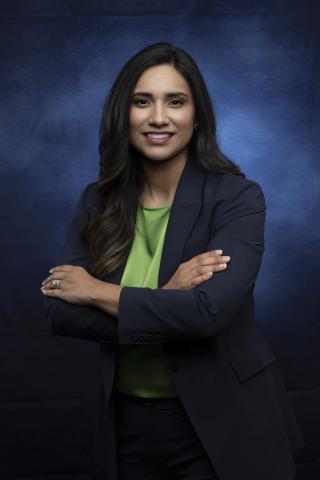
Sen. Sabrina Cervantes
Total votes
21,671
all sessions
Attendance
86%
2,660 missed
Near the chamber average
With party
98%
of cast votes
Near the chamber average
Bipartisan score
1%
crosses aisle rarely
Near the chamber average
Sponsored
1,698
bills & resolutions
Near the chamber average
Committees
11
assignments
1,698 bills and resolutions
Sponsored bills
Total
1,698
Primary
203
Co-sponsor
1,495
This page
1,698
matching current filters
Passed May 29, 2018
1 co-sponsor
Relative to National Mental Health Awareness Month.
This measure would recognize May 2018 as National Mental Health Awareness Month in California to enhance public awareness of mental illness.
Signed into law May 29, 2018
1 co-sponsor
Recovery residences.
Existing law provides for the licensure and regulation of community care facilities by the State Department of Social Services. Existing law also provides for the licensure and regulation by the State Department of Health Care Services of adult alcoholism and drug abuse recovery and treatment facilities for adults. This bill would, among other things, define a "recovery residence" as a residential property that is operated as a cooperative living arrangement to provide an alcohol and drug free environment for persons recovering from alcoholism or drug abuse, or both, who seek a living environment that supports personal recovery. The bill would authorize a recovery residence to demonstrate its commitment to providing a supportive recovery environment by applying and becoming certified by a certifying organization that is approved by the State Department of Health Care Services. The bill would require an approved certifying organization to, among other things, maintain an affiliation with a national organization recognized by the department, establish and use procedures to administer the application, certification, renewal, and disciplinary processes for a recovery residence, and investigate and enforce violations by a residence of the organization's code of conduct, as provided. The bill would specify the information and documentation that an operator who seeks to have a residence certified is required to submit to an approved certifying organization. This bill would require an approved certifying organization to maintain and post on its Internet Web site a registry containing specified information of a residence that has been certified pursuant to these provisions, and would require the department to maintain and post on its Internet Web site a registry that contains specified information regarding each residence and operator that has had its certification revoked. This bill would require, on and after January 1, 2020, specified entities, including a state agency, state-contracted vendor, county agency, or county-contracted vendor, certified alcohol drug counselor, and person or entity licensed in the healing arts that directs substance use treatment, or a judge or parole board that sets terms and conditions for the release, parole, or discharge of a person from custody, if it requires that person to reside in a sober living environment, to first refer that person to a residence listed as a certified recovery residence on a registry posted by an approved certifying organization, if available. The bill would authorize those entities to refer persons to noncertified recovery residences, if they determine it is in the best interests of those persons, and would authorize those entities to notify the department of their decision. The bill would require the department to report to the Legislature on or before January 1, 2021, regarding the efficacy of its regulation of certifying organizations' impact on complaint resolution, as specified. By imposing additional duties on local governments, this bill would create a state-mandated local program. The bill would provide for the repeal of all of these provisions on January 1, 2026. The California Constitution requires the state to reimburse local agencies and school districts for certain costs mandated by the state. Statutory provisions establish procedures for making that reimbursement. This bill would provide that, if the Commission on State Mandates determines that the bill contains costs mandated by the state, reimbursement for those costs shall be made pursuant to the statutory provisions noted above.
In committee May 25, 2018
1 co-sponsor
Unlawful entry of a vehicle.
Existing law defines the crime of burglary to include entering a vehicle when the doors are locked with the intent to commit grand or petit larceny or a felony. Burglary of a vehicle is punishable as a misdemeanor. This bill would make forcibly entering a vehicle with the intent to commit a theft therein a crime punishable by imprisonment in a county jail for a period not to exceed one year or imprisonment in a county jail for 16 months, or 2 or 3 years. By creating a new crime, this bill would impose a state-mandated local program. The California Constitution requires the state to reimburse local agencies and school districts for certain costs mandated by the state. Statutory provisions establish procedures for making that reimbursement. This bill would provide that no reimbursement is required by this act for a specified reason.
In committee May 25, 2018
1 co-sponsor
Alzheimer's disease and dementia: public awareness campaign.
Existing law requires the California Department of Aging to designate various private nonprofit or public agencies as area agencies on aging to work for the interests of older Californians within a planning and service area and provide a broad array of social and nutritional services. Existing law also requires the department to adopt policies and guidelines to carry out the purposes of the Alzheimer's Day Care-Resource Center program, which provides access to specialized day care resource centers for individuals with Alzheimer's disease and other dementia-related disorders and support to their families and caregivers. Existing law requires the department to make efforts to increase public awareness about areas of importance to California's older individuals, their families, and other caregivers. Existing law requires the department to establish an Aging Information and Education Fund, from funds made available pursuant to the annual Budget Act, to implement public awareness of various issues, including at least medication management, elder abuse prevention, and a toll-free line for linkage to local service networks. This bill would require the department to implement a public awareness campaign, as specified, to reduce stigma and raise public awareness of the warning signs of Alzheimer's disease and dementia in order to promote early detection and accurate diagnosis. The bill would also make related legislative findings and declarations.
In committee May 25, 2018
1 co-sponsor
Income taxes: credits: apprenticeships.
The Personal Income Tax Law and the Corporation Tax Law allow various credits against the taxes imposed by those laws. Existing law provides for the establishment of apprenticeship programs in various trades, to be approved by the Chief of the Division of Apprenticeship Standards in any trade in the state or in a city or trade area whenever the apprentice training needs justify the establishment. This bill, for taxable years beginning on or after January 1, 2019, and before January 1, 2023, would allow a credit against the taxes imposed under those tax laws in an amount equal to $1 for each hour a registered apprentice worked in the taxable year, up to $1,000 each for up to 10 registered apprentices, as defined, trained by the taxpayer in the taxable year. This bill would provide that the credit would have an aggregate cap of $10,000,000 for each calendar year. This bill would require the Division of Apprenticeship Standards in the Department of Industrial Relations, among other things, to establish a procedure for taxpayers, in the form and manner jointly prescribed by the Division of Apprenticeship Standards and the Franchise Tax Board, to apply and receive a certificate for purposes of the credit. This bill would also require the Division of Apprenticeship Standards to prepare reports for each of the 5 calendar years beginning on January 1, 2020, and before January 1, 2025, containing specified information relating to the credits, to be submitted to the Assembly and Senate Appropriations Committees, the Assembly Revenue and Taxation Committee, and the Senate Governance and Finance Committee on or before March 1 of the following calendar year, commencing March 1, 2021. This bill would take effect immediately as a tax levy.
In committee May 25, 2018
0 co-sponsors
Taxation.
The Personal Income Tax Law and the Corporation Tax Law allow a credit against the taxes imposed under those laws, for each taxable year beginning on or after January 1, 2014, and before January 1, 2025, in an amount as provided in a written agreement between the Governor's Office of Business and Economic Development and the taxpayer, agreed upon by the California Competes Tax Credit Committee, and based on specified factors, including the number of jobs the taxpayer will create or retain in the state and the amount of investment in the state by the taxpayer. Existing law provides for the allocation of credit amounts through the 2017–18 fiscal year and limits the aggregate amount of credit that may be allocated in a fiscal year. This bill, for the credits described above as may be authorized for allocation for the 2018–19 fiscal year through the 2023–24 fiscal year, would allow up to 50% of the unallocated and recaptured credit amount, if any, from the preceding fiscal year to be reserved as a preliminary allocation to taxpayers that create or retain regionally significant jobs in a manufacturing, research and development, or testing facility, or a corporate headquarters, if the city, county, or city and county that is competing for the establishment, expansion, or retention of a manufacturing, research and development, or testing facility, or a corporate headquarters applies to GO-Biz on behalf of the taxpayer, as provided.
In committee May 25, 2018
1 co-sponsor
Autism: sensory-friendly movie screenings.
This measure would declare the support of the Legislature for the expansion of sensory-friendly movie screenings and similar programs for people with autism, and would encourage families to attend a sensory-friendly movie screening during April 2018, which is National Autism Awareness Month.
Signed into law May 24, 2018
1 co-sponsor
Relative to the Armenian Genocide.
This measure would, among other things, designate the year 2018 as "State of California Year of Commemoration of the Anniversary of the Armenian Genocide of 1915–1923," would designate April 24, 2018, as "State of California Day of Commemoration of the 103rd Anniversary of the Armenian Genocide of 1915–1923," and would call upon the President of the United States and the United States Congress to formally and consistently reaffirm the historical truth that the atrocities committed against the Armenian people constituted genocide.
Signed into law May 24, 2018
1 co-sponsor
Ask Maddy
·
AI policy assistant
Ask Maddy about Sabrina Cervantes
Scope: california
Hi! I can help you understand Sabrina Cervantes's legislative record. What would you like to know?
Try one of these
i
Maddy answers using official bill text and legislative records. Always verify before sharing.
Sources cited inline