

Existing law establishes the Pierce's Disease Control Program in the Department of Food and Agriculture and requires the Governor to appoint a statewide coordinator. Existing law establishes the Pierce's Disease Management Account in the Food and Agriculture Fund and allows certain money in this account to be expended to combat Pierce's disease and its vectors, including the glassy-winged sharpshooter, and for purposes relating to other designated pests and diseases, as provided. Existing law makes these provisions inoperative on March 1, 2021, and repeals them on January 1, 2022. This bill would extend to March 1, 2026, the date on which the above provisions become inoperative, and would repeal those provisions on January 1, 2027. The bill would require the Secretary of Food and Agriculture to appoint a statewide coordinator. By extending the operative date for a partially continuously appropriated fund, this bill would make an appropriation. Existing law creates in the department the Pierce's Disease and Glassy-winged Sharpshooter Board, which consists of specified members, and prescribes the functions and duties of the board with respect to implementation of the Pierce's disease program. Existing law provides for an annual assessment to be paid by grape processors, as defined, into the Food and Agriculture Fund and continuously appropriates the collected funds for the purposes of, among other things, research and other activities related to the Pierce's disease program. Existing law repeals these provisions on March 1, 2021. This bill would extend the repeal date of these provisions to March 1, 2026, and would make related conforming changes. By extending the date until which the assessments are collected, the bill would make an appropriation.
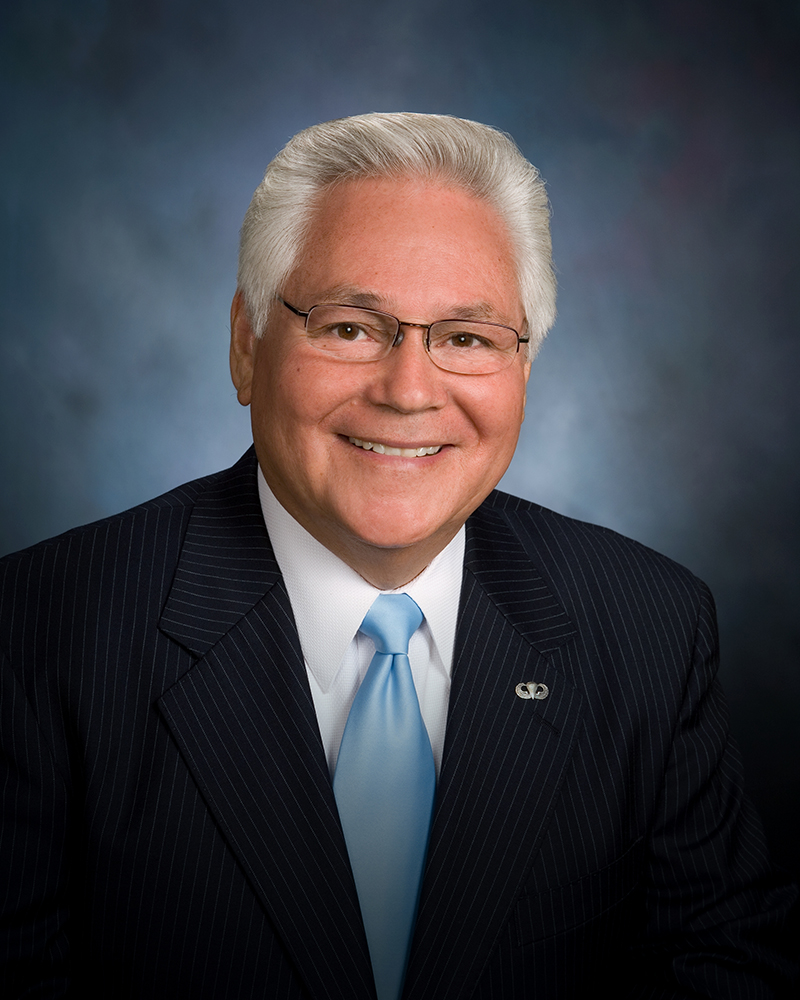
Sen. Bob Archuleta
Sponsored bills
Existing law authorizes the governing body of a political subdivision, as those terms are defined, to declare a shelter crisis if the governing body makes a specified finding. Upon declaration of a shelter crisis, existing law, among other things, suspends certain state and local laws, regulations, and ordinances to the extent that strict compliance would prevent, hinder, or delay the mitigation of the effects of the shelter crisis. Existing law, upon a declaration of a shelter crisis by the City of Berkeley, Emeryville, Los Angeles, Oakland, or San Diego, the County of Santa Clara, or the City and County of San Francisco, specifies additional provisions applicable to a shelter crisis declared by one of those jurisdictions. Among other things, existing law authorizes the city, county, or city and county that declares a shelter crisis pursuant to these provisions, in lieu of compliance with local building approval procedures or state housing, health, habitability, planning and zoning, or safety standards, procedures, and laws, to adopt by ordinance reasonable local standards and procedures for the design, site development, and operation of homeless shelters and the structures and facilities in the homeless shelters, to the extent that it is determined at the time of adoption that strict compliance with state and local standards or laws in existence at the time of that adoption would in any way prevent, hinder, or delay the mitigation of the effects of the shelter crisis. Existing law requires the Department of Housing and Community Development to review and approve the city's, county's, or city and county's draft ordinance to ensure it addresses minimum health and safety standards. Existing law requires the department to provide its findings to the Senate Committee on Housing and the Assembly Committee on Housing and Community Development within 30 calendar days of receiving the draft ordinance. This bill would extend the time within which the department is required to provide its findings to those legislative committees to 90 calendar days of receiving the draft ordinance. Existing law exempts from the California Environmental Quality Act specified actions by a state agency or a city, county, or city and county relating to land owned by a local government to be used for, or to provide financial assistance to, a homeless shelter constructed pursuant to the above-described provisions. Existing law requires a city, county, or city and county that declares a shelter crisis pursuant to these provisions to develop a plan to address the shelter crisis on or before July 1, 2019, and to annually report to specified committees of the Legislature on or before January 1, 2019, and annually thereafter until January 1, 2021. Existing law repeals these additional provisions as of January 1, 2021. This bill would apply the above-described additional provisions to a shelter crisis declared by the County of Alameda, the County of Orange, any city located within the County of Alameda, any city located within the County of Orange, and the City of San Jose, and extend the above-described repeal date to January 1, 2023. By expanding the scope of these provisions to apply within the County of Alameda, the County of Orange, and the City of San Jose, the bill would expand the above-described exemption from the California Environmental Quality Act. The bill, with respect to a shelter crisis declared by the County of Alameda, the County of Orange, a city located within the County of Alameda, a city located within the County of Orange, or the City of San Jose, would require the county or city, as applicable, to develop the above-described shelter plan on or before July 1, 2020, to include in the shelter plan a plan to transition residents from homeless shelters to permanent housing, and to provide the first above-described annual report on or before January 1 of the year following the declaration of a shelter crisis. This bill would make legislative findings and declarations as to the necessity of a special statute for the County of Alameda, the County of Orange, and the City of San Jose. This bill would declare that it is to take effect immediately as an urgency statute.
This measure would recognize October 2, 2019, as the 150th birth anniversary of Mahatma Gandhi and would recognize his lasting contributions and influences throughout the world. The measure would encourage Californians to celebrate through his eternal message of peace, love, and the universal principle of nonviolence.
This measure would proclaim September 29, 2019, as Gold Star Mothers' and Families' Day.
(1) Existing law requires each law enforcement agency to annually furnish specified information to the Department of Justice regarding the use of force by a peace officer. Existing law requires the Department of Justice, once per year, to update a summary of information contained in the reports received on its internet website. Existing law requires a department or agency that employs peace officers or custodial officers to establish a procedure to investigate complaints by members of the public against those officers. This bill would, by no later than January 1, 2021, require each law enforcement agency to maintain a policy that provides guidelines on the use of force, utilizing deescalation techniques and other alternatives to force when feasible, specific guidelines for the application of deadly force, and factors for evaluating and reviewing all use of force incidents, among other things. The bill would require each agency to make their use of force policy accessible to the public. By imposing additional duties on local agencies, this bill would create a state-mandated local program. (2) Existing law establishes the Commission on Peace Officer Standards and Training in the Department of Justice and requires the commission to adopt rules establishing minimum standards regarding the recruitment of peace officers. Existing law requires the commission to develop guidelines and implement courses of instruction regarding racial profiling, domestic violence, hate crimes, vehicle pursuits, and human trafficking, among others. This bill would require the commission to implement a course or courses of instruction for the regular and periodic training of law enforcement officers in the use of force. The bill would require the commission to develop uniform, minimum guidelines for adoption and promulgation by California law enforcement agencies for the use of force, as specified. The bill would require law enforcement agencies to adopt and promulgate a use of force policy and would state the intent of the Legislature that each law enforcement agency adopt, promulgate, and require regular and periodic training consistent with the agency's policy that complies with the guidelines developed under this bill. This bill would make findings and declarations regarding the intent of the bill, as it pertains to law enforcement agencies' use of force polices, including that those policies may be introduced in legal proceedings and may be considered as a factor in determining the reasonableness of an officer's actions, but do not impose a legal duty on an officer to act in accordance with the policy. (3) The California Constitution requires the state to reimburse local agencies and school districts for certain costs mandated by the state. Statutory provisions establish procedures for making that reimbursement. This bill would provide that, if the Commission on State Mandates determines that the bill contains costs mandated by the state, reimbursement for those costs shall be made pursuant to the statutory provisions noted above. (4) This bill would also make its provisions operative contingent on the enactment of Assembly Bill 392 of the 2019–20 Regular Session.
The Economic Revitalization Act establishes the Governor's Office of Business and Economic Development, also known as "GO-Biz," to, among other duties, serve the Governor as the lead entity for economic strategy and the marketing of California on issues relating to business development, private sector investment, and economic growth. Existing law authorizes the director of GO-Biz to establish and terminate international trade and investment offices outside of the United States as the director determines is appropriate, if specific requirements are met. Existing law establishes the Economic Development and Trade Promotion Account, a continuously appropriated account, to accept private moneys to fund international trade and investment offices. Existing law prohibits a donor from donating in a calendar year more than 25% of the annual budget of an international trade and investment office operated under contract with a nonprofit entity, and requires GO-Biz to post a specified report on its internet website within 30 days of receiving a donation to fund an international trade and investment office operated under contract with a nonprofit entity. This bill would require the director of GO-Biz, on or before January 1, 2023, to establish and operate, to contract with a nonprofit entity to establish and operate, to create a public-private partnership to establish and operate, or otherwise provide for the operation of, an international trade and investment office in Yerevan, in the Republic of Armenia. The bill would require the director of GO-Biz to include information regarding the Yerevan trade and investment office in existing reporting requirements relating to an International Trade and Investment Program, as specified. The bill would establish the Armenia Trade and Investment Office Account as a separate subaccount within the Economic Development and Trade Promotion Account and would require GO-Biz to accept and administer private sector moneys specified for the Yerevan trade and investment office or international trade and investment activities through this account. The bill would restrict the use of the funds in this account to the establishment or operation of that office, as specified, or the undertaking of international trade and investment events through that office, and would make these funds available upon appropriation by the Legislature. This bill would require the Yerevan trade and investment office to, among other things, promote the export of California goods and services into the Republic of Armenia and facilitate access to educational exchange programs between California and the Republic of Armenia. This bill would apply the above-described provisions relating to donations to fund an international trade and investment office operated under contract with a nonprofit entity to a Yerevan trade and investment office operated under contract with a nonprofit entity.
This measure would, among other things, designate the year 2019 as "State of California Year of Commemoration of the Anniversary of the Armenian Genocide of 1915–1923," would designate April 24, 2019, as "State of California Day of Commemoration of the 104th Anniversary of the Armenian Genocide of 1915–1923," and would call upon the President of the United States and the United States Congress to formally and consistently reaffirm the historical truth that the atrocities committed against the Armenian people constituted genocide.
This measure would recognize August 15, 2019, as India's Independence Day, and urge all Californians to join in celebrating India's independence.
This measure would urge the Congress and the President of the United States to work together to enact the robust bipartisan federal infrastructure legislation necessary to restore California's and other states' crumbling road and freight infrastructure, respond to growing traffic congestion, and increase investment in public transportation, most particularly, by expanding paratransit services for the elderly and those with special needs. The measure would additionally urge the Congress and the President of the United States to address the shortfall in the federal Highway Trust Fund by restoring the lost purchasing power of the federal fuel tax, in order to provide the long-term funding stability necessary for California and other states.
Existing law governs the operation of animal shelters by, among other things, setting a minimum holding period for stray dogs and cats and requiring animal shelters to ensure that dogs and cats, if adopted, are spayed or neutered. Existing law requires the word "VETERAN" to be printed on the face of a driver's license or identification card at the applicant's request, subject to certain requirements, including, among others, the verification of the applicant's veteran status, as specified, and payment of a fee. This bill would prohibit a public animal shelter from charging an adoption fee for a dog or cat if the person adopting the dog or cat presents to the public animal shelter a current and valid driver's license or identification card with the word "VETERAN" printed on its face pursuant to the above-described provision. The bill also would authorize a public animal shelter to limit the number of dogs and cats adopted from that public animal shelter by an eligible veteran to one dog and cat each 6-month period.