

The Personal Income Tax Law and the Corporation Tax Law, in conformity with federal income tax law, generally define "gross income" as income from whatever source derived, except as specifically excluded, and provide various exclusions from gross income. Existing law, in conformity with the federal Coronavirus Aid, Relief, and Economic Security Act (CARES Act) , and its subsequent amendments in the Paycheck Protection Program and Health Care Enhancement Act and the Paycheck Protection Program Flexibility Act of 2020, among other things, excludes any amounts of covered loans forgiven under the CARES Act from gross income for purposes of the Personal Income Tax Law and the Corporation Tax Law. Existing law reduces the amount of any credit or deduction otherwise allowed under the Personal Income Tax and the Corporation Tax Law for any amount paid or incurred by the taxpayer upon which this exclusion is based by the amount of the exclusion allowed. Existing law requires any bill authorizing a new tax expenditure to contain, among other things, specific goals, purposes, and objectives the tax expenditure will achieve, detailed performance indicators, and data collection requirements. Existing federal law, the Consolidated Appropriations Act, 2021, prohibits reductions in tax deductions, denials of basis adjustments, and reductions in tax attributes for federal income tax purposes based on the exclusion from gross income provided in the federal CARES Act and its subsequent amendments. This bill would exclude, for taxable years beginning on or after January 1, 2019, from gross income any advance grant amount, as defined, issued pursuant to specified provisions of the CARES Act or the Consolidated Appropriations Act, 2021, and covered loan amounts forgiven pursuant to the Consolidated Appropriations Act, 2021. This bill would adopt, except as provided, the provisions of the Consolidated Appropriations Act, 2021, prohibiting any reduction in tax deductions, denials of basis adjustments, and reductions in tax attributes based on the exclusion from gross income provided for any loan amount forgiven in modified conformity with the federal CARES Act and its subsequent amendments. This bill would provide findings to comply with the additional information requirement for any bill authorizing a new tax expenditure. This bill would also make findings and declarations related to a gift of public funds. This bill would declare that it is to take effect immediately as an urgency statute.
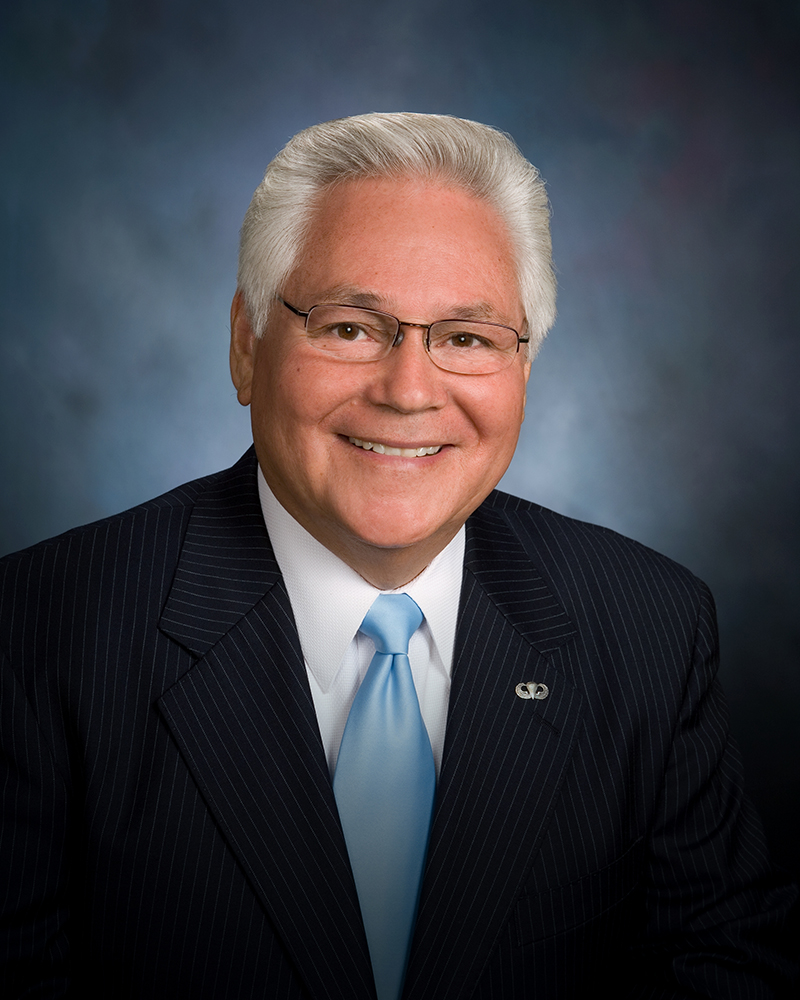
Sen. Bob Archuleta
Sponsored bills
(1) Existing law establishes the Office of Small Business Advocate (CalOSBA) within the Governor's Office of Business and Economic Development, also known as GO-Biz, to advocate for causes of small business and to provide small businesses with the information they need to survive in the marketplace. Existing law prescribes the duties and functions of the Small Business Advocate, who is also the Director of the Office of Small Business Advocate. This bill would establish the California Small Business COVID-19 Relief Grant Program within CalOSBA to assist qualified small businesses affected by COVID-19 through administration of grants. The bill would require CalOSBA to provide grants to qualified small businesses, as defined, in accordance with specified criteria, including geographic distribution based on COVID-19 restrictions, industry sectors most impacted by the pandemic, and underserved small businesses. The bill would repeal these provisions on January 1, 2024. This bill would appropriate $2,075,000,000 from the General Fund to the Golden State Stimulus Emergency Fund to be transferred to the Office of Small Business Advocate for purposes of the program, and would allocate $50,000,000 of those funds for eligible nonprofit cultural institutions, as defined. (2) The Personal Income Tax Law and the Corporation Tax Law, in conformity with federal income tax law, generally define "gross income" as income from whatever source derived, except as specifically excluded, and provide various exclusions from gross income. This bill would exclude, for taxable years beginning on or after January 1, 2020, and before January 1, 2030, from gross income specified grant allocations, including grant allocations received by a taxpayer pursuant to a grant program funded by Executive Order No. 20/21-182 and pursuant to the California Small Business COVID-19 Relief Grant Program. The bill would authorize the Franchise Tax Board to adopt regulations that are necessary and appropriate to implement the exclusions, and would provide the Administrative Procedure Act does not apply to any regulation, standard, criterion, procedure, determination, rule, notice, guideline, or any other guidance established or issued by the board pursuant to the exclusions. The bill would also authorize the board to include in audits the grants that are excluded from gross income by the bill's provisions. The bill would set forth procedures for recapturing grant amounts if CalOSBA determines that the grantee has failed to meet the criteria for a qualified small business. (3) This bill would also make findings and declarations related to a gift of public funds. (4) This bill would declare that it is to take effect immediately as a bill providing for appropriations related to the Budget Bill.
(1) Existing law sets out the various responsibilities of the Department of General Services and state agencies in overseeing and implementing state contracting procedures and policies. Existing law also provides that whenever any official advertising, notice, resolution, order, or other matter of any nature whatsoever is required by law to be published in a newspaper, the publication is required to be made only in a newspaper of general circulation, as specified. This bill would require the department to publish, on the department's internet website, an annual report by July 1 of each year containing specified information relating to payments for placement of marketing or outreach advertising material by each state agency. The bill would provide that these provisions are not intended to amend any of the above-described provisions relating to required publications of official advertising, notices, resolutions, orders, or other matters. The bill would make these provisions inoperative on July 1, 2023. (2) Existing law, as established in the case of Dynamex Operations W. v. Superior Court (2018) 4 Cal.5th 903 (Dynamex) , creates a presumption that a worker who performs services for a hirer is an employee for purposes of claims for wages and benefits arising under wage orders issued by the Industrial Welfare Commission. Existing law requires a 3-part test, commonly known as the "ABC" test, to determine if workers are employees or independent contractors for those purposes. Existing law establishes that, for purposes of the Labor Code, the Unemployment Insurance Code, and the wage orders of the Industrial Welfare Commission, a person providing labor or services for remuneration is considered an employee rather than an independent contractor unless the hiring entity demonstrates that the person is free from the control and direction of the hiring entity in connection with the performance of the work, the person performs work that is outside the usual course of the hiring entity's business, and the person is customarily engaged in an independently established trade, occupation, or business. This test is commonly known as the "ABC" test, as described above. Existing law charges the Labor Commissioner with the enforcement of labor laws, including worker classification. Existing law exempts specified occupations and business relationships from the application of Dynamex and the provisions described above. These exemptions include a temporary exemption for newspaper distributors working under contract with a newspaper publisher, and newspaper carriers working under contract either with a newspaper publisher or newspaper distributor, as those terms are defined, until January 1, 2021. This bill would expand the exemption applicable to newspaper carriers by deleting the condition that a newspaper carrier work under contract either with a newspaper publisher or newspaper distributor. The bill would extend the exemption period to January 1, 2022. (3) This bill would incorporate the changes to Section 2750.3 of the Labor Code proposed by this bill to Section 2783 of the Labor Code, as proposed to be added by AB 2257, to be operative only if this bill and AB 2257 are enacted and this bill is enacted last.
Existing law prohibits the wearing of a military uniform, as specified, by any person not authorized to wear that uniform. This bill would prohibit, with certain exceptions, a law enforcement agency from authorizing or allowing its employees to wear a uniform that is made from a camouflage printed or patterned material or a uniform that is substantially similar, as described, to a uniform of the United States Armed Forces or state active militia.
Existing law authorizes a peace officer to make an arrest pursuant to a warrant or based upon probable cause, as specified. Under existing law, an arrest is made by the actual restraint of the person or by submission to the custody of the arresting officer. Existing law authorizes a peace officer to use reasonable force to effect the arrest, to prevent escape, or to overcome resistance. Existing law requires law enforcement agencies to maintain a policy on the use of force, as specified. Existing law requires the Commission on Peace Officer Standards and Training to implement courses of instruction for the regular and periodic training of law enforcement officers in the use of force. This bill would prohibit a law enforcement agency from authorizing the use of a carotid restraint or a choke hold, as defined. By requiring local agencies to amend use of force policies, this bill would impose a state-mandated local program. The California Constitution requires the state to reimburse local agencies and school districts for certain costs mandated by the state. Statutory provisions establish procedures for making that reimbursement. This bill would provide that, if the Commission on State Mandates determines that the bill contains costs mandated by the state, reimbursement for those costs shall be made pursuant to the statutory provisions noted above.
Existing law establishes and requires the State Department of Social Services to administer the CalFood Program to provide food and funding to food banks whose primary function is to facilitate the distribution of food to low-income households, as specified. This bill would establish a program to provide emergency food assistance. The program would require, upon the appropriation of funds by the Legislature for this purpose, or upon a determination by the Governor that specified funds available to the Governor may be used for this purpose, the department to contract with a Feeding America partner state organization with the capacity to provide a food assistance benefit statewide, or another nonprofit entity that the department deems appropriate, to issue food assistance benefits in the form of a one-time use, prepaid card preloaded with $600 for use at retailers that sell groceries. The bill would require the cards to be issued on 2 different distribution periods at least one month apart to any adult who self-attests to eligibility for specified assistance programs. The bill would specify the procedures for administering this program. This bill would declare that it is to take effect immediately as an urgency statute.
The California Environmental Quality Act (CEQA) requires a lead agency, as defined, to prepare, or cause to be prepared, and certify the completion of an environmental impact report on a project that it proposes to carry out or approve that may have a significant effect on the environment or to adopt a negative declaration if it finds that the project will not have that effect. CEQA also requires a lead agency to prepare a mitigated negative declaration for a project that may have a significant effect on the environment if revisions in the project would avoid or mitigate that effect and there is no substantial evidence that the project, as revised, would have a significant effect on the environment. CEQA establishes a procedure by which a person may seek judicial review of the decision of the lead agency made pursuant to CEQA. CEQA requires a court to make specified orders if it finds that any determination, finding, or decision of a public agency has been made without compliance with CEQA. The Jobs and Economic Improvement Through Environmental Leadership Act of 2011 (leadership act) authorizes the Governor, until January 1, 2020, to certify projects that meet certain requirements, including certain labor-related requirements, for streamlining benefits provided by the leadership act related to compliance with CEQA and streamlining of judicial review of action taken by a public agency to require a judicial action to be resolved within 270 days of the filing of the certified record of proceedings with the court. The leadership act provides that if a lead agency fails to approve a project certified by the Governor before January 1, 2021, the certification expires and is no longer valid. The leadership act requires a lead agency to prepare the record of proceedings for the certified project concurrent with the preparation of the environmental documents. The leadership act is repealed by its own terms on January 1, 2021. This bill would additionally include projects to construct a fixed guideway, as defined, and related fixed facilities meeting certain conditions as projects that are eligible for certification by the Governor under the leadership act. The bill would provide that the certification by the Governor expires if the lead agency fails to approve the project by January 1, 2024. Because a lead agency would be required to prepare the record of proceedings for these projects, this bill would impose a state-mandated local program. This bill would provide that this act shall become effective only if Senate Bill 995 of the 2019–20 Regular Session is enacted on or before January 1, 2021. The California Constitution requires the state to reimburse local agencies and school districts for certain costs mandated by the state. Statutory provisions establish procedures for making that reimbursement. This bill would provide that no reimbursement is required by this act for a specified reason.