

Existing law establishes the Alternative and Renewable Fuel and Vehicle Technology Program, administered by the State Energy Resources Conservation and Development Commission, to provide funding to certain entities to develop and deploy innovative technologies that transform California's fuel and vehicle types to help attain the state's climate change policies. Existing law requires the commission to give preference to those projects that maximize the goals of the program based on specified criteria and to fund specified eligible projects, including, among others, alternative and renewable fuel projects to develop and improve alternative and renewable low-carbon fuels. Existing law creates the Alternative and Renewable Fuel and Vehicle Technology Fund, to be administered by the commission, and requires the moneys in the fund, upon appropriation by the Legislature, to be expended by the commission to implement the program. This bill would revise and recast the program to expand the purpose of the program to include developing and deploying innovative technologies that transform California's fuel and vehicle types to help reduce criteria air pollutants and air toxics. The bill would no longer require the commission to provide certain project preferences. The bill would delete the list of projects that the commission is required to make eligible for funding. The bill would authorize the commission to periodically review incentive programs, as provided. The bill would provide that the goals of the program shall be to advance the state's clean transportation, equity, air quality, and climate emission goals and would require the commission to ensure program investments support specified requirements. The bill would require the commission to expend at least 50% of the moneys appropriated to the program for projects that directly benefit or serve residents of disadvantaged and low-income communities and low-income Californians, and would require at least 50% of funding for tangible location-based investments to be expended in disadvantaged and low-income communities. The bill would delete various other requirements relating to the administration of the program. This bill would require the Strategic Growth Council to coordinate and convene at least 2 meetings each calendar year with specified state agencies and regional entities, if the regional entities choose to participate, to coordinate their implementation of sustainable transportation policies. The bill would require those state agencies and regional entities, on or before December 31, 2023, and each year thereafter, to collaboratively develop a summary of actions undertaken as part of the meetings and would require the summary to be publicly available on the Strategic Growth Council's internet website.
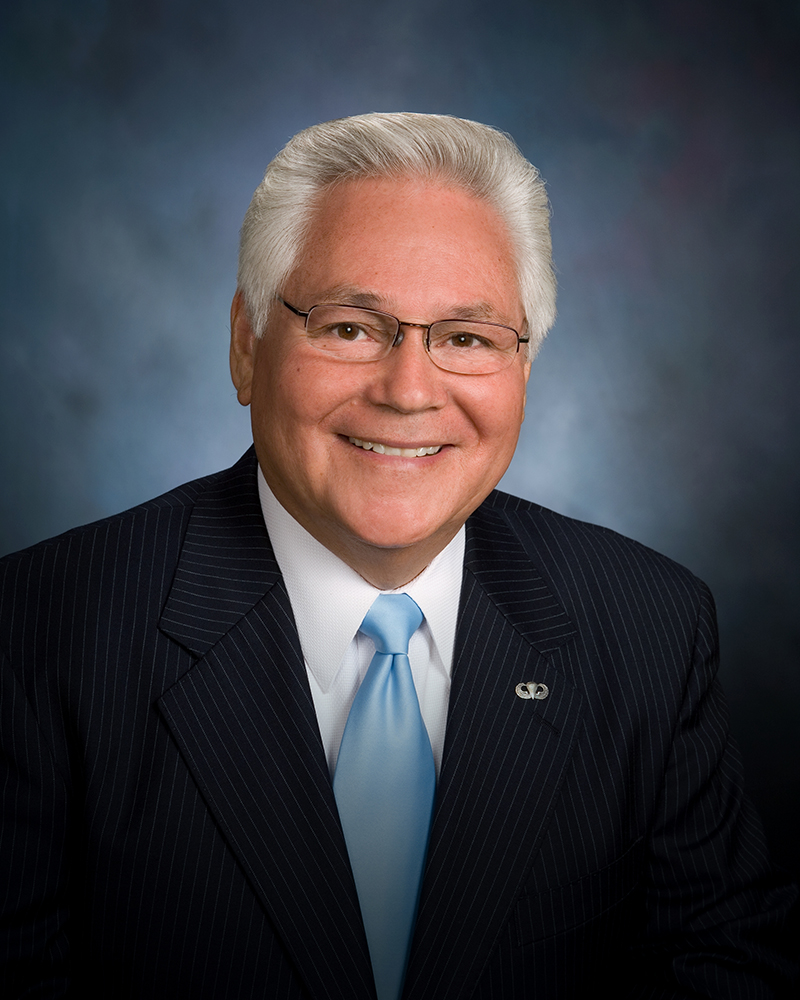
Sen. Bob Archuleta
Sponsored bills
This measure would declare that a climate emergency threatens the state, the nation, the planet, the natural world, and all of humanity.
This measure would declare August 7, 2022, as Purple Heart Day in California.
This measure would declare that the Legislature honors the life and legacy of Vicente Fernández, and would proclaim February 17, 2022, as Vicente Fernández Day, a day of remembrance and education to ensure that all Californians honor and remember the cultural voice of generations.
Existing law imposes various requirements to be satisfied before exercising a power of sale under a mortgage or deed of trust, including recording a notice of default, providing a mortgagor or trustor a copy of the recorded notice of default, providing notice of the time and place scheduled for the public auction sale of the real property and other notices related to the sale, determining the fees and expenses that may be paid from the sale, determining who may conduct the sale and act in the sale as an auctioneer for the trustee, determining the time and place where the auction sale may occur, and specifying how bids may be made and accepted at the auction sale. This bill would recast these provisions to require that an equity sale, as defined, of property under a power of sale of a mortgage or deed of trust be made by a real estate licensee, as defined, and by publicly listing the property for sale on a multiple listing service with an initial listing price at the property's appraised value, as specified. If the trustee receives multiple qualifying offers, as defined, the bill would require the trustee to make counter offers to each offeror, as specified, and comply with prescribed procedures. The bill would require the trustee to reduce the listed price of the property if the trustee does not receive a qualifying offer within 30 days of listing the property, and every 30 days thereafter, as specified. This bill would authorize the trustee to sell the property by public auction if the trustee does not receive a qualifying offer within 30 days of the 4th price decrease, or if a price decrease will result in the property's listed price falling below the equity threshold, as defined. The bill would also make conforming changes to the various requirements to be satisfied before exercising a power of sale under a mortgage or deed of trust, and would impose liability for damages resulting from specified violations of these provisions.
This measure would recognize August 15, 2022, as India's Independence Day and urge all Californians to join in celebrating India's independence.
Existing law requires the Department of General Services, in consultation with the State Energy Resources Conservation and Development Commission and the State Air Resources Board, to develop and adopt specification and standards for passenger cars and light-duty trucks for the state vehicle fleet, as specified. Existing law requires the department, in conjunction with the commission and the state board, to amend the "Enhanced Efficiency Costing Methodology for Passenger Cars and Light-Duty Vehicles" to rank the environmental and energy benefits and costs of motor vehicles for potential procurement by state and local governments. This bill would repeal the requirement on the department to develop and adopt specifications and standards for passenger cars and light-duty trucks for the state vehicle fleet. The bill would repeal the requirement for the department to amend the "Enhanced Efficiency Costing Methodology for Passenger Cars and Light-Duty Vehicles." The bill would require the department, on or before January 1, 2023, to maximize the purchase and availability of alternative fuel vehicles in the state vehicle fleet by adopting a procurement method to evaluate those vehicles, and would require the department, for the purchase of passenger vehicles and light-duty trucks powered solely by an internal combustion engine, to evaluate the cost and environmental and energy benefits of that purchase, as specified.
The California Constitution provides that all property is taxable, and requires that it be assessed at the same percentage of fair market value, unless otherwise provided by the California Constitution or federal law. The California Constitution and existing property tax law provide various exemptions from taxation, including, among others, a disabled veterans' exemption and a veterans' organization exemption. This bill would exempt from taxation property owned by, and that constitutes the principal place of residence of, a veteran, the veteran's spouse, or the veteran and the veteran's spouse jointly, if the veteran is 100% disabled. The bill would provide an unmarried surviving spouse a property exemption in the same amount that they would have been entitled to if the veteran was alive and if certain conditions are met. The bill would require certain documentation to be provided to the county assessor to receive the exemption and would prohibit any other real property tax exemption from being granted to the claimant if receiving the exemption provided by the provisions of this bill. The bill would make these exemptions applicable for property tax lien dates occurring on or after January 1, 2023, but occurring before January 1, 2033. By imposing additional duties on local tax officials, the bill would impose a state-mandated local program. Existing law requires any bill authorizing a new tax expenditure to contain, among other things, specific goals, purposes, and objectives that the tax expenditure will achieve, detailed performance indicators, and data collection requirements. This bill would state that it is the intent of the Legislature to apply those requirements to the bill and would set forth specified information relating to those requirements. The California Constitution requires the state to reimburse local agencies and school districts for certain costs mandated by the state. Statutory provisions establish procedures for making that reimbursement. This bill would provide that, if the Commission on State Mandates determines that the bill contains costs mandated by the state, reimbursement for those costs shall be made pursuant to the statutory provisions noted above. Existing law requires the state to reimburse local agencies annually for certain property tax revenues lost as a result of any exemption or classification of property for purposes of ad valorem property taxation. This bill would provide that, notwithstanding those provisions, no appropriation is made and the state shall not reimburse local agencies for property tax revenues lost by them pursuant to the bill. This bill would take effect immediately as a tax levy.
Under existing law, a state agency is authorized to apply to the Department of Motor Vehicles (DMV) to sponsor a specialized license plate program, and the DMV is required to issue those license plates if the agency meets certain requirements. Existing law also requires the DMV to charge specified fees for certain services related to the issuance of those plates. This bill would require the State Department of Education to apply to the DMV to sponsor a mental health awareness license plate program, and would require the DMV to issue the license plates if the State Department of Education meets certain requirements. The bill would also establish the Mental Health Awareness Fund in the State Treasury and would require the revenue generated from the license plates to be deposited in the fund for use, upon appropriation by the Legislature to the State Department of Education, for mental health services in public schools.
Under existing law, upon the proclamation of a state of emergency, as defined, declared by the President of the United States or the Governor, or upon the declaration of a local emergency, as defined, by the executive officer of any county, city, or city and county, and for a period of 30 days following that declaration, it is a misdemeanor with specified penalties for a person, contractor, business, or other entity to sell or offer to sell certain goods and services, including rental housing, for a price that exceeds by 10% the price charged by that person immediately prior to the proclamation of emergency, except as specified. Existing law authorizes this prohibition to be extended for additional periods if deemed necessary to protect the lives, property, or welfare of the citizens, as specified. Existing law requires the Office of Emergency Services, upon the proclamation of an emergency by the Governor, to include information about these provisions and guidance to property owners, as specified, on an appropriate internet website. This bill would require an extension of those prohibitions, if it would apply to rental housing and the state of emergency has been in effect for over a year or more, to include findings that it is necessary to prevent excessive and unjustified increases in rental prices. The bill would also exclude from those prohibitions newly constructed housing that was issued a certificate of occupancy for residential use within the 3 months preceding a proclamation of a state of emergency or declaration of local emergency or within the duration of the proclamation or declaration. The bill would require the Office of Emergency Services to post on its internet website all proclamations of a state of emergency and declarations of local emergency, including any extensions, as specified, and would prohibit penalties for violations of these provisions from being enforced until the proclamation is posted on the internet website of the office.