

Passed Apr 20, 2015
1 co-sponsor
Total votes
28,277
all sessions
Attendance
95%
1,115 missed
Near the chamber average
With party
99%
of cast votes
Near the chamber average
Bipartisan score
1%
crosses aisle rarely
Near the chamber average
Sponsored
950
bills & resolutions
Near the chamber average
Committees
0
assignments
950 bills and resolutions
Sponsored bills
Total
950
Primary
262
Co-sponsor
688
This page
950
matching current filters
Passed Apr 9, 2015
1 co-sponsor
Relative to Berryessa Snow Mountain National Monument.
This measure would urge the President of the United States and the Secretary of the United States Department of Interior to designate the area known as the Berryessa Snow Mountain region as the Berryessa Snow Mountain National Monument.
Signed into law Apr 9, 2015
1 co-sponsor
Relative to Multiple Sclerosis Awareness Week.
This measure would declare the week of March 2, 2015, through March 8, 2015, as Multiple Sclerosis Awareness Week.
Signed into law Apr 7, 2015
1 co-sponsor
Relative to the Lunar New Year Celebration.
This measure would recognize the Lunar New Year Celebration.
Signed into law Mar 12, 2015
1 co-sponsor
A resolution to propose to the people of the State of California an amendment to the Constitution of the State, by amending Section 8 of Article IV thereof, relating to the Legislature.
The California Constitution prohibits a bill other than the Budget Bill from being heard or acted on by a committee or either house of the Legislature until the 31st day after the bill is introduced, unless the house dispenses with this requirement by rollcall vote entered in the journal, 34 of the membership concurring. This measure would add an additional exception to this 31-day waiting period by authorizing a committee to hear or act on a bill if the bill, in the form to be considered by the committee, has been in print and published on the Internet for at least 15 days. Existing provisions of the California Constitution prohibit either house of the Legislature from passing a bill until the bill with amendments has been printed and distributed to the Members. This measure would also prohibit either house of the Legislature from passing a bill until the bill, in the form to be voted on, has been made available to the public, in print and published on the Internet, for at least 72 hours preceding the vote. This requirement would not apply to specified urgency bills upon the submission by the Governor to the Legislature of a written statement that it is necessary to dispense with the requirement to address a state of emergency declared by the Governor.
In committee Mar 2, 2015
1 co-sponsor
Passed Jan 29, 2015
1 co-sponsor
California Voluntary Contribution Program.
Under existing law, individuals are allowed to contribute amounts in excess of their tax liability for the support of specified funds. Existing law provides for various voluntary contribution check-off funds to be listed on the personal income tax return. This bill would modify the existing voluntary check-off system by establishing the California Voluntary Contribution Program to be administered by the office of California Volunteers to expand the contribution options for a taxpayer. The bill would provide that the purpose of the program is to promote charitable giving and collect through the personal income tax return individual taxpayers' voluntary contributions either to specified charities in a pool of up to 200 qualified applicants, defined to include any charitable organization meeting certain requirements or a state or local agency, or to make a general charitable gift by donating to the Charitable Giving Fund. Not later than January 1, 2017, the bill would require the office to, among other things, develop the application to participate in the program and establish application and renewal fees. The bill would authorize the office to adopt specified policies and guidelines to regulate the number of qualified applicants participating in the program. The bill would authorize the office to adopt regulations necessary to carry out these provisions and would make these regulations subject to the Administrative Procedure Act. The bill would require the Franchise Tax Board to revise the personal income tax form in a manner necessary to inform an individual about how to make designations to qualified applicants or to the Charitable Giving Fund. Commencing on January 1, 2018, this bill would allow an individual taxpayer to designate a contribution to up to 5 qualified applicants or to the Charitable Giving Fund. The bill would require an applicant wishing to receive contributions to submit an application to the program, including an application fee. The bill would require the office to approve an application if specified requirements, and other reasonable requirements, are met, thereby making a qualified applicant eligible to receive voluntary contributions. The bill would require these contributions to be transferred from the Personal Income Tax Fund to the California Voluntary Contribution Fund or to the Charitable Giving Fund, both of which are created by this bill. The bill would require moneys in the California Voluntary Contribution Fund and the Charitable Giving Fund, upon appropriation by the Legislature, to be allocated to the Franchise Tax Board and the Controller for reimbursement of costs, as provided, and the balance from the California Voluntary Contribution Fund to the office of California Volunteers for distribution to each qualified applicant designated by an individual and the balance from the Charitable Giving Fund to the office for distribution as grants for charitable purposes, in accordance with policies and procedures established by the office. The bill would establish a specified minimum contribution amount for each qualified applicant. The bill would prohibit a qualified applicant from receiving voluntary contributions if, among other things, the average amount of contributions received during certain calendar years did not equal the minimum contribution amount. This bill would annually require the office to provide the Legislature with a report containing specified information on the program. The bill would also require this report to be made available to the public. The bill would also require the office to work in consultation with the Department of Finance to develop a strategy to propose to the Legislature for a continuous appropriation to distribute taxpayers' contributions to the designated qualified applicants. This bill would repeal these provisions on January 1, 2023.
Failed Nov 30, 2014
0 co-sponsors
Brain research: Cal-BRAIN program.
Existing law establishes various health research grant programs, including the Cancer Research Program, the Breast Cancer Research Program, and the Spinal Cord Injury Research Program. This bill, the California Blueprint for Research to Advance Innovations in Neuroscience (Cal-BRAIN) Act of 2014, would request the Regents of the University of California to establish the Cal-BRAIN program to leverage California's research assets and the federal BRAIN Initiative's funding opportunities to accelerate the development of brain mapping techniques, including the development of new technologies, in order to achieve certain goals. The bill would additionally request the University of California to convene certain stakeholders to develop a governing structure for the Cal-BRAIN program designed to do specified tasks, and to provide information about the program through an Internet Web site. These provisions would only be implemented to the extent that adequate funding is appropriated to the University of California, as specified.
Failed Nov 30, 2014
1 co-sponsor
A resolution to propose to the people of the State of California an amendment to the Constitution of the State, by amending Section 8 of Article IV thereof, relating to the Legislature.
The California Constitution prohibits a bill other than the Budget Bill from being heard or acted on by a committee or either house of the Legislature until the 31st day after the bill is introduced, unless the house dispenses with this requirement by rollcall vote entered in the journal, 34 of the membership concurring. This measure would add an additional exception to this 31-day waiting period by authorizing a committee to hear or act on a bill if the bill, in the form to be considered by the committee, has been in print and published on the Internet for at least 15 days. Existing provisions of the California Constitution prohibit either house of the Legislature from passing a bill until the bill with amendments has been printed and distributed to the Members. This measure would also prohibit either house of the Legislature from passing a bill until the bill, in the form to be voted on, has been made available to the public, in print and published on the Internet, for at least 72 hours preceding the vote. This requirement would not apply to specified urgency bills upon the submission by the Governor to the Legislature of a written statement that it is necessary to dispense with the requirement to address a state of emergency declared by the Governor.
Failed Nov 30, 2014
0 co-sponsors
Ask Maddy
·
AI policy assistant
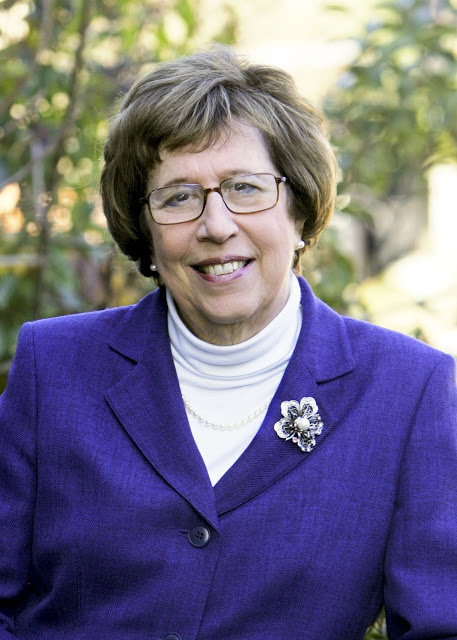
Ask Maddy about Lois Wolk
Scope: california
Hi! I can help you understand Lois Wolk's legislative record. What would you like to know?
Try one of these
i
Maddy answers using official bill text and legislative records. Always verify before sharing.
Sources cited inline