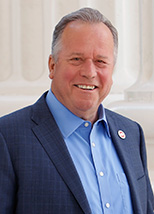
Photo of Bill Dodd
D California Senate · District 3

Sen. Bill Dodd

Contact Email
Compare
Total votes
20,491
all sessions
Attendance
97%
426 missed
Lower than 97% of chamber peers
With party
99%
of cast votes
Lower than 97% of chamber peers
Bipartisan score
0%
crosses aisle rarely
Near the chamber average
Sponsored
1,151
bills & resolutions
Near the chamber average
Committees
0
assignments
1,151 bills and resolutions

Sponsored bills

Total
1,151
Primary
250
Co-sponsor
901
This page
1,151
matching current filters
Primary SCR 94
Signed into law · California Senate · Lead sponsor
Relative to Data Privacy Week.

This measure would designate, in perpetuity, the 4th week of January as Data Privacy Week and the last Sunday of January as Data Privacy Day.

Signed into law Feb 13, 2024 0 co-sponsors
Co-sponsor AB 748
Vetoed · California House · Co-sponsor
California Abandoned and Derelict Commercial Vessel Program.

Existing law establishes within the Natural Resources Agency, the State Lands Commission consisting of the Controller, the Lieutenant Governor, and the Director of Finance. Existing law vests in the commission exclusive jurisdiction over all ungranted tidelands and submerged lands owned by the state, and of the beds of navigable rivers, streams, lakes, bays, estuaries, inlets, and straits, including tidelands and submerged lands. Existing law authorizes the commission to take immediate action to remove from areas under its jurisdiction a vessel that is left unattended and is moored, docked, beached, or made fast to land in a position as to obstruct the normal movement of traffic or in a condition as to create a hazard to navigation, other vessels using a waterway, or the property of another. Existing law requires the commission, by July 1, 2019, and in consultation with other relevant state and local agencies directly involved in the removal of abandoned vessels, to develop a plan for the removal of abandoned commercial vessels. This bill would establish the California Abandoned and Derelict Commercial Vessel Program within the Natural Resources Agency, to be administered by the commission, upon appropriation by the Legislature, to bring federal, state, and local agencies together to identify, prioritize, and fund the removal and proper disposal of abandoned and derelict commercial vessels and other debris from commercially navigable waters, as defined. The bill would require the commission, upon appropriation by the Legislature, on or before July 1, 2025, to create, and regularly update and maintain thereafter, an inventory of abandoned and derelict commercial vessels on or in commercially navigable waters, as provided, and, on or before July 1, 2026, to develop a plan to prevent or reduce abandoned and derelict commercial vessels on or in commercially navigable waters, as provided. This bill would establish the California Abandoned and Derelict Commercial Vessel Program Task Force as an advisory body within the Natural Resources Agency, consisting of specified members. The bill would require the task force to, among other things, provide policy guidance for the program and advise on the prevention, removal, destruction, and disposal of abandoned and derelict commercial vessels, as provided. The bill would require the task force, in consultation with impacted local governments, to develop a system for prioritizing the removal of the abandoned and derelict commercial vessels identified by the commission, as provided. This bill would require the commission, on or before December 1, 2024, to enter into a memorandum of agreement with specified state agencies, and other relevant federal, state, or local agencies, as provided, for the purposes of abandoned and derelict commercial vessel and other debris cleanup and removal from commercially navigable waters. The bill would require, upon execution of the memorandum of agreement and the availability of funds, the commission to immediately authorize and execute the removal of abandoned and derelict commercial vessels and other debris, as specified. This bill would establish the California Abandoned and Derelict Commercial Vessel Program Trust Fund in the State Treasury and would require that, upon appropriation by the Legislature, moneys in the fund be used by the commission to fund the removal of abandoned and derelict commercial vessels and other debris pursuant to the program, as provided. This bill would prohibit, except as specified, a commercial vessel, as defined, that is at risk of becoming derelict from occupying, or anchoring, mooring, or otherwise being secured in or on, the waters of the state. The bill would provide that a commercial vessel is at risk of becoming derelict if certain conditions exist, including that the commercial vessel is taking on or has taken on water without an effective means to dewater. The bill would authorize a peace officer, as defined, to find that a commercial vessel is at risk of becoming derelict if these conditions exist. The bill would subject a person who violates this prohibition to a civil penalty of not less than $1,000 and not more than $5,000 per day of violation, and would prescribe other requirements related to a civil action, including the assessment of a civil penalty and the recovery of other specified costs, brought for a violation of this prohibition. The bill would also authorize a peace officer to seize or order the removal of a commercial vessel that is at risk of becoming derelict, as provided. The bill would require 75% of civil penalties and other costs collected be deposited into the California Abandoned and Derelict Commercial Vessel Program Trust Fund and, upon appropriation by the Legislature, 25% distributed to the Attorney General, district attorney, or city attorney prosecuting the action, as specified.


Vetoed Feb 12, 2024 1 co-sponsor
Primary SB 361
In committee · California Senate · Lead sponsor
Water resources: stream gages.

Existing law, the Open and Transparent Water Data Act, requires the Department of Water Resources, the State Water Resources Control Board, and the Department of Fish and Wildlife to coordinate and integrate existing water and ecological data from local, state, and federal agencies. Existing law requires the Department of Water Resources and the board, upon an appropriation of funds by the Legislature, to develop a plan to deploy a network of stream gages that includes a determination of funding needs and opportunities for modernizing and reactivating existing gages and deploying new gages, as specified. Existing law requires the department and the board, in consultation with the Department of Fish and Wildlife, the Department of Conservation, the Central Valley Flood Protection Board, interested stakeholders, and, to the extent they wish to consult, local agencies, to develop the plan to address significant gaps in information necessary for water management and the conservation of freshwater species. This bill would require the Department of Water Resources and the board, upon appropriation of funds by the Legislature, to reactivate, upgrade, and install new stream gages, as provided. The bill would require the department and board to use the recommendations and data provided in the California Stream Gaging Prioritization Plan 2022 to complete specified actions by 2030. The bill would require the department to report to the Legislature, on or before January 1, 2026, and every 2 years thereafter, on progress made in completing those specified actions. The bill would require the data from all stream gages operating with any public money to be published as provisional data within 10 days of collection and made publicly available on the state's open water data platforms. The bill would require the department and board to develop and adopt a set of standards and processes for assessing, tracking, and reporting the accuracy of stream gages, evapotranspiration data, water meters, and other critical data inputs for water management, as provided. The bill would require the department and the board to consult with interested stakeholders to develop a plan to identify the gaps in the network of automated weather stations and eddy covariance towers to ensure accurate and comprehensive data collection.

In committee Feb 1, 2024 0 co-sponsors
Primary SB 436
died · California Senate · Lead sponsor
Wildfire safety: The California Wildfire Mitigation Strategic Planning Act.

Existing law, the California Emergency Services Act, establishes the Office of Emergency Services within the Governor's office under the supervision of the Director of Emergency Services and makes the office responsible for the state's emergency and disaster response services for natural, technological, or man-made disasters and emergencies. This bill would require the office, on or before January 1, 2025, and every 3 years thereafter, to prepare a Wildfire Risk Mitigation Planning Framework sufficient to quantitatively evaluate wildfire risk mitigation actions, as provided. The bill would require the framework to allow for geospatial evaluation and comparison of wildfire risk mitigation actions, as defined, sufficient to direct coordinated mitigation efforts and long-term collaborative mitigation planning. The bill would require the office to, each year the framework is completed, submit a copy of the framework to the Legislature, the Office of Energy Infrastructure Safety, and the Public Utilities Commission for review and consideration. The bill would require the office, on or before April 1, 2025, and every 3 years thereafter, to prepare a Wildfire Risk Baseline and Forecast for the state delineated on a statewide level and by county, as provided. The bill would require the forecast to include geographic specificity as determined by the director to be sufficient to evaluate targeted wildfire risk mitigation actions, and to accomplish specific things, including establishing key risk metrics for wildfire risk for the state as a whole, by county, and by geographic location. The bill would require the office to, each year the forecast is completed, submit a copy of the forecast to the Legislature, the Office of Energy Infrastructure Safety, and the Public Utilities Commission for review and consideration. The bill would require the office, on or before August 1, 2025, to prepare a Wildfire Mitigation Scenarios Report, to be updated annually. The bill would require the report to contain specified information, including identification of a reasonable range of possible scenarios for overall wildfire risk mitigation spending, as provided. The bill would authorize the director to contract with a private consultant or a public university with special expertise in quantitative assessment of wildfire risk and risk mitigation to conduct quantitative assessment of wildfire and community risk modeling and for preparation of reports to accomplish the purposes of this act.

died Feb 1, 2024 0 co-sponsors
Co-sponsor AB 538
Failed · California House · Co-sponsor
Multistate regional transmission system organization: membership.

Existing law provides for the establishment of an Independent System Operator (ISO) as a nonprofit public benefit corporation and requires the ISO to ensure efficient use and reliable operation of the electrical transmission grid consistent with achieving planning and operating reserve criteria no less stringent than those established by the Western Electricity Coordinating Council and the North American Electric Reliability Council. The Clean Energy and Pollution Reduction Act of 2015 provides for the transformation of the ISO into a regional organization, with the approval of the Legislature, pursuant to a specified process. That process provides that modifications to the ISO's governance structure, through changes to its bylaws or other corporate governance documents, will not become effective until the ISO, the Public Utilities Commission (PUC) , the State Energy Resources Conservation and Development Commission (Energy Commission) , the State Air Resources Board (state board) , the Governor, and the Legislature take specified actions on or before January 1, 2019. This bill would prohibit a California electrical transmission facility owner, a retail seller of electricity, or a local publicly owned electric utility from joining a multistate regional transmission system organization, as defined, unless the bylaws or other organizational documents that govern the organization, and the organization's operations, meet Federal Energy Regulatory Commission requirements and other specified requirements. The bill would require a California transmission owner, retail seller, or local publicly owned electric utility, before joining a multistate regional transmission system organization, to submit the bylaws and other organizational documents that govern the multistate regional transmission system organization to the Energy Commission for review. The bill would require the Energy Commission, in consultation with the PUC and the state board, to review those materials for compliance with the bill's requirements. The bill would prohibit a California transmission owner, retail seller, or local publicly owned electric utility from joining the multistate regional transmission system organization unless the Energy Commission has determined that the organization's bylaws and organizational documents meet those requirements. If a California transmission owner, retail seller, or local publicly owned electric utility has joined an independent system operator that becomes a multistate regional transmission system organization and the Energy Commission determines that the organization's bylaws and organizational documents do not meet those requirements, the bill would require that the California transmission owner, retail seller, or local publicly owned electric utility not remain in the organization. The bill would authorize the ISO to develop and submit to the Energy Commission a governance proposal that complies with those requirements and to provide notice and a copy of this submission to the Legislature and the Governor at the same time as it is submitted to the Energy Commission. The bill would require the Energy Commission, in consultation with the PUC and state board, to review the proposal for compliance with the bill's requirements, and, if the Energy Commission determines that the proposal meets those requirements, to submit the governance proposal to the Governor and to the Legislature with a declaration that the Energy Commission has so found. If notice is delivered by the Energy Commission, and if a transmission owner from outside California that is not a participating transmission owner as of January 1, 2024, has entered into an agreement with the ISO indicating its intent to become a participating transmission owner, the bill would authorize the ISO to proceed to implement the proposal, as provided. Existing law, the California Renewables Portfolio Standard Program, requires the PUC to establish a renewables portfolio standard requiring all retail sellers, defined as electrical corporations, electric service providers, and community choice aggregators, to procure a minimum quantity of electricity products from eligible renewable energy resources, as defined, at specified percentages of the total kilowatthours sold to their retail end-use customers during specified compliance periods. The program additionally requires each local publicly owned electric utility to procure a minimum quantity of electricity products from eligible renewable energy resources to achieve the targets established by the program. The program, consistent with the goals of procuring the least-cost and best-fit electricity products from eligible renewable energy resources that meet project viability principles, requires that all retail sellers procure a balanced portfolio of electricity products from eligible renewable energy resources, in 3 specified categories referred to as the portfolio content requirements. Existing law requires retailer sellers to meet renewable energy procurement obligations by at least 75% of the electricity product that is from a renewable energy resource that meets various requirements, including the requirement on the first point of interconnection of the resource with the state or an agreement to dynamically transfer electricity to a California balancing authority, for compliance periods after December 31, 2016. This bill would define "point of interconnection" to mean a point connecting with a California balancing authority as the California balancing authority area was on June 30, 2023.

Failed Feb 1, 2024 1 co-sponsor
Co-sponsor AB 770
Failed · California House · Co-sponsor
Residential care facilities for the elderly.

Existing law, the California Residential Care Facilities for the Elderly Act (act) , requires the State Department of Social Services to license, inspect, and regulate residential care facilities for the elderly and imposes criminal penalties on a person who violates the act or who willfully or repeatedly violates any rule or regulation adopted under the act. Under existing law, whether or not unrelated persons are living together, a residential care facility for the elderly that serves 6 or fewer persons is considered a residential use of property, as specified. Existing law makes certain violations of the act a crime. This bill would revise those provisions by deleting the restriction to facilities that serve 6 or fewer and instead referring to residential care facilities for the elderly that are licensed by the State Department of Social Services and provide onsite services. The bill would also require that such a facility that has greater than 6 beds reserve a minimum of 30% of the additional beds for low-income individuals or recipients of specified benefits. By expanding the number of facilities subject to the provisions of the act, thereby expanding the crimes associated with the act, and by creating a new crime this bill would establish a state-mandated local program. The California Constitution requires the state to reimburse local agencies and school districts for certain costs mandated by the state. Statutory provisions establish procedures for making that reimbursement. This bill would provide that no reimbursement is required by this act for a specified reason.

Failed Feb 1, 2024 1 co-sponsor
Co-sponsor SB 687
In committee · California Senate · Co-sponsor
Water Quality Control Plan: Delta Conveyance Project.

Existing law establishes the State Water Resources Control Board and the 9 California regional water quality control boards as the principal state agencies with authority over matters relating to water quality. Existing law requires the state board to formulate and adopt state policy for water quality control. Existing law authorizes the state board to adopt water quality control plans for waters that require water quality standards pursuant to the Federal Water Pollution Control Act, and provides that those plans supersede any regional water quality control plans for the same waters to the extent of any conflict. This bill would require the board to adopt a final update of the 1995 Water Quality Control Plan for the San Francisco Bay/Sacramento-San Joaquin Delta Estuary, as provided, before the board may consider a change in point diversion or any other water rights permit or order for the Delta Conveyance Project. The bill would also, if, after completing the update of the plan and in compliance with existing law, the board approves a change in point of diversion or any other water rights permit or order associated with the Delta Conveyance Project, prohibit the operation of the Delta Conveyance Project unless and until the updated plan is fully implemented. The bill would specify that these provisions do not constitute an authorization for or approval of funding for the Delta Conveyance Project or any other project that includes isolated Delta conveyance facilities, and do not reduce any statutory or other regulatory conditions or permit requirements for Delta conveyance projects.

In committee Feb 1, 2024 1 co-sponsor
Co-sponsor SB 31
died · California Senate · Co-sponsor
Encampments: sensitive areas: penalties.

Under existing law, a person who lodges in a public or private place without permission is guilty of disorderly conduct, a misdemeanor. Existing law also provides that a person who willfully and maliciously obstructs the free movement of any person on any street, sidewalk, or other public place is guilty of a misdemeanor. Under existing law, a public nuisance is anything that is injurious to health, or is indecent or offensive to the senses, so as to interfere with the comfortable enjoyment of life or property by an entire community, neighborhood, or considerable number of persons. Existing law provides various remedies against a public nuisance, including abatement by any public body or officer authorized by law. This bill would prohibit a person from sitting, lying, sleeping, or storing, using, maintaining, or placing personal property upon any street, sidewalk, or other public right-of-way within 1000 feet of a sensitive area, as defined. The bill would specify that a violation of this prohibition is a public nuisance that can be abated and prevented, as provided. The bill would also provide that a violation of the prohibition may be charged as a misdemeanor or an infraction, at the discretion of the prosecutor. The bill would prohibit a person from being found in violation of the bill's provisions unless provided notice, at least 72 hours before commencement of any enforcement action, as provided. By imposing criminal penalties for a violation of these provisions, this bill would impose a state-mandated local program. The California Constitution requires the state to reimburse local agencies and school districts for certain costs mandated by the state. Statutory provisions establish procedures for making that reimbursement. This bill would provide that no reimbursement is required by this act for a specified reason.

died Feb 1, 2024 1 co-sponsor
Co-sponsor AB 1128
Failed · California House · Co-sponsor
Personal Income Tax Law: young child tax credit: qualifying child.

The Personal Income Tax Law, in modified conformity with federal income tax law, allows an earned income tax credit against the taxes imposed under that law to an eligible individual that is equal to that portion of the earned income tax credit allowed by federal law as determined by the earned income tax credit adjustment factor, as specified, and allows a payment from the Tax Relief and Refund Account for an allowable credit in excess of tax liability. The Personal Income Tax Law also allows a young child tax credit against the taxes imposed under that law to a qualified taxpayer in a specified amount multiplied by the earned income tax credit adjustment factor, and allows a payment from the Tax Relief and Refund Account for an amount in excess of tax liability. Existing law defines "qualified taxpayer" for this purpose to include an eligible individual, as defined, who has a qualifying child, defined to be a child younger than 6 years of age as of the last day of the taxable year, and who meets other specified criteria. This bill would remove the requirement that a qualifying child has to be younger than 6 years of age as of the last day of the taxable year. By increasing the payments from the Tax Relief and Refund Account, a continuously appropriated fund, the bill would make an appropriation.

Failed Feb 1, 2024 1 co-sponsor
Showing 121 to 130 of 1,151 bills
Previous 1 12 13 14 116 Next