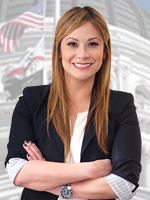
Photo of Ling Ling Chang
R California Senate · District 29

Sen. Ling Ling Chang

Compare
Total votes
10,779
all sessions
Attendance
92%
576 missed
Lower than 89% of chamber peers
With party
95%
of cast votes
Lower than 99% of chamber peers
Bipartisan score
3%
crosses aisle rarely
Higher than 96% of chamber peers
Sponsored
511
bills & resolutions
Near the chamber average
Committees
0
assignments
511 bills and resolutions

Sponsored bills

Total
511
Primary
69
Co-sponsor
442
This page
511
matching current filters
Co-sponsor AB 1051
Passed · California Assembly · Co-sponsor
Denti-Cal program: reimbursement rates.

Existing law provides for the Medi-Cal program, which is administered by the State Department of Health Care Services, under which qualified low-income individuals receive health care services. The Medi-Cal program is, in part, governed and funded by federal Medicaid program provisions. Existing law provides for a schedule of benefits provided under the Medi-Cal program, which includes certain dental services that are referred to as Denti-Cal. This bill would require the State Department of Health Care Services to increase Denti-Cal provider reimbursement rates for the 15 most common prevention, treatment, and oral evaluation services to the regional average commercial rates, effective January 1, 2017.

Passed Aug 11, 2016 1 co-sponsor
Co-sponsor AB 1672
Passed · California Assembly · Co-sponsor
Veterans treatment courts: Judicial Council assessment and survey.

Existing law establishes a statewide system of courts with a superior court of one or more judges in each county. Existing law authorizes the Judicial Council to prescribe the methods, means, and standards for electronic collection of data related to court administration, practice, and procedure. This bill would require the Judicial Council to report to the Legislature on a study of veterans and veterans treatment courts that includes a statewide assessment, as specified, of veterans treatment courts currently in operation and a survey of counties that do not operate veterans treatment courts that identifies barriers to program implementation and assesses the need for veterans treatment courts in those counties, if funds are received for that purpose. The bill would require the Judicial Council to report to the Legislature on the results of the study, as specified, on or before June 1, 2019. The bill would create the Veterans Court Assessment Fund in the State Treasury, administered by the Judicial Council, and would authorize the fund to accept private donations, as specified. The bill would appropriate specified sums from the Veterans Court Assessment Fund and from the General Fund for the purpose of conducting the study and report.

Passed Aug 11, 2016 1 co-sponsor
Co-sponsor AB 828
Passed · California Assembly · Co-sponsor
Vehicles: transportation services.

Existing law establishes the Public Utilities Commission and designates the duties of the commission, including regulating specified transportation carriers. This bill would require the commission to conduct an investigation to consider whether existing statutes and regulations relating to for-hire passenger transportation services serve the public interest, encourage innovation, and create a fair and competitive transportation market among companies that provide regulated transportation services. The bill would require the commission to complete the investigation and report its conclusions and recommendations to the Legislature on or before January 1, 2017. Existing law defines "commercial vehicle," for the purposes of the Vehicle Code, as a motor vehicle of a type required to be registered under that code that is used or maintained for the transportation of persons for hire, compensation, or profit or designed, used, or maintained primarily for the transportation of property. Existing law, the Passenger Charter-party Carriers' Act, provides for the regulation of transportation network companies by the Public Utilities Commission. Existing law defines a "transportation network company" to mean an organization, including, but not limited to, a corporation, limited liability company, partnership, sole proprietor, or any other entity, operating in California that provides prearranged transportation services for compensation using an online-enabled application or platform to connect passengers with drivers using a personal vehicle. This bill, until January 1, 2018, would exclude from the definition of "commercial vehicle," for purposes of the Vehicle Code, any motor vehicle operated in connection with a transportation network company, if specified conditions are satisfied.

Passed Aug 11, 2016 1 co-sponsor
Primary AB 2072
Passed · California Assembly · Lead sponsor
High school diplomas: State Seal of STEM.

Existing law establishes the Golden State Seal Merit Diploma for the purpose of recognizing pupils who have mastered the high school curriculum. Existing law also establishes the State Seal of Biliteracy to recognize high school graduates who have attained a high level of proficiency in speaking, reading, and writing in one or more languages in addition to English. This bill would establish a State Seal of STEM to recognize high school graduates who have attained a high level of proficiency in science, technology, engineering, and mathematics fields. The bill would establish criteria for the receipt of the State Seal of STEM, would require the Superintendent of Public Instruction to prepare and deliver to participating school districts an appropriate insignia to be affixed to pupil diplomas or transcripts, and would require participating school districts to maintain appropriate records and affix the appropriate insignia to diplomas or transcripts of recipient pupils. The bill would not become operative until after data from the statewide administration of specified state science assessments are available. The bill's provisions would be repealed on January 1, 2025.

Passed Aug 11, 2016 0 co-sponsors
Co-sponsor SB 1432
Passed · California Senate · Co-sponsor
School attendance: pupil transfer options: school districts of choice.

(1) Existing law authorizes the governing board of a school district to accept pupils from other school districts by adopting a resolution to become a school district of choice, as defined, in accordance with specified procedural requirements and limitations. This bill would revise and recast these provisions. The bill would, among other things, revise the limits that a school district of residence may impose on the total number of pupils that may transfer out of the school district of residence to a school district of choice, would expand the list of pupil characteristics that a school district of choice is prohibited from considering in selecting pupils for admission, and would revise the requirements for admitting and rejecting and the manner of selecting pupils who apply to transfer to a school district of choice. The bill would revise the procedural requirements for becoming a school district of choice, including requiring a school district to register with the Superintendent of Public Instruction as a school district of choice, and would set forth a procedure for hearing complaints or appeals by a school district of choice, a school district of residence, or a pupil who is denied a transfer, as specified. The bill would revise requirements for providing transportation assistance for transfer pupils, including requiring a school district of choice to provide a pupil who is eligible for free and reduced-price meals free transportation assistance, subject to specified requirements. To the extent the bill would impose additional duties on school districts and other local educational agencies, the bill would impose a state-mandated local program. The bill would revise data, information, and reporting requirements relating to the school district of choice program, including, among other things, requiring the Superintendent to maintain a list of the school districts of choice in the state and to collect specified other information relating to school districts of choice, and by requiring the Superintendent rather than the Legislative Analyst to make specified information available to the Legislature and the Governor each year. The bill would require the Legislative Analyst to complete and submit an evaluation and recommendations regarding the program to the appropriate education policy committees of the Legislature and the Governor by January 31, 2020. (2) Existing law makes the school district of choice program inoperative on July 1, 2017, and repeals the program on January 1, 2018. This bill would extend the inoperative date to July 1, 2022, and the repeal date to January 1, 2023. (3) The California Constitution requires the state to reimburse local agencies and school districts for certain costs mandated by the state. Statutory provisions establish procedures for making that reimbursement. This bill would provide that, if the Commission on State Mandates determines that the bill contains costs mandated by the state, reimbursement for those costs shall be made pursuant to these statutory provisions.


Passed Aug 11, 2016 1 co-sponsor
Co-sponsor ACR 131
Passed · California Assembly · Co-sponsor
Professions and vocations: licensing fees: equity.

This measure would encourage the Department of Consumer Affairs and its boards, bureaus, and committees to create policies that promote fairness and equity to guarantee that each licensee pays a fair amount, especially in regard to initial and ongoing license fees.

Passed Aug 11, 2016 1 co-sponsor
Co-sponsor ACR 195
Signed into law · California Assembly · Co-sponsor
Relative to Vin Scully.

This measure would recognize the legendary career of Vincent Edward "Vin" Scully.

Signed into law Aug 10, 2016 1 co-sponsor
Showing 221 to 230 of 511 bills
Previous 1 … 22 23 24 … 52 Next