

Passed May 16, 2022
1 co-sponsor
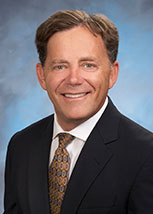
Total votes
11,475
all sessions
Attendance
96%
413 missed
Lower than 97% of chamber peers
With party
99%
of cast votes
Bipartisan score
0%
crosses aisle rarely
Sponsored
448
bills & resolutions
Near the chamber average
Committees
0
assignments
448 bills and resolutions
Sponsored bills
Total
448
Primary
134
Co-sponsor
314
This page
448
matching current filters
Violent felonies: serious felonies: human trafficking.
Existing law defines the terms "serious felony" and "violent felony" for various purposes, including, among others, enhancing the punishment for felonies pursuant to existing sentencing provisions commonly known as the Three Strikes Law. This bill would include human trafficking within the definition of a violent felony and the definition of a serious felony for all purposes, including for purposes of the Three Strikes Law. By expanding the scope of an enhancement, this bill would impose a state-mandated local program. The California Constitution requires the state to reimburse local agencies and school districts for certain costs mandated by the state. Statutory provisions establish procedures for making that reimbursement. This bill would provide that no reimbursement is required by this act for a specified reason.
died Apr 26, 2022
1 co-sponsor
Federal funding: promoting homeownership.
Under existing law governing the Community Development Block Grant Program, the Department of Housing and Community Development is required to distribute federal funds in the form of grants to eligible cities and counties to provide housing and economic development, principally for persons and families of low or moderate income. Existing law requires all funds made available under the program to be utilized to provide decent housing, a suitable living environment, and expanding economic opportunities, consistent with federal requirements. This bill would authorize the Department of Housing and Community Development to prioritize 10% of program funds for down payment assistance. The bill would provide that these requirements be implemented only to the extent that they are consistent with federal requirements. Existing federal law establishes the HOME Investment Partnership Act, which allocates funds to states and local governments to, among other things, expand the supply of affordable housing. Existing law designates the Department of Housing and Community Development as the state agency responsible for the administration of the state's allocation of HOME Investment Partnership Act funds, the provision of technical assistance, and coordination of HOME Investment Partnership Act activities. This bill would authorize the Department of Housing and Community Development to prioritize 30% of the federal funding provided under the HOME Investment Partnership Act for purposes of promoting homeownership. The bill would provide that this requirement be implemented only to the extent that it is consistent with federal requirements.
In committee Apr 21, 2022
1 co-sponsor
Employment: COVID-19 vaccination requirements.
Existing law, the California Fair Employment and Housing Act (FEHA) , establishes the Department of Fair Employment and Housing within the Business, Consumer Services, and Housing Agency and sets forth its powers and duties relating to the enforcement of civil rights laws with respect to housing and employment. Existing federal law, the Federal Food, Drug, and Cosmetic Act, authorizes the United States Secretary of Health and Human Services to approve new drugs and products, including vaccines, for introduction into interstate commerce, and authorizes the secretary to authorize vaccines for use in an emergency upon declaring a public health emergency. On February 4, 2020, the secretary determined that there is a public health emergency and declared circumstances exist justifying the authorization of emergency use of drugs and biological products. The secretary subsequently authorized the emergency use of 3 vaccines for the prevention of COVID-19, and on August 23, 2021, the secretary approved a vaccine for the prevention of COVID-19. The California Emergency Services Act authorizes the Governor to declare a state of emergency during conditions of disaster or extreme peril to persons or property, including epidemics. On March 4, 2020, the Governor declared a state of emergency relating to the COVID-19 pandemic. Pursuant to this authority, the Governor issued several executive orders requiring individuals in specified employment, health care, school, or other settings to provide proof of a COVID-19 vaccination status, unless specified exceptions are met. This bill would require an employer to require each person who is an employee or independent contractor, and who is eligible to receive the COVID-19 vaccine, to show proof to the employer, or an authorized agent thereof, that the person has been vaccinated against COVID-19. This bill would establish an exception from this vaccination requirement for a person who is ineligible to receive a COVID-19 vaccine due to a medical condition or disability or because of a sincerely held religious belief, as specified, and would require compliance with various other state and federal laws. The bill would require proof-of-vaccination status to be obtained in a manner that complies with federal and state privacy laws and not be retained by the employer, unless the person authorizes the employer to retain proof. This bill would require, on January 1, 2023, each employer to affirm, in a form and manner provided by the department, that each employee or independent contractor complied with these provisions, and would require the employer to affirm that each new employee or independent contractor is in compliance at the time of hiring or contracting with that person. The bill would require the department to impose a penalty of an unspecified amount on an employer for any violation of these provisions. This bill would repeal these provisions when the federal Centers for Disease Control and Prevention's Advisory Committee on Immunization Practices determines that COVID-19 vaccinations are no longer necessary for the health and safety of individuals. This bill would include findings that changes proposed by this bill address a matter of statewide concern rather than a municipal affair and, therefore, apply to all cities, including charter cities. This bill would declare that its provisions are severable.
In committee Apr 18, 2022
1 co-sponsor
Relative to school nutrition programs.
This measure would proclaim March 7, 2022, to March 11, 2022, inclusive, as School Breakfast Week and would recognize the importance of school nutrition programs and school nutrition staff in addressing the needs of the state's pupils.
Signed into law Apr 4, 2022
1 co-sponsor
A resolution to propose to the people of the State of California an amendment to the Constitution of the State, by amending Sections 15 and 17 of Article II thereof, and by amending Section 10 of Article V thereof, relating to elections.
The California Constitution provides that voters may recall a state officer by majority vote and, in the same election, elect a successor with a plurality of the vote. The Constitution prohibits an officer who is the subject of a recall election from being a candidate for successor. The Constitution also prohibits a successor candidacy for the office of judge of the Supreme Court or a court of appeal. The Constitution provides that the Lieutenant Governor becomes Governor when a vacancy occurs in the office of Governor, and requires the Lieutenant Governor to act as Governor during the impeachment, absence from the state, or other temporary disability of the Governor or of a Governor-elect who fails to take office. When a recall of the Governor is initiated, the Constitution requires the Lieutenant Governor to perform the recall duties of the Governor. The Constitution requires the Governor to fill vacancies in certain judicial and executive offices by appointment, as specified. This measure would provide, in the event an officer is removed in a recall election, for the office to remain vacant until a successor candidate to hold the unexpired term of the office receives a majority of votes at a special election, or for the office to remain vacant for the remainder of the term if the nomination period for the subsequent term of that office has closed. The measure would allow an officer who was the subject of the recall election to be a candidate in the special election. The measure would require the Legislature to enact laws providing for the election of a successor. If the Superintendent of Public Instruction, Lieutenant Governor, Secretary of State, Controller, Treasurer, Attorney General, or a member of the State Board of Equalization is removed from office in a recall election, this measure would provide that a special election will not be held and instead would require the Governor to appoint a successor for the remainder of the unexpired term using existing procedures for filling a vacancy in such offices, provided that the officer who was the subject of the recall election may not be appointed to fill the vacancy in that office. If the Governor is removed from office in a recall election, this measure would provide that the Lieutenant Governor will become Governor for the remainder of the unexpired term. If the Governor is removed from office by recall before the close of the nomination period for the next statewide election during the first two years of the Governor's term, the measure would provide for a special election to be held to replace the Governor for the remainder of the unexpired term, to be consolidated with the next statewide primary election and, if necessary, the subsequent statewide general election. The measure would require the Secretary of State to perform the recall duties of the Governor when a recall of the Governor is initiated.
In committee Mar 23, 2022
0 co-sponsors
Sales and Use Tax Law: exemptions: COVID-19 prevention and response goods.
Existing sales and use tax laws impose taxes on retailers measured by the gross receipts from the sale of tangible personal property sold at retail in this state, or on the storage, use, or other consumption in this state of tangible personal property purchased from a retailer for storage, use, or other consumption in this state, and provides various exemptions from the taxes imposed by those laws. This bill would exempt from those taxes, until January 1, 2025, the gross receipts from the sale of, and the storage, use, or other consumption of, COVID-19 prevention and response goods, as defined. Existing law requires a bill that would authorize a new tax expenditure under the Sales and Use Tax Law to identify specific goals, purposes, and objectives that the tax expenditure will achieve, and detailed performance indicators and data collection requirements for determining whether the tax expenditure achieves these goals, purposes, and objectives. This bill would make findings specifying the goal, purpose, and objective of the sales and use tax exemption provided by this bill and the performance indicator to be used, and would require, on or before January 1, 2026, the California Department of Tax and Fee Administration to provide a report to the Assembly Revenue and Taxation Committee and the Senate Governance and Finance Committee on the use of the tax exemption. The Bradley-Burns Uniform Local Sales and Use Tax Law authorizes counties and cities to impose local sales and use taxes in conformity with the Sales and Use Tax Law, and existing laws authorize districts, as specified, to impose transactions and use taxes in accordance with the Transactions and Use Tax Law, which generally conforms to the Sales and Use Tax Law. Amendments to the Sales and Use Tax Law are automatically incorporated into the local tax laws. Existing law requires the state to reimburse counties and cities for revenue losses caused by the enactment of sales and use tax exemptions. This bill would provide that, notwithstanding Section 2230 of the Revenue and Taxation Code, no appropriation is made and the state shall not reimburse any local agencies for sales and use tax revenues lost by them pursuant to this bill. This bill would declare that it is to take effect immediately as an urgency statute.
In committee Mar 23, 2022
1 co-sponsor
Passed Mar 21, 2022
1 co-sponsor
Relative to Eating Disorders Awareness Week.
This resolution would designate the week beginning on February 21, 2022, as Eating Disorders Awareness Week.
Signed into law Mar 11, 2022
1 co-sponsor
California Transportation Commission: state transportation improvement program: capital outlay support.
Existing law requires the California Transportation Commission to biennially adopt a state transportation improvement program that lists all capital improvement projects that are expected to receive an allocation of state transportation funds, as specified. Existing law characterizes the state transportation improvement program as a resource management document to assist the state and local entities to plan and implement transportation improvements and to use available resources in a cost-effective manner. Existing law requires the program to specify the allocation or expenditure amount and the allocation or expenditure year for certain project components, as specified. This bill would require the commission to make an allocation of capital outlay support resources by project phase, including preconstruction, for each project in the program. The bill would require the commission to develop guidelines, in consultation with the Department of Transportation, to implement these allocation procedures. The bill would require the commission to establish a threshold for requiring a supplemental project allocation and would require the department to submit a supplemental project allocation request to the commission for each project that experiences cost increases above the amounts in its allocation. The bill would authorize commission to provide exceptions in the guidelines to the supplemental project allocation threshold requirement to ensure that projects are not unnecessarily delayed. The bill would exempt the guidelines adopted by the commission under these provisions from the Administrative Procedure Act.
In committee Mar 9, 2022
0 co-sponsors
Ask Maddy
·
AI policy assistant
Ask Maddy about Josh Newman
Scope: california
Hi! I can help you understand Josh Newman's legislative record. What would you like to know?
Try one of these
i
Maddy answers using official bill text and legislative records. Always verify before sharing.
Sources cited inline