

Passed Feb 10, 2022
1 co-sponsor
Total votes
40,295
all sessions
Attendance
93%
2,258 missed
Among the lowest in the chamber
With party
99%
of cast votes
Higher than 82% of chamber peers
Bipartisan score
0%
crosses aisle rarely
Lower than 85% of chamber peers
Sponsored
2,637
bills & resolutions
Lower than 93% of chamber peers
Committees
10
assignments
2,637 bills and resolutions
Sponsored bills
Total
2,637
Primary
384
Co-sponsor
2,253
This page
2,637
matching current filters
Agricultural labor relations: labor representative elections: representation ballot card election.
Existing law, the Alatorre-Zenovich-Dunlap-Berman Agricultural Labor Relations Act of 1975, grants agricultural employees the right to form and join labor organizations and engage in collective bargaining with respect to wages, terms of employment, and other employment conditions, and authorizes employees to elect exclusive bargaining representatives for these purposes. Existing law requires the Agricultural Labor Relations Board to certify the results of an election conducted by secret ballot of employees in a collective bargaining unit to designate a collective bargaining representative, unless the board determines there are sufficient grounds to refuse to do so. Existing law further provides that if the board refuses to certify an election because of employer misconduct that would render slight the chances of a new election reflecting the free and fair choice of employees, the labor organization shall be certified as the bargaining representative for the bargaining unit. This bill would refer to the secret ballot election as a polling place election. This bill would also permit agricultural employees, as an alternative election procedure, to select their labor representatives through a representation ballot card election by submitting a petition to the board supported by representation ballot cards signed by a majority of employees in the bargaining unit. This bill would require the board to conduct an immediate investigation regarding the validity of the petition and the supporting representation ballot cards and, within 5 days after receiving a petition, to make an administrative decision as to whether the petition meets certain requirements and as to whether the labor organization submitted the requisite number of cards. The bill would require the board to certify the labor organization as the exclusive bargaining representative if the board determines that the labor organization has submitted the required number of representation ballot cards and the cards meet specified criteria. Existing law authorizes a person aggrieved by the final order of the board granting or denying in whole or in part the relief sought for an unfair labor practice, to obtain a review of the order in a specified court of appeal by filing in the court a written petition requesting that the order of the board be modified or set aside. This bill would require an employer who appeals or petitions for a writ of review of any order of the board involving make-whole, backpay, or other monetary awards to employees, to post an appeal bond in the amount of the entire economic value of the order, as specified, and would provide for the bond to be forfeited under specified conditions. This bill would state that its provisions are severable.
Vetoed Feb 3, 2022
1 co-sponsor
California Commission on Human Rights.
The California Constitution prohibits the state, including any political subdivision or government instrumentality of or within the state, from discriminating against, or granting preferential treatment to, any individual or group on the basis of race, sex, color, ethnicity, or national origin in the operation of public employment, public education, or public contracting. Existing law establishes in state government various commissions and committees, including, among others, the California Commission on Disability Access, the Healthy California for All Commission, the Commission on the Status of Women and Girls, and the Committee on Revision of the Penal Code to study and recommend reforms on certain topics, including issues related to equality and justice. This bill would establish in state government the California Commission on Human Rights, as an advisory commission, and would require it to, among other things, identify and evaluate California's successes and failures in protecting human rights of individuals living within the state, determine statutory, regulatory, or budgetary solutions to better protect human rights, and report, at least annually, on the status of human rights to the Legislature and the Governor with statutory and regulatory recommendations. The bill would require the commission to consist of 17 members, including, among others, Members of the Assembly and the Senate. The bill would also create the California Commission on Human Rights Fund in the General Fund to, upon appropriation by the Legislature, carry out these provisions and support the commission. The bill would make related findings and declarations. The bill would repeal these provisions on January 1, 2027.
Vetoed Feb 3, 2022
0 co-sponsors
Human services: noncitizen victims.
Under existing law, noncitizen victims of trafficking, domestic violence, and other serious crimes, as defined, are eligible for certain public social services and health care services to the same extent as individuals who are admitted to the United States as refugees. Existing law requires that those services discontinue if there is a final administrative denial of a visa application, as specified. Existing law requires that benefits and services under those provisions be paid from state funds to the extent federal funding is unavailable. This bill would prohibit the discontinuance of those services due to the denial of a visa application if the individual is eligible for those services on another basis. The bill would also expand those services to noncitizen victims of parental maltreatment, noncitizen children who have been abused, neglected, or abandoned, and noncitizens who fear persecution. The bill would add to the categories of eligible noncitizen victims for the services individuals who have filed a formal application or petition with the appropriate federal agency for status or relief under the federal Violence Against Women Act, for special immigrant juvenile status, for asylum status, or for parole as family members of victims of severe trafficking, as specified. The bill would also make nonsubstantive conforming changes. By increasing duties for counties to administer and determine eligibility for public social services and health care services, the bill would create a state-mandated local program. The bill would require the Director of Social Services to adopt regulations, which may be emergency regulations, to implement these provisions no later than July 1, 2022. The bill would authorize the State Department of Social Services to implement and administer these provisions through an all-county letter or similar instructions from the director until regulations are adopted. The California Constitution requires the state to reimburse local agencies and school districts for certain costs mandated by the state. Statutory provisions establish procedures for making that reimbursement. This bill would provide that, if the Commission on State Mandates determines that the bill contains costs mandated by the state, reimbursement for those costs shall be made pursuant to the statutory provisions noted above.
Vetoed Feb 3, 2022
0 co-sponsors
Passed Feb 3, 2022
1 co-sponsor
Passed Feb 3, 2022
1 co-sponsor
Economic development: low- to moderate-income communities: Equity in Lending and Fair Recovery Act.
Existing law, the Small Business Financial Assistance Act of 2013, requires the California Infrastructure and Economic Development Bank to administer the Small Business Finance Center, which administers programs that assist businesses seeking new capital resources, including, but not limited to, the Small Business Loan Guarantee Program. Existing law establishes the Small Business Expansion Fund and requires, among other things, that the fund provide guarantees to loans offered by financial institutions and financial companies, as those terms are defined, to small businesses, as provided. Existing law, the California Pollution Control Financing Authority Act, establishes the California Pollution Control Financing Authority, with specified powers and duties, and authorizes the authority to approve financing for projects or pollution control facilities to prevent or reduce environmental pollution. This bill would enact the Equity in Lending and Fair Recovery Act to require the California Pollution Control Financing Authority to establish and administer the Equity in Lending and Fair Recovery Program, in accordance with specified requirements, for the purpose of supporting and expanding eligible lender access to lending capital and borrower access to responsible installment loans for low- to moderate-income individuals and communities. The bill would require the program to provide partial loan guarantees and other credit enhancements for eligible lenders, as defined, to access additional capital to expand the availability of eligible loans, as defined. This bill would, among other things, require the authority to require that participating eligible lenders pay premiums, fees, and interest sufficient to cover the reasonable administrative costs of the program and manage the risk of defaults associated with the program. The bill would require that these premiums, fees, and interest payments be deposited into the Equity in Lending and Fair Recovery Fund, which this bill would establish as a continuously appropriated fund, thereby making an appropriation. This bill would authorize the authority to establish and operate a program to provide grants to support minority-owned small businesses, as defined, allocated through a competitive application process in accordance with specified requirements. The bill would make moneys in the fund available for these grants only to the extent that there are sufficient moneys in the fund for purposes of this bill's provisions. The bill would require the authority to charge an application fee to each grantee under this program, in an amount sufficient to cover the reasonable costs of the authority in administering that program. This bill would appropriate $25,000,000 to the authority for deposit into the fund, to be used for initial startup costs relating to the establishment and operation of the Equity in Lending and Fair Recovery Program.
In committee Feb 2, 2022
1 co-sponsor
Collective bargaining: Legislature.
Existing law, the Ralph C. Dills Act (Dills Act) , governs collective bargaining between the state and recognized state public employee organizations. Existing law excludes certain employees from coverage under the Dills Act, including, among others, managerial employees, supervisory employees, and confidential employees, as defined. Existing law creates the Public Employment Relations Board and authorizes it, among other things, to determine appropriate state employee bargaining units, as specified. This bill would enact the Legislature Employer-Employee Relations Act, to provide employees of the Legislature, including some supervisory and managerial employees, the right to form, join, and participate in the activities of employee organizations of their own choosing for the purpose of representation on all matters of employer-employee relations. The bill would prescribe rights, duties, and prohibitions in this context that parallel those in the Dills Act. The bill would prohibit the Public Employment Relations Board from including employees of the Legislature in a bargaining unit that includes employees other than those of the Legislature. The bill would make it a misdemeanor for any person to willfully resist, prevent, impede, or interfere with any member of the board, or any of its agents, in the performance of duties pursuant to its provisions. By expanding the definition of a crime, this bill would impose a state-mandated local program. The bill would provide that the provisions of the Legislature Employer-Employee Relations Act are severable. The California Constitution requires the state to reimburse local agencies and school districts for certain costs mandated by the state. Statutory provisions establish procedures for making that reimbursement. This bill would provide that no reimbursement is required by this act for a specified reason.
died Feb 1, 2022
1 co-sponsor
Air pollution: warehouse facilities.
Existing law regulates the emissions of air pollution. Existing law designates air pollution control districts and air quality management districts as having the primary responsibility for the control of air pollution from all sources other than vehicular sources, subject to the powers and duties of the State Air Resources Board. Existing law designates the state board as having the primary responsibility for the control of air pollution from vehicular sources. This bill would authorize the State Air Resources Board to regulate indirect sources, as defined. Existing law, the Planning and Zoning Law, sets forth various requirements relating to the review of development project permit applications and the issuance of development permits for particular specified classes of development projects. This bill would prohibit local governments from allowing the siting of a warehouse development project where the distance between the boundary of the project site and sensitive land use is less than 3,000 yards. The bill would require local governments, before approving a warehouse development project, to conduct a cumulative analysis of the air quality impacts of the warehouse development project, to require the use of certain equipment for the warehouse development project, to require the project applicant to develop certain agreements that affected residents or groups that represent the community interest may elect to sign, and to ensure public participation by residents affected by the project on the consideration of the project, as provided. By imposing additional duties on local governments, this bill would impose a state-mandated local program. The bill would include findings that changes proposed by this bill address a matter of statewide concern rather than a municipal affair and, therefore, apply to all cities, including charter cities. The California Constitution requires the state to reimburse local agencies and school districts for certain costs mandated by the state. Statutory provisions establish procedures for making that reimbursement. This bill would provide that no reimbursement is required by this act for a specified reason.
Failed Feb 1, 2022
0 co-sponsors
Early Childhood Development Act of 2020.
The Early Childhood Development Act of 2020 sets forth legislative findings and declarations regarding the need for an integrated early childhood learning and care system to promote high-quality, affordable learning to comprehensively and effectively serve children and families and to address societal inequities and disproportionalities. This bill would make additional legislative findings and declarations regarding childcare supportive services. This bill would require the State Department of Social Services to report on various topics related to early childhood supports in light of the COVID-19 pandemic by October 1, 2021. This bill would declare that it is to take effect immediately as an urgency statute.
Failed Feb 1, 2022
0 co-sponsors
Ask Maddy
·
AI policy assistant
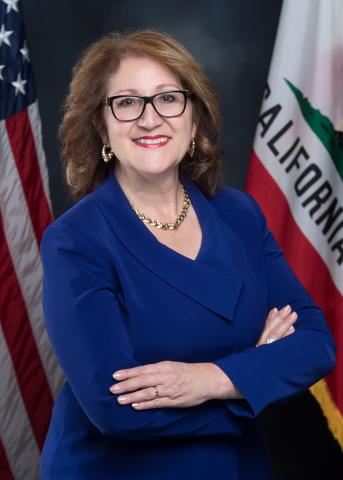
Ask Maddy about Eloise Reyes
Scope: CA
Hi! I can help you understand Eloise Reyes's legislative record. What would you like to know?
Try one of these
i
Maddy answers using official bill text and legislative records. Always verify before sharing.
Sources cited inline