

Passed Feb 8, 2024
1 co-sponsor
Total votes
40,186
all sessions
Attendance
93%
2,266 missed
Among the lowest in the chamber
With party
99%
of cast votes
Bipartisan score
0%
crosses aisle rarely
Sponsored
2,637
bills & resolutions
Near the chamber average
Committees
10
assignments
2,637 bills and resolutions
Sponsored bills
Total
2,637
Primary
384
Co-sponsor
2,253
This page
2,637
matching current filters
Public social services: student eligibility.
(1) Existing law establishes various public social services programs, including, among others, the California Work Opportunity and Responsibility to Kids (CalWORKs) program, CalFresh, and the Medi-Cal program. Existing law defines "public social services" to mean activities and functions of state and local government administered or supervised by the State Department of Social Services or the State Department of Health Care Services and involved in providing aid or services, or both, to those people of the state who, because of their economic circumstances or social condition, are in need of and may benefit from the aid or services. This bill would require the State Department of Social Services to convene a workgroup comprised of, among others, the County Welfare Directors Association of California, to develop recommendations to allow data from Free Application for Federal Student Aid (FAFSA) applications to be released to county welfare departments to authorize students to apply to receive public social services based on data collected pursuant to information from their FAFSA application. The bill would require those recommendations to be submitted to the Legislature by December 31, 2024. The bill would, upon the submission of those recommendations, require the department and the workgroup to begin to pursue administrative and statutory changes to make it possible for data from the FAFSA application, or any other student aid application administered by the Student Aid Commission, to be prepopulated into applications for students to receive public social services. (2) Existing law requires the Office of Systems Integration within the California Health and Human Services Agency to implement a statewide automated welfare system, known as the California Statewide Automated Welfare System (CalSAWS) , for various public assistance programs, including the CalWORKs program, CalFresh, and the Medi-Cal program. Under existing law, among other duties, the state is consolidating existing consortia systems into the single CalSAWS. Existing federal law provides for the Supplemental Nutrition Assistance Program (SNAP) , known in California as CalFresh, under which supplemental nutrition assistance benefits allocated to the state by the federal government are distributed to eligible individuals by each county. Existing law requires the department to convene a workgroup to identify the steps necessary to establish a CalFresh application submission process that accommodates the large influx of CalFresh applications during the beginning of a school term, as specified, and to submit a report, on or before April 1, 2023, to the Legislature on the necessary steps identified by the workgroup and any estimates of costs associated with implementing those steps. This bill would require the department to ensure that CalSAWS allows all county office eligibility workers, regardless of county, to view, transfer, and process all CalFresh applications via CalSAWS to allow students to be able to apply for benefits in their home county before moving, or, in the county of their school.
Failed Feb 1, 2024
0 co-sponsors
Air quality programs: funding.
(1) Existing law creates the Enhanced Fleet Modernization Program to provide compensation for the retirement and replacement of passenger vehicles and light-duty and medium-duty trucks that are high polluters. Existing law requires the Bureau of Automotive Repair to administer the program and the State Air Resources Board to adopt the guidelines for the program. Existing law requires the guidelines to ensure vehicle replacement or a mobility option be an option for all motor vehicle owners and may be in addition to compensation for vehicles retired. Existing law creates the Enhanced Fleet Modernization Subaccount in the High Polluter Repair or Removal Account and makes available, upon appropriation, all moneys in the account to establish, implement, and administer the program. This bill would require the guidelines to ensure each replacement vehicle in the program be either a plug-in hybrid or zero-emission vehicle unless the state board makes a specified determination in consultation with the State Energy Resources Conservation and Development Commission, as specified. (2) Existing law establishes the Clean Transportation Program, administered by the State Energy Resources Conservation and Development Commission, to provide funding to certain entities to develop and deploy innovative technologies that transform California's fuel and vehicle types to help attain the state's climate change policies. Existing law requires the commission to give preference to those projects that maximize the goals of the program based on specified criteria and to fund specified eligible projects, including, among others, alternative and renewable fuel projects to develop and improve alternative and renewable low-carbon fuels. Existing law creates the Alternative and Renewable Fuel and Vehicle Technology Fund, to be administered by the commission, and requires the moneys in the fund, upon appropriation by the Legislature, to be expended by the commission to implement the program. This bill would expand the purpose of the program to include developing and deploying innovative technologies that transform California's fuel and vehicle types to help reduce criteria air pollutants and air toxics. The bill would no longer require the commission to provide certain project preferences. The bill would provide that the goals of the program shall be to advance the state's clean transportation, equity, air quality, and climate emission policies and would require the commission to ensure program investments support specified requirements. The bill would require the commission, on and after January 1, 2025, to expend at least 50% of the moneys appropriated to the program on programs and projects that directly benefit or serve residents of disadvantaged and low-income communities and low-income Californians, and would require at least 50% of funding for tangible location-based investments to be expended in disadvantaged and low-income communities. (3) Existing law establishes the Air Quality Improvement Program under the administration of the State Air Resources Board for the purpose funding air quality improvement projects relating to fuel and vehicle technologies. The primary purpose of the program is to fund projects to reduce criteria air pollutants, improve air quality, and provide funding for research to determine and improve the air quality impacts of alternative transportation fuels and vehicles, vessels, and equipment technologies. Existing law establishes a list of projects eligible for funding under the program. Existing law creates the Air Quality Improvement Fund, and requires the state board to expend the moneys in that fund, upon appropriation by the Legislature, to implement the Air Quality Improvement Program. This bill would instead provide that the purpose of the program is to fund air quality improvement projects relating to zero-emission fuel and vehicle technologies and that the primary purpose of the program is to fund projects to reduce criteria air pollutants in the logistics, trucking, off-road, warehouse, and port sectors, improve air quality in nonattainment basins, and improve the air quality impacts of zero-emission transportation fuels and vehicles, vessels, and equipment technologies. The bill would also revise the list of projects eligible for funding under the program. (4) Existing law, until January 1, 2024, increases vehicle registration fees, vessel registration fees, and specified service fees for identification plates by a specified amount. Existing law requires the revenue generated by the increase in those fees to be deposited in the Alternative and Renewable Fuel and Vehicle Technology Fund and either the Air Quality Improvement Fund or the Enhanced Fleet Modernization Subaccount, as provided. Existing law, until January 1, 2024, imposes on certain vehicles a smog abatement fee of $20, and requires a specified amount of this fee to be deposited in the Air Quality Improvement Fund and in the Alternative and Renewable Fuel and Vehicle Technology Fund. This bill would extend those charges in the amounts required to make those deposits until January 1, 2035. (5) This bill would declare that it is to take effect immediately as an urgency statute.
died Feb 1, 2024
1 co-sponsor
Workforce training: CaliforniaVolunteers: youth job corps.
Under existing law, by executive order, CaliforniaVolunteers is established in the Office of the Governor and is charged with overseeing programs and initiatives for service and volunteerism. Existing law authorizes CaliforniaVolunteers to form a nonprofit public benefit corporation or other entity exempt from income taxation, as provided, to raise revenues and receive grants or other financial support from private or public sources, for purposes of undertaking or funding any lawful activity authorized to be undertaken by CaliforniaVolunteers. Existing federal law, the National and Community Service Trust Act of 1993, also requires the state to create a commission to carry out specified duties relating to national service programs to be eligible for grants or allotments under certain programs, or to receive distributions of approved national service positions. Existing state law continues into existence the Board of Commissioners under CaliforniaVolunteers for purposes of meeting the requirements of the federal act and the act's implementing rules and regulations. #CaliforniansForAll Youth Jobs Corps is a program of the CaliforniaVolunteers. This bill would establish in statute the #CaliforniansForAll Youth Job Corps Program. The bill would require the CaliforniaVolunteers to expand the program, upon appropriation by the Legislature, which would fund supportive services, as specified, that are necessary for homeless youth and current or former foster youth to enable their participation in the workforce development program, as defined. Under the bill, grants would be awarded on a competitive basis. The bill would require the CaliforniaVolunteers to conduct outreach activities and to provide technical assistance to eligible applicants to ensure that grants are awarded to qualified applicants providing a broad spectrum of supportive services. The bill would prescribe definitions, duties for the CaliforniaVolunteers, and requirements for applications and applicants, including the requirement that applicants agree to provide the office any information that the office deems necessary to meet reporting requirements and other grant requirements. The bill would require the CaliforniaVolunteers to evaluate how grants awarded under the program address the needs of eligible targeted populations and, beginning one year after the initial award of grant funds, to post an annual report on its internet website regarding the progress and success of the program.
Failed Feb 1, 2024
1 co-sponsor
Healing arts: foreign dental schools.
Existing law, the Dental Practice Act, provides for the licensure and regulation of dentists and dental assistants by the Dental Board of California. Existing law requires the board to grant a license to practice dentistry, and to register as a licensed dentist on the board register, a person who successfully passes a specified examination. Notwithstanding that provision, existing law authorizes the board to grant a license to practice dentistry to an applicant who submits specified information to the board including, among other things, satisfactory evidence of having graduated from a dental school approved by a national accrediting body approved by the board or by the Commission on Dental Accreditation of the American Dental Association. This bill would remove the authority to grant a license to an applicant who submits evidence of having graduated from a dental school approved by a national accreditation body approved by the board. Existing law, until January 1, 2024, makes the board responsible for the approval of foreign dental schools based upon standards established by the board, as specified. Existing law authorizes the board to contract with outside consultants or a national professional organization to survey and evaluate foreign dental schools and requires the board to establish a technical advisory group to review and comment on the survey and evaluation of a foreign dental school pursuant to any contract before final action by the board regarding certification of the foreign dental school. Existing law provides that any foreign dental school that wishes to be approved to apply to the board. Existing law requires that periodic surveys and evaluations of all approved schools be made to ensure continued compliance with these provisions. Existing law requires a school to pay a registration fee or a renewal fee, as applicable. Exiting law requires a fully approved school to submit a renewal application every 7 years and specifies that an approval that is not renewed automatically expires. This bill would delete the January 1, 2024, repeal date, thereby making the provisions described above operative indefinitely. Existing law prohibits the board, from January 1, 2020, until January 1, 2024, from accepting new applications for schools seeking approval as a foreign dental school and instead requires the applicant to successfully complete the international consultative and accreditation process with the Commission on Dental Accreditation of the American Dental Association or a comparable accrediting body approved by the board. Existing law requires that, by January 1, 2024, in order for a school to remain an approved foreign dental school, that it successfully complete the international consultative and accreditation process with the Commission on Dental Accreditation of the American Dental Association or a comparable accrediting body approved by the board. This bill would delete those provisions. Existing law, to become operative on January 1, 2024, requires a school seeking approval as a foreign dental school to have successfully completed the international consultative and accreditation process with the Commission on Dental Accreditation of the American Dental Association or a comparable accrediting body approved by the board and specifies that graduates of a foreign dental school whose programs were approved at the time of graduation are eligible for licensure. This bill would repeal those provisions.
Failed Feb 1, 2024
0 co-sponsors
Qualifying logistics use projects.
(1) Existing law, the Planning and Zoning Law, sets forth various requirements relating to the review of development project permit applications and the issuance of development permits for specified classes of development projects. This bill would prohibit the County of Riverside, the County of San Bernardino, any city located within those counties, and the agencies, boards, or commissions, charter cities, joint powers authorities, regional agencies, public districts, and redevelopment agencies, and any other political subdivisions located within those counties, from approving the development or expansion of any qualifying logistics use, as defined, within 1,000 feet of sensitive receptors, as defined, except as provided. The bill would authorize a public agency, as defined, to approve the development or expansion of a qualifying logistics use greater than 500 feet from a sensitive receptor and within 1,000 feet of a sensitive receptor only if the qualifying logistics use complies with certain requirements, including that all heavy-duty vehicles domiciled onsite meet certain requirements. The bill would require these minimum setback measurements to be made from the property line of the sensitive receptor to the property line of the qualifying logistics use by using a straight-line method. By modifying the duties of local agencies with regard to qualifying logistics use projects, the bill would impose a state-mandated local program. The bill would authorize an individual affected by a violation of these provisions or the Attorney General to bring an action to enjoin a violation of the provisions of this bill. The bill would provide that these provisions do not relieve a public agency from complying with the California Environmental Quality Act. (2) The bill would include findings that changes proposed by this bill address a matter of statewide concern rather than a municipal affair and, therefore, apply to all cities, including charter cities. (3) This bill would make legislative findings and declarations as to the necessity of a special statute for the Counties of Riverside and San Bernardino, the cities located within those counties, and the agencies, boards, or commissions, charter cities, joint powers authorities, regional agencies, public districts, and redevelopment agencies, and any other political subdivisions located within those counties. (4) The California Constitution requires the state to reimburse local agencies and school districts for certain costs mandated by the state. Statutory provisions establish procedures for making that reimbursement. This bill would provide that no reimbursement is required by this act for a specified reason.
Failed Feb 1, 2024
0 co-sponsors
California Community College Guided Pathways Grant Program.
Existing law establishes the California Community College Guided Pathways Grant Program under the administration of the office of the Chancellor of the California Community Colleges and requires the chancellor's office to distribute grants, upon appropriation by the Legislature, to community colleges that satisfy certain requirements, including, among other requirements, integration of existing student-success programs and development of clearly structured, coherent guided pathways programs, as defined. This bill, on or before August 1, 2024, and on or before August 1 of every even-numbered year thereafter, would require each community college to develop an educational plan, as provided, to provide a detailed sequence of courses for each degree, certificate, diploma, or license, or any other form of transfer to a postsecondary educational institution, offered by the community college and ensure that the community college offers the courses required for a degree, certificate, diploma, or license, or any other pathway of transfer to a postsecondary educational institution, in a consistent manner to ensure students can plan their academic futures. The bill, on or before June 1, 2025, and on or before June 1 of every even-numbered year thereafter, would require the chancellor's office to submit a report to the Director of Finance and the Legislature, based on the educational plans received from community colleges, as specified, that includes a summary of the educational plans and related information, as provided. By imposing new duties on community college districts, the bill would impose a state-mandated local program. The California Constitution requires the state to reimburse local agencies and school districts for certain costs mandated by the state. Statutory provisions establish procedures for making that reimbursement. This bill would provide that, if the Commission on State Mandates determines that the bill contains costs mandated by the state, reimbursement for those costs shall be made pursuant to the statutory provisions noted above.
Failed Feb 1, 2024
0 co-sponsors
State Partnership for Affordable Housing Registries in California Grant Program.
Existing law creates the Department of Housing and Community Development and requires the department to administer various programs relating to housing. This bill would establish, subject to appropriation by the Legislature, the State Partnership for Affordable Housing Registries in California Grant Program to provide technical assistance to eligible entities, as defined, for the purpose of creating a state-managed online platform of affordable housing listings, information, and applications. The bill would require the department to administer the program and to adopt guidelines for this purpose. The bill would require the department to develop a housing preapplication to standardize applications for affordable housing and to solicit participation of eligible entities no later than January 1, 2026, and to launch the platform no later than July 1, 2027. The bill would require the department to provide technical assistance to participating entities and to ensure equitable access to database users, as specified. The bill would authorize the department to coordinate with the Office of Data and Innovation to carry out the requirements of the program and to contract with vendors pursuant to existing provisions of state contract law, as specified. The bill would establish minimum requirements for the platform and would require a vendor selected to create and maintain the platform to demonstrate specified capabilities and implement those requirements. The bill would exempt from disclosure as a public record any personally identifiable information collected by the platform or shared between eligible entities and the department in administering the program. Existing constitutional provisions require that a statute that limits the right of access to the meetings of public bodies or the writings of public officials and agencies be adopted with findings demonstrating the interest protected by the limitation and the need for protecting that interest. This bill would make legislative findings to that effect.
Failed Feb 1, 2024
0 co-sponsors
Vehicular air pollution: Clean Transportation Program: vehicle registration and identification plate service fees: smog abatement fee: extension.
Existing law, until January 1, 2024, increases the smog abatement fee on certain vehicles by a specified amount and requires the revenues generated by the increase to be deposited in the Air Quality Improvement Fund and the Alternative and Renewable Fuel and Vehicle Technology Fund. Existing law, until January 1, 2024, increases vehicle registration fees and certain service fees for identification plates by specified amounts. Existing law requires the revenue generated by the increase in those fees to be deposited in the Alternative and Renewable Fuel and Vehicle Technology Fund and either the Air Quality Improvement Fund or the Enhanced Fleet Modernization Subaccount, as provided. This bill would extend the increases in those charges to July 1, 2035. Existing law, until January 1, 2024, prohibits the State Air Resources Board from enforcing any element of its clean fuels outlet regulations or other regulation that requires or has the effect of requiring suppliers, as defined, to construct, operate, or provide funding for the construction or operation of publicly available hydrogen-fueling stations. Existing law, until January 1, 2024, requires the state board to aggregate and make available certain information regarding projected leases and sales of, and the registration of, hydrogen-fueled vehicles, to evaluate, based on that information, the need for additional publicly available hydrogen-fueling stations for the actual and projected number of hydrogen-fueled vehicles, the geographic areas where fuel will be needed, and station coverage, and to report the finding of the evaluation to the State Energy Resources Conservation and Development Commission. Existing law, until January 1, 2024, requires the commission to annually allocate $20,000,000 to fund the number of publicly available hydrogen-fueling stations identified by the state board, not to exceed 20% of the moneys appropriated by the Legislature from the Alternative and Renewable Fuel and Vehicle Technology Fund, until at least 100 publicly available hydrogen-fueling stations are operating in the state. This bill would extend the above-described provisions to July 1, 2035, and would repeal them as of January 1, 2036. The bill would lower the annual allocation described above to $10,000,000, require the commission to make that allocation only until July 1, 2030, and impose other specified requirements. The bill would also delete the requirements that the hydrogen-fueling stations be publicly available and that there be at least 100 hydrogen-fueling stations operating in the state. Existing law creates the Enhanced Fleet Modernization Program to provide compensation for the retirement and replacement of passenger vehicles and light-duty and medium-duty trucks that are high polluters. Existing law requires the Bureau of Automotive Repair to administer the program and the state board to adopt the guidelines for the program. Existing law requires the guidelines to ensure vehicle replacement or a mobility option be an option for all motor vehicle owners and may be in addition to compensation for vehicles retired. Existing law creates the Enhanced Fleet Modernization Subaccount in the High Polluter Repair or Removal Account and makes available, upon appropriation, all moneys in the account to establish, implement, and administer the program. This bill would require the guidelines to ensure each replacement vehicle in the program be either a plug-in hybrid or zero-emission vehicle unless the state board makes a specified determination regarding either the availability of vehicles or the availability of charging and refueling capabilities in consultation with the commission, as specified. Existing law establishes the Clean Transportation Program that is administered by the commission to provide financial assistance to develop and deploy innovative technologies that transform California's fuel and vehicle types to help attain the state's climate change policies with an emphasis on the development and deployment of technology and alternative and renewable fuels in the marketplace. Existing law authorizes the commission to make a single source or sole source award for applied research. This bill would revise and recast the Clean Transportation Program to, among other things, change the emphasis of the program to the development and deployment of zero-emission technology and fuels in the marketplace where feasible and near-zero-emission technology and fuels elsewhere. The bill would additionally authorize the commission to make a single source or sole source award to public or nonpublic entities that manage a United States Department of Energy national laboratory. The bill would require the commission, on and after January 1, 2025, to expend at least 50% of the moneys appropriated to the program on programs and projects that directly benefit or serve residents of disadvantaged and low-income communities and low-income Californians. The bill would also require the State Energy Resources Conservation and Development Commission, by January 1, 2028, in consultation with the State Air Resources Board and the Department of Motor Vehicles, to propose to the Legislature alternative funding methodologies or fee structures for funding zero-emission vehicle infrastructure for light-, medium-, and heavy-duty vehicles. The bill would require the proposal to include an assessment of the economic equity of the alternatives. This bill would declare that it is to take effect immediately as an urgency statute.
died Feb 1, 2024
0 co-sponsors
Criminal procedure: expungement of records.
Existing law allows a defendant who successfully participated in the California Conservation Camp program as an incarcerated individual hand crew member, or successfully participated as a member of a county incarcerated individual hand crew, or participated at an institutional firehouse, except as specified, to petition the court to have the pleading dismissed, thus releasing the person of any penalties and disabilities of conviction, except as otherwise provided. This bill would require, beginning May 1, 2026, and every other year thereafter, each superior court to report to the Judicial Council specified data regarding petitions seeking relief pursuant to the above-described provisions. The bill would require the Judicial Council to report the statewide data regarding these petitions beginning June 1, 2026, and every other year thereafter. The bill would repeal these provisions on January 1, 2036.
Vetoed Jan 29, 2024
0 co-sponsors
Ask Maddy
·
AI policy assistant
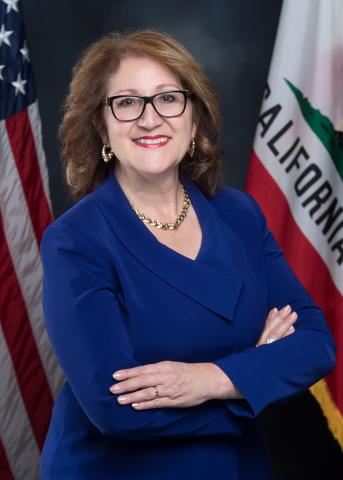
Ask Maddy about Eloise Reyes
Scope: california
Hi! I can help you understand Eloise Reyes's legislative record. What would you like to know?
Try one of these
i
Maddy answers using official bill text and legislative records. Always verify before sharing.
Sources cited inline