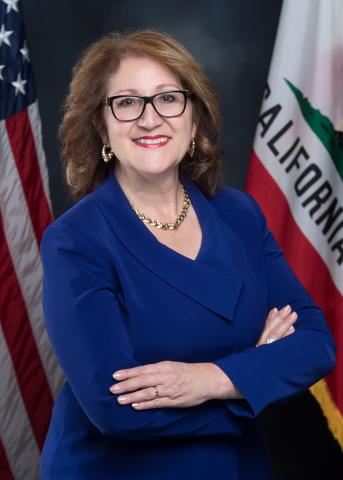
Photo of Eloise Reyes
D California Senate · District 29

Sen. Eloise Reyes

Compare
Total votes
40,186
all sessions
Attendance
93%
2,266 missed
Among the lowest in the chamber
With party
99%
of cast votes
Bipartisan score
0%
crosses aisle rarely
Sponsored
2,637
bills & resolutions
Near the chamber average
Committees
10
assignments
2,637 bills and resolutions

Sponsored bills

Total
2,637
Primary
384
Co-sponsor
2,253
This page
2,637
matching current filters
Co-sponsor SB 1356
Signed into law · California Senate · Co-sponsor
Judiciary: training: gender bias.

Existing law authorizes the Judicial Council to provide by rule of court for racial, ethnic, and gender bias, and sexual harassment training and training for any other bias based on sex, race, color, religion, ancestry, national origin, ethnic group identification, age, mental disability, physical disability, medical condition, genetic information, marital status, or sexual orientation for judges and subordinate judicial officers. This bill would require the Judicial Council, when developing any training on gender bias, to consider the role of gender in court proceedings and meeting the needs of litigants in unique situations of vulnerability. The bill would make related findings and declarations.

Signed into law Aug 19, 2024 1 co-sponsor
Co-sponsor ACR 214
Signed into law · California Assembly · Co-sponsor
Relative to India's Independence Day.

Maddy summaryThis bill recognizes August 15, 2024, as India's Independence Day and encourages all Californians to participate in celebrations honoring the occasion. It directly affects the residents of California, particularly the state's large Indian American community, by formally acknowledging the historical significance of the date when India gained independence from British rule. The measure does not create new laws or change government operations; instead, it serves as a symbolic gesture to highlight the cultural contributions of Indian Americans and the shared values of democracy and nonviolence between the two nations.

Signed into law Aug 19, 2024 1 co-sponsor
Co-sponsor ACR 209
Signed into law · California Assembly · Co-sponsor
Relative to the 2024 International Day of Yoga.

Maddy summaryThis bill officially recognizes June 21, 2024, as the 2024 International Day of Yoga within the state of California. It does not create new laws or change existing regulations but serves as a formal acknowledgment of the global event. The measure is intended to highlight the history and benefits of yoga as a wellness practice.

Signed into law Aug 19, 2024 1 co-sponsor
Co-sponsor AB 2943
Signed into law · California Assembly · Co-sponsor
Crimes: shoplifting.

(1) Existing law divides theft into grand theft and petty theft. Existing law punishes petty theft as a misdemeanor while grand theft is punished as either a misdemeanor or a felony. Existing law lists specific types of theft which are grand theft and all other cases of theft as petty theft. Existing law authorizes a person to be charged with grand theft if the property taken exceeds $950 over the course of distinct but related acts. This bill would clarify that those related acts include acts committed against multiple victims or in counties other than the county of the current offense. The bill would also clarify that evidence that distinct acts are motivated by one intention, one general impulse, and one plan may include, but is not limited to, evidence that the acts involve the same defendant or defendants, are substantially similar in nature, or occur within a 90-day period. (2) Existing law prohibits the possession or receipt of stolen property, as specified. A violation of this prohibition is punishable as either a misdemeanor or a felony, depending on the value of the property and whether the offender has certain prior convictions. This bill would make it a crime for any person to possess property unlawfully that was acquired through one or more acts of shoplifting, theft, or burglary from a retail business, if the property is not possessed for personal use and the person has intent to sell, exchange, or return the merchandise for value, or the intent to act in concert with one or more persons to sell, exchange, or return the merchandise for value, and the value of the possessed property exceeds $950. The bill would, for the purpose of determining the value of the property, aggregate the property with any other property possessed by the person with that intent within the prior 2 years and with any property possessed by another person acting in concert with the first person to sell, exchange, or return the merchandise for value, if that property was also acquired unlawfully. The bill would make this crime punishable as a misdemeanor or a felony. By creating a new crime, this bill would impose a state-mandated local program. (3) Existing law prohibits shoplifting, defined as entering a commercial establishment with intent to commit theft while that establishment is open during regular business hours, where the value of the property that is taken or intended to be taken does not exceed $950. Existing law requires an act that falls within this definition to be charged as shoplifting and not as burglary or theft. Under existing law, shoplifting is punishable as a misdemeanor, except when the defendant has prior convictions, as specified. Existing law authorizes a peace officer to make a warrantless arrest for a misdemeanor when the officer has probable cause to believe the person to be arrested has committed the misdemeanor in the officer's presence. Existing law also authorizes a private person to make an arrest for a misdemeanor committed in their presence, and requires the person to deliver the arrested person to a peace officer or magistrate. Existing law additionally authorizes a merchant to detain a person for a reasonable time and in a reasonable manner to determine if a person has unlawfully taken merchandise. Existing law authorizes a peace officer to make a warrantless arrest for specified misdemeanors relating to domestic violence, violation of a restraining order, and carrying a concealed firearm at an airport that did not occur in the officer's presence. This bill would authorize a peace officer to make a warrantless arrest for a misdemeanor shoplifting offense not committed in the officer's presence if the officer has probable cause to believe that person has committed shoplifting, as specified. The bill would clarify that local law enforcement or a local jurisdiction is prohibited from bringing a nuisance action against a business solely for the act of reporting retail crime, unless the report is knowingly false. (4) Existing law requires a peace officer to release upon a signed promise to appear any person arrested for a misdemeanor, unless the person demands to be taken before a magistrate. Existing law provides certain reasons a person arrested for a misdemeanor shall not be released including that the person is intoxicated or in need of medical attention, the person is unable to provide satisfactory proof of identification, or there are outstanding arrest warrants for the person. Additionally, existing law exempts from this provision persons arrested for specified crimes including domestic violence, stalking, threatening a witness, and, until January 1, 2026, organized retail theft. This bill would extend that exemption for organized retail theft until January 1, 2031. (5) Existing law, until January 1, 2026, authorizes a city or county prosecuting authority or county probation department to create a diversion or deferred entry of judgment program for persons who commit a theft offense or repeat theft offenses, as specified. This bill would extend that authorization until January 1, 2031. (6) Existing law authorizes the court to suspend a criminal sentence and make and enforce terms of probation for a period not to exceed 2 years, and in misdemeanor cases, for a period not to exceed one year. Existing law authorizes the court to make and enforce the terms of probation for specified theft cases for a period not to exceed 3 years. This bill would, for an offense of shoplifting or petty theft, authorize the court to make and enforce the terms of probation for a period not to exceed 2 years. The bill would require a court that imposes a term longer than one year to consider referring the defendant to a collaborative court or rehabilitation program that is relevant to the underlying factor or factors that led to the commission of the offense, as specified. For a defendant under 25 years of age, the bill would require the court, to the extent such a program is available, to refer the defendant to a program modeled on healing-centered, restorative, trauma-informed, and positive youth development approaches that is provided in collaboration with community-based organizations. By increasing the period of probation, this bill would impose a state-mandated local program. (7) The California Constitution requires the state to reimburse local agencies and school districts for certain costs mandated by the state. Statutory provisions establish procedures for making that reimbursement. This bill would provide that, if the Commission on State Mandates determines that the bill contains costs mandated by the state, reimbursement for those costs shall be made pursuant to the statutory provisions noted above.


Signed into law Aug 16, 2024 1 co-sponsor
Co-sponsor AB 2071
Passed · California Assembly · Co-sponsor
Pupil instruction: English Learner Roadmap: grant program: parent toolkit.

Existing law establishes the State Board of Education, and requires the state board to adopt rules and regulations, not inconsistent with the laws of the state, to govern the public elementary and secondary schools of the state. Existing law requires the state board to determine all questions of policy within its powers. Pursuant to these powers, the state board has adopted a policy known as the California English Learner Roadmap State Board of Education Policy: Educational Programs and Services for English Learners, also known as the EL Roadmap Policy, for the stated purpose of assisting the State Department of Education in providing guidance to local educational agencies with respect to educating English learners attending California public schools. Existing law establishes the State Department of Education, under the administration of the Superintendent of Public Instruction, and assigns the department numerous duties relating to the governance and funding of local educational agencies. This bill would require the state board to, on or before March 15, 2026, develop and adopt a "California English Learner Roadmap: Parent Toolkit" that will be made available to families served by school districts, county offices of education, and charter schools that are implementing the EL Roadmap Policy. The bill would require the state board to convene a workgroup to assist in the development of the parent toolkit, as provided. The bill would require the department to develop forms that may be used by parents of English learner pupils to request services from the pupil's teacher or administrator as it relates to the parent toolkit. The bill would establish the English Learner Roadmap Implementation Grant Pilot Program with the goal of locally planning and implementing the EL Roadmap Policy. The bill would require the department, on or before September 1, 2025, to award no more than 8 one-time grants of up to $1,500,000 per grant and no more than 4 one-time grants of up to $750,000 per grant to school districts, county offices of education, or charter schools, as provided. The bill would require the department to, among other things, determine application procedures and selection criteria for grant awards, review applications, identify and determine how data will be collected and shared with the public, and meet quarterly with leaders from the grant recipients for specified purposes. The bill would require grant recipients to submit to the department specified data as it relates to the grant received. The bill would require the department to submit to the appropriate policy and fiscal committees of the Legislature a progress report on or before January 31, 2027, and, on or before December 1, 2028, a final report, with specified information about, among other things, the successes and challenges of the grant program, as provided. This bill would make implementation of its provisions contingent upon an appropriation by the Legislature, as provided.

Passed Aug 15, 2024 1 co-sponsor
Primary AB 1911
Passed · California Assembly · Lead sponsor
Residential care facilities: complaints.

Existing law establishes the State Department of Social Services and sets forth its powers and duties, including, but not limited to, the licensing and administration of residential care facilities for the elderly. Existing law authorizes any person to request an investigation of a residential care facility for the elderly by making a complaint to the department, as specified. Existing law requires the department to make a preliminary review, except as specified, and make an onsite inspection within 10 days of receiving the complaint unless the visit would adversely affect the investigation, as specified. Existing law requires the department, upon receipt of a complaint, to make a good faith effort to contact and interview the complainant of the department's proposed course of action and relevant deadline for the department to complete the investigation. Existing law requires the department, within 10 days of completing that investigation, to notify the complainant of the department's determination as a result of the investigation. This bill would instead authorize any person to file a complaint with the department against a residential care facility for the elderly. The bill would require the department to conduct an onsite investigation within one business day of receipt of the complaint if the complaint involves a threat of imminent danger of death or serious harm. The bill would require the department to inform the complainant within 10 calendar days of receipt of the complaint if the department determines that an investigation is not warranted and the reason for that determination. The bill would require the department, prior to conducting an onsite investigation, to send a notification to the complainant notifying them of, among other things, the nature of the allegations to be investigated and the relevant deadline for the department to complete the investigation. The bill would require the department, for complaints received on or after July 1, 2025, to complete an investigation within a specified amount of time and would allow an extension of these time frames due to extenuating circumstances, as specified. The bill would require the department, when providing notification of the outcome of the investigation, to also provide notification of the right to seek an informal conference, and to provide a copy of any reports describing violations and enforcement actions resulting from the investigation, if applicable. The bill would authorize a complainant to appeal a determination made by the department, as specified.

Passed Aug 15, 2024 0 co-sponsors
Primary AB 2262
Passed · California Assembly · Lead sponsor
Small business.

Existing law creates within the Governor's Office of Business and Economic Development the Office of Small Business Advocate, which is led by the Small Business Advocate, to advocate the causes of small business and to provide small businesses with the information they need to survive in the marketplace. Existing law requires the advocate to, among other duties, collaborate with the Office of Small Business and Disabled Veteran Business Enterprise Services in their activities under the Small Business Procurement and Contract Act, including promoting small business certification. This bill would also require the advocate to collaborate with local agencies on the development and implementation of local strategies to increase small business participation in local procurement opportunities, as specified. In this connection, the bill would authorize a local agency, as defined, to establish a Small Business Utilization Program (SBUP) to increase small businesses' participation in local agency procurement opportunities. The bill would require an SBUP, to facilitate the participation of small businesses in the provision of goods, information technology, and services to the local agency, to establish a small business certification process. As part of this process, the bill would require the SBUP, to the extent feasible, to include all of specified criteria, including, among other things, a minimum goal of 25% procurement participation for small businesses certification. The bill would authorize a local agency to submit information on its small business procurement participation to the Office of Small Business Advocate, including progress toward meeting utilization goals. The bill would require the Office of Small Business Advocate, subject to funding being available, and upon appropriation by the Legislature for these purposes, to issue its first data call to local agencies on or before November 15, 2026, as specified. The bill would include related legislative findings.

Passed Aug 15, 2024 0 co-sponsors
Primary AB 596
Passed · California Assembly · Lead sponsor
Early learning and care: rate reform.

(1) Existing law, the Early Education Act, among other things, requires the Superintendent of Public Instruction to administer all California state preschool programs, including, but not limited to, part-day and full-day age and developmentally appropriate programs for 3- and 4-year-old children. Existing law, the Child Care and Development Services Act, administered by the State Department of Social Services, establishes a system of child care and development services for children up to 13 years of age. Existing law requires the department, in collaboration with the State Department of Education, to implement a reimbursement system plan that establishes reasonable standards and assigned reimbursement rates, as specified. Existing law requires the state and Child Care Providers United - California to establish a Joint Labor Management Committee to develop recommendations for a single reimbursement rate structure that has specified characteristics, and requires the Joint Labor Management Committee to present those recommendations to the Department of Finance no later than November 15, 2022. Existing law also requires the department, in consultation with the State Department of Education, to convene a working group to assess the existing quality standards for childcare and development and preschool programs and the methodology for establishing reimbursement rates for those programs, and requires the working group to provide recommendations relating to specified topics to a specified Joint Labor Management Committee, the Department of Finance, and the Joint Legislative Budget Committee no later than August 15, 2022. This bill would require the State Department of Social Services, in collaboration with the State Department of Education, to develop an alternative methodology for calculating subsidy payment rates for child care and development services and California state preschool program services that build upon and align with the recommendations of the working group and Joint Labor Management Committee, and that uses a cost estimation model, as specified. The bill would require the department to develop an interim transition plan, if necessary, to implement the alternative methodology, as specified, and to seek preapproval from the United States Department of Health and Human Services to amend the state's current Child Care and Development Fund State Plan to change its current methodology for determining childcare and development and preschool subsidy payment rates to the alternative methodology. The bill would require the State Department of Social Services and the State Department of Education to implement the alternative methodology upon notice, in writing, to the Legislature that the alternative methodology has been adopted, as specified. (2) Existing law requires the State Department of Social Services, in consultation with the State Department of Education, to establish a fee schedule for families using preschool and child care and development services and requires families who utilize those services to be assessed a family fee that is based on income, certified family need for full-time or part-time care services, and enrollment. Existing law prohibits those family fees from exceeding 10% of the family's monthly income and prohibits family fees from being collected for the 2022–23 fiscal year. The bill would require the State Department of Social Services, in consultation with the State Department of Education, to develop an equitable sliding scale for the payment of family fees, and would suspend the collection of family fees until the new equitable sliding scale is implemented. (3) The Early Education Act requires the Superintendent of Public Instruction to adopt rules, regulations, and guidelines to facilitate the funding and reimbursement required by the act. Existing law requires, for the 2022–23 fiscal year only, contracting agencies operating a California state preschool to be reimbursed 100% of the contract maximum reimbursable amount or net reimbursable program costs, whichever is less, if they meet specified criteria. This bill would delete the requirement that the above-described reimbursement rate apply only during the 2022–23 fiscal year, thereby extending that reimbursement rate for contracting agencies operating a California state preschool indefinitely. The bill would also delete the requirement of meeting specified criteria in order to obtain that reimbursement rate. Existing law requires reimbursement for full-day and part-day California state preschool family childcare home education network providers for the 2022–23 fiscal year to be based on the maximum certified hours of care for all families, including families certified for a variable schedule, regardless of attendance. This bill would delete the requirement that the above-described reimbursement provision apply during the 2022–23 fiscal year, thereby extending that reimbursement provision for full-day and part-day California state preschool family childcare home education network providers indefinitely. (4) Existing law requires the State Department of Social Services to contract with local contracting agencies for alternative payment programs for childcare services to be provided throughout the state. Existing law requires the alternative payment program to reimburse childcare providers based upon specified criteria, including the actual days and hours of attendance for those families with variable schedules. Existing law also requires the department to administer general childcare and development programs, as specified. This bill would instead require the alternative payment program to reimburse childcare providers based on the maximum certified hours of care, as specified. The bill would require contracting agencies operating those general childcare and development programs to be reimbursed the lesser of 100% of the contract maximum reimbursable amount or net reimbursable program costs.

Passed Aug 15, 2024 0 co-sponsors
Showing 171 to 180 of 2,637 bills
Previous 1 … 17 18 19 … 264 Next