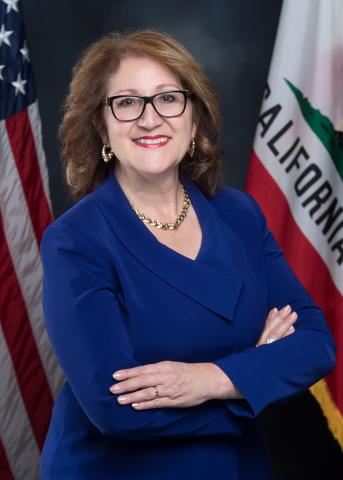
Signed into law
·
California Assembly
·
Co-sponsor
Nonvehicular air pollution: criteria air pollutants and toxic air contaminants.
(1) Existing law requires the State Air Resources Board to make available on its Internet Web site data concerning the emissions of greenhouse gases, criteria air pollutants, and toxic air contaminants, as specified. This bill would require the state board to develop a uniform statewide system of annual reporting of emissions of criteria air pollutants and toxic air contaminants for use by certain categories of stationary sources. The bill would require those stationary sources to report their annual emissions of criteria air pollutants and toxic air contaminants, as specified. (2) Existing law generally designates air pollution control and air quality management districts with the primary responsibility for the control of air pollution from all sources other than vehicular sources. Existing law authorizes the state board or an air district to require the owner or the operator of an air pollution emission source to take any action that the state board or the air district determines to be reasonable for the determination of the amount of air pollution emissions from that source. This bill would require the state board, by October 1, 2018, to prepare a monitoring plan regarding technologies for monitoring criteria air pollutants and toxic air contaminants and the need for and benefits of additional community air monitoring systems, as defined. The bill would require the state board to select, based on the monitoring plan, the highest priority locations in the state for the deployment of community air monitoring systems. The bill would require an air district containing a selected location, by July 1, 2019, to deploy a system in the selected location. The bill would authorize the air district to require a stationary source that emits air pollutants in, or that materially affect, the selected location to deploy a fence-line monitoring system, as defined, or other specified real-time, on-site monitoring. The bill would authorize the state board, by January 1, 2020, and annually thereafter, to select additional locations for the deployment of the systems. The bill would require air districts that have deployed a system to provide to the state board air quality data produced by the system. By increasing the duties of air districts, this bill would impose a state-mandated local program. The bill would require the state board to publish the data on its Internet Web site. This bill would require the state board, by October 1, 2018, to prepare and update, at least once every 5 years, a statewide strategy to reduce emissions of toxic air contaminants and criteria pollutants in communities affected by a high cumulative exposure burden. The bill would require the state board to select locations around the state for the preparation of community emissions reduction programs, and to provide grants to community-based organizations for technical assistance and to support community participation in the programs. The bill would require an air district containing a selected location, within one year of the state board's selection, to adopt a community emissions reduction program. By increasing the duties of air districts, this bill would impose a state-mandated local program. (3) Existing law requires air districts, prior to adopting rules to meet the requirement for best available retrofit control technology or for a specified feasible measure, to take specified actions, including, among others, identifying one or more potential control options that achieve the emissions reduction objectives for the rule. Existing law also authorizes a district to establish its own best available retrofit control technology requirement based upon the consideration of specified factors. This bill would require a district that is in nonattainment for one or more air pollutants to adopt an expedited schedule for the implementation of best available retrofit control technology, as specified. The bill would require the schedule to apply to each industrial source that, as of January 1, 2017, was subject to a specified market-based compliance mechanism and give highest priority to those permitted units that have not modified emissions-related permit conditions for the greatest period of time. This bill would require the state board to establish and maintain a statewide clearinghouse that identifies the best available control technology, best available retrofit control technology for criteria air pollutants, and related technologies for the control of toxic air contaminants. (4) Existing law establishes maximum criminal and civil penalties for any person, as defined, for violations of air pollution laws from nonvehicular sources. Existing law generally establishes the maximum criminal and civil penalties at $1,000, unless otherwise specified. This bill would increase the maximum for the generally applicable criminal and civil penalties under these provisions to $5,000. The bill would annually adjust maximum penalties for violations of these laws based on the California Consumer Price Index. (5) The California Constitution requires the state to reimburse local agencies and school districts for certain costs mandated by the state. Statutory provisions establish procedures for making that reimbursement. This bill would provide that with regard to certain mandates no reimbursement is required by this act for a specified reason. With regard to any other mandates, this bill would provide that, if the Commission on State Mandates determines that the bill contains costs so mandated by the state, reimbursement for those costs shall be made pursuant to the statutory provisions noted above.