

Existing federal law, the Indian Child Welfare Act, governs the proceedings for determining the placement of an Indian child when that child is removed from the custody of his or her parent or guardian. Existing provisions of state law govern child custody proceedings, adoption proceedings, and dependency proceedings, including termination of parental rights, the voluntary relinquishment of a child by a parent, and guardianship proceedings. Existing law recognizes that the federal Indian Child Welfare Act applies if the subject of these proceedings is or may be an Indian child, and specifies conforming procedures in these cases with regard to the right to notice and intervention accorded the child's tribe and the standard of proof applied in evaluating the evidence submitted, among other things. Existing law requires an attorney or law firm that receives or disburses trust funds to establish and maintain an Interest on Lawyers Trust Account (IOLTA) and to deposit in the account all client deposits or funds that are nominal in amount or are on deposit or invested for a short period of time, the interest and dividend earnings on which are to be paid to the State Bar of California to be used to fund qualified legal services projects that provide free civil legal services to indigent persons and qualified support centers that provide legal training, legal technical assistance, or advocacy support to qualified legal services projects, as specified. This bill would require the State Bar of California to administer grants to qualified legal services projects and qualified support centers for the purpose of providing legal services to Indian tribes in child welfare matters under the federal Indian Child Welfare Act. The bill would provide that its provisions shall become operative upon an appropriation of not less than $1,000,000 to the State Bar of California in the annual Budget Act expressly identified for the purpose of these provisions.
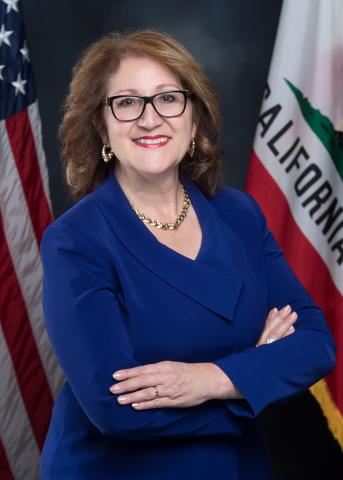
Sponsored bills
Under existing law, a judgment that a person convicted of an infraction be punished by a fine may also provide for the payment to be made within a specified time or in specified installments. Existing law requires a court, in any case when a person appears before a traffic referee or judge of the superior court for adjudication of a violation of the Vehicle Code, upon request of the defendant, to consider the defendant's ability to pay, as specified. This bill would require the court, in any case involving an infraction filed with the court, to determine whether the defendant is indigent for purposes of determining what portion of the statutory amount of any associated fine, fee, assessment, or other financial penalties the person can afford to pay. The bill would provide that the defendant can demonstrate that he or she is indigent by providing specified information, including attesting to his or her indigent status under penalty of perjury. Because a violation thereof would be a crime, the bill would impose a state-mandated local program. The bill would require the court to reduce the base fine and associated fees by 80% if the court establishes that the defendant is indigent, and to provide alternatives to immediate payment of the sentence, including a payment plan option. The bill would require the court to determine the amount a defendant can afford to pay per month by using a payment calculator developed by the Judicial Council, as specified. For persons not found to be indigent, the bill would require that the monthly payment not exceed 5% of the defendant's family monthly income, as provided. For defendants found to be indigent, the bill would require that monthly payments be $0 until the defendant's financial circumstances change, and would require the remaining amount owed to be discharged after 48 months in the interest of justice. Existing law authorizes any county or court to implement a "comprehensive collection program" as a separate revenue collection activity, and requires the program to meet certain criteria, one of which is that the program engages in specified activities in collecting fines or penalties. One of those activities is initiating suspensions or holds for driver's licenses, as specified. This bill would delete initiating suspensions or holds for driver's licenses from the list of activities the program may engage in. The bill would require the program to provide a payment plan option based on the debtor's ability to pay and requires the program to notify the defendant of his or her right to an indigency determination for infractions. Existing law requires, whenever a person is arrested for any nonfelony violation of the Vehicle Code, or for a violation of an ordinance of a city or county relating to traffic offenses and he or she is not immediately taken before a magistrate, the arresting officer to prepare in triplicate a written notice to appear in court or before a person authorized to receive a deposit of bail, as specified. Existing law further requires the officer to deliver one copy of the notice to appear to the arrested person, and the arrested person in order to secure release must give his or her written promise to appear in court or before a person authorized to receive a deposit of bail. This bill would require the court to send the defendant a reminder notice of his or her promise to appear in court and would require the reminder notice to include specified information, including an appearance date and location and the right to an indigency determination. Existing law authorizes the court to notify the Department of Motor Vehicles when a person has failed to appear or failed to pay a fine or bail, with respect to various violations relating to vehicles. Existing law requires the department to suspend, and prohibits the department from issuing or renewing, a person's driver's license upon receipt of one of those notices, as specified. This bill would repeal the provisions authorizing the court to notify the department of a failure to pay a fine or bail. The bill would repeal certain provisions prohibiting the department from issuing or renewing a person's driver's license upon receipt of a notice of a defendant's failure to pay, with respect to designated violations. Existing law provides that a person willfully violating his or her written promise to appear or a lawfully granted continuance of his or her promise to appear in court or before a person authorized to receive a deposit of bail, or willfully failing to pay bail in installments or a certain lawfully imposed fine, as specified, is guilty of a misdemeanor. The bill would instead provide that a person willfully violating his or her written promise to appear or a lawfully granted continuance of his or her promise to appear in court or before a person authorized to receive a deposit of bail is guilty of an infraction. By changing the definition of a crime, this bill would impose a state-mandated local program. This bill would repeal the misdemeanor for willfully failing to pay bail in installments or a lawfully imposed fine. This bill would declare that its provisions do not alter existing law related to suspension of the privilege to operate a motor vehicle in connection with violations relating to reckless driving or driving under the influence of alcohol or drugs, as specified. The California Constitution requires the state to reimburse local agencies and school districts for certain costs mandated by the state. Statutory provisions establish procedures for making that reimbursement. This bill would provide that no reimbursement is required by this act for a specified reason.
Existing law establishes the Office of Emergency Services, which is required to, among other things, allocate and award funds to communities developing and providing ongoing citizen involvement and crime resistance programs. This bill would require the office, to the extent funds are available for this purpose and until January 1, 2023, to allocate and award funds to up to 11 district attorney offices that employ a vertical prosecution methodology for the prosecution of human trafficking crimes and that meet other specified criteria, including minimum staffing levels for the program. The bill would require the office, on or before January 1, 2021, to submit to the Legislature and the Governor's office a report that describes the counties that received funding pursuant to this program, the number of prosecutions for human trafficking cases filed by the counties receiving funding, the number of human trafficking convictions obtained by those counties, and the sentences imposed for human trafficking crimes in those counties. The bill would be operative only to the extent that funding is provided in the annual Budget Act or another statute for the purposes of the bill.
Existing law establishes a public school financing system that requires state funding for county superintendents of schools, school districts, and charter schools to be calculated pursuant to a local control funding formula. Existing law requires the Superintendent of Public Instruction to determine the amount of funding to be provided for each special education local plan area in accordance with specified calculations. Existing law requires the Superintendent, for the 2013–14 fiscal year, to compute an equalization adjustment for each special education local plan area for purposes of increasing the funding rates for special education local plan areas with funding rates below the 90th percentile, as specified. This bill would increase that percentile to the 95th percentile and would require the Superintendent to compute that equalization adjustment commencing with the first fiscal year after funds are apportioned pursuant to a specified formula and for each fiscal year thereafter in which an equalization appropriation is made, as specified. The bill would require the Superintendent to make certain computations following each year in which an equalization appropriation is made. The bill would establish the high-cost service allowance for the purpose of providing supplemental funding to a special education local plan area on the basis of the number of pupils with severe disabilities and the number pupils with both deafness and blindness, traumatic brain injury, or multiple disabilities, and would require the Superintendent to make specified computations that would determine the high-cost service allowance for each special education local plan area. The bill would require, commencing with the first fiscal year after funds are apportioned pursuant to a specified formula, a special education local plan area that reports serving children 3 or 4 years of age who meet the definition of an "individual with exceptional needs" to count 3 times all units of average daily attendance generated by children enrolled in kindergarten less those children eligible for transitional kindergarten, for purposes of calculating units of average daily attendance, except as provided. By adding to the duties of special education local plan areas, the bill would impose a state-mandated local program. Existing law defines "average daily attendance reported for the special education local plan area" for purposes of these and other provisions to mean the total number of units of average daily attendance reported in the school district or districts and in the county office of education or county offices of education, or portion of a county office of education that is a part of more than one special education local plan area, as specified. The bill would revise that definition to mean the total number of units of average daily attendance reported for the current school year or the prior school year, whichever is greater, in those same entities, as specified. The California Constitution requires the state to reimburse local agencies and school districts for certain costs mandated by the state. Statutory provisions establish procedures for making that reimbursement. This bill would provide that, if the Commission on State Mandates determines that the bill contains costs mandated by the state, reimbursement for those costs shall be made pursuant to the statutory provisions noted above.
Existing law provides that, except as specified, the fee for original transcripts prepared by an official court reporter or by a court reporter pro tempore is $0.85 for each 100 words, and for each copy purchased at the same time, $0.15 for each 100 words. Existing law provides that, except as specified, the fee for a first copy of a transcript by a person who does not simultaneously purchase the original transcript is $0.20 for each 100 words, and for each additional copy purchased at the same time, $0.15 for each 100 words. Existing law authorizes a court reporter, in civil cases, to charge an additional 50% for special daily copy service. This bill would increase the fee charged for original transcripts and copies purchased at the same time, and copies purchased thereafter without the original transcript, incrementally commencing July 1, 2019, except as specified. The bill would also provide that the fee for transcription is an additional 50% for special daily copy service. The bill would require the Judicial Council to report to the Legislature by January 1, 2023, with regard to transcript fees, as specified.
Existing law, the California Occupational Safety and Health Act of 1973, requires, among other things, that an employer provide for the safety of its employees. Existing law requires an employer to provide and use safety devices and safeguards reasonably adequate to render the employment and place of employment safe. This bill would require, among other things, that a hotel employer, as defined, provide its employees, as defined, with a panic button, as specified, in order to summon immediate assistance when working alone in the guestroom. The bill would require a hotel employer to post a specified notice in each guestroom regarding these provisions. The bill would require a hotel employer to provide paid time off to an employee who is the victim of assault in order to contact the police, a counselor, medical professional, or an attorney. The bill would require a hotel employer to provide reasonable accommodations to an employee who has been subjected to an act of violence, sexual assault, or sexual harassment by a guest, as specified. The bill would require a hotel employer, upon request of an employee, to contact law enforcement to report an act constituting a crime and to cooperate in the investigation. The bill would prohibit a hotel employer from discriminating or retaliating against an employee who reasonably uses a panic button, reports a specified act, requests time off, reasonable accommodations under these provisions. The bill would establish a minimum standard of protection for these employees and would authorize the enactment and enforcement of more protective policies. The bill would impose a specified civil penalty on hotel employers for violations of its provisions and would provide legislative findings in support of its provisions.
This measure would mark May 6, 2018, as the 136th anniversary of the enactment of the Chinese Exclusion Act in order to recognize the harm caused by racially discriminatory immigration measures, and to honor the contributions of all immigrants and refugees who have enriched our communities. The measure would also declare the opposition of the Legislature to executive orders and a presidential proclamation signed by President Trump relating to immigration, call upon the President to revoke those orders and that proclamation, condemn the expansion of deportations being undertaken under the current presidential administration, and reaffirm that the state is open and welcoming to immigrants and refugees who are integral to life in our state.
This measure would declare the intent of the Legislature to further support the housing needs of individuals with developmental disabilities by exploring models that facilitate the private donation of homes in perpetuity and would recognize the work of organizations that have developed a property donation program.