

Passed Feb 4, 2021
1 co-sponsor
Total votes
40,295
all sessions
Attendance
93%
2,258 missed
Among the lowest in the chamber
With party
99%
of cast votes
Higher than 82% of chamber peers
Bipartisan score
0%
crosses aisle rarely
Lower than 85% of chamber peers
Sponsored
2,637
bills & resolutions
Lower than 93% of chamber peers
Committees
10
assignments
2,637 bills and resolutions
Sponsored bills
Total
2,637
Primary
384
Co-sponsor
2,253
This page
2,637
matching current filters
Passed Feb 4, 2021
1 co-sponsor
Passed Feb 1, 2021
1 co-sponsor
Passed Jan 25, 2021
1 co-sponsor
Relative to Reverend Dr. Martin Luther King, Jr.
This measure would, among other things, honor the late civil rights pioneer and icon Reverend Dr. Martin Luther King, Jr. and commemorate Dr. Martin Luther King, Jr. Day.
Passed Jan 19, 2021
1 co-sponsor
Passed Jan 15, 2021
1 co-sponsor
Passed Jan 11, 2021
1 co-sponsor
Regional business training center network: pilot project.
Existing law establishes the Employment Training Panel within the Employment Development Department. Under existing law, the panel is charged with performing various duties, including establishing a 3-year plan based on the demand of employers for trained workers, changes in the state's economy and labor markets, and continuous reviews of the effectiveness of panel training contracts. Existing law establishes the California Community Colleges Economic and Workforce Development Program with the purpose of, among other things, using labor market information to advise the chancellor's office and regional community college bodies on the workforce needs of the state's competitive and emerging industry sectors, and collaborating and coordinating investment with other state, regional, or local agencies involved in education and workforce training in California. Existing law authorizes the governing board of any community college district to contract education programs by agreement with any public or private agency, corporation, association, or any other person or body, to provide specific educational programs or training to meet the specific needs of those bodies. This bill, upon appropriation by the Legislature, would require the Employment Training Panel to establish a pilot project to enhance the regionally focused statewide business training center network of community college contract education centers to partner with other assistance providers serving small businesses. The bill would authorize the pilot project to be guided through a partnership with the Employment Training Panel, including the California Community Colleges, the Governor's Office of Business and Economic Development, the Labor and Workforce Development Agency, and the California Workforce Development Board. This bill would state that the purpose of the pilot project is to support the enhancement of a regionally focused statewide network of at least 10 regional business training centers, and their subcontracted community college partners, to support the upskilling of the regional workforce to meet the demand for jobs in essential industry sectors during the COVID-19 pandemic and in the emerging and dominant industry sectors in the post COVID-19 economy, and to strengthen the capacity of a region's small business service providers to meet the demands being placed upon it by the COVID-19 pandemic, as specified. The bill would require community colleges participating in the pilot project to offer short-term training programs that assist displaced and incumbent workers in obtaining the skills necessary to work within essential, emerging, and dominant industry sectors, as specified. The bill would authorize the Employment Training Panel, and its partners, to establish an advisory board of businesses, workforces, and economic development stakeholders to provide advice and to review the pilot project. The bill would require the Employment Training Panel to submit 2 annual reports on the activities of the pilot project and a final report that includes an overall summary of the activities of the pilot project and an assessment of the effectiveness of the pilot project, as specified. The bill would repeal these provisions January 1, 2025.
Vetoed Sep 30, 2020
1 co-sponsor
Emergency services: community response: grant program.
Existing law creates the Office of Emergency Services within the office of the Governor. The office is responsible for the state's emergency and disaster response services for natural, technological, or man-made disasters and emergencies. Existing law requires the office to establish by rule and regulation various classes of disaster service workers, the scope of the duties of each class, and to adopt rules and regulations for the registration of each class of these workers. Existing law requires the office to work with advocacy groups representing the deaf and hard of hearing for the purpose of improving accessibility to emergency information and services for the populations that they serve. Existing law requires the office to develop a plan for state and local utilization of volunteers during a state of emergency. This bill would, until January 1, 2024, enact the Community Response Initiative to Strengthen Emergency Systems Act or the C.R.I.S.E.S. Act for the purpose of creating, implementing, and evaluating the C.R.I.S.E.S. Act Grant Pilot Program, which the act would establish. The bill would require the Office of Emergency Services to establish rules and regulations for the act with the goal of making grants to community organizations, over 3 years, for the purpose of expanding the participation of community organizations in emergency response for specified vulnerable populations. The bill would require that grantees receive a minimum award of $250,000 per year. The bill would require a community organization receiving funds pursuant to the program to use the grant to stimulate and support involvement in emergency response activities that do not require a law enforcement officer, as specified. The bill would require the director of the office to assemble staff and resources to carry out certain duties in support of the program. The bill would require the office to support an 11-member C.R.I.S.E.S. Advisory Committee, selected by the Governor, the Chair of the Senate Rules Committee, and the Speaker of the Assembly, as specified, to be inclusive of community organizations with a proven history of leadership and partnership on emergency response. The committee would establish grant application criteria and parameters for eligible community organizations, review and decide upon grant proposals, ensure grants are adhering to standards, and make recommendations to the office, among other things. The bill would establish the Community Response Initiative to Strengthen Emergency Systems Act Fund in the State Treasury in support of the program, to be administered by the director. The bill would require that the act be implemented only if appropriate funding is made available to the office, which would make a determination to this effect, to be published on its internet website. The bill would provide that if the appropriation was not made, the office would bear no responsibility for implementing the act. The bill would make findings and declarations in regard to innovative approaches to emergency responses.
Vetoed Sep 30, 2020
1 co-sponsor
Prisoners: California Reentry Commission.
Existing law requires the Department of Corrections and Rehabilitation to establish parole reentry and assessment programs for inmates in state prison, in order to assess the inmate prior to release and to assist with the inmate's reentry into the community while on parole. Existing law establishes the California Reentry and Enrichment Grant Program to provide grants to community-based programs that provide rehabilitative services to incarcerated individuals. This bill would, subject to an appropriation by the Legislature for these purposes, establish the California Reentry Commission within the department, to be cochaired by the Secretary of the Department of Corrections and Rehabilitation and a formerly incarcerated individual to be appointed to the commission by the Governor. The bill would specify the members of the commission and require the commission to meet once every 2 months. The bill would require the commission to prepare and develop a new health and safety agenda for those returning home from prison or jail, coordinate with the Department of Corrections and Rehabilitation and the Board of State and Community Corrections to develop a grant program to provide grants to reentry service providers, conduct a review of reentry barriers, review current state criminal justice policies, and report to the Legislature on the impact of COVID-19 on the reentry population, among other duties.
Vetoed Sep 30, 2020
1 co-sponsor
Ask Maddy
·
AI policy assistant
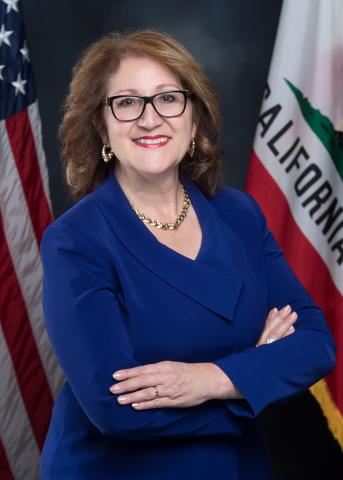
Ask Maddy about Eloise Reyes
Scope: CA
Hi! I can help you understand Eloise Reyes's legislative record. What would you like to know?
Try one of these
i
Maddy answers using official bill text and legislative records. Always verify before sharing.
Sources cited inline