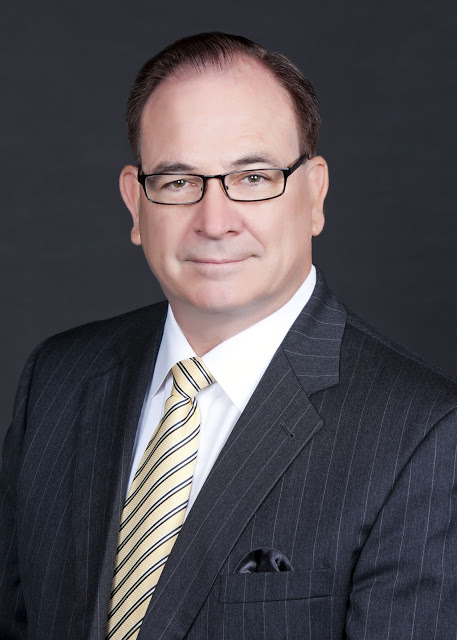
Photo of Bob Huff
R California Senate · District 29

Sen. Bob Huff

Compare
Total votes
21,472
all sessions
Attendance
95%
938 missed
Lower than 98% of chamber peers
With party
97%
of cast votes
Lower than 90% of chamber peers
Bipartisan score
3%
crosses aisle rarely
Higher than 87% of chamber peers
Sponsored
686
bills & resolutions
Near the chamber average
Committees
0
assignments
686 bills and resolutions

Sponsored bills

Total
686
Primary
201
Co-sponsor
485
This page
686
matching current filters
Co-sponsor AB 1051
Passed · California House · Co-sponsor
Denti-Cal program: reimbursement rates.

Existing law provides for the Medi-Cal program, which is administered by the State Department of Health Care Services, under which qualified low-income individuals receive health care services. The Medi-Cal program is, in part, governed and funded by federal Medicaid program provisions. Existing law provides for a schedule of benefits provided under the Medi-Cal program, which includes certain dental services that are referred to as Denti-Cal. This bill would require the State Department of Health Care Services to increase Denti-Cal provider reimbursement rates for the 15 most common prevention, treatment, and oral evaluation services to the regional average commercial rates, effective January 1, 2017.

Passed Aug 11, 2016 1 co-sponsor
Co-sponsor SB 933
Passed · California Senate · Co-sponsor
Teachers: California Teacher Corps Act of 2016: teacher residency programs.

Existing law establishes a system of public elementary and secondary education in this state. Existing law establishes local educational agencies, including school districts and county offices of education, throughout the state, and authorizes these agencies to provide instruction to pupils in kindergarten and grades 1 to 12, inclusive. This bill would enact the California Teacher Corps Act of 2016, under which the Superintendent of Public Instruction would make grants to applicant local educational agencies and consortia of local educational agencies to assist these agencies in establishing, maintaining, or expanding teacher residency programs, as defined. The teacher residency programs established by the bill would be defined as school-based teacher preparation programs in which a prospective teacher would teach alongside an experienced mentor teacher, as defined, while also receiving teacher training instruction in a teacher credentialing program in a qualified institution of higher education. The bill would establish eligibility standards for persons who apply for participation in the teacher residency programs established by the bill. This bill would appropriate the sum of $60,000,000 from the General Fund to the Superintendent on a one-time basis, available for the 2016–17, 2017–18, and 2018–19 fiscal years, to make grants to applicant local educational agencies and consortia of local educational agencies, as described above. Funds appropriated by this bill would be applied toward the minimum funding requirements for school districts and community college districts for the 2015–16 fiscal year imposed by Section 8 of Article XVI of the California Constitution.

Passed Aug 11, 2016 1 co-sponsor
Co-sponsor SB 1323
Passed · California Senate · Co-sponsor
Controlled substances: fentanyl.

Existing law classifies controlled substances into 5 schedules and places the greatest restrictions and penalties on the use of those substances placed in Schedule I. The drug fentanyl is classified in Schedule II. Existing law prohibits a person from possessing for sale or purchasing for purposes of sale, specified controlled substances, including fentanyl, and provides for imprisonment in a county jail for 2, 3, or 4 years for a violation of this provision. Existing law also imposes an additional term upon a person who is convicted of a violation of, or of a conspiracy to violate, specified provisions of law with respect to a substance containing heroin, cocaine base, and cocaine, if the substance exceeds a specified weight. Existing law imposes a greater additional term under these provisions depending on the weight of the substance. This bill would make the provisions imposing an additional term, as described above, applicable with respect to a substance containing fentanyl. By imposing additional incarceration costs on local agencies, the bill would impose a state-mandated local program. The California Constitution requires the state to reimburse local agencies and school districts for certain costs mandated by the state. Statutory provisions establish procedures for making that reimbursement. This bill would provide that no reimbursement is required by this act for a specified reason.

Passed Aug 11, 2016 1 co-sponsor
Co-sponsor AB 1944
Passed · California House · Co-sponsor
Personal Income Tax Law: gross income exclusion: Olympic and Paralympic Games.

The Personal Income Tax Law provides for various exclusions from gross income, including a reward from a crime hotline. This bill, for taxable years beginning on or after January 1, 2016, and before January 1, 2021, also would exclude from gross income the value of any medal given by the International Olympic Committee or the International Paralympic Committee, and any prize money or honoraria received from the United States Olympic Committee, on account of either the Olympic Games or the Paralympic Games. This bill would take effect immediately as a tax levy.

Passed Aug 11, 2016 1 co-sponsor
Co-sponsor AB 1869
Passed · California House · Co-sponsor
Theft: firearms.

(1) The existing Safe Neighborhoods and Schools Act, enacted as an initiative statute by Proposition 47, as approved by the electors at the November 4, 2014, statewide general election, makes the theft of property that does not exceed $950 in value petty theft, and makes that crime punishable as a misdemeanor, with certain exceptions. The California Constitution authorizes the Legislature to amend an initiative statute by another statute that becomes effective only when approved by the electors. This bill would amend that initiative statute by making the theft of a firearm grand theft in all cases and punishable by imprisonment in the state prison for 16 months, or 2 or 3 years. (2) Under existing law, a person who buys or receives property that has been stolen, knowing the property to be stolen, or who conceals, sells, withholds, or aids in concealing, selling, or withholding property from the owner, knowing the property to be stolen, is guilty of a misdemeanor or a felony, except that if the value of the property does not exceed $950. Proposition 47 makes the offense punishable as a misdemeanor if the defendant has not previously been convicted of one or more specified serious or violent felonies or of an offense requiring registration as a sex offender. This bill would amend that initiative statute by making the buying or receiving of a stolen firearm, with knowledge that the property was stolen, or the concealing, selling, withholding, or aiding in concealing, selling, or withholding of a firearm, with knowledge that the property was stolen, a misdemeanor or a felony. (3) This bill would call a special election to be consolidated with the November 8, 2016, statewide general election. This bill would require the Secretary of State to submit the provisions of the bill that amend the initiative statute to the electors for their approval at the November 8, 2016, consolidated election. This bill would declare that it is to take effect immediately as an act calling an election.


Passed Aug 11, 2016 1 co-sponsor
Primary SB 1432
Passed · California Senate · Lead sponsor
School attendance: pupil transfer options: school districts of choice.

(1) Existing law authorizes the governing board of a school district to accept pupils from other school districts by adopting a resolution to become a school district of choice, as defined, in accordance with specified procedural requirements and limitations. This bill would revise and recast these provisions. The bill would, among other things, revise the limits that a school district of residence may impose on the total number of pupils that may transfer out of the school district of residence to a school district of choice, would expand the list of pupil characteristics that a school district of choice is prohibited from considering in selecting pupils for admission, and would revise the requirements for admitting and rejecting and the manner of selecting pupils who apply to transfer to a school district of choice. The bill would revise the procedural requirements for becoming a school district of choice, including requiring a school district to register with the Superintendent of Public Instruction as a school district of choice, and would set forth a procedure for hearing complaints or appeals by a school district of choice, a school district of residence, or a pupil who is denied a transfer, as specified. The bill would revise requirements for providing transportation assistance for transfer pupils, including requiring a school district of choice to provide a pupil who is eligible for free and reduced-price meals free transportation assistance, subject to specified requirements. To the extent the bill would impose additional duties on school districts and other local educational agencies, the bill would impose a state-mandated local program. The bill would revise data, information, and reporting requirements relating to the school district of choice program, including, among other things, requiring the Superintendent to maintain a list of the school districts of choice in the state and to collect specified other information relating to school districts of choice, and by requiring the Superintendent rather than the Legislative Analyst to make specified information available to the Legislature and the Governor each year. The bill would require the Legislative Analyst to complete and submit an evaluation and recommendations regarding the program to the appropriate education policy committees of the Legislature and the Governor by January 31, 2020. (2) Existing law makes the school district of choice program inoperative on July 1, 2017, and repeals the program on January 1, 2018. This bill would extend the inoperative date to July 1, 2022, and the repeal date to January 1, 2023. (3) The California Constitution requires the state to reimburse local agencies and school districts for certain costs mandated by the state. Statutory provisions establish procedures for making that reimbursement. This bill would provide that, if the Commission on State Mandates determines that the bill contains costs mandated by the state, reimbursement for those costs shall be made pursuant to these statutory provisions.

Passed Aug 11, 2016 0 co-sponsors
Co-sponsor SCR 138
Signed into law · California Senate · Co-sponsor
Relative to state park rangers.

This measure would recognize 2016 as the 150-year anniversary of public service and protection of state parks by state park rangers and would encourage the Department of Parks and Recreation, the California State Park Rangers Association, and the California State Parks Anniversary Committee to take all appropriate action to celebrate that anniversary.

Signed into law Aug 10, 2016 1 co-sponsor
Co-sponsor ACR 195
Signed into law · California House · Co-sponsor
Relative to Vin Scully.

This measure would recognize the legendary career of Vincent Edward "Vin" Scully.

Signed into law Aug 10, 2016 1 co-sponsor
Showing 31 to 40 of 686 bills
Previous 1 3 4 5 69 Next