

Failed Nov 30, 2014
0 co-sponsors
Total votes
21,472
all sessions
Attendance
95%
935 missed
Lower than 98% of chamber peers
With party
97%
of cast votes
Lower than 91% of chamber peers
Bipartisan score
3%
crosses aisle rarely
Higher than 87% of chamber peers
Sponsored
686
bills & resolutions
Near the chamber average
Committees
0
assignments
686 bills and resolutions
Sponsored bills
Total
686
Primary
201
Co-sponsor
485
This page
686
matching current filters
Water Quality, Supply, and Infrastructure Improvement Act of 2014.
(1) Existing law, the Safe, Clean, and Reliable Drinking Water Supply Act of 2012, if approved by the voters, would authorize the issuance of bonds in the amount of $11,140,000,000 pursuant to the State General Obligation Bond Law to finance a safe drinking water and water supply reliability program. Existing law provides for the submission of the bond act to the voters at the November 4, 2014, statewide general election. This bill would repeal these provisions. (2) Under existing law, various measures have been approved by the voters to provide funds for water supply and protection facilities and programs. Existing law, the Safe Drinking Water, Water Quality and Supply, Flood Control, River and Coastal Protection Bond Act of 2006, an initiative measure approved by the voters as Proposition 84 at the November 7, 2006, statewide general election, authorizes the issuance of bonds in the amount of $5,388,000,000 for the purposes of financing safe drinking water, water quality and supply, flood control, natural resource protection, and park improvements. Existing law, the Disaster Preparedness and Flood Prevention Bond Act of 2006, approved by the voters as Proposition 1E at the November 7, 2006, general statewide election, authorizes the issuance of bonds in the amount of $4,090,000,000 for the purposes of financing disaster preparedness and flood prevention projects. Existing law, the Water Security, Clean Drinking Water, Coastal and Beach Protection Act of 2002, an initiative measure approved by the voters as Proposition 50 at the November 5, 2002, statewide general election, authorizes, for the purposes of financing a safe drinking water, water quality, and water reliability program, the issuance of bonds in the amount of $3,440,000,000. Existing law, the Costa-Machado Water Act of 2000, approved by the voters as Proposition 13 at the March 7, 2000, statewide primary election, authorizes the issuance of general obligation bonds in the amount of $1,970,000,000 for the purposes of financing a safe drinking water, clean water, watershed protection, and flood protection program. Existing law, the Safe, Clean, Reliable Water Supply Act, approved by the voters as Proposition 204 at the November 5, 1996, statewide general election, authorizes the issuance of general obligation bonds in the amount of $995,000,000 for the purposes of financing a safe, clean, reliable water supply program. Existing law, the Water Conservation and Water Quality Bond Law of 1986, approved by the voters as Proposition 44 at the June 3, 1986, statewide primary election, authorizes the issuance of general obligation bonds in the amount of $150,000,000 for the purposes of financing a water conservation and water quality program. This bill would enact the Water Quality, Supply, and Infrastructure Improvement Act of 2014, which, if approved by the voters, would authorize the issuance of bonds in the amount of $7,120,000,000 pursuant to the State General Obligation Bond Law to finance a water quality, supply, and infrastructure improvement program. This bill, upon voter approval, would reallocate $425,000,000 of the unissued bonds authorized for the purposes of Propositions 1E, 13, 44, 50, 84, and 204 to finance the purposes of a water quality, supply, and infrastructure improvement program. This bill would provide for the submission of these provisions to the voters at the November 4, 2014, statewide general election. (3) This bill would declare that it is to take effect immediately as an urgency statute.
Vetoed Nov 30, 2014
1 co-sponsor
Prostitution: minors: punishment.
Existing law provides that a person who solicits or agrees to engage in or engages in any act of prostitution is guilty of disorderly conduct, a misdemeanor, punishable by imprisonment in a county jail for no more than 6 months, by a fine not exceeding $1,000, or by both that fine and imprisonment. Existing law requires a person convicted of seeking to procure or procuring the sexual services of a prostitute in violation of these provisions, if the prostitute is under 18 years of age, to pay an additional fine in an amount not to exceed $25,000. This bill would, instead, make it either a misdemeanor, punishable by not more than one year in a county jail, or a felony, punishable in a county jail for 16 months or 2 or 3 years, for a person who, in violation of the above provisions, solicits an act of prostitution from, agrees to engage in an act of prostitution with, or engages in an act of prostitution with, another person under 18 years of age whom the person knows or reasonably should know is under 18 years of age. The bill would make a 2nd or subsequent violation of that offense a felony, punishable in a county jail for 16 months or 2 or 3 years. The bill would also impose an additional fine in an amount not to exceed $25,000 for a violation of these provisions. These provisions would apply only to the person who exchanged, or offered to exchange, anything of value with the other person in return for a lewd act. By increasing the punishment for a crime, the bill would impose a state-mandated local program. The California Constitution requires the state to reimburse local agencies and school districts for certain costs mandated by the state. Statutory provisions establish procedures for making that reimbursement. This bill would provide that no reimbursement is required by this act for a specified reason.
Failed Nov 30, 2014
0 co-sponsors
Personal income taxes: health savings accounts.
The Personal Income Tax Law authorizes various deductions in computing income that is subject to tax under that law. This bill would, for taxable years beginning on and after January 1, 2015, allow a deduction in connection with health savings accounts in conformity with federal law. In general, the deduction would be an amount equal to the aggregate amount paid in cash during the taxable year by, or on behalf of, an eligible individual, as defined, to a health savings account of that individual, as provided. This bill would, for taxable years beginning on and after January 1, 2015, also provide related conformity to that federal law with respect to the allowance of rollovers from Archer Medical Savings Accounts, health flexible spending arrangements, or health reimbursement accounts to a health savings account, and penalties in connection therewith. This bill would take effect immediately as a tax levy.
Failed Nov 30, 2014
0 co-sponsors
Failed Nov 30, 2014
0 co-sponsors
International trade and investment office: Mexico.
(1) The Economic Revitalization Act establishes the Governor's Office of Business and Economic Development, also known as "GO-Biz," to, among other duties, serve the Governor as the lead entity for economic strategy and the marketing of California on issues relating to business development, private sector investment, and economic growth. Existing law authorizes the director of GO-Biz to establish and terminate international trade and investment offices outside of the United States as he or she determines is appropriate, if specific requirements are met. Existing law establishes the Economic Development and Trade Promotion Account, a continuously appropriated account, to accept private moneys to fund international trade and investment offices. This bill would, notwithstanding provisions authorizing the director of GO-Biz to establish and terminate international trade and investment offices outside of the United States if specified conditions are satisfied, and to the extent private moneys are available, require the director of GO-Biz, on or before January 1, 2016, to establish and operate, or to create a public-private partnership to establish and operate, an international trade and investment office in Mexico City, Mexico. This bill would require the director of GO-Biz to include information regarding the Mexico City trade and investment office in existing reporting requirements relating to an International Trade and Investment Program, as specified. This bill would require GO-Biz to accept and administer private moneys through the Economic Development and Trade Promotion Account. By expanding the use of a continuously appropriated account, this bill would make an appropriation. This bill would require the Mexico City trade and investment office to, among other things, promote the export of California goods and services into Mexico and facilitate access to educational exchange programs between California and Mexico. (2) Existing law requires the director of GO-Biz to develop an International Trade and Investment Program for the state and to submit the strategy and business plan for the International Trade and Investment Program to the Chief Clerk of the Assembly, the Secretary of the Senate, the Speaker of the Assembly, the President pro Tempore of the Senate, the chair of the Assembly Committee on Jobs, Economic Development, and the Economy and the chair of the Senate Committee on Business, Professions and Economic Development, or respective successor committees, with jurisdiction over the international trade and economic development programs. This bill would also require the director of GO-Biz to submit the strategy and business plan to the Senate Select Committee on California-Mexico Cooperation.
Vetoed Nov 30, 2014
1 co-sponsor
Technology: biotechnology industry: corporate taxation.
This measure would declare the support of the Legislature for federal tax policies designed to encourage growth, incentivize corporations to remain in the United States, and reduce competitive disadvantages for companies based in the United States, particularly those in the biomedical and life sciences industry. The measure would further urge the President and Congress to enact specified tax strategies to encourage domestic economic growth.
Failed Nov 30, 2014
1 co-sponsor
Vehicles: school zone fines.
Existing law, in the case of specified violations relating to rules of the road and driving under the influence, doubles the fine in the case of misdemeanors, and increases the fine, as specified, in the case of infractions, if the violation is committed by the driver of a vehicle within a highway construction or maintenance area during any time when traffic is regulated or restricted by the Department of Transportation or local authorities pursuant to existing law or is committed within a designated Safety Enhancement-Double Fine Zone. This bill would also require that an additional fine of $35 be imposed if the violation occurred when passing a school building or school grounds, as specified, and the highway is posted with a standard "SCHOOL" warning sign and an accompanying sign notifying motorists that increased penalties apply for traffic violations that are committed within that school zone. The bill would require that these additional fines be deposited in the State Transportation Fund for purposes of funding school zone safety projects within the Active Transportation Program.
Vetoed Nov 30, 2014
1 co-sponsor
Area agencies on aging: independent living centers: funding.
Existing law designates area agencies on aging as local units on aging in California, which are financially supported by a variety of sources, including federal funding, state and local government assistance, the private sector, and individual contributions. Existing law also provides for independent living centers, for the purpose of assisting individuals with disabilities in their attempts to live fuller and freer lives outside institutions, and achieve social and economic independence. This bill would continuously appropriate from the Federal Trust Fund, in the absence of enactment of the annual Budget Act by July 1 of a fiscal year, (1) to the California Department of Aging, the amount of federal funds contained in the Federal Trust Fund necessary to pay area agencies on aging for the administration of programs under their jurisdiction, and (2) to the Department of Rehabilitation, the amount of federal funds contained in the Federal Trust Fund necessary to pay independent living centers for the administration of programs under their jurisdiction, pending enactment of the Budget Act. This bill would declare that it is to take effect immediately as an urgency statute.
Failed Nov 30, 2014
1 co-sponsor
Driver's licenses: veteran designation.
(1) Under existing law, when the Department of Motor Vehicles determines that an applicant is lawfully entitled to a driver's license, the department is required to issue that license to the applicant. Existing law specifies the contents of a driver's license and requires the application for a driver's license or identification card to contain a space for an applicant to indicate whether he or she has served in the Armed Forces of the United States and to give his or her consent to be contacted regarding eligibility to receive state or federal veterans' benefits. This bill would, commencing November 11, 2015, allow an applicant for a driver's license or identification card to allow a person to request the driver's license or identification card be printed with the word "VETERAN." The applicant would be required to present to the Department of Motor Vehicles, on a form developed jointly by the Department of Veterans Affairs and the Department of Motor Vehicles, proof of veteran status. The bill would require county veterans service offices to verify an applicant's veteran status for these purposes, as specified. The department would be required to print the word "VETERAN" on the face of a driver's license or identification card issued to a person who makes that request and presents that verification to the department. (2) Existing law establishes certain fee amounts for the applications for, and renewal of, driver's licenses and identification cards. This bill would authorize the department to charge an additional fee in an unspecified amount to a person who requests that the person's driver's license or identification card be designated as provided above.
Failed Nov 30, 2014
1 co-sponsor
Ask Maddy
·
AI policy assistant
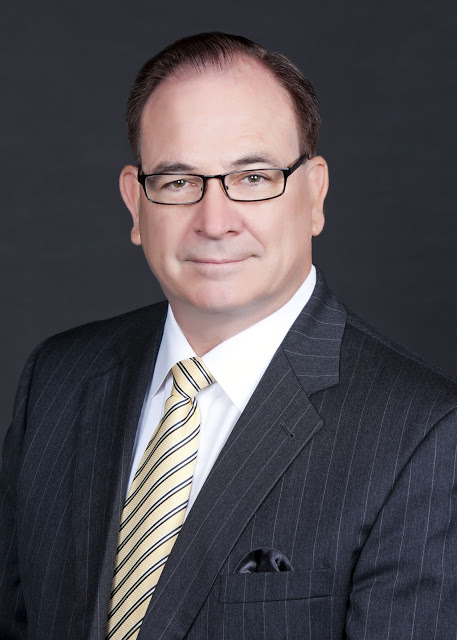
Ask Maddy about Bob Huff
Scope: california
Hi! I can help you understand Bob Huff's legislative record. What would you like to know?
Try one of these
i
Maddy answers using official bill text and legislative records. Always verify before sharing.
Sources cited inline