

Existing law provides that in a misdemeanor proceeding, if the accused agrees, the initial court appearance, arraignment, and plea may be by video, as specified. This bill would instead provide that if the accused agrees, any court appearance not involving testimonial evidence, including, but not limited to, the initial court appearance, arraignment, or plea may be by video. Existing law provides that in all cases in which a felony is charged, the accused shall be present at specified court proceedings and provides a process for the accused to waive his or her right to be personally present at all other proceedings, as specified. Existing law provides that if the accused agrees, the initial court appearance, arraignment, and plea may be by video, as specified. This bill would instead provide that if the accused agrees, any court appearance not involving testimonial evidence, including, but not limited to, the initial court appearance, arraignment, or plea may be by video.
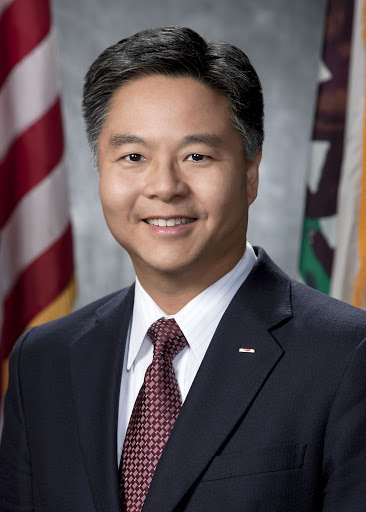
Sponsored bills
Existing law, subject to exceptions, makes it an offense to carry a concealed handgun on the person or in a vehicle, as specified. Existing law provides that firearms carried openly in belt holsters are not concealed within the meaning of those provisions. This bill would delete the exception pertaining to firearms carried openly in belt holsters. The bill would also establish an exemption to the offense for transportation of a firearm by members of specified organizations going directly to or from official parade duty or ceremonial occasions, as specified. The bill would provide other exemptions. By expanding the scope of an existing offense, this bill would impose a state-mandated local program. Existing law, subject to exceptions, makes it an offense to carry a loaded firearm in specified public areas. The bill would, subject to exceptions, make it a misdemeanor to openly carry an unloaded handgun on the person in specified public areas. By creating a new offense, this bill would impose a state-mandated local program. The bill would make conforming and nonsubstantive technical changes. The bill would incorporate amendments to Section 12001 of the Penal Code, proposed by AB 1810, contingent on the prior enactment of that bill. The California Constitution requires the state to reimburse local agencies and school districts for certain costs mandated by the state. Statutory provisions establish procedures for making that reimbursement. This bill would provide that no reimbursement is required by this act for a specified reason.
This measure would commend the Girl Scouts for 98 years of service and for inspiring millions of girls with the highest ideals of confidence, courage, and character.
This measure would recognize the week of April 18, 2010, through April 24, 2010, as Crime Victims' Rights Week.
This measure would proclaim the month of May to be Women Veterans Recognition Month.
Existing law requires the State Department of Public Health to provide breast cancer and cervical cancer screening services to eligible low-income individuals under a federal grant made under the federal Centers for Disease Control and Prevention breast and cervical cancer early detection program. Funding for these services is provided by a combination of federal and state moneys. Existing law requires these services to be provided at the level of funding budgeted from state and other resources during the fiscal year in which the Legislature has appropriated funds to the department for this purpose. This bill would, insofar as consistent with federal law and without jeopardizing federal funding, require the department to provide breast cancer screening and diagnostic services to individuals of any age who are exhibiting symptoms, with a physician's recommendation, and individuals 40 years of age or older, provided the individual otherwise meets the state eligibility requirements. This bill would appropriate an unspecified amount to the department for the breast and cervical cancer early detection program.
Under existing law, any taxing agency or instrumentality of the state may file a petition and prosecute to completion bankruptcy proceedings permitted under the laws of the United States. This bill would provide that a local public entity may only file under federal bankruptcy law with the approval of the California Debt and Investment Advisory Commission, except as specified. The bill would also provide an alternative procedure for a local entity to file under federal bankruptcy law by submitting specific analyses regarding its financial position to the State Auditor who would be required to audit the analyses and financial position of the local entity. The bill would make the local public entity responsible for the costs of the audit, as specified. The public entity would be authorized to file a petition under federal bankruptcy law after the State Auditor has notified the public entity of completion of its audit work and made public the findings of that audit.
Existing law requires any state agency, board, or commission that directly or by contract collects demographic data as to the ancestry or ethnic origin of Californians to use separate collection categories and tabulations for each major Asian and Pacific Islander group, including, but not limited to, Chinese, Japanese, Filipino, Korean, Vietnamese, Asian Indian, Hawaiian, Guamanian, Samoan, Laotian, and Cambodian. This bill would require specified state agencies to use additional separate collection categories and tabulations for other major Asian groups and Native Hawaiians and other Pacific Islander groups, including Bangladeshi, Fijian, Hmong, Indonesian, Malaysian, Pakistani, Sri Lankan, Taiwanese, Thai, and Tongan. This bill would also require that these specified state agencies update their data collection categories to match those used by the United States Census Bureau. This bill would further require a state agency, board, or commission that directly or by contract collects demographic data, include data on specified collection categories and tabulations in any demographic report on ancestry or ethnic origins of Californians that it publishes or releases on or after July 1, 2011. This bill would further require a state agency, board, or commission to make the collected data available to the public, in accordance with state and federal law, except for personal identifying information, which shall be deemed confidential.
(1) Existing law provides that school districts and county offices of education are responsible for the overall development of a comprehensive school safety plan for each of their constituent schools. Existing law requires the schoolsite council of a school to write and develop the school safety plan relevant to the needs and resources of the particular school. Existing law requires a schoolsite council or school safety planning committee, before adopting a school safety plan, to hold a public meeting at the schoolsite, as specified. Existing law requires schools to forward copies of their school safety plans to the school district or county office of education for approval. Existing law requires school districts and county offices of education annually to notify the State Department of Education regarding schools that fail to adopt a school safety plan. This bill would revise and recast those procedures. The bill would make the requirement to develop and adopt a school safety plan applicable to charter schools authorized by the governing boards of school districts or county offices of education in addition to other public schools operated by those districts or county offices. The bill also would impose various criminal penalties for school and local educational agency officers who fail to comply with the revised procedures. The bill would authorize the filing of a complaint of noncompliance with the school safety plan requirements of Title IV of the federal No Child Left Behind Act of 2001 with the department pursuant to the Uniform Complaint Procedures set forth in the California Code of Regulations. By requiring school and local educational agency officers to perform additional duties, and creating new crimes, the bill would impose a state-mandated local program. (2) The California Constitution requires the state to reimburse local agencies and school districts for certain costs mandated by the state. Statutory provisions establish procedures for making that reimbursement. This bill would provide that with regard to certain mandates no reimbursement is required by this act for a specified reason. With regard to any other mandates, this bill would provide that, if the Commission on State Mandates determines that the bill contains costs so mandated by the state, reimbursement for those costs shall be made pursuant to the statutory provisions noted above.
Existing law does not provide a system of universal health care coverage for California residents. Existing law provides for the creation of various programs to provide health care services to persons who have limited incomes and meet various eligibility requirements. These programs include the Healthy Families Program administered by the Managed Risk Medical Insurance Board, and the Medi‑Cal program administered by the State Department of Health Care Services. Existing law provides for the regulation of health care service plans by the Department of Managed Health Care and health insurers by the Department of Insurance. This bill would establish the California Healthcare System to be administered by the newly created California Healthcare Agency under the control of a Healthcare Commissioner appointed by the Governor and subject to confirmation by the Senate. The bill would make all California residents eligible for specified health care benefits under the California Healthcare System, which would, on a single-payer basis, negotiate for or set fees for health care services provided through the system and pay claims for those services. The bill would provide that a resident of the state with a household income, as specified, at or below 200% of the federal poverty level would be eligible for the type of benefits provided under the Medi-Cal program. The bill would require the commissioner to seek all necessary waivers, exemptions, agreements, or legislation to allow various existing federal, state, and local health care payments to be paid to the California Healthcare System, which would then assume responsibility for all benefits and services previously paid for with those funds. The bill would create the Healthcare Policy Board to establish policy on medical issues and various other matters relating to the system. The bill would create the Office of Patient Advocacy within the agency to represent the interests of health care consumers relative to the system. The bill would create within the agency the Office of Health Planning to plan for the health care needs of the population, and the Office of Health Care Quality, headed by a chief medical officer, to support the delivery of high quality care and promote provider and patient satisfaction. The bill would create the Office of Inspector General for the California Healthcare System within the Attorney General's office, which would have various oversight powers. The bill would prohibit health care service plan contracts or health insurance policies from being issued for services covered by the California Healthcare System. The bill would create the Healthcare Fund and the Payments Board to administer the finances of the California Healthcare System. The bill would create the California Healthcare Premium Commission (Premium Commission) to determine the cost of the California Healthcare System and to develop a premium structure for the system that complies with specified standards. The bill would require the Premium Commission to recommend a premium structure to the Governor and the Legislature on or before January 1, 2013, and to make a draft recommendation to the Governor, the Legislature, and the public 90 days before submitting its final premium structure recommendation. The bill would specify that only its provisions relating to the Premium Commission would become operative on January 1, 2011, with its remaining provisions becoming operative on the date the Secretary of California Health and Human Services notifies the Legislature, as specified, that sufficient funding exists to implement the California Healthcare System. The bill would require that system to be operative within 2 years of that date and would provide for various transition processes for that period. The bill would extend the application of certain insurance fraud laws to providers of services and products under the system, thereby imposing a state-mandated local program by revising the definition of a crime. The bill would enact other related provisions relative to budgeting, regional entities, federal preemption, subrogation, collective bargaining agreements, compensation of health care providers, conflict of interest, patient grievances, independent medical review, and associated matters. The California Constitution requires the state to reimburse local agencies and school districts for certain costs mandated by the state. Statutory provisions establish procedures for making that reimbursement. This bill would provide that no reimbursement is required by this act for a specified reason.