

Existing law provides that a person who solicits or agrees to engage in or engages in any act of prostitution is guilty of disorderly conduct, a misdemeanor, punishable by imprisonment in a county jail for no more than 6 months, by a fine not exceeding $1,000, or by both that fine and imprisonment. Existing law requires a person convicted of seeking to procure or procuring the sexual services of a prostitute in violation of these provisions, if the prostitute is under 18 years of age, to pay an additional fine in an amount not to exceed $25,000. This bill would, instead, make it either a misdemeanor, punishable by not more than one year in a county jail, or a felony, punishable in a county jail for 16 months or 2 or 3 years, for a person who, in violation of the above provisions, solicits an act of prostitution from, agrees to engage in an act of prostitution with, or engages in an act of prostitution with, another person under 18 years of age whom the person knows or reasonably should know is under 18 years of age. The bill would make a 2nd or subsequent violation of that offense a felony, punishable in a county jail for 16 months or 2 or 3 years. The bill would also impose an additional fine in an amount not to exceed $25,000 for a violation of these provisions. These provisions would apply only to the person who exchanged, or offered to exchange, anything of value with the other person in return for a lewd act. By increasing the punishment for a crime, the bill would impose a state-mandated local program. The California Constitution requires the state to reimburse local agencies and school districts for certain costs mandated by the state. Statutory provisions establish procedures for making that reimbursement. This bill would provide that no reimbursement is required by this act for a specified reason.
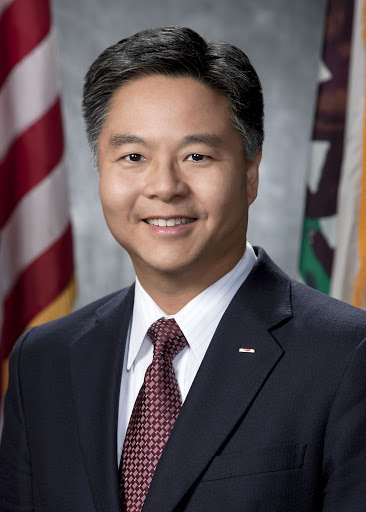
Sponsored bills
Existing law prohibits the disclosure of the home addresses of certain public employees and officials that appear in any records of the Department of Motor Vehicles, except to a court, a law enforcement agency, an attorney in a civil or criminal action under certain circumstances, and certain other official entities. This bill would extend that prohibition, subject to those same exceptions, to the disclosure of the home addresses of code enforcement officers, as defined. Existing constitutional provisions require that a statute that limits the right of access to the meetings of public bodies or the writings of public officials and agencies be adopted with findings demonstrating the interest protected by the limitation and the need for protecting that interest. This bill would make legislative findings to that effect.
This measure would support the Federal Aviation Administration's initiative to certify safe unleaded aviation fuel for piston engine aircraft and would encourage the Federal Aviation Administration and the United States Environmental Protection Agency to prioritize the development and certification of unleaded aviation fuel in advance of 2018.
Existing law, the Political Reform Act of 1974, provides for the comprehensive regulation of campaign financing, including requiring the reporting of campaign contributions and expenditures and imposing other reporting and recordkeeping requirements on campaign committees. Existing law additionally imposes disclosure statement requirements with respect to advertisements supporting or opposing a candidate or ballot measure paid for by donors making contributions of specified amounts or by independent expenditures and defines several terms and phrases for these purposes. Existing law makes a knowing or willful violation of the Political Reform Act of 1974 a misdemeanor and subjects offenders to criminal penalties. This bill would repeal and recast several definitions. The bill would modify a committee identification requirement and a disclosure statement requirement relating to advertisements for or against any ballot measure paid for by a committee. The bill would impose new disclosure statement requirements for political advertisements regarding a ballot measure that are radio advertisements, prerecorded telephonic messages, television or video advertisements, or mass mailing or print advertisements that would require the identification of identifiable contributors, ballot measures, and other funding details, as specified. By introducing new disclosure requirements, the violation of which would be a misdemeanor, the bill would create a new crime, thereby imposing a state-mandated local program. Existing law creates the Fair Political Practices Commission, and gives it primary responsibility for the impartial, effective administration and implementation of the Political Reform Act of 1974. The bill would require the Fair Political Practices Commission to promulgate regulations related to identifying and reporting persons who are the original sources of funds transferred through committees or other persons to determine identifiable contributors by January 1, 2016. The bill would require the Commission to promulgate regulations prohibiting a recipient of funds transferred by an identifiable contributor from depositing the funds until required applicable reports have been received by the recipient. This bill would incorporate additional changes in Section 84511 of the Government Code proposed by A.B. 510, that would become operative only if A.B. 510 and this bill are both chaptered and become effective on or before January 1, 2015, and this bill is chaptered last. The California Constitution requires the state to reimburse local agencies and school districts for certain costs mandated by the state. Statutory provisions establish procedures for making that reimbursement. This bill would provide that no reimbursement is required by this act for a specified reason. The Political Reform Act of 1974, an initiative measure, provides that the Legislature may amend the act to further the act's purposes upon a 23 vote of each house and compliance with specified procedural requirements. This bill would declare that it furthers the purposes of the act.
(1) Under existing law, when the Department of Motor Vehicles determines that an applicant is lawfully entitled to a driver's license, the department is required to issue that license to the applicant. Existing law specifies the contents of a driver's license and requires the application for a driver's license or identification card to contain a space for an applicant to indicate whether he or she has served in the Armed Forces of the United States and to give his or her consent to be contacted regarding eligibility to receive state or federal veterans' benefits. This bill would, commencing November 11, 2015, allow an applicant for a driver's license or identification card to allow a person to request the driver's license or identification card be printed with the word "VETERAN." The applicant would be required to present to the Department of Motor Vehicles, on a form developed jointly by the Department of Veterans Affairs and the Department of Motor Vehicles, proof of veteran status. The bill would require county veterans service offices to verify an applicant's veteran status for these purposes, as specified. The department would be required to print the word "VETERAN" on the face of a driver's license or identification card issued to a person who makes that request and presents that verification to the department. (2) Existing law establishes certain fee amounts for the applications for, and renewal of, driver's licenses and identification cards. This bill would authorize the department to charge an additional fee in an unspecified amount to a person who requests that the person's driver's license or identification card be designated as provided above.
Existing law authorizes the Commissioner of the California Highway Patrol to issue authorized emergency vehicle permits for specified vehicles, and then only upon a finding in each case that the vehicle is used in responding to emergency calls for fire or law enforcement or for the immediate preservation of life or property or for the apprehension of law violators. This bill would authorize the commissioner to issue an emergency vehicle permit to a vehicle owned and operated by a hospital designated by the Los Angeles County Department of Health Services as a disaster resource center hospital at the request of the Los Angeles County Emergency Medical Services Agency or the state's Office of Emergency Services, if the vehicle is used exclusively to transport mass casualty decontamination apparatus medical supplies, lifesaving equipment, or personnel to the scene of an emergency, as specified. The bill would require the hospital responsible for operating the vehicle to provide emergency vehicle operations training to the designated vehicle operators, to maintain a record of the training in the vehicle, to ensure that the designated vehicle operators maintain an appropriate class of driver's license, and to maintain insurance coverage for the vehicle. This bill would make legislative findings and declarations as to the necessity of a special statute for the County of Los Angeles.
Existing law establishes the Arts Council composed of 11 members, with the Speaker of the Assembly and the Senate Committee on Rules each appointing one member and the Governor appointing 9 members who are subject to confirmation by the Senate. The Arts Council is authorized to award grants, as specified. This bill would continuously appropriate the sum of $25,000,000 annually from the General Fund to the Arts Council to be used for grants as currently authorized by law.
Existing property tax law establishes a veterans' organization exemption under which property is exempt from taxation if, among other things, that property is used exclusively for charitable purposes and is owned by a veterans' organization. This bill would provide that the veterans' organization exemption shall not be denied to a property on the basis that the property is used for fraternal, lodge, or social club purposes, and would make specific findings and declarations in that regard. The bill would also provide that the exemption shall not apply to any portion of a property that consists of a bar where alcoholic beverages are served. Section 2229 of the Revenue and Taxation Code requires the Legislature to reimburse local agencies annually for certain property tax revenues lost as a result of any exemption or classification of property for purposes of ad valorem property taxation. This bill would provide that, notwithstanding Section 2229 of the Revenue and Taxation Code, no appropriation is made and the state shall not reimburse local agencies for property tax revenues lost by them pursuant to the bill. This bill would take effect immediately as a tax levy.
The Personal Income Tax Law conforms to specified provisions of the federal Mortgage Forgiveness Debt Relief Act of 2007, relating to the exclusion of the discharge of qualified principal residence indebtedness, as defined, from a taxpayer's income if that debt is discharged after January 1, 2007, and before January 1, 2010, as provided. The federal Emergency Economic Stabilization Act of 2008 extended the operation of those provisions to debt that is discharged before January 1, 2013. This bill would extend the operation of the exclusion of the discharge of qualified principal residence indebtedness to debt that is discharged on or after January 1, 2013, and before January 1, 2014. The bill would become operative only if SB 391 is enacted and takes effect. This bill would declare that it is to take effect immediately as an urgency statute.
The Public Safety Officers Procedural Bill of Rights Act and the Firefighters Procedural Bill of Rights Act grant certain rights to public safety officers and firefighters, as defined. The acts require that, when any public safety officer or firefighter is under investigation and subjected to interrogation by his or her commanding officer, or any other member of the employing public safety department or fire department, that could lead to punitive action, the interrogation be conducted under certain conditions, except as specified. This bill would provide that if an interrogation focuses on matters that may result in punitive action against a public safety officer or firefighter who is not formally under investigation, but is interviewed regarding the investigation of another public safety officer or firefighter, the public safety officer or firefighter being interviewed is entitled to representation, as specified. By adding to the duties of local agencies to comply with the Public Safety Officers Procedural Bill of Rights Act and the Firefighters Procedural Bill of Rights Act, this bill would impose a state-mandated local program. The California Constitution requires the state to reimburse local agencies and school districts for certain costs mandated by the state. Statutory provisions establish procedures for making that reimbursement. This bill would provide that, if the Commission on State Mandates determines that the bill contains costs mandated by the state, reimbursement for those costs shall be made pursuant to these statutory provisions.