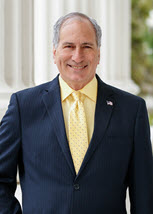
Photo of Jeff Stone
R California Senate · District 28 · Former member

Sen. Jeff Stone

Compare
Total votes
10,476
all sessions
Attendance
97%
292 missed
Near the chamber average
With party
97%
of cast votes
Lower than 86% of chamber peers
Bipartisan score
1%
crosses aisle rarely
Higher than 83% of chamber peers
Sponsored
300
bills & resolutions
Lower than 93% of chamber peers
Committees
0
assignments
300 bills and resolutions

Sponsored bills

Total
300
Primary
111
Co-sponsor
189
This page
300
matching current filters
Primary SB 1091
In committee · California Senate · Lead sponsor
Property taxation: transfer of base year value: disaster relief.

Existing property tax law, pursuant to a requirement of the California Constitution, authorizes the base year value of property that is substantially damaged or destroyed by a disaster, as declared by the Governor, to be transferred to a comparable property located within the same county that is acquired or newly constructed as a replacement for the substantially damaged or destroyed property. This bill would prohibit the limitation requiring the transfer of base year value within the same county from applying to the transfer of base year value of property that is substantially damaged or destroyed by a disaster, as declared by the Governor, occurring on or after January 1, 2017, to July 1, 2018, inclusive, to comparable property located within a different county that is acquired or newly constructed as a replacement for the substantially damaged or destroyed property. The bill would limit these provisions to intercounty transfers of base year value that occur on or after the effective date of this bill. By changing the manner in which local assessors assess property for property taxation purposes, this bill would impose a state-mandated local program. The California Constitution requires the state to reimburse local agencies and school districts for certain costs mandated by the state. Statutory provisions establish procedures for making that reimbursement. This bill would provide that, if the Commission on State Mandates determines that the bill contains costs mandated by the state, reimbursement for those costs shall be made pursuant to the statutory provisions noted above. Existing law requires the state to reimburse local agencies annually for certain property tax revenues lost as a result of any exemption or classification of property for purposes of ad valorem property taxation. This bill would provide that, notwithstanding those provisions, no appropriation is made and the state shall not reimburse local agencies for property tax revenues lost by them pursuant to the bill. This bill would take effect immediately as a tax levy, but would become operative only if Senate Constitutional Amendment ____ of the 2017–18 Regular Session is approved by the voters.


In committee May 25, 2018 0 co-sponsors
Co-sponsor SB 916
In committee · California Senate · Co-sponsor
Unlawful entry of a vehicle.

Existing law defines the crime of burglary to include entering a vehicle when the doors are locked with the intent to commit grand or petit larceny or a felony. Burglary of a vehicle is punishable as a misdemeanor. This bill would make forcibly entering a vehicle with the intent to commit a theft therein a crime punishable by imprisonment in a county jail for a period not to exceed one year or imprisonment in a county jail for 16 months, or 2 or 3 years. By creating a new crime, this bill would impose a state-mandated local program. The California Constitution requires the state to reimburse local agencies and school districts for certain costs mandated by the state. Statutory provisions establish procedures for making that reimbursement. This bill would provide that no reimbursement is required by this act for a specified reason.

In committee May 25, 2018 1 co-sponsor
Primary SB 1352
In committee · California Senate · Lead sponsor
Personal income taxes: credit: ABLE account contributions.

The Personal Income Tax Law allows various credits against the taxes imposed by those laws. This bill would allow a credit against those taxes for each taxable year beginning on or after January 1, 2019, and before January 1, 2024, in an amount equal to 20% of a qualified contribution, as defined, paid or incurred by a taxpayer during the taxable year, not to exceed $750. This bill would take effect immediately as a tax levy.

In committee May 25, 2018 0 co-sponsors
Primary SJR 21
In committee · California Senate · Lead sponsor
Relative to the federal Tax Cuts and Jobs Act.

This measure would encourage any individual taxpayer in California who disapproves of the federal Tax Cuts and Jobs Act to donate their tax savings to the State of California's General Fund, as specified.

In committee May 14, 2018 0 co-sponsors
Co-sponsor SCR 134
Signed into law · California Senate · Co-sponsor
Relative to California Peace Officers' Memorial Day.

This measure would designate Monday, May 7, 2018, as California Peace Officers' Memorial Day, urge all Californians to use that day to honor California peace officers, and recognize specified California peace officers who were killed in defense of their communities.

Signed into law May 10, 2018 1 co-sponsor
Co-sponsor SCA 15
In committee · California Senate · Co-sponsor
A resolution to propose to the people of the State of California an amendment to the Constitution of the State, by amending Sections 1 and 2 of Article XIII C thereof, and by amending Sections 2 and 3 of Article XIII D thereof, relating to local government.

The California Constitution conditions the imposition of a general tax by a local government upon the approval of a majority of its voters voting on the tax. The California Constitution requires the election for the vote on a general tax to be consolidated with a regularly scheduled election for members of the governing body of the local government, except in cases where the members of the governing body of the local government, by a unanimous vote, declare an emergency. The California Constitution conditions the imposition of a special tax by a local government upon the approval of 23 of the voters voting on the tax. The California Constitution defines "local government" for these purposes to mean any county, city, city and county, including a charter city or county, any special district, or any other local or regional governmental entity. This measure would specify that the electorate exercising its initiative power is within the definition of "local government," and that these conditions and requirements apply to the exercise of that power. The California Constitution prohibits an assessment or property-related fee or charge from being assessed by an agency on any parcel of property unless it meets certain requirements. Existing provisions of the California Constitution require an agency to follow specified procedures in imposing or increasing an assessment or property-related fee or charge, and condition the imposition or increase of an assessment or property-related fee or charge, with certain exceptions, upon the absence of a majority protest on the part of owners of affected parcels and, in the case of a property-related fee or charge, upon approval by either a majority vote of the owners of the subject parcels or a 23 vote of the voters residing in the affected area. The California Constitution defines "agency" for these purposes to mean any county, city, city and county, including a charter city or county, any special district, or any other local or regional governmental entity. This measure would specify that the electorate exercising its initiative power is within the definition of "agency," and that the existing requirements and procedures apply to the exercise of that power.

In committee Apr 26, 2018 1 co-sponsor
Primary SB 1322
died · California Senate · Lead sponsor
Medi-Cal: comprehensive medication management.

Existing law provides for the Medi-Cal program, which is administered by the State Department of Health Care Services, under which qualified low-income individuals receive health care services. The Medi-Cal program is, in part, governed and funded by federal Medicaid Program provisions. Existing law provides for a schedule of benefits under the Medi-Cal program, which includes outpatient prescription drugs, subject to utilization controls and the Medi-Cal list of contract drugs. This bill would provide that comprehensive medication management (CMM) services, as defined, are a covered benefit under the Medi-Cal program, and would require those services to include, among other things, the development and implementation of a written medication treatment plan that is designed to resolve documented medication therapy problems and to prevent future medication therapy problems. The bill would require the department to evaluate the effectiveness of CMM on quality of care, patient outcomes, and total program costs, as specified.

died Apr 25, 2018 0 co-sponsors
Primary SB 1404
In committee · California Senate · Lead sponsor
Pharmacists: exemption from overtime regulations.

Existing law generally requires an employee to be paid an overtime rate of compensation for work in excess of 8 hours per day. Existing wage orders of the Industrial Welfare Commission exempt persons employed in an administrative, executive, or professional capacity from that requirement, among other things. Existing law provides that a person employed in the practice of pharmacy is not exempt from coverage under any provision of the wage orders of the commission, unless he or she individually meets the criteria established for exemption as executive or administrative employees. Existing law also provides that no person employed in the practice of pharmacy may be subject to any exemption from coverage under the orders of the commission established for professional employees. This bill would provide that a person employed in the practice of pharmacy, who is participating in a postgraduate training program, as specified, who is in a field relating to the practice of pharmacy or pharmacy research, or who is performing certain procedures or functions, is not subject to coverage under any provision of the orders of the Industrial Welfare Commission.

In committee Apr 25, 2018 0 co-sponsors
Primary SB 1373
In committee · California Senate · Lead sponsor
General acute care hospitals: minimum levels of pharmaceutical staff.

(1) Existing law requires the State Department of Public Health to license and regulate general acute care hospitals. Existing regulations require a hospital with a capacity of 100 or more beds to have a pharmacy on the premises that is licensed by the California State Board of Pharmacy. Existing regulations require a hospital having fewer than 100 beds to comply with other licensing requirements enforced by the California State Board of Pharmacy. Existing law requires general acute care hospitals to comply with specific statutory provisions for standards of care and regulations promulgated by the department, and a violation of these provisions or regulations is a crime. This bill would require a general acute care hospital licensed by the department to employ, at a minimum, one full-time pharmacist for every 100 licensed beds, and for additional licensed beds, employ additional pharmacists on a pro rata basis. The bill would require a general acute care hospital that is licensed for less than 100 beds to employ one pharmacist on at least a part-time basis. (2) The California Constitution requires the state to reimburse local agencies and school districts for certain costs mandated by the state. Statutory provisions establish procedures for making that reimbursement. This bill would provide that no reimbursement is required by this act for a specified reason.

In committee Apr 25, 2018 0 co-sponsors
Showing 71 to 80 of 300 bills
Previous 1 … 7 8 9 … 30 Next