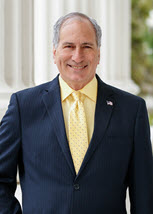
Photo of Jeff Stone
R California Senate · District 28 · Former member

Sen. Jeff Stone

Compare
Total votes
10,476
all sessions
Attendance
97%
292 missed
Near the chamber average
With party
97%
of cast votes
Lower than 86% of chamber peers
Bipartisan score
1%
crosses aisle rarely
Higher than 83% of chamber peers
Sponsored
300
bills & resolutions
Lower than 93% of chamber peers
Committees
0
assignments
300 bills and resolutions

Sponsored bills

Total
300
Primary
111
Co-sponsor
189
This page
300
matching current filters
Primary SB 609
In committee · California Senate · Lead sponsor
Controlled substances: narcotic replacement treatment.

Existing law specifies the controlled substances that may be used in narcotic replacement therapy by licensed narcotic treatment programs, including federally approved controlled substances used for the purpose of narcotic replacement treatment, and requires the State Department of Public Health to establish guidelines for narcotic treatment programs, including dosage requirements. This bill would, instead, authorize the use of federally approved controlled substances used for the purpose of substance use disorder treatment.

In committee Feb 1, 2016 0 co-sponsors
Co-sponsor SB 167
In committee · California Senate · Co-sponsor
Fires: interference: unmanned aircraft.

Existing law makes it a misdemeanor to engage in disorderly conduct that delays or prevents a fire from being timely extinguished or to resist or interfere with the lawful efforts of a firefighter in the discharge of an official duty. Existing law makes it a misdemeanor to impede police officers, firefighters, emergency personnel, or military personnel, in the performance of their duties in coping with an emergency. This bill would make it unlawful to knowingly, intentionally, or recklessly operate an unmanned aircraft or unmanned aircraft system, as defined, in a manner that prevents or delays the extinguishment of a fire, or in any way interferes with the efforts of firefighters to control, contain, or extinguish a fire. The bill would make a violation of this prohibition punishable by imprisonment in a county jail not to exceed 6 months, by a fine not to exceed $5,000, or by both that fine and imprisonment. By creating a new crime, this bill would impose a state-mandated local program. The California Constitution requires the state to reimburse local agencies and school districts for certain costs mandated by the state. Statutory provisions establish procedures for making that reimbursement. This bill would provide that no reimbursement is required by this act for a specified reason. This bill would declare that it is to take effect immediately as an urgency statute.

In committee Feb 1, 2016 1 co-sponsor
Co-sponsor SB 457
In committee · California Senate · Co-sponsor
Bobcat Protection Act of 2013.

Existing law, the Bobcat Protection Act of 2013, makes it unlawful to trap any bobcat, or attempt to do so, or to sell or export any bobcat or part of any bobcat taken in the area surrounding Joshua Tree National Park, as specified. The act requires the Fish and Game Commission to amend its regulations to prohibit the trapping of bobcats adjacent to the boundaries of each national or state park and national monument or wildlife refuge in which bobcat trapping is prohibited. The act also requires the commission, commencing January 1, 2016, to consider whether to prohibit bobcat trapping within, and adjacent to, preserves, state conservancies, and any other public or private conservation areas identified to the commission by the public as warranting protection, and to amend its regulations accordingly, as specified. The act requires the commission to delineate the boundaries of an area in which bobcat trapping is prohibited pursuant to these provisions using readily identifiable features, such as highways or other major roads, such as those delineated for Joshua Tree National Park. This bill would provide that these features may include roads instead of major roads and would provide that landmarks and geographic positions established by navigation and surveying methods may be used to delineate the boundaries of an area described above in which bobcat trapping is prohibited.

In committee Feb 1, 2016 1 co-sponsor
Co-sponsor SB 659
In committee · California Senate · Co-sponsor
Opportunity Grant Pilot Project.

Existing federal law provides for the allocation of federal funds through the federal Temporary Assistance for Needy Families (TANF) block grant program to eligible states. Existing law provides for the California Work Opportunity and Responsibility to Kids (CalWORKs) program under which, through a combination of state and county funds and federal funds received through the TANF program, each county provides cash assistance and other benefits to qualified low-income families. This bill would require the State Department of Social Services, in consultation with the County Welfare Directors Association of California, no later than July 1, 2017, to design and implement a 5-year pilot project under which monetary grants are provided to organizations operating programs that assist individuals receiving CalWORKs benefits achieve economic independence. The bill would require the department, in developing the pilot project, among other things, to develop a competitive review process for all grant proposals submitted, to develop eligibility requirements for organizations seeking a grant, and to develop an ongoing evaluation of the effectiveness of an organization receiving grant funding in teaching its program participants the skills necessary to achieve economic independence. The bill would authorize the department to enter into an agreement with an academic institution or other entity with sufficient expertise for the purpose of creating, performing, or both creating and performing the evaluation. The bill would authorize an organization receiving a grant to utilize the funds in any reasonable manner, as long as the funds are expended in furtherance of the organization's program or other requirements established by the department. The bill would require organizations receiving grant funding to contact the county welfare department upon being notified of the grant and to make a good faith effort to coordinate their programs with CalWORKs requirements. The bill would require the department, or the academic institution or other entity the department contracted with, to send a report evaluating the effectiveness of the programs funded by the grants to the relevant policy and fiscal committees of the Legislature by December 31, 2021. The bill would appropriate $50,000,000 from the General Fund for the purpose of funding these provisions. The bill would make these provisions inoperative on July 1, 2022, and would repeal them on January 1, 2023.


In committee Feb 1, 2016 1 co-sponsor
Primary SB 666
In committee · California Senate · Lead sponsor
Felons: coming upon prison property.

Existing law makes it a felony for a person who was previously convicted of a felony and confined in the state prison to come upon the grounds of a prison, prison camp, prison farm, jail, or other place where prisoners are located under the custody of prison officials, or lands belonging or adjacent thereto, without the consent of the warden or other officer in charge. This bill would require that the person know or should know that he or she is required to obtain consent in order to be guilty of the above felony, and would expand the application of the crime to a person who was previously convicted of a felony under the laws of the United States or any other state and who was confined in a federal prison or a prison of another state. The bill would also expand application of the crime to a person who was convicted of a felony and confined in a county jail. By expanding the application of a crime, this bill would impose a state-mandated local program. The California Constitution requires the state to reimburse local agencies and school districts for certain costs mandated by the state. Statutory provisions establish procedures for making that reimbursement. This bill would provide that no reimbursement is required by this act for a specified reason.

In committee Feb 1, 2016 0 co-sponsors
Primary SB 639
In committee · California Senate · Lead sponsor
Developmental centers: closure.

Existing law vests in the State Department of Developmental Services jurisdiction over state hospitals referred to as developmental centers for the provision of residential care to individuals with developmental disabilities. Existing law requires the department to comply with procedural requirements when closing a developmental center, including submitting a detailed plan to the Legislature and holding at least one public hearing. Under existing law, the department allocates funds to private nonprofit entities known as regional centers, which are required to provide, or arrange for the provision of, services and supports for persons with developmental disabilities. This bill would require the department to submit a plan to the Legislature by April 1, 2016, to close the Sonoma Developmental Center and the Fairview Developmental Center. The bill would require the plan to meet existing requirements for closing a developmental center and to additionally include, specified components, including a closure plan that will result in each of the 2 developmental centers closing no later than December 31, 2018, except as specified. The bill would also require the plan to include a plan for using the properties occupied by the 2 developmental centers, as specified, and would require the department to work with the Department of General Services to estimate potential revenues that may be generated from different options for use of the properties. The bill would state the intent of the Legislature that the department minimize the expenditure of state funds related to any developmental center residential units that are decertified for failure to meet federal or state health and safety laws or regulations or that receive notification from a state or federal regulator that they are at risk of decertification for failure to meet those laws or regulations, and that funds previously used to operate developmental centers instead be shifted to support community-based services for individuals with developmental disabilities.

In committee Feb 1, 2016 0 co-sponsors
Co-sponsor SB 619
In committee · California Senate · Co-sponsor
Pharmacy: outsourcing facilities: licensure.

Existing law, the Pharmacy Law, provides for the licensure and regulation of pharmacists and pharmacy corporations in this state by the California State Board of Pharmacy. The law prohibits a pharmacy from compounding sterile drug products unless the pharmacy has obtained a sterile compounding pharmacy license from the board, and prohibits the board from issuing or renewing that license until the board has, among other things, reviewed a current copy of the pharmacy's procedures and policies for sterile compounding. Existing law provides that fees collected on behalf of the board are credited to the Pharmacy Board Contingent Fund, a continuously appropriated fund. This bill would require the board to license an outsourcing facility, as defined, and would prohibit an outsourcing facility to be concurrently licensed with the board as a sterile compounding pharmacy at the same location. The bill would require an outsourcing facility to be licensed with the board before doing business within or into the state, and would require an outsourcing facility to, among other things, notify the board of any disciplinary or other action taken by another state or the federal Food and Drug Administration within 10 days of the action. The bill would require the board to, among other things, inspect the location of an outsourcing facility to ensure that the outsourcing facility is in compliance with all laws and regulations before issuing or renewing an outsourcing facility's license. The bill would make a violation of any of these provisions or regulations adopted thereto punishable by a fine of up to $5,000 per occurrence. The bill would, on or after January 1, 2018, require the board to provide a report, as specified, to the Legislature regarding the regulation of nonresident outsourcing facilities. The bill would also authorize the board to collect a fee of $780 for the issuance and renewal of an outsourcing license and a fee of $715 for a temporary license, as specified. By increasing the amount of money deposited into a continuously appropriated fund, the bill would make an appropriation.

In committee Feb 1, 2016 1 co-sponsor
Co-sponsor SB 389
died · California Senate · Co-sponsor
Environmental quality: the Sustainable Environmental Protection Act.

The California Environmental Quality Act, or CEQA, requires a lead agency, as defined, to prepare, or cause to be prepared, and certify the completion of, an environmental impact report, or EIR, on a project that it proposes to carry out or approve that may have a significant effect on the environment or to adopt a negative declaration if it finds that the project will not have that effect. CEQA also requires a lead agency to prepare a mitigated negative declaration for a project that may have a significant effect on the environment if revisions in the project would avoid or mitigate that effect and there is no substantial evidence that the project, as revised, would have a significant effect on the environment. Existing law establishes regulations related to numerous environmental issues. This bill would enact the Sustainable Environmental Protection Act and would specify the environmental review required pursuant to CEQA for projects related to specified environmental topical areas. For a judicial action or proceeding filed challenging an action taken by a lead agency on the ground of noncompliance with CEQA, the bill would prohibit a cause of action that (1) relates any topical area or criteria for which compliance obligations are identified or (2) challenges the environmental document if: (A) the environmental document discloses compliance with applicable environmental law, (B) the project conforms with the use designation, density, or building intensity in an applicable plan, as defined, and (C) the project approval incorporates applicable mitigation requirements into the environmental document. The bill would provide that the Sustainable Environmental Protection Act only applies if the lead agency or project applicant has agreed to provide to the public in a readily accessible electronic format an annual compliance report prepared pursuant to the mitigation monitoring and reporting program. Because this bill would impose additional duties on local agencies, it would impose a state-mandated local program. The California Constitution requires the state to reimburse local agencies and school districts for certain costs mandated by the state. Statutory provisions establish procedures for making that reimbursement. This bill would provide that no reimbursement is required by this act for a specified reason.

died Feb 1, 2016 1 co-sponsor
Primary SB 280
In committee · California Senate · Lead sponsor
Public employees: compensation.

Existing law requires the Controller, in conformity with an accounting system prescribed by the Department of Finance, to install and operate a uniform state payroll system for state agencies. This bill would require the Controller, as part of the development and implementation of a new uniform state payroll system on and after January 1, 2016, to include in the design of the system an Internet Web site portal that allows a state employee to view and print his or her pay warrant electronically.

In committee Feb 1, 2016 0 co-sponsors
Co-sponsor SB 818
In committee · California Senate · Co-sponsor
Developmental services: Medi-Cal: rate increases.

The Lanterman Developmental Disabilities Services Act requires the State Department of Developmental Services to contract with regional centers to provide services and supports to individuals with developmental disabilities. Under existing law, the regional centers purchase needed services for individuals with developmental disabilities through approved service providers or arrange for those services through other publicly funded agencies. Existing law establishes specified rates to be paid to certain service providers and the rates to be paid for certain developmental services. Existing law requires that rates to be paid to other developmental service providers either be set by the department or negotiated between the regional center and the service provider. Existing law prohibits certain provider rate increases, but authorizes increases to those rates as necessary to adjust employee wages to meet the state minimum wage law and to provide paid sick leave. Existing law establishes the Medi-Cal program, administered by the State Department of Health Care Services, under which basic health care services are provided to qualified low-income persons. The Medi-Cal program is, in part, governed and funded by federal Medicaid Program provisions. Existing law requires, except as otherwise provided, Medi-Cal provider payments to be reduced, as specified. This bill would appropriate certain sums to the State Department of Developmental Services to provide a 10% rate increase for certain developmental service providers and regional center operating budgets, and would appropriate certain sums to the State Department of Health Care Services to restore rates paid to Medi-Cal providers to those levels in effect prior to the implementation of the provider rate reductions. The bill would require the Director of Finance to calculate the amounts necessary to provide these rate increases. The bill would make these rate increases retroactive to July 1, 2015. This bill would declare that it is to take effect immediately as an urgency statute.

In committee Jan 28, 2016 1 co-sponsor
Showing 201 to 210 of 300 bills
Previous 1 … 20 21 22 … 30 Next