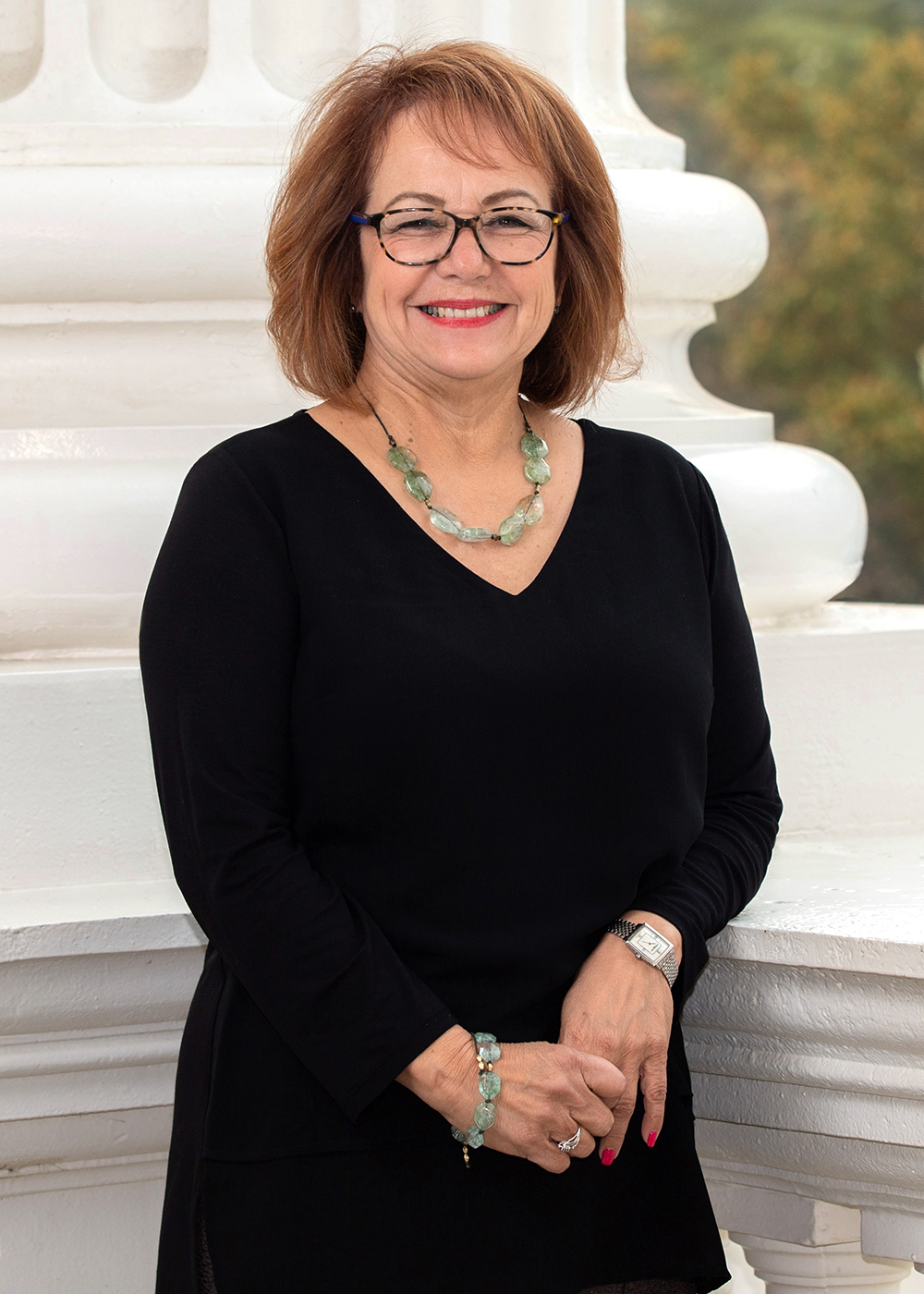
Photo of María Elena Durazo
D California Senate · District 26

Sen. María Elena Durazo

Compare
Total votes
18,987
all sessions
Attendance
98%
302 missed
Near the chamber average
With party
99%
of cast votes
Near the chamber average
Bipartisan score
0%
crosses aisle rarely
Near the chamber average
Sponsored
555
bills & resolutions
Near the chamber average
Committees
8
assignments
555 bills and resolutions

Sponsored bills

Total
555
Primary
172
Co-sponsor
383
This page
555
matching current filters
Co-sponsor ACA 8
Signed into law · California Assembly · Co-sponsor
A resolution to propose to the people of the State of California an amendment to the Constitution of the State, by amending Section 6 of Article I thereof, relating to slavery.

The California Constitution prohibits slavery and prohibits involuntary servitude, except as punishment to a crime. This measure would instead prohibit slavery in any form. This measure would prohibit the Department of Corrections and Rehabilitation from disciplining any incarcerated person for refusing a work assignment. The measure would also clarify that its provisions do not prohibit the Department of Corrections and Rehabilitation from awarding credits to an incarcerated person who voluntarily accepts a work assignment.

Signed into law Jun 27, 2024 1 co-sponsor
Primary SB 1201
Passed · California Senate · Lead sponsor
Beneficial owners.

Existing law requires a person who is directly or indirectly the beneficial owner of more than 10% of any class of stock of a domestic insurer to file in the office of the Insurance Commissioner within 10 days after that person becomes a beneficial owner a statement, in a form prescribed by the commissioner, of the amount of all stock of that insurer of which the person is the beneficial owner, as specified. The General Corporation Law (GCL) requires a domestic corporation and a foreign corporation to file annually, as prescribed, with the Secretary of State, a statement containing certain information, including the names and complete business or residence addresses of its chief executive officer, secretary, and chief financial officer. The GCL requires a domestic corporation to certify that the information it provides in that statement is true and correct. This bill would, by January 1, 2026, additionally require those corporations to include in the statement described above the names and complete business or residence addresses of any beneficial owner, as defined. By expanding the scope of the crime of perjury, this bill would impose a state-mandated local program. Existing law, the California Revised Uniform Limited Liability Company Act, requires a limited liability company, and a foreign limited liability company registered to transact intrastate business in this state, to file biennially, as specified, with the Secretary of State, a statement containing certain information, including the name and complete business or residence addresses of any manager or managers and the chief executive officer, if any, appointed or elected in accordance with the articles of organization or operating agreement or, if a manager has not been so elected or appointed, the name and business or residence address of each member. This bill would, by January 1, 2026 additionally require those limited liability companies to include in the statement described above the name and complete business or residence addresses of any beneficial owner, as defined. Existing law authorizes the Secretary of State to charge and collect certain statutorily established fees, including fees for corporations, foreign corporations, limited liability companies, and foreign limited liability companies filing the above-described statements of information. Existing law requires those fees to be paid into the Secretary of State's Business Fees Fund. Existing law states that it is the intent of the Legislature that the money deposited into that fund be used to support the programs from which fees are collected, that the fees be sufficient to cover the costs of the programs, and that the fees be expended to the extent that appropriations are made in the annual Budget Act. Existing law authorizes, of the fees collected and interest earned in excess of the authority of the Secretary of State to expend those fees and interest pursuant to the annual Budget Act, up to $1,000,000 to remain in the Business Fees Fund. Existing law requires any additional excess fees and interest earned to be transferred to the General Fund. This bill would authorize the Secretary of State, by regulation, to increase the amount of the fee for corporations, foreign corporations, limited liability companies, and foreign limited liability companies filing the above-described statements of information. The bill would prohibit the fee increase from exceeding the reasonable cost of any regulatory activities necessary to implement each of the above-described beneficial owner information requirements. The bill would also require the amount of the fees that are increased by the bill's provisions to be used to support the Secretary of State's regulatory activities imposed by the bill, and would prohibit that amount from being considered additional excess fees. The California Constitution requires the state to reimburse local agencies and school districts for certain costs mandated by the state. Statutory provisions establish procedures for making that reimbursement. This bill would provide that no reimbursement is required by this act for a specified reason.

Passed Jun 25, 2024 0 co-sponsors
Co-sponsor ACA 6
Failed · California Assembly · Co-sponsor
A resolution to propose to the people of the State of California an amendment to the Constitution of the State, by adding subdivision (h) to Section 9 of Article IX thereof, relating to the University of California.

The California Constitution provides that the University of California constitutes a public trust, and requires the university to be administered by the Regents of the University of California, a corporation in the form of a board, with full powers of organization and government, subject to legislative control only for specified purposes. These provisions grant the regents all the powers necessary or convenient for the effective administration of its trust. This measure would require employees of the Regents of the University of California to have the right to, and be covered by, certain basic state labor standards, as provided. The measure would require individuals who perform certain work for the regents to have the right to the payment of a prevailing wage. The measure would authorize the Legislature to enact laws that further these rights, establish, define, or specify the basic state labor standards applicable to the regents, or establish other health, safety, and labor protections for individuals performing work for the regents.

Failed Jun 11, 2024 1 co-sponsor
Primary SB 828
Signed into law · California Senate · Lead sponsor
Minimum wages: health care workers: delay.

Existing law requires, for any covered health care facility employer, as defined, with 10,000 or more full-time equivalent employees (FTEE) , as defined, any covered health care facility employer that is a part of an integrated health care delivery system or a health care system with 10,000 or more FTEEs, a covered health care facility employer that is a dialysis clinic or is a person that owns, controls, or operates a dialysis clinic, or a covered health facility owned, affiliated, or operated by a county with a population of more than 5,000,000 as of January 1, 2023, the minimum wage for covered health care employees to be $23 per hour from June 1, 2024, to May 31, 2025, inclusive, $24 per hour from June 1, 2025, to May 31, 2026, inclusive, and $25 per hour from June 1, 2026, and until as adjusted, as specified. Existing law requires, for any hospital that is a hospital with a high governmental payor mix, an independent hospital with an elevated governmental payor mix, a rural independent covered health care facility, or a covered health care facility that is owned, affiliated, or operated by a county with a population of less than 250,000 as of January 1, 2023, as those terms are defined, the minimum wage for covered health care employees to be $18 per hour from June 1, 2024, to May 31, 2033, inclusive, and $25 per hour from June 1, 2033, and until as adjusted, as specified. Existing law requires, for specified clinics that meet certain requirements, the minimum wage for covered health care employees to be $21 per hour from June 1, 2024, to May 31, 2026, inclusive, and $22 per hour from June 1, 2026, to May 31, 2027, inclusive, and $25 from June 1, 2027, and until as adjusted, as specified. Existing law requires, for all other covered health care facility employers, the minimum wage for covered health care employees to be $21 per hour from June 1, 2024, to May 31, 2026, inclusive, $23 per hour from June 1, 2026, to May 31, 2028, inclusive, and $25 per hour from June 1, 2028, and until as adjusted, as specified. Existing law also separately requires, for a licensed skilled nursing facility, as described, in specified circumstances the minimum wage for certain other covered health care employees, as described, to be $21 per hour from June 1, 2024, to May 31, 2026, inclusive, $23 per hour from June 1, 2026, to May 31, 2028, inclusive, and $25 per hour from June 1, 2028, and until as adjusted, as specified. This bill would delay the minimum wage adjustments above by one month. This bill would make legislative findings and declarations as to the necessity of a special statute for health care workers. This bill would declare that it is to take effect immediately as an urgency statute.


Signed into law May 31, 2024 0 co-sponsors
Co-sponsor SCR 134
Signed into law · California Senate · Co-sponsor
Relative to Child Abuse Prevention Month.

This measure would acknowledge April 2024 as Child Abuse Prevention Month and encourage Californians to work together to support youth-serving child abuse prevention activities in their communities and schools.

Signed into law May 31, 2024 1 co-sponsor
Co-sponsor SCR 127
Signed into law · California Senate · Co-sponsor
Relative to Women's Equal Pay Day.

This measure would proclaim March 12, 2024, as Women's Equal Pay Day in California, in recognition of the need to eliminate the gender gap in earnings by women and to promote policies to ensure equal pay for all.

Signed into law May 31, 2024 1 co-sponsor
Co-sponsor SCR 133
Signed into law · California Senate · Co-sponsor
Relative to American Muslim Appreciation and Awareness Month.

Maddy summaryThis bill, Senate Concurrent Resolution 133, officially designates April 2024 as American Muslim Appreciation and Awareness Month in California. The resolution aims to highlight the contributions of the state's Muslim community, which includes over one million residents, and to foster greater understanding among students and the public. By moving the observance from August to April, the measure ensures the event aligns with the K-12 school year to facilitate educational engagement. The text also acknowledges the historical and contemporary challenges faced by Muslims in California, including hate crimes and past government surveillance, while celebrating their diverse roles in society.

Signed into law May 31, 2024 1 co-sponsor
Co-sponsor SR 92
Passed · California Senate · Co-sponsor
Relative to Lupus and Fibromyalgia Awareness Month.

Maddy summarySenate Resolution 92 officially designates May 2024 as Lupus and Fibromyalgia Awareness Month in California. This legislative measure aims to increase public understanding of these conditions by highlighting their symptoms, diagnostic challenges, and prevalence among specific demographics. The resolution does not alter laws or funding but serves to encourage education and research into these chronic health issues.

Passed May 30, 2024 1 co-sponsor
Co-sponsor SR 94
Passed · California Senate · Co-sponsor
Relative to animals.

Maddy summarySenate Resolution 94 officially designates June 1, 2024, as California Adopt-a-Pet Day to encourage pet adoptions across the state. This proclamation aims to help shelters find homes for 2,024 animals during a special event organized by animal welfare groups. The resolution does not change any laws or policies but serves as a formal declaration to support a one-day campaign. It is intended to raise awareness and facilitate adoptions without altering existing regulations or funding.

Passed May 28, 2024 1 co-sponsor
Co-sponsor SB 233
Signed into law · California Senate · Co-sponsor
Practice of medicine: Arizona physicians: abortions and abortion-related care for Arizona patients.

Existing law, the Medical Practice Act, establishes the Medical Board of California and the Osteopathic Medical Board of California to license and regulate the practice of medicine, and establishes examination, training, and other requirements for licensure as a physician and surgeon. A violation of the act is a misdemeanor. This bill, through November 30, 2024, would authorize a physician licensed to practice medicine in Arizona who meets certain requirements to practice medicine in California for the purpose of providing abortions and abortion-related care to patients who are Arizona residents traveling from Arizona, upon application for registration with the Medical Board of California or the Osteopathic Medical Board of California, as applicable. The bill would prohibit the physician from providing care or consultation for other purposes or to other patients, except under specified circumstances. The bill would require an Arizona physician, before practicing in California, to submit specified information to the Medical Board of California or the Osteopathic Medical Board of California, as applicable, including, among other information, written verification from the Arizona Medical Board or the Arizona Board of Osteopathic Examiners in Medicine and Surgery, or documentation printed from an online licensing system, that the physician's Arizona license to practice medicine is in good standing and confers on the physician the authority to practice abortions and abortion-related care. The bill would require the applicant to provide an affidavit attesting that, among other things, the applicant meets all of the requirements for registration, as specified, and would make it a misdemeanor for a person to provide false information. The bill would limit the information the California boards are required to disclose about a registrant. The bill would deem a physician registered pursuant to the bill's provisions a licensee of the applicable board, would authorize the applicable board to take enforcement against a person registered pursuant to the bill's provisions, and would prohibit the applicable boards from collecting any fees for registration. By creating a new crime, the bill would impose a state-mandated local program. The bill would repeal the bill's provisions on January 1, 2025. The California Constitution requires the state to reimburse local agencies and school districts for certain costs mandated by the state. Statutory provisions establish procedures for making that reimbursement. This bill would provide that no reimbursement is required by this act for a specified reason. This bill would declare that it is to take effect immediately as an urgency statute. Existing constitutional provisions require that a statute that limits the right of access to the meetings of public bodies or the writings of public officials and agencies be adopted with findings demonstrating the interest protected by the limitation and the need for protecting that interest. This bill would make legislative findings to that effect.
Signed into law May 23, 2024 1 co-sponsor
Showing 201 to 210 of 555 bills
Previous 1 … 20 21 22 … 56 Next