

Existing law, the Licensed Physicians and Dentists from Mexico Pilot Program, allows up to 30 licensed physicians and up to 30 licensed dentists from Mexico to practice medicine or dentistry in California for a period not to exceed 3 years, in accordance with certain requirements. Existing law requires the Medical Board of California and the Dental Board of California to provide oversight pursuant to these provisions. Existing law requires appropriate funding to be secured from nonprofit philanthropic entities before implementation of the pilot program may proceed. Existing law requires physicians participating in the Licensed Physicians and Dentists from Mexico Pilot Program to be enrolled in English as a second language classes, to have satisfactorily completed a 6-month orientation program, and to have satisfactorily completed a 6-month externship at the applicant's place of employment, among various other requirements. This bill would repeal the provisions regarding the Licensed Physicians and Dentists from Mexico Pilot Program, and would instead establish two bifurcated programs, the Licensed Physicians from Mexico Program and the Licensed Dentists from Mexico Pilot Program. Within these 2 programs, the bill would generally revise and recast certain requirements pertaining to the Licensed Physicians and Dentists from Mexico Pilot Program, including deleting the above-described requirement that Mexican physicians participating in the program enroll in adult English as a second language classes. The bill would instead require those physicians to have satisfactorily completed the Test of English as a Foreign Language or the Occupational English Test, as specified. The bill would remove the requirement that the orientation program be 6 months, and would further require the orientation program to include electronic medical records systems utilized by federally qualified health centers and standards for medical chart notations. The bill would also delete the requirement that the physicians participate in a 6-month externship. The bill would further delete provisions requiring an evaluation of the pilot program to be undertaken with funds provided from philanthropic foundations, and would make various other related changes to the program. The bill would require the Dental Board of California to, notwithstanding existing requirements to provide specified federal taxpayer information, issue a 3-year nonrenewable permit to an applicant who has not provided an individual taxpayer identification number or social security number if the applicant meets specified conditions. Commencing January 1, 2025, the bill would authorize the Medical Board of California to issue a limited number of active licenses to eligible applicants to participate in the Licensed Physicians from Mexico Program, as specified. Under the bill, each additional physician selected for the program would not be eligible to renew their 3-year license. The bill would require the federally qualified health centers employing physicians pursuant to the program to continue specified peer review protocols and procedures and to work with an approved medical school or an approved residency program, as provided. The bill would also require specified entities to be the points of contact involved in securing required documents, recruiting and vetting candidates, assisting candidates to meet all program requirements, selecting appropriate federally qualified health centers throughout California, ensuring compliance with program provisions, developing policy and clinical workshops, monitoring productivity and increased access to medical care, and assessing the necessity of policy and programmatic improvements. The bill would impose fees in connection with both programs, as specified. This bill would make legislative findings and declarations as to the necessity of a special statute.
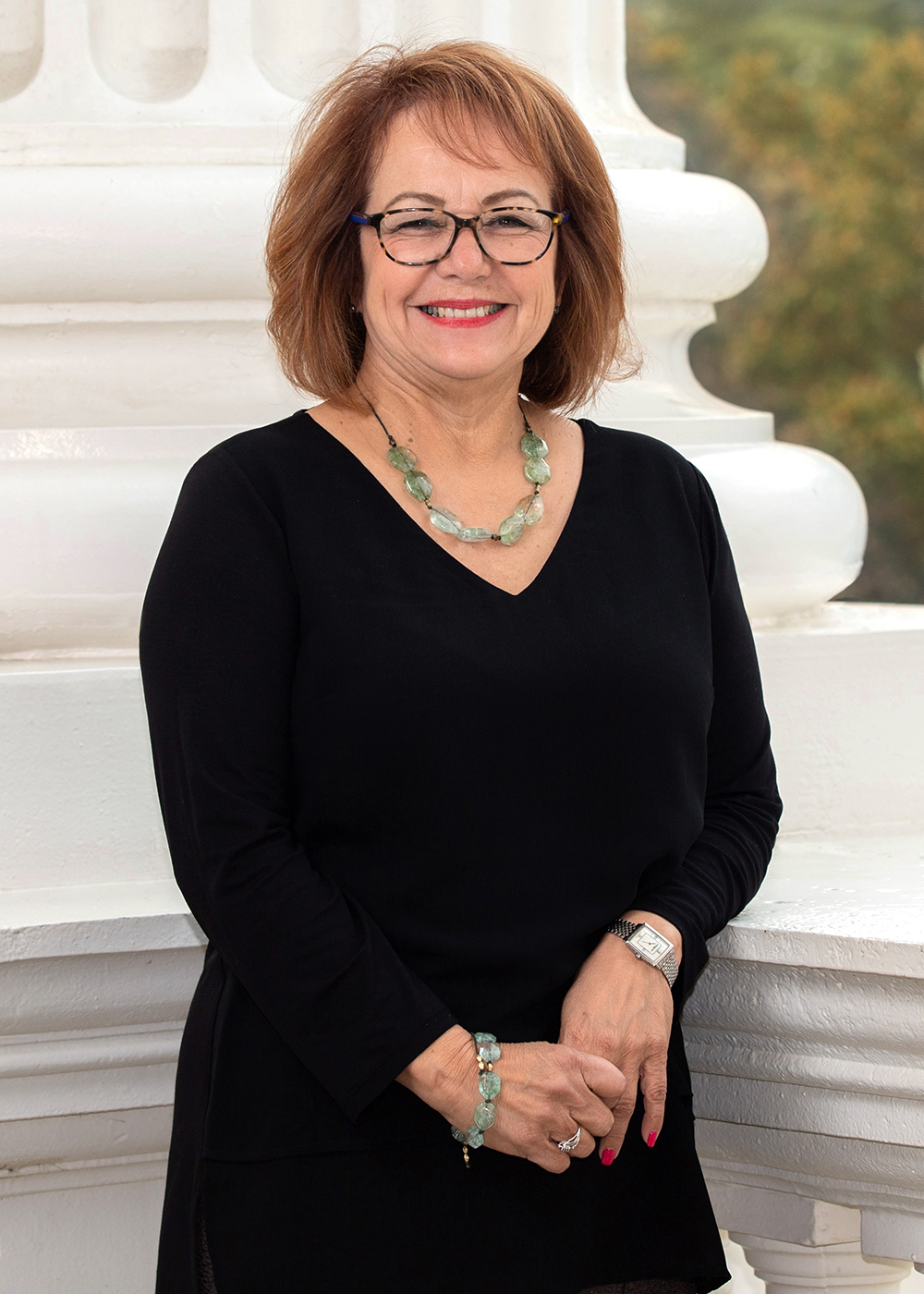
Sen. María Elena Durazo
Sponsored bills
This measure would designate a specified portion of Interstate 80 in the City and County of San Francisco as the Willie Mays Highway. The measure would request the Department of Transportation to determine the cost of appropriate signs showing this special designation and, upon receiving donations from nonstate sources covering that cost, to erect those signs.
Existing law requires the governing board of a school district, and the governing board of a community college district, to provide for a leave of absence from duty for a certificated employee or an academic employee of the district who is required to be absent from duty because of pregnancy, miscarriage, childbirth, and recovery from those conditions. Existing law authorizes the governing board of a school district, and the governing board of a community college district, to provide for a leave of absence from duty as it deems appropriate for a female employee in the classified service of the district who is required to be absent from duty because of pregnancy or convalescence following childbirth. Existing law authorizes a governing board to adopt rules and regulations about leaves of absence for classified employees for these purposes, and authorizes a governing board to provide in the rules and regulations whether the leave granted shall be with or without pay, as provided. Commencing January 1, 2028, and only if an appropriation is made for these purposes in the annual Budget Act or another statute, this bill would delete the latter provisions authorizing a governing board of a school district and the governing board of a community college district to adopt those rules and regulations. The bill instead would require a public school employer to, for a certificated employee or an employee in the classified service of the public school employer, and would require a community college district to, for an academic employee or an employee in the classified service of the community college district, provide up to 14 weeks of a leave of absence with specified pay benefits for an employee who is required to be absent from duty because of pregnancy, miscarriage, childbirth, termination of pregnancy, or recovery from those conditions, as provided. The bill would authorize the paid leave to begin before and continue after childbirth if the employee is actually disabled by pregnancy, childbirth, termination of pregnancy, or a related condition. The bill would prohibit a leave of absence taken pursuant to these provisions from being deducted from other leaves of absence, as provided.
This measure would recognize August 26, 2024, as Women's Equality Day and its historic importance to women's rights, including the battle to attain those rights in the past, present, and future.
Existing law provides for the payment of unemployment compensation benefits and extended benefits to eligible individuals who meet specified requirements. Under existing law, unemployment benefits are paid from the Unemployment Fund, which is continuously appropriated for these purposes. Existing law makes an employee ineligible for benefits if the employee left work because of a trade dispute and specifies that the employee remains ineligible for the duration of the trade dispute. Existing case law holds that employees who left work due to a lockout by the employer, even if it was in anticipation of a trade dispute, are eligible for benefits. This bill would restore eligibility after the first 2 weeks for an employee who left work because of a trade dispute. The bill would codify specified case law that holds that employees who left work due to a lockout by the employer, even if it was in anticipation of a trade dispute, are eligible for benefits. The bill would specify that the bill's provisions do not diminish eligibility for benefits of individuals deprived of work due to an employer lockout or similar action, as specified. Because this bill would expand the categories of people eligible to receive benefits from a continuously appropriated fund, it would make an appropriation.
Existing law requires each gas corporation to develop a plan for the safe and reliable operation of its Public Utilities Commission-regulated gas pipeline facility. Existing law requires the commission and gas corporation to provide opportunities for meaningful, substantial, and ongoing participation by the gas corporation workforce in the development and implementation of the plan, with the objective of developing an industrywide culture of safety that will minimize accidents, explosions, fires, and dangerous conditions for the protection of the public and the gas corporation workforce. This bill would require a gas corporation, whenever it files a formal application with the commission, to serve the application on all employee organizations representing the gas corporation's employees' labor interests. The bill would require a gas corporation, whenever the commission, on its own motion, opens a formal proceeding to which the gas corporation is a party, to notify all employee organizations representing the gas corporation's employees' labor interests within 3 days of the gas corporation's receipt of service for the proceeding. The bill would authorize the commission to grant party status to the employee organizations after those organizations have filed a motion for party status and would require the commission to allow those organizations to file a notice of intent to claim intervenor compensation after they have been granted party status. Under existing law, a violation of the Public Utilities Act is a crime. Because the above requirements would be part of the Public Utilities Act, a violation of which would be a crime, this bill would impose a state-mandated local program. The California Constitution requires the state to reimburse local agencies and school districts for certain costs mandated by the state. Statutory provisions establish procedures for making that reimbursement. This bill would provide that no reimbursement is required by this act for a specified reason.
Maddy summaryThis Senate Resolution designates April 2024 as National County Government Month in California to recognize the essential services provided by the state's 58 counties. The measure encourages participation from county officials, employees, schools, and residents in events celebrating local government contributions to community health, safety, and infrastructure. By issuing a formal proclamation, the resolution aims to raise public awareness about the wide range of duties counties perform, such as managing waste and maintaining roads, without imposing any new laws or funding requirements.
Maddy summaryThis Senate resolution designates September 2024 as Pain Awareness Month and September 1, 2024, as Women In Pain Awareness Day in California. The measure aims to highlight the high number of Americans suffering from untreated pain and to draw attention to gender disparities where women's pain is often dismissed or treated less aggressively than men's. It calls on Californians to participate in awareness activities and learn about improving pain management for those affected. The resolution does not change laws or funding but serves to recognize these issues and encourage public engagement.
This measure would proclaim the week of August 4, 2024, to August 10, 2024, inclusive, as National Health Center Week and would encourage Californians to take part in this week by visiting their local community health center and celebrating the important partnership between California's community health centers and the communities they serve.
This measure would urge the President and the Congress of the United States to address, with effective policies, the issue of servicemembers who were unjustly discharged under "Don't Ask, Don't Tell" or predecessor provisions, in order to unify efforts to upgrade discharges issued under the DADT policy, and to restore benefits.