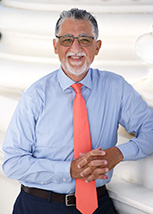
Photo of Anthony Portantino
D California Senate · District 25

Sen. Anthony Portantino

Contact Email
Compare
Total votes
35,772
all sessions
Attendance
96%
931 missed
Near the chamber average
With party
99%
of cast votes
Near the chamber average
Bipartisan score
0%
crosses aisle rarely
Near the chamber average
Sponsored
387
bills & resolutions
Near the chamber average
Committees
0
assignments
387 bills and resolutions

Sponsored bills

Total
387
Primary
140
Co-sponsor
247
This page
387
matching current filters
Co-sponsor SB 843
Passed · California Senate · Co-sponsor
Taxation: renters' credit.

The Personal Income Tax Law authorizes various credits against the taxes imposed by that law, including a credit for qualified renters in the amount of $120 for spouses filing joint returns, heads of household, and surviving spouses if adjusted gross income is $50,000, as adjusted, or less, and in the amount of $60 for other individuals if adjusted gross income is $25,000, as adjusted, or less. This bill would require the Franchise Tax Board to prepare a written report by April 1, 2023, on the number of taxpayers claiming the credit, and the average credit amount on returns claiming the credit.

Passed Aug 30, 2022 1 co-sponsor
Co-sponsor SCR 115
Signed into law · California Senate · Co-sponsor
Relative to drug abuse.

This measure would designate the month of September 2022 as Opioid, Heroin, Fentanyl, and Prescription Drug Abuse Awareness Month, as specified.

Signed into law Aug 30, 2022 1 co-sponsor
Co-sponsor ACR 126
Signed into law · California Assembly · Co-sponsor
Relative to the Katcho Achadjian Memorial Highway.

This measure would designate the portion of U.S. Route 101 in the County of San Luis Obispo, from postmile 19.812 to postmile 15.579, as the Katcho Achadjian Memorial Highway. The measure would request the Department of Transportation to determine the cost of appropriate signs showing this special designation and, upon receiving donations from nonstate sources covering that cost, to erect those signs.

Signed into law Aug 30, 2022 1 co-sponsor
Primary SB 485
Passed · California Senate · Lead sponsor
Income taxes: tax credits: motion picture credit: extension: diversity workplan.

The Personal Income Tax Law and the Corporation Tax Law allow various credits against the taxes imposed by those laws, including a motion picture credit for taxable years beginning on or after January 1, 2020, to be allocated by the California Film Commission on or after July 1, 2020, and before July 1, 2025, in an amount equal to 20% or 25% of qualified expenditures for the production of a qualified motion picture in this state, with additional credit amounts allowed, including for amounts equal to specified qualified expenditures and qualified wages relating to original photography outside the Los Angeles zone, as specified. Existing law limits the aggregate amount of credits that may be allocated to specified amounts per fiscal year, and sets forth allocation percentages for various productions under the motion picture credit. This bill, for credit allocations made on or after July 1, 2023, would revise the definition of qualified motion picture for purposes of the credit to require an applicant to provide a diversity workplan that includes goals that are broadly reflective of California's population, as specified, and would require the commission to approve or reject each diversity workplan, to the extent allowed by federal and state law. The bill would prohibit the commission from certifying the tax credit for an applicant required to provide a diversity workplan until the commission receives the applicant's final diversity report, and would authorize the commission to increase the applicant's credit percentage if the commission determines that the applicant has met or made a good faith effort to meet the diversity goals in its diversity workplan. This bill, if legislation relating to the 2023 Budget Act and making changes to the application criteria for the motion picture credit is enacted, would extend the period during which the commission allocates the above-described motion picture credits through July 1, 2030. The bill would also extend the application of the limit on the aggregate amount of credits that may be allocated through the 2029–30 fiscal year and would make conforming changes. Existing law also allows a credit for taxable years beginning on or after January 1, 2022, and before January 1, 2032, in an amount equal to 20% or 25%, or as modified, of qualified expenditures paid or incurred during the taxable year by a qualified motion picture produced in this state at a certified studio construction project. This bill would instead allow the credit for qualified expenditures paid or incurred by a qualified taxpayer in all taxable years during the production of a qualified motion picture produced in this state at a certified studio construction project. Existing law requires any bill authorizing a new tax expenditure to contain, among other things, specific goals, purposes, and objectives the tax expenditure will achieve, detailed performance indicators, and data collection requirements. This bill would provide findings to comply with the additional information requirement for any bill authorizing a new tax expenditure. This bill would include a change in state statute that would result in a taxpayer paying a higher tax within the meaning of Section 3 of Article XIIIA of the California Constitution, and thus would require for passage the approval of 2/3 of the membership of each house of the Legislature. This bill would take effect immediately as a tax levy.

Passed Aug 25, 2022 0 co-sponsors
Primary SB 1177
Signed into law · California Senate · Lead sponsor
Joint powers authorities: Cities of Burbank, Glendale, and Pasadena.

The Joint Exercise of Powers Act authorizes 2 or more public agencies, by agreement, to form a joint powers authority to exercise any power common to the contracting parties, as specified. That act authorizes the agreement to set forth the manner by which the joint powers authority will be governed. That act specifically authorizes the creation of the Orange County Housing Finance Trust, a joint powers authority, for the purposes of funding housing to assist the homeless population and persons and families of extremely low, very low, and low income within the County of Orange. This bill would similarly authorize the creation of the Burbank-Glendale-Pasadena Regional Housing Trust, a joint powers authority, by the Cities of Burbank, Glendale, and Pasadena, with the stated purpose of funding housing to assist the homeless population and persons and families of extremely low, very low, low, and moderate income. The bill would authorize the Burbank-Glendale-Pasadena Regional Housing Trust to fund the planning and construction of housing, receive public and private financing and funds, and authorize and issue bonds. The bill would require that the joint powers agreement establishing the Burbank-Glendale-Pasadena Regional Housing Trust incorporate specified annual financial reporting and auditing requirements. This bill would make legislative findings and declarations as to the necessity of a special statute for the Cities of Burbank, Glendale, and Pasadena.

Signed into law Aug 22, 2022 0 co-sponsors
Co-sponsor SB 864
Signed into law · California Senate · Co-sponsor
General acute care hospitals: drug screening.

Existing law provides for the licensure and regulation of health facilities, including general acute care hospitals, by the State Department of Public Health. A violation of these provisions is a crime. This bill would, until January 1, 2028, require a general acute care hospital to include a urine drug screening, as defined, for fentanyl if a person is treated at the hospital and the hospital conducts a urine drug screening to assist in diagnosing the patient's condition. By expanding the scope of a crime, this bill would impose a state-mandated local program. The California Constitution requires the state to reimburse local agencies and school districts for certain costs mandated by the state. Statutory provisions establish procedures for making that reimbursement. This bill would provide that no reimbursement is required by this act for a specified reason.


Signed into law Aug 22, 2022 1 co-sponsor
Co-sponsor AB 1929
Signed into law · California Assembly · Co-sponsor
Medi-Cal benefits: violence prevention services.

Existing law establishes the Medi-Cal program, which is administered by the State Department of Health Care Services and under which qualified low-income individuals receive health care services. The Medi-Cal program is, in part, governed and funded by federal Medicaid program provisions. Existing law establishes a schedule of benefits under the Medi-Cal program, including various mental health services. Existing federal law authorizes, at the option of the state, preventive services, as defined, that are recommended by a physician or other licensed practitioner of the healing arts. This bill would add violence prevention services, as defined, as a covered benefit under Medi-Cal, subject to medical necessity and utilization controls. The bill would authorize the department to implement, interpret, or make specific that provision by means of all-county letters, plan letters, or plan or provider bulletins, or similar instructions until regulations are adopted. The bill would limit its implementation only to the extent that any necessary federal approvals are obtained and federal financial participation is not otherwise jeopardized. The bill would require the department to post on its internet website the date upon which violence prevention services may be provided and billed.

Signed into law Aug 22, 2022 1 co-sponsor
Co-sponsor SB 1339
Passed · California Senate · Co-sponsor
Hospitals.

Existing law, the Alfred E. Alquist Hospital Facilities Seismic Safety Act of 1983, establishes, under the jurisdiction of the Department of Health Care Access and Information, a program of seismic safety building standards for certain hospitals constructed on and after March 7, 1973. Existing law requires, by January 1, 2030, owners of all acute care inpatient hospitals to either seismically retrofit all acute care inpatient hospitals, or demolish, replace, or change to nonacute care use all hospital buildings not in substantial compliance with regulations and standards developed by the department in accordance with the act, as specified. This bill would require an acute care hospital in a building with a specified rating to submit to the Department of Health Care Access and Information the estimated cost for the hospital to comply with the 2030 seismic requirements. The bill would require the department to provide the Legislature with a report containing specified information that would provide, among other things, the Legislature with an assessment of projected costs to retrofit each hospital building in order to meet the 2030 seismic requirements. The bill would authorize the department to rely on the cost estimates submitted by the hospitals, and if the department relies on the estimates, the bill would require the department to clearly state in the report that the information was provided by the hospital and not verified by the department.

Passed Aug 11, 2022 1 co-sponsor
Primary SB 1067
Passed · California Senate · Lead sponsor
Housing development projects: automobile parking requirements.

Existing law, the Planning and Zoning Law, requires each county and city to adopt a comprehensive, long-term general plan for its physical development, and the development of certain lands outside its boundaries, that includes, among other mandatory elements, a housing element. Existing law also authorizes the legislative body of a city or a county to adopt ordinances establishing requirements for parking. This bill would prohibit a city, county, or city and county from imposing any minimum automobile parking requirement on a housing development project, as defined, that is located within 12 mile of public transit, as defined. The bill, notwithstanding the above-described prohibition, would authorize a city, county, or city and county to impose or enforce minimum automobile parking requirements on a housing development project if the local government makes written findings, within 30 days of the receipt of a completed application, that not imposing or enforcing minimum automobile parking requirements on the development would have a substantially negative impact, supported by a preponderance of the evidence in the record, on the city's, county's, or city and county's ability to meet its share of specified housing needs or existing residential or commercial parking within 12 mile of the housing development. The bill would create an exception from the above-described provision if the development (1) dedicates a minimum of 20% of the total number of housing units to very low, low-, or moderate-income households, students, the elderly, or persons with disabilities, (2) contains fewer than 20 housing units, or (3) is not subject to parking requirements based on any other state law. The bill would prohibit these provisions from reducing, eliminating, or precluding the enforcement of any requirement imposed on a housing development project that is located within 12 mile of public transit to provide electric vehicle supply equipment installed parking spaces or parking spaces that are accessible to persons with disabilities. By changing the duties of local planning officials, this bill would impose a state-mandated local program. Existing law also requires the Department of Housing and Community Development to notify a city, county, or city and county, and authorizes the department to notify the office of the Attorney General, that the city, county, or city and county is in violation of state law if the department finds that the housing element or an amendment to the housing element does not substantially comply with specified provisions of the Planning and Zoning Law, or that the local government has taken action or failed to act in violation of specified provisions of law. Existing law authorizes the Attorney General to bring suit for a violation of those provisions. This bill would add a violation of the minimum automobile parking requirements of housing development projects, as described above, to the list of laws that, when violated, require the department to notify the jurisdiction and authorize the Attorney General to bring an action to enforce state law. The bill would include findings that changes proposed by this bill address a matter of statewide concern rather than a municipal affair and, therefore, apply to all cities, including charter cities. The California Constitution requires the state to reimburse local agencies and school districts for certain costs mandated by the state. Statutory provisions establish procedures for making that reimbursement. This bill would provide that no reimbursement is required by this act for a specified reason.
Passed Aug 11, 2022 0 co-sponsors
Showing 191 to 200 of 387 bills
Previous 1 … 19 20 21 … 39 Next