

Existing law authorizes recreational activities in which there is bodily contact with the water by any participant in certain reservoirs only in accordance with prescribed requirements. Existing law requires the State Department of Public Health, by regulation and in consultation with the State Water Resources Control Board, local health officers, and the public, to establish, maintain, and amend, as necessary, minimum standards for the sanitation of public beaches. Existing law provides for the establishment of the California Water Quality Monitoring Council, which is administered by the state board, and requires the council to undertake various actions relating to water quality data collection and to review existing water quality monitoring, assessment, and reporting efforts and recommend specific actions and funding needs necessary to coordinate and enhance those efforts. This bill would require, on or before July 1, 2022, the council to direct a new or existing working group to study water recreation hazards at priority water-contact recreation sites, as specified. The bill would require, on or before July 1, 2023, the working group to submit a report to the council that the council would be required to post on its internet website that includes specified information. This bill would require, on or before December 31, 2023, the council, in consultation with the department, local health officers, and the public, to propose to the state board for consideration a definition of a priority water-contact recreation site, and recommendations and requirements for the establishment of a priority water-contact recreation site monitoring program that includes specified components. The bill would require the council, in developing a proposed definition of a priority water-contact recreation site, to consider various characteristics of a water body, including whether the body is used for organized recreational events with water contact or for commercial purposes with water contact, among others.
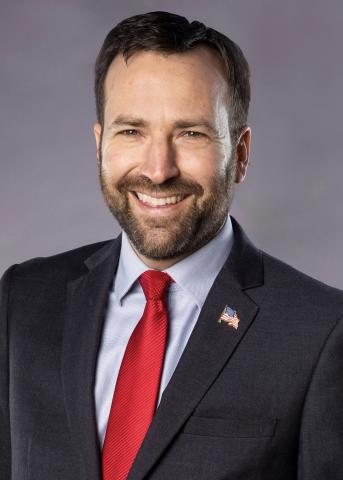
Sponsored bills
(1) Existing law, the Alcoholic Beverage Control Act, is administered by the Department of Alcoholic Beverage Control and regulates the granting of licenses for the manufacture, distribution, and sale of alcoholic beverages within the state. The act requires the department to make and prescribe rules to carry out the purposes and intent of existing state constitutional provisions on the regulation of alcoholic beverages, and to enable the department to exercise the powers and perform the duties conferred upon it by the state constitution and the act, not inconsistent with any statute of this state. The act makes it unlawful for any person other than a licensee of the department to sell, manufacture, or import alcoholic beverages in this state, with exceptions. The department, pursuant to its powers and in furtherance of emergency declarations and orders of the Governor under the California Emergency Services Act regarding the spread of the COVID-19 virus, has established prescribed temporary relief measures to suspend certain legal restrictions relating to, among other things, the expansion of a licensed footprint, sales of alcoholic beverages to-go, and delivery privileges. This bill would authorize the department, for a period of 365 days following the end of the state of emergency proclaimed by the Governor on March 4, 2020, in response to the COVID-19 pandemic, to permit licensees to exercise license privileges in an expanded license area authorized pursuant to a COVID-19 Temporary Catering Authorization approved in accordance with the Fourth Notice of Regulatory Relief issued by the department, as specified. The bill would also authorize the department to extend the period of time during which the COVID-19 Temporary Catering Authorization is valid beyond 365 days if the licensee has filed a pending application with the department for the permanent expansion of their premises before the 365-day time period expires. The bill would make these provisions effective only until July 1, 2024, and repeal them as of that date. (2) The Planning and Zoning Law authorizes the legislative body of any city or county to adopt ordinances that regulate zoning within its jurisdiction, as specified. Under that law, variances and conditional use permits may be granted if provided for by the zoning ordinance. This bill would, to the extent that an outdoor expansion of a business to mitigate COVID-19 pandemic restrictions on indoor dining interferes with, reduces, eliminates, or impacts required parking for existing uses, require a local jurisdiction that has not adopted an ordinance that provides relief from parking restrictions for expanded outdoor dining areas to reduce the number of required parking spaces for existing uses by the number of spaces that the local jurisdiction determines are needed to accommodate an expanded outdoor dining area. Because the bill would require local officials to perform additional duties, the bill would impose a state-mandated local program. The bill would make these provisions operative on January 1, 2022, and repeal them on July 1, 2024. (3) Existing law, the California Retail Food Code, establishes uniform health and sanitation standards for, and provides for regulation by the State Department of Public Health of, retail food facilities. Existing law restricts satellite food service to limited food preparation in a fully enclosed permanent food facility that meets specified requirements. Existing law requires a permanent food facility, prior to conducting satellite food service, to submit to the enforcement agency written operating standards. This bill would, for a period of one year after the end of the state of emergency proclaimed by the Governor on March 4, 2020, related to the COVID-19 pandemic, or until January 1, 2024, whichever occurs first, authorize a permitted food facility within any local jurisdiction that is subject to retail food operation restrictions related to a COVID-19 public health response to prepare and serve food as a temporary satellite food service without obtaining a separate satellite food service permit or submitting written operating procedures. This bill would require the written operating procedures to be maintained onsite for review, upon request, by the local jurisdiction. (4) The California Constitution requires the state to reimburse local agencies and school districts for certain costs mandated by the state. Statutory provisions establish procedures for making that reimbursement. This bill would provide that no reimbursement is required by this act for a specified reason. (5) This bill would declare that it is to take effect immediately as an urgency statute.
Existing law defines a "hate crime" as a criminal act committed, in whole or in part, because of actual or perceived characteristics of the victim, including, among other things, race, religion, disability, and sexual orientation. Existing law requires the Commission on Peace Officer Standards and Training (POST) to develop guidelines and a course of instruction and training for law enforcement officers addressing hate crimes. Existing law requires state law enforcement agencies to adopt a framework or other formal policy created by POST regarding hate crimes. Existing law requires any local law enforcement agency that adopts or updates a hate crime policy to include specified information in that policy, including information on bias motivation. This bill would include a statement of legislative findings and declarations and require the basic course curriculum on the topic of hate crimes to be developed in consultation with subject matter experts, as specified. The bill would, subject to an appropriation of funds for this purpose in the annual Budget Act or other statute, require POST to update the basic course to include the viewing of a specified video course developed by POST. The bill would also require POST to make the video available via the online learning portal, and would require all peace officers to complete specified training materials no later than one year after the commission makes the updated course available. The bill would require POST to develop and periodically update an interactive course on hate crimes for in-service peace officers, and require officers to take the course every 6 years. This bill would also require any local law enforcement agency that adopts or updates a hate crime policy to include specified information on recognizing religion-bias hate crimes, and would require those policies to include the discriminatory selection of victims as a form of bias motivation.
Under existing law, the Department of Consumer Affairs (department) , under the control of the Director of Consumer Affairs, is comprised of various boards that license and regulate various professions and vocations. Existing law requires an applicant seeking a license from a board within the department to meet specified requirements and to pay certain licensing fees. Existing law requires a board within the department to issue, after appropriate investigation, certain types of temporary licenses to an applicant if the applicant meets specified requirements, including that the applicant supplies evidence satisfactory to the board that the applicant is married to, or in a domestic partnership or other legal union with, an active duty member of the Armed Forces of the United States who is assigned to a duty station in this state under official active duty military orders and the applicant submits an application to the board that includes a signed affidavit attesting to the fact that the applicant meets all of the requirements for a temporary license and that the information submitted in the application is accurate, to the best of the applicant's knowledge. Under existing law, some of the funds within the jurisdiction of a board consist of revenue from fees that are continuously appropriated. Existing law authorizes a board to adopt regulations necessary to administer these provisions. This bill, on and after January 1, 2023, would expand the requirement to issue temporary licenses to practice a profession or vocation to include licenses issued by any board within the department, except as provided. The bill would require an applicant for a temporary license to provide to the board documentation that the applicant has passed a California law and ethics examination if otherwise required by the board for the profession or vocation for which the applicant seeks licensure. The bill would require a board to issue a temporary license within 30 days of receiving the required documentation if the results of a criminal background check do not show grounds for denial and would require a board to request the Department of Justice to conduct the criminal background check and to furnish the criminal background information in accordance with specified requirements. The bill would specifically direct revenues from fees for temporary licenses issued by the California Board of Accountancy to be credited to the Accountancy Fund, a continuously appropriated fund. The bill would require, if necessary to implement the bill's provisions, a board to submit to the department for approval draft regulations necessary to administer these provisions. The bill would exempt from these provisions a board that has a process in place by which an out-of-state licensed applicant in good standing who is married to, or in a domestic partnership or other legal union with, an active duty member of the Armed Forces of the United States is able to receive expedited, temporary authorization to practice while meeting state-specific requirements for a period of at least one year or is able to receive an expedited license by endorsement with no additional requirements superseding those for a temporary license, as described above. The bill would make conforming changes. By expanding the scope of the crime of perjury, the bill would impose a state-mandated local program. The bill's expansion of the requirement to issue temporary licenses would result in revenues from fees for certain licenses being deposited into continuously appropriated funds. By establishing a new source of revenue for those continuously appropriated funds, the bill would make an appropriation. Existing law provides that these temporary licenses shall expire 12 months after issuance, upon issuance of an expedited license, or upon denial of the application for expedited licensure by the board, whichever occurs first. Existing law authorizes the immediate termination of a temporary license upon a finding that the temporary licenseholder failed to meet the requirements for temporary licensure or provided substantively inaccurate information that would affect the person's eligibility for temporary licensure. This bill, on and after July 1, 2023, would instead provide that these temporary licenses are nonrenewable and shall expire 12 months after issuance, upon issuance or denial of a standard license, upon issuance or denial of a license by endorsement, or upon issuance or denial of an expedited license, whichever occurs first. The bill, on and after July 1, 2023, would also require the board to revoke a temporary license if the board finds that the temporary licenseholder engaged in unprofessional conduct or any other act that is cause for discipline by the board. This bill would require the Department of Consumer Affairs to compile an annual report to the Legislature containing specified information relating to the professional licensure of veterans, servicemembers, and their spouses. The bill would also require the Department of Consumer Affairs and each board within the department to post specified information on their internet websites relating to licensure for military spouses, the availability of temporary licenses, and permanent licensure by endorsement or credential for out-of-state applicants. The bill would also require the Department of Real Estate to compile specified information on military, veteran, and spouse licensure into an annual report for the Legislature. Existing law, the Psychology Licensing Law, provides for the licensure and regulation of psychologists by the Board of Psychology. Existing law authorizes a psychologist certified or licensed in another state or Canadian province who has applied to the board for licensure to provide activities and services of a psychological nature without a valid license for a period not to exceed 180 days from the time of submitting their application or from the commencement of residency in the state, whichever occurs first, subject to specified conditions and requirements. This bill would also authorize a psychologist certified or licensed in another state or Canadian province who is married to, or in a domestic partnership or other legal union with, an active duty member of the Armed Forces of the United States and who has applied to the board for licensure to perform activities and services of a psychological nature without a valid license for a period not to exceed 12 months. The California Constitution requires the state to reimburse local agencies and school districts for certain costs mandated by the state. Statutory provisions establish procedures for making that reimbursement. This bill would provide that no reimbursement is required by this act for a specified reason. This bill would incorporate additional changes to Section 2946 of the Business and Professions Code proposed by SB 801 to be operative only if this bill and SB 801 are enacted and this bill is enacted last.
The California Environmental Quality Act (CEQA) requires a lead agency, as defined, to prepare, or cause to be prepared, and certify the completion of an environmental impact report (EIR) on a project that it proposes to carry out or approve that may have a significant effect on the environment or to adopt a negative declaration if it finds that the project will not have that effect. CEQA also requires a lead agency to prepare a mitigated negative declaration for a project that may have a significant effect on the environment if revisions in the project would avoid or mitigate that effect and there is no substantial evidence that the project, as revised, would have a significant effect on the environment. CEQA establishes a procedure by which a person may seek judicial review of the decision of the lead agency made pursuant to CEQA. This bill would, until January 1, 2025, establish specified procedures for the administrative and judicial review of the environmental review and approvals granted for an environmental leadership transit project, as defined, proposed by a public or private entity or its affiliates that is located wholly within the County of Los Angeles or connects to an existing transit project wholly located in that county and that is approved by the lead agency on or before January 1, 2024. The bill would require the project applicant of the environmental leadership transit project to take certain actions in order for those specified procedures to apply to the project. The bill would require the Judicial Council, on or before January 1, 2023, to adopt rules of court establishing procedures requiring actions or proceedings seeking judicial review of the certification of an environmental impact report for an environmental leadership transit project or the granting of any project approval, including any appeals to the court of appeal or the Supreme Court, to be resolved, to the extent feasible, within 365 calendar days of the filing of the certified record of proceedings with the court to an action or proceeding seeking judicial review of the lead agency's action related to an environmental leadership transit project. The bill would require the environmental leadership transit project to meet certain labor requirements. The bill would require the lead agency to prepare the EIR for an environmental leadership transit project in a specified manner and would require the concurrent preparation of the record of proceedings. The bill would specify that these requirements would only apply to the first 7 environmental leadership transit projects obtaining a certified environmental impact report. Because the bill would impose additional duties on the lead agency, this bill would impose a state-mandated local program. This bill would make legislative findings and declarations as to the necessity of a special statute for the County of Los Angeles. The California Constitution requires the state to reimburse local agencies and school districts for certain costs mandated by the state. Statutory provisions establish procedures for making that reimbursement. This bill would provide that no reimbursement is required by this act for a specified reason.
The California Coastal Act of 1976 requires a person undertaking development in the coastal zone to obtain a coastal development permit in accordance with prescribed procedures. Existing law authorizes the superior court to impose civil liability on a person who performs or undertakes development that is in violation of the act or that is inconsistent with a previously issued coastal development permit, and on a person who violates the act in any other manner. Existing law authorizes the California Coastal Commission to impose specified administrative civil penalties on a person, including a landowner, who is in violation of the public access provisions of the act for each violation of the act. This bill would additionally authorize the commission to impose specified administrative civil penalties on a person, including a landowner, who is in violation of any provision of the act other than public access. The bill would require the commission staff to annually prepare and present a written report to the full commission that includes specified information related to the imposition of those penalties and to annually provide the written report to the Legislature, as prescribed.
(1) Existing law, the Sherman Food, Drug, and Cosmetic Law, prohibits the manufacture, sale, delivery, holding, or offer for sale of adulterated foods, beverages, or cosmetics. Existing law prescribes when a food or beverage is adulterated, including if it bears or contains any poisonous or deleterious substance that may render it injurious to the health of a person or other animal that may consume it. Existing law prescribes when a cosmetic is adulterated, including when it bears or contains a poisonous or deleterious substance that may render it injurious to users under the conditions of use prescribed in the labeling or advertisement of the cosmetic, under customary or usual conditions. The Sherman Food, Drug, and Cosmetic Law, among other things, regulates the labeling of food, beverages, and cosmetics and makes it a crime to distribute in commerce any food, drug, device, or cosmetic if its packaging or labeling does not conform to these provisions. Existing law also makes it unlawful for a person to disseminate any false advertisement of any food, drug, device, or cosmetic. Violation of the Sherman Food, Drug, and Cosmetic Law is a misdemeanor. Existing law requires a person who manufactures pet food in California to obtain a license from the State Department of Public Health. Existing law also prohibits the manufacture, sale, or delivery of a pet food ingredient or processed pet food that is adulterated and defines "adulterated" for this purpose. This bill would require a manufacturer of dietary supplements and food that includes industrial hemp to register with the State Department of Public Health and to be able to demonstrate that all parts of the plant used come from a state or country that has an established and approved industrial hemp program, as defined, that inspects or regulates hemp under a food safety program or equivalent criteria to ensure safety for human or animal consumption and that the industrial hemp cultivator or grower is in good standing and compliance with the governing laws of the state or country of origin. This bill would state that a dietary supplement, food, beverage, cosmetic, or pet food is not adulterated by the inclusion of industrial hemp or cannabinoids, extracts, or derivatives from industrial hemp if those substances meet specified requirements, and would prohibit restrictions on the sale of dietary supplements, food, beverages, cosmetics, or pet food that include industrial hemp or cannabinoids, extracts, or derivatives from industrial hemp based solely on the inclusion of those substances. The bill would also prohibit a manufacturer, distributor, or seller of an industrial hemp product from including on the label, or publishing or disseminating in advertising or marketing, a health-related statement, as defined, that is untrue in any particular manner as to the effects on health of consuming products containing industrial hemp or cannabinoids, extracts, or derivatives from industrial hemp. By creating a new crime, this bill would impose a state-mandated local program. This bill would create a registration process, under the State Department of Public Health, for hemp manufacturers who produce specified products that include industrial hemp or who produce raw hemp extract, as defined, including requirements for testing and labeling on products. The bill would define "THC" for these purposes and would authorize the department to include or exclude comparable compounds from the definition of THC for purposes of regulation as industrial hemp based on the compound's intoxicating effect, or lack thereof. The bill would authorize the department to collect specified fees, which would be used, upon appropriation, to implement the program. By creating a new crime, this bill would impose a state-mandated local program. This bill, upon the enactment of a tax on inhalable products, would require the department to regulate those products, as specified, or enter into a memorandum of understanding or other interagency agreement with another state agency to do so. Until that tax is enacted, the bill would prohibit the manufacture and sale of inhalable products, except for the sole purpose of sale out of state. This bill would require the Department of Cannabis Control to prepare a report to the Governor and the Legislature outlining the steps necessary for the incorporation of hemp products into the cannabis supply chain, as specified. The bill would also require the Department of Food and Agriculture and the State Department of Public Health, in consultation with the Department of Cannabis Control, if necessary, to develop a process to share license, registration, cultivar, and enforcement information to facilitate compliance and enforcement against unlicensed manufacturers or the sale of hemp that does not meet specified requirements. The bill would make communications shared between these agencies and local law enforcement for this purpose exempt from the California Public Records Act. Existing constitutional provisions require that a statute that limits the right of access to the meetings of public bodies or the writings of public officials and agencies be adopted with findings demonstrating the interest protected by the limitation and the need for protecting that interest. This bill would make legislative findings to that effect. Existing law provides that, except as otherwise provided by statute, all relevant evidence is admissible. The California Constitution provides for the Right to Truth-in-Evidence, which requires a 23 vote of the Legislature to exclude any relevant evidence from any criminal proceeding, as specified. This bill would make communications shared between agencies pursuant to the above provisions official information, which may be privileged and made inadmissible in an action or proceeding, thereby requiring a 23 vote. (2) Existing law, the Control, Regulate and Tax Adult Use of Marijuana Act (AUMA) , added by Proposition 64 at the November 8, 2016, statewide general election, regulates the cultivation, distribution, transport, storage, manufacturing, testing, processing, sale, and use of marijuana for nonmedical purposes by people 21 years of age and older. The existing Medicinal and Adult-Use Cannabis Regulation and Safety Act (MAUCRSA) , among other things, consolidates the licensure and regulation of commercial medicinal and adult-use cannabis activities. Existing law, for purposes of commercial cannabis regulation, defines "cannabis" as derivatives of the cannabis plant, not including industrial hemp. Existing law defines industrial hemp, for this purpose, as cannabis plants having no more than 0.3% tetrahydrocannabinol (THC) contained in the dried flowering tops, whether growing or not; the seeds of the plant; the resin extracted from any part of the plant; and every compound, manufacture, salt, derivative, mixture, or preparation of the plant, its seeds, or resin produced therefrom. Industrial hemp is exempt from the provisions of MAUCRSA. AUMA authorizes the Legislature to amend the act to further the purposes and intent of the act with a 23 vote of the membership of both houses of the Legislature, except as provided. This bill would amend AUMA by changing the definition of "industrial hemp" to include cannabis plants and any part of that plant, including the seeds of the plant and all derivatives, extracts, the resin extracted from any part of the plant, cannabinoids, isomers, acids, salts, and salts of isomers, with a delta-9 tetrahydrocannabinol concentration of no more than 0.3% on a dry weight basis. (3) The California Constitution requires the state to reimburse local agencies and school districts for certain costs mandated by the state. Statutory provisions establish procedures for making that reimbursement. This bill would provide that no reimbursement is required by this act for a specified reason. (4) This bill would declare that it is to take effect immediately as an urgency statute.
(1) Existing law declares that it is the public policy of the state that environmental marketing claims, whether explicit or implied, should be substantiated by competent and reliable evidence to prevent deceiving or misleading consumers about the environmental impact of plastic products and that, for consumers to have accurate and useful information about the environmental impact of plastic products, environmental marketing claims should adhere to uniform and recognized standards. This bill would further declare that it is the public policy of the state that claims related to the recyclability of a product or packaging be truthful and that consumers deserve accurate and useful information related to how to properly handle the end of life of a product or packaging. This bill would require the Department of Resources Recycling and Recovery, on or before January 1, 2024, in order to provide information to the public to evaluate whether a product or packaging is recyclable in the state and is of a material type and form that routinely become feedstock used in the production of new products and packaging, to update specified regulations to require disposal facility operators, among other operations and facilities, to provide information to the department regarding how material collected or processed by the operations and facilities was collected and what material types and forms are actively recovered, and not considered contaminants, by the operation or facility. The bill would require the department to conduct, publish on its internet website, and update as provided, a characterization study of material types and forms that are collected, sorted, sold, or transferred by solid waste facilities identified by the department for inclusion in the study. The bill would provide that, except as specified, a product or packaging is considered recyclable in the state if, based on the information published by the department, the product or packaging is of a material type and form collected for recycling by recycling programs for jurisdictions that collectively encompass at least 60% of the population of the state, among other statewide recyclability criteria. (2) Under existing law, it is unlawful for any person to make any untruthful, deceptive, or misleading environmental marketing claim, whether explicit or implied. A violation of this requirement is a misdemeanor. This bill would prohibit a person from offering for sale, selling, distributing, or importing into the state any product or packaging for which a deceptive or misleading claim about the recyclability of the product or packaging is made. The bill would provide that, except as specified, a product or packaging that displays a chasing arrows symbol, among other symbols, statements, or directions, is deemed to be a deceptive or misleading claim unless the product or packaging is considered recyclable pursuant to statewide recyclability criteria and is of a material type and form that routinely becomes feedstock used in the production of new products or packaging, as provided. The bill would therefore expand the scope of an existing crime and impose a state-mandated local program. (3) Under existing law, a person who represents in advertising or on the label or container of a consumer good that the consumer good that it manufactures or distributes is not harmful to, or is beneficial to, the natural environment, through the use of environmental terms, is required to maintain in its records specified information and documentation supporting the validity of the representation, including, if applicable, whether the consumer good conforms with the uniform standards contained in the Federal Trade Commission Guidelines for Environmental Marketing Claims for the use of the term "recyclable," among other terms. A violation of this requirement is a misdemeanor. This bill would apply that recordkeeping requirement to a person who makes those representations through the use of a chasing arrows symbol, as defined, or by otherwise directing a consumer to recycle a consumer good. The bill would add to the required information and documentation for the use of the term "recyclable," the use of a chasing arrows symbol, or other representation that advises consumers to recycle a consumer good, whether the consumer good meets the criteria for statewide recyclability. The bill would provide that a direction to a consumer that accurately instructs the consumer to properly dispose of or otherwise properly handle a consumer good at the end of its useful life shall not be considered "otherwise directing a consumer to recycle a consumer good" if the consumer good is subject to one of several enumerated programs. The bill would provide that directing a consumer to compost or properly dispose of a consumer good through an organics recycling program is also not considered "otherwise directing a consumer to recycle a consumer good." A violation of these provisions would be a misdemeanor. The bill would therefore create a new crime and impose a state-mandated local program. (4) Existing law requires all rigid plastic bottles and rigid plastic containers sold in the state to be labeled with a code that indicates the resin used to produce the bottles or containers, with specified numbers and letters placed in relation to a triangle. This bill would prohibit the resin identification code from being placed inside a chasing arrows symbol, unless the rigid plastic bottle or rigid plastic container meets the requirements for statewide recyclability. (5) The California Constitution requires the state to reimburse local agencies and school districts for certain costs mandated by the state. Statutory provisions establish procedures for making that reimbursement. This bill would provide that no reimbursement is required by this act for a specified reason.
Existing law provides for the payment of unemployment compensation benefits to eligible persons who are unemployed through no fault of their own through a federal-state unemployment insurance program administered by the Employment Development Department, subject to oversight by the Director of Employment Development. Existing law requires the Department of Justice to maintain state summary criminal history information, including the identification and criminal history of a person, including name, date of birth, social security number, physical description, fingerprints, photographs, dates of arrests, arresting agencies and booking numbers, charges, dispositions, sentencing information, and similar data about the person. Existing law requires the Attorney General to furnish this information to specified persons, agencies, or organizations, including the Department of Corrections and Rehabilitation, if needed in the course of their duties. Existing law makes it a crime for any person authorized by law to receive state summary criminal history information to knowingly furnish the information to a person who is not authorized by law to receive it. This bill would require the Department of Corrections and Rehabilitation to provide the name, known aliases, birth date, social security number, and booking date and expected release date, if known, of a current inmate to the Employment Development Department for the purposes of preventing payments on fraudulent claims for unemployment compensation benefits. The bill would require this information to be provided to the Employment Development Department on the first of every month and upon the Employment Development Department's request. Because this bill would expand the scope of an existing crime, the bill imposes a state-mandated local program. This bill would require, for purposes of preventing payments on fraudulent claims for unemployment compensation benefits, the Director of Employment Development to verify with the information provided by the Department of Corrections and Rehabilitation that the claimant is not an inmate currently incarcerated in the state prisons. The bill would require the Employment Development Department to complete necessary system programming or automation upgrades to allow electronic monitoring of Department of Corrections and Rehabilitation inmate data to prevent payment on fraudulent claims for unemployment compensation benefits at the earliest possible date, but not later than September 1, 2023. The California Constitution requires the state to reimburse local agencies and school districts for certain costs mandated by the state. Statutory provisions establish procedures for making that reimbursement. This bill would provide that no reimbursement is required by this act for a specified reason. This bill would declare that it is to take effect immediately as an urgency statute.
The California Integrated Waste Management Act of 1989, which is administered by the Department of Resources Recycling and Recovery, requires each city, county, and joint powers authority formed under the act, referred to as a regional agency, to develop a source reduction and recycling element of an integrated waste management plan. The act requires the source reduction and recycling element to divert from disposal 50% of all solid waste subject to the element through source reduction, recycling, and composting activities, with specified exceptions. This bill would make the export out of the country of a mixture of plastic wastes "disposal" for purposes of the act, unless the mixture includes only certain plastics destined for separate recycling and satisfies other specified requirements, in which case that export would constitute diversion through recycling. Until January 1, 2024, or the expiration of a relevant trade agreement or arrangement with Canada or Mexico, whichever is later, these provisions would not apply to exports to Canada or Mexico. To the extent the bill would require local agencies to revise the source reduction and recycling elements of their integrated waste management plans, the bill would impose a state-mandated local program. Existing law requires recycling and composting operations and facilities to submit periodic information to the department on the types and quantities of materials that are disposed of, sold, or transferred to other recycling or composting facilities, end users inside of the state or outside the state, or exporters, brokers, or transporters for sale inside of the state or outside of the state. Existing law authorizes the provision of information in the reports on an aggregate facilitywide basis and the exclusion of information related to the jurisdiction of the origin of the materials. This bill would, except as provided, require the report to contain information on the jurisdiction or region of origin for materials that are a mixture of plastic wastes and are exported out of the country. The bill would require the department to make publicly available information on the jurisdiction or region of origin and tonnage for those exported materials. The California Constitution requires the state to reimburse local agencies and school districts for certain costs mandated by the state. Statutory provisions establish procedures for making that reimbursement. This bill would provide that, if the Commission on State Mandates determines that the bill contains costs mandated by the state, reimbursement for those costs shall be made pursuant to the statutory provisions noted above.