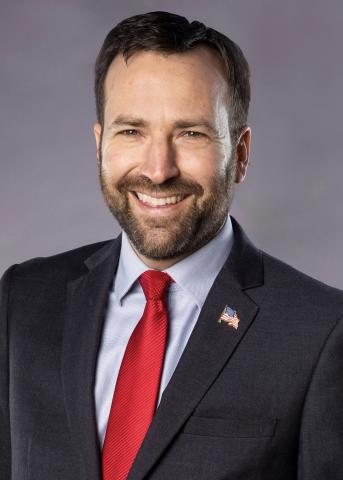
Photo of Ben Allen
D California Senate · District 24

Sen. Ben Allen

Compare
Total votes
25,548
all sessions
Attendance
94%
1,112 missed
Lower than 88% of chamber peers
With party
99%
of cast votes
Near the chamber average
Bipartisan score
0%
crosses aisle rarely
Near the chamber average
Sponsored
478
bills & resolutions
Near the chamber average
Committees
13
assignments
478 bills and resolutions

Sponsored bills

Total
478
Primary
137
Co-sponsor
341
This page
478
matching current filters
Co-sponsor SJR 16
Signed into law · California Senate · Co-sponsor
Relative to the Chuckwalla National Monument, the Joshua Tree National Monument, and the Kw'tsán National Monument.

This measure would urge the President of the United States to use the federal Antiquities Act of 1906 to establish the Chuckwalla National Monument, to establish a National Park Service-managed Joshua Tree National Monument adjacent to Joshua Tree National Park, and to establish the Kw'tsán National Monument.

Signed into law Sep 10, 2024 1 co-sponsor
Primary SCR 161
Signed into law · California Senate · Lead sponsor
Relative to the First Continental Congress.

This measure would commemorate the 250th anniversary of the First Continental Congress and encourage and all citizens to reflect on the legacy of the First Continental Congress and honor the sacrifices made by the delegates who stood up for the principles of liberty and self-governance.

Signed into law Sep 5, 2024 0 co-sponsors
Primary SB 1461
Passed · California Senate · Lead sponsor
State of emergency and local emergency: landslide.

Existing law, the California Emergency Services Act, authorizes the Governor to declare a state of emergency, and local officials and local governments to declare a local emergency, when specified conditions of disaster or extreme peril to the safety of persons and property exist, and authorizes the Governor or the appropriate local government to exercise certain powers in response to that emergency. Existing law defines the term "state of emergency" and "local emergency" to mean a duly proclaimed existence of conditions of disaster or of extreme peril to the safety of persons and property within the state caused by, among other things, fire, storm, riot, or cyberterrorism. This bill would additionally include a landslide among those causes of the conditions constituting a state of emergency or local emergency.

Passed Aug 31, 2024 0 co-sponsors
Co-sponsor SB 683
Passed · California Senate · Co-sponsor
Hotels and short-term rentals: advertised rates: mandatory fees.

The False Advertising Law (FAL) makes it a crime for a person or a firm, corporation, or association, or any employee thereof, to engage in specified false or misleading advertising practices. The Unfair Competition Law (UCL) makes various unfair competition practices unlawful, including any unlawful, unfair, or fraudulent business act or practice and unfair, deceptive, untrue, or misleading advertising. Existing law requires every keeper of a hotel, inn, or lodginghouse to post a statement of rates by the day for lodging and prohibits collection of a sum greater than that amount, as specified. This bill would, beginning July 1, 2024, require a person or an internet website, application, or other similar centralized platform that advertises a hotel room rate or short-term rental rate before the public in this state, or from this state before the public in any state, to include in the advertised hotel room rate or short-term rental rate all mandatory fees, as defined, that will be charged in order for the consumer to stay in the hotel room or short-term rental and include in the total price to be paid, before the consumer reserves the stay, all taxes and fees imposed by a government on the stay. This bill would authorize certain public attorneys, including the Attorney General, to bring an enforcement action against a person or an internet website, application, or other similar centralized platform that knew or should have known that it has advertised a hotel room rate or short-term rental rate in violation of these provisions, and would require a court to impose a civil penalty of not more than $10,000 for each violation after consideration of specified factors.

Passed Aug 30, 2024 1 co-sponsor
Co-sponsor AB 2236
Passed · California Assembly · Co-sponsor
Solid waste: recycled paper bags: standards: carryout bag prohibition.

Existing law prohibits a store, as defined, from providing a single-use carryout bag to a customer at the point of sale, with specified exceptions, including an exemption for bags used to contain unwrapped food. Existing law defines a "single-use carryout bag" as a bag made of plastic, paper, or other material that is provided by a store to a customer at the point of sale and that is not a recycled paper bag or a reusable grocery bag that meets specified requirements, including that the bag be made by a certified reusable grocery bag producer and meets specified requirements with regard to the bag's durability, material, labeling, heavy metal content, and, with regard to reusable grocery bags made from plastic film, recycled material content. Existing law prohibits a producer of reusable grocery bags made from plastic film from selling or distributing those bags unless the producer is certified by a third-party certification entity, and provides proof of that certification and a certification fee to the Department of Resources Recycling and Recovery, as specified. Existing law also prohibits a store from selling or distributing a recycled paper bag at the point of sale unless the store makes that bag available for purchase for not less than $0.10. Existing law defines "recycled paper bag," in part, as a paper carryout bag that contains a minimum of 40% postconsumer recycled materials, except as provided, and meets other requirements. Existing law allows a retail establishment to voluntarily comply with these requirements, if the retail establishment provides the department with irrevocable notice. This bill would, commencing January 1, 2026, revise and recast those provisions to, among other things, recast the definition of a "single-use carryout bag" to a "carryout bag," and would revise the definition to mean a bag made of plastic, paper, or other material that is provided by a store to a customer at the point of sale for the purpose of carrying purchased goods and that is not a recycled paper bag. The bill would create a carryout bag exception to include a bag provided to a customer before the customer reaches the point of sale, that is designed to protect a purchased item from damaging or contaminating other purchased items in a checkout bag, or to contain an unwrapped food item, as specified. The bill would revise the definition of "recycled paper bag" to require it be made from a minimum of 50% postconsumer recycled materials on and after January 1, 2028, without exception. The bill would also prohibit a store from providing, distributing, or selling a carryout bag to a customer at the point of sale, except as provided. The bill would also repeal the provisions relating to standards for and the certification of reusable grocery bags, and would repeal a provision relating to certain obsolete at-store recycling program requirements. The bill would make related legislative findings and declarations and would make related conforming changes.


Passed Aug 29, 2024 1 co-sponsor
Primary SB 1427
Signed into law · California Senate · Lead sponsor
Marriage: joint petition for dissolution of marriage.

Existing law requires a proceeding for dissolution of marriage or for legal separation of the parties to be commenced by filing a petition containing specific information, including the date of marriage and the date of separation. Existing law requires a party to serve a copy of the petition with a copy of a summons upon the other party and requires the other party to respond in a specified time and manner. Existing law requires a proceeding for summary dissolution of marriage, which can only be used in specified limited situations, to be commenced by filing a joint petition, as prescribed. A joint petition does not require service or response. Existing law authorizes a party to a marriage to revoke a joint petition for summary dissolution and terminate the proceeding, as specified. This bill would, commencing January 1, 2026, establish a process by which parties to a marriage that does not meet the requirements for summary dissolution may file a joint petition for dissolution of marriage or for legal separation, as specified. Among other things, the bill would require parties in a joint petition proceeding for dissolution of marriage or for legal separation to provide specific facts, including the age and date of birth of each child of the marriage, if any. The bill would, upon the filing of a joint petition with the court in a form approved by the Judicial Council, deem that the joint petition was served on both parties.

Signed into law Aug 19, 2024 0 co-sponsors
Primary SB 1417
Signed into law · California Senate · Lead sponsor
Transit districts: prohibition orders.

Existing law prohibits certain acts by a person with respect to the property, facilities, or vehicles of a transit district. A violation is generally an infraction punishable by a fine not exceeding $75 on a first offense, or on a subsequent offense by a fine not exceeding $250 or by community service. Existing law authorizes the Fresno Area Express, the Los Angeles County Metropolitan Transportation Authority, the Sacramento Regional Transit District, the San Francisco Bay Area Rapid Transit District, and the Santa Clara Valley Transportation Authority to issue a prohibition order to any person cited for committing one or more of certain prohibited acts in specified transit facilities. Existing law prohibits a person subject to the prohibition order from entering the property, facilities, or vehicles of the transit district for specified periods of time. Existing law establishes notice requirements in that regard and provides for initial and administrative review of the order. This bill would provide that the Santa Monica Department of Transportation is also a transit district for purposes of these provisions regarding prohibition orders.

Signed into law Aug 19, 2024 0 co-sponsors
Co-sponsor SB 1416
Signed into law · California Senate · Co-sponsor
Sentencing enhancements: sale, exchange, or return of stolen property.

Existing law defines types of theft, including petty theft, grand theft, and shoplifting. Existing law also defines the crime of burglary, which consists of entering specified buildings, places, or vehicles with the intent to commit grand or petty theft or a felony. This bill would, until January 1, 2030, create sentencing enhancements for selling, exchanging, or returning for value, or attempting to sell, exchange, or return for value, any property acquired through one or more acts of shoplifting, theft, or burglary from a retail business, if the property value exceeds specified amounts. The bill would additionally make these enhancements apply to any person acting in concert with another person to violate these provisions. By adding new sentencing enhancements, this bill would impose a state-mandated local program. The California Constitution requires the state to reimburse local agencies and school districts for certain costs mandated by the state. Statutory provisions establish procedures for making that reimbursement. This bill would provide that no reimbursement is required by this act for a specified reason.

Signed into law Aug 16, 2024 1 co-sponsor
Co-sponsor SB 905
Signed into law · California Senate · Co-sponsor
Crimes: theft from a vehicle.

Existing law defines the crime of burglary to include entering a vehicle when the doors are locked with the intent to commit grand or petit larceny or a felony. Existing law makes the burglary of a vehicle punishable as a misdemeanor or a felony. This bill would make forcibly entering a vehicle, as defined, with the intent to commit a theft or a felony therein a crime punishable by imprisonment in a county jail for a period not to exceed one year or imprisonment in a county jail for 16 months, or 2 or 3 years. By creating a new crime, this bill would impose a state-mandated local program. Existing law prohibits the taking of the personal property of another, as specified, prohibits removing any part of a vehicle without the consent of the owner, and prohibits the possession or receipt of stolen property, as specified. A violation of these prohibitions is punishable as either a misdemeanor or a felony. This bill would make it a crime for a person to unlawfully possess property that was acquired through one or more acts of theft from a vehicle, unlawful entry of a vehicle, burglary of a locked vehicle, or vehicle tampering, if the property is not possessed for personal use and the person has the intent to sell or exchange the property, or the intent to act with another person to sell or exchange the property, and the value of the possessed property exceeds $950. The bill would, for the purpose of determining the value, allow the aggregation of the value of other illegally obtained property possessed by the person within the past 2 years. The bill would make this crime punishable as a misdemeanor or a felony. By creating a new crime, this bill would impose a state-mandated local program. The California Constitution requires the state to reimburse local agencies and school districts for certain costs mandated by the state. Statutory provisions establish procedures for making that reimbursement. This bill would provide that no reimbursement is required by this act for a specified reason.

Signed into law Aug 16, 2024 1 co-sponsor
Showing 221 to 230 of 478 bills
Previous 1 … 22 23 24 … 48 Next