

Passed Jun 29, 2022
1 co-sponsor
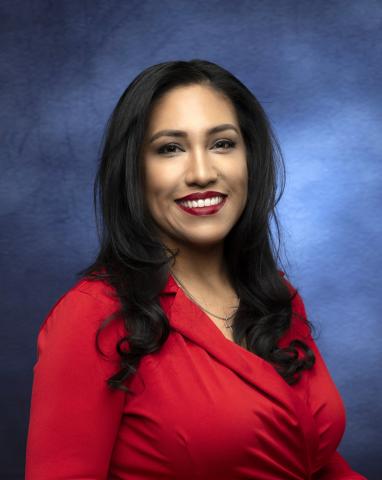
R
California Senate
·
District 23
Sen. Suzette Valladares
Total votes
9,120
all sessions
Attendance
87%
932 missed
Lower than 90% of chamber peers
With party
98%
of cast votes
Lower than 78% of chamber peers
Bipartisan score
1%
crosses aisle rarely
Higher than 77% of chamber peers
Sponsored
626
bills & resolutions
Near the chamber average
Committees
11
assignments
626 bills and resolutions
Sponsored bills
Total
626
Primary
71
Co-sponsor
555
This page
626
matching current filters
Universal Preschool Act.
Existing law, the Early Education Act, requires the Superintendent of Public Instruction, to, among other things, provide an inclusive and cost-effective preschool program. Existing law requires the Superintendent to develop standards for the implementation of high-quality preschool programs. This bill would rename the Early Education Act as the Universal Preschool Act, and would revise and recast the act to, among other things, require the State Department of Education, in consultation with the State Department of Social Services, to administer the universal preschool program. The bill would require the Superintendent and the Director of Social Services to convene a statewide coordination council to develop, among other things, goals, guidelines, and best practices to be used at a local level to implement a universal preschool program, as provided. The bill would require the Superintendent, in consultation with the Director of Social Services, to develop standards for the implementation of high-quality preschool programs in all settings, including, among other settings, transitional kindergarten. The act establishes a standard reimbursement rate for both the part- and full-day preschool programs, as provided. The act defines the term "attendance" for purposes of this reimbursement to include excused absences by children because of illness, quarantine, illness or quarantine of their parent, family emergency, or to spend time with a parent or other relative as required by court of law or that is clearly in the best interest of the child. This bill would require the State Department of Education, in consultation with the State Department of Social Services, to instead ensure the standard reimbursement rate provides at least a living wage for all universal preschool site supervisors, teachers, and staff. The bill would delete the definition of "attendance" for purposes of this reimbursement. The Early Education Act establishes eligibility requirements, including income eligibility requirements, for the part- and full-day preschool programs. The act establishes a fee schedule for families receiving preschool services. This bill would delete the requirements relating to eligibility and the fee schedule, and instead would provide that the universal preschool program shall be free, inclusive, and available to all 3- and 4-year-olds. The Early Education Act provides that the same fee as that prescribed for a credential shall be charged for either the issuance or renewal of each child development permit authorizing service in the supervision and instruction of children in child development programs or authorizing service as a supervisor in a program. This bill would instead provide that no fees shall be charged for either the issuance or renewal of each child development permit authorizing service in the supervision and instruction of children in child development programs or authorizing service as a supervisor in a program. The bill would require the State Department of Education, in consultation with the State Department of Social Services, to offer financial support to current and aspiring universal preschool site supervisors, teachers, and other support staff in obtaining required credentials and degrees to work in the preschool classroom or setting, as provided. This bill would make other related changes to the administration of the newly named Universal Preschool Act. Existing law requires childcare resource and referral programs to provide specified services, including the establishment of a referral process that responds to parental need for information, as provided. This bill would require the Director of Social Services, in partnership with the Superintendent, to expand existing childcare resource and referral services to include navigation, referral, and enrollment services for the universal preschool program, as provided. This bill would provide that the above described changes to law would become operative only upon an appropriation of funds by the Legislature for these purposes in the annual Budget Act or another statute.
Passed Jun 28, 2022
1 co-sponsor
Relative to Firefighter Mental Health Awareness Week.
This measure would proclaim the week of May 23 through May 27, inclusive, as Firefighter Mental Health Awareness Week.
Signed into law Jun 28, 2022
1 co-sponsor
Relative to California Fairgrounds Appreciation Month.
This measure would designate the month of May 2022 as California Fairgrounds Appreciation Month and would extend the Legislature's warmest regards and appreciation to the thousands of volunteers, fair directors, staff, business supporters, and sponsors who keep the network of California state fairgrounds strong, vibrant, relevant, and successful.
Signed into law Jun 28, 2022
1 co-sponsor
Relative to California Nonprofits Day.
This measure would declare June 8, 2022, as California Nonprofits Day in recognition of the importance of nonprofit organizations to the economy and well-being of this state.
Signed into law Jun 28, 2022
1 co-sponsor
Relative to military behavioral health care.
This measure would urge the President, the Congress of the United States, and the United States Department of Veterans Affairs to take all measures to ensure that military veterans can access necessary treatment for mental health and substance abuse disorders in a timely manner.
Signed into law Jun 28, 2022
1 co-sponsor
Relative to Missing and Murdered Indigenous People Awareness Month.
This measure would designate the month of May 2022 as Missing and Murdered Indigenous People Awareness Month in California.
Signed into law Jun 24, 2022
1 co-sponsor
Relative to Cystic Fibrosis Awareness Month.
This measure would proclaim the month of May 2022 as Cystic Fibrosis Awareness Month.
Signed into law Jun 24, 2022
1 co-sponsor
Prohibited investments and contracts: Russia and Belarus.
(1) The California Constitution grants the retirement board of a public employee retirement system plenary authority and fiduciary responsibility for investment of moneys and administration of the retirement fund and system. These provisions qualify this grant of powers by reserving to the Legislature the authority to prohibit investments if it is in the public interest and the prohibition satisfies standards of fiduciary care and loyalty required of a retirement board. Existing law prohibits the boards of administration of the Public Employees' Retirement System and the State Teachers' Retirement System from making investments in certain countries and in thermal coal companies, as specified, subject to the boards' plenary authority and fiduciary responsibility for investment of moneys and administration of the systems. This bill, except as specified, would prohibit the boards of specified state and local public retirement systems from making additional or new investments in prohibited companies, as defined, domiciled in Russia or Belarus, as defined, companies that the United States government has designated as complicit in the aggressor countries', as defined, war in Ukraine, or companies that supply military equipment to the aggressor countries, and to liquidate the investments of the board in those companies, as specified. The bill would also require the board, on or before January 1, 2023, and every year thereafter, to file a specified report with the Legislature. The bill would repeal these provisions on specified triggering events. By requiring the boards of local public retirement systems to take specified actions, this bill would impose a state-mandated local program. (2) Existing law specifies the duties of the Treasurer, which include receiving and keeping in the vaults of the State Treasury or depositing in banks or credit unions all moneys belonging to the state, and, except as specified, receiving and keeping in the vaults of the State Treasury or depositing for safekeeping with any federal reserve bank or any branch thereof, or with any trust company or the trust department of any state or national bank located in a city designated as a reserve or central reserve city by the Board of Governors of the Federal Reserve System, bonds and other securities or investments belonging to the state. This bill, except as specified, would prohibit the Treasurer from making additional or new investments or renewing existing investments of state moneys in any investment vehicle in the government of Russia or the government of Belarus that meets certain conditions, or in or from a Russian or Belarusian financial institution currently under sanctions imposed by the United States, as defined and specified. The bill would repeal these provisions on specified triggering events. (3) Existing law specifies how money received into the treasury must be credited and how those state funds are to be used. Existing law prohibits state funds from being used to reimburse a state contractor for costs incurred to assist, promote, or deter union organizing, as defined and specified. Existing law also prohibits state trust moneys from being used to make additional or new investments or to renew existing investments in business firms that engage in discriminatory practices in further of or in compliance with the Arab League's economic boycott of Israel, as defined and specified. This bill, except as specified, would prohibit a state agency, as defined, from making additional or new investments or renewing existing investments of state moneys in any investment vehicle in the government of Russia or the government of Belarus that meets certain conditions, or in or from Russian or Belarusian financial institutions currently under sanctions imposed by the United States, and would require a state agency to liquidate those investments. The bill would also require a state agency to file a specified report with the Legislature and the Governor. The bill would urge companies operating in California and the Regents of the University of California to divest and separate themselves from the government of Russia, Russian financial institutions, Russian businesses, the government of Belarus, Belarusian financial institutions, and Belarusian businesses, and would request companies doing business in California to report their investments in and contracts with the government of Russia, Russian financial institutions, Russian businesses, the government of Belarus, Belarusian financial institutions, and Belarusian businesses, as specified. The bill would repeal these provisions on specified triggering events. (4) Existing law authorizes state agencies to contract for goods, information technology, or services with certain suppliers, as specified. Existing law also makes companies in Sudan involved in certain activities ineligible to bid or submit a proposal for, and forbids them from bidding on or submitting a proposal for, a contract with a state agency for goods or services, as specified. This bill, except as specified, would make a company that conducts business with the government of Russia or the government of Belarus ineligible to bid or submit a proposal for, and would forbid that company from bidding on or submitting a proposal for, a contract with a state agency for goods or services, as defined and specified. The bill would require a state agency to require a company that submits a bid or proposal with respect to a contract for goods or services to certify that the company is not a scrutinized company, as prescribed. The bill would, among other things, make a company that submits a false certification under these provisions liable for a civil penalty, and would require the Department of General Services to report the company to the Attorney General, who would be required to determine whether to bring a civil action against the company, as specified. The bill would repeal these provisions on specified triggering events. (5) The California Constitution requires the state to reimburse local agencies and school districts for certain costs mandated by the state. Statutory provisions establish procedures for making that reimbursement. This bill would provide that, if the Commission on State Mandates determines that the bill contains costs mandated by the state, reimbursement for those costs shall be made pursuant to the statutory provisions noted above. (6) This bill would declare that it is to take effect immediately as an urgency statute.
Passed Jun 21, 2022
1 co-sponsor
Relative to AAPI Day Against Bullying and Hate.
This measure would proclaim May 18, 2022, as AAPI Day Against Bullying and Hate.
Signed into law Jun 21, 2022
1 co-sponsor
Ask Maddy
·
AI policy assistant
Ask Maddy about Suzette Valladares
Scope: CA
Hi! I can help you understand Suzette Valladares's legislative record. What would you like to know?
Try one of these
i
Maddy answers using official bill text and legislative records. Always verify before sharing.
Sources cited inline