

Passed Aug 25, 2022
1 co-sponsor
R
California Senate
·
District 23
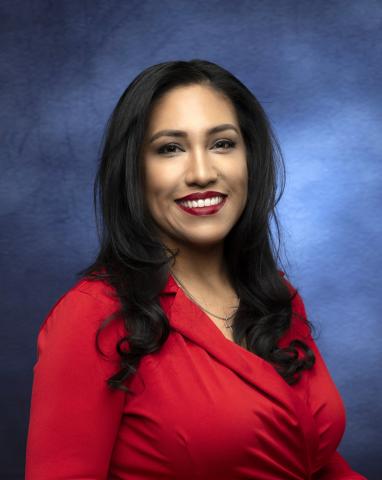
Sen. Suzette Valladares
Total votes
9,120
all sessions
Attendance
87%
932 missed
Near the chamber average
With party
98%
of cast votes
Near the chamber average
Bipartisan score
1%
crosses aisle rarely
Near the chamber average
Sponsored
626
bills & resolutions
Near the chamber average
Committees
11
assignments
626 bills and resolutions
Sponsored bills
Total
626
Primary
71
Co-sponsor
555
This page
626
matching current filters
Passed Aug 25, 2022
1 co-sponsor
Passed Aug 25, 2022
1 co-sponsor
Passed Aug 24, 2022
1 co-sponsor
Freight transportation: federal funding.
This measure would request the Congress of the United States to pass legislation and the President of the United States to sign into law a statute providing for, and the United States Department of Transportation and all federal agencies implementing any federal statute or regulation providing federal funding for ports or multimodal freight transportation to provide, a fair allocation of federal transportation funding for freight projects in California, specifically, and on the Pacific Coast of the United States, generally, based on the volume of containerized freight moved.
Signed into law Aug 23, 2022
1 co-sponsor
Relative to California Native American Day and the California Indian Cultural Awareness Conference.
This measure would recognize the importance of California Native American Day, celebrated this year on September 23, 2022, and the annual California Indian Cultural Awareness Conference, to the enhancement of awareness of California Indian culture.
Passed Aug 23, 2022
1 co-sponsor
Passed Aug 23, 2022
0 co-sponsors
Psychology: supervision.
The Psychology Licensing Law establishes the Board of Psychology to license and regulate the practice of psychology. Existing law requires an applicant for licensure as a psychologist to have engaged in supervised professional experience under the direction of a licensed psychologist, or under suitable alternative supervision, for at least 2 years, at least one year of which is required to occur after the applicant has been awarded the qualifying doctoral degree. Existing law authorizes a registered psychological associate to perform psychological functions in preparation for licensure as a psychologist under specified conditions, including that the registered psychological associate is supervised by a licensed psychologist. This bill would authorize the supervision of an applicant for licensure as a psychologist, and of a registered psychological associate, to be provided in real time, which is defined as through in-person or synchronous audiovisual means, in compliance with federal and state laws related to patient health confidentiality. This bill would declare that it is to take effect immediately as an urgency statute.
Signed into law Aug 22, 2022
1 co-sponsor
Neighborhood electric vehicles: County of Los Angeles.
Existing law defines "low-speed vehicle" for purposes of the Vehicle Code as a motor vehicle with 4 wheels that is capable of a minimum speed of 20 miles per hour and a maximum speed of 25 miles per hour on a paved level surface and that has a gross vehicle weight rating of less than 3,000 pounds. Existing law imposes certain restrictions on the use of low-speed vehicles on public streets and highways, and generally requires an operator of a low-speed vehicle to have a driver's license. A low-speed vehicle is also known as a neighborhood electric vehicle (NEV) . A violation of the Vehicle Code is an infraction, unless otherwise specified. Existing law authorizes certain local agencies to establish a NEV transportation plan subject to certain requirements. A person operating a NEV in a plan area in violation of certain provisions is guilty of an infraction punishable by a fine not exceeding $100. This bill would authorize the County of Los Angeles or any city in the county to establish a similar NEV transportation plan, as specified, subject to the same penalties. The bill would require that the transportation plan have received a prior review and the comments of the Southern California Association of Governments (SCAG) and any agency having traffic law enforcement responsibilities in an entity included in the plan area. The bill, if the County of Los Angeles or a city in the county adopts a NEV transportation plan, would require the entity adopting the plan to submit a report, in consultation with SCAG, the department, the Department of the California Highway Patrol, and any applicable local law enforcement agency, as specified, to the Legislature within 2 years of the date the NEV transportation plan is adopted. The bill would repeal these provisions on January 1, 2040. Because the bill would create a new crime, it would impose a state-mandated local program. The California Constitution requires the state to reimburse local agencies and school districts for certain costs mandated by the state. Statutory provisions establish procedures for making that reimbursement. This bill would provide that no reimbursement is required by this act for a specified reason.
Signed into law Aug 22, 2022
1 co-sponsor
Passed Aug 22, 2022
1 co-sponsor
Ask Maddy
·
AI policy assistant
Ask Maddy about Suzette Valladares
Scope: california
Hi! I can help you understand Suzette Valladares's legislative record. What would you like to know?
Try one of these
i
Maddy answers using official bill text and legislative records. Always verify before sharing.
Sources cited inline