

Existing law requires the State Air Resources Board to adopt and implement motor vehicle fuel specifications for the control of air contaminants and sources of air pollution. Existing law prohibits the state board from adopting any regulation that establishes a specification for motor vehicle fuel unless that regulation, and a multimedia evaluation conducted by affected agencies and coordinated by the state board, are reviewed by the California Environmental Policy Council. This bill would, notwithstanding that prohibition, authorize blends of gasoline containing 10.5% to 15% ethanol by volume to be sold in the state for use as a transportation fuel until (1) the California Environmental Policy Council completes its review of those blends and (2) the state board either adopts a regulation establishing a specification for those blends or posts an assessment on its internet website demonstrating that it is not possible for a regulation establishing a specification for those blends to meet specified requirements. This bill would declare that it is to take effect immediately as an urgency statute.
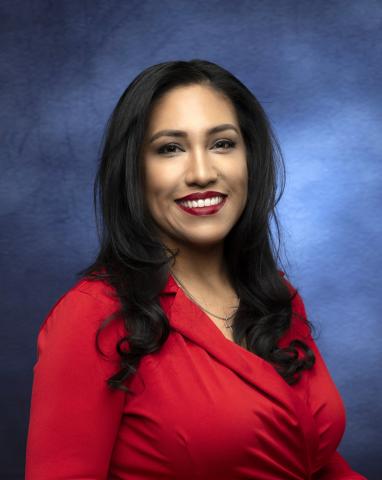
Sen. Suzette Valladares
Sponsored bills
Existing sales and use tax laws, among other things, impose a tax on retailers measured by the gross receipts from their sales of tangible personal property sold at retail in this state. The Sales and Use Tax Law makes certain sellers of tangible personal property consumers, and not retailers, of the tangible personal property they sell, including, until January 1, 2026, an all-volunteer fire department, as defined, if the profits are used solely and exclusively in furtherance of the purposes of the all-volunteer fire department, as prescribed. This bill would extend the sunset described above until January 1, 2031. Existing law requires any bill authorizing a new tax expenditure to contain, among other things, specific goals, purposes, and objectives that the tax expenditure will achieve, detailed performance indicators, and data collection requirements. The bill also would include additional information required for any bill authorizing a new tax expenditure. The Bradley-Burns Uniform Local Sales and Use Tax Law authorizes counties and cities to impose local sales and use taxes in conformity with the Sales and Use Tax Law, and existing laws authorize districts, as specified, to impose transactions and use taxes in accordance with the Transactions and Use Tax Law, which generally conforms to the Sales and Use Tax Law. Amendments to the Sales and Use Tax Law are automatically incorporated into the local tax laws. Existing law requires the state to reimburse counties and cities for revenue losses caused by the enactment of sales and use tax exemptions. This bill would provide that, notwithstanding Section 2230 of the Revenue and Taxation Code, no appropriation is made and the state shall not reimburse any local agencies for sales and use tax revenues lost by them pursuant to this bill. This bill would take effect immediately as a tax levy.
Maddy summarySCR 95 is a ceremonial resolution that would establish September 20, 2025, and every September 20 thereafter, as "Soju Day" in the state. It does not create new laws or regulations, nor does it affect any specific individuals or groups. The resolution solely designates an annual date for recognition and celebration. This is purely symbolic, with no concrete policy changes or practical impact beyond the ceremonial observance.
Maddy summarySCR 85 designates September 20, 2025, as Latino Veterans Day. This ceremonial resolution directly recognizes Latino veterans for their military service. The bill does not create new benefits or policies; it simply formally designates a date for commemoration. The measure is purely symbolic, aiming to honor this group's contributions through official recognition.
This measure would proclaim September 4, 2025, as Taekwondo Day in California and encourage all residents to recognize and celebrate the positive impact of Taekwondo on individuals, families, and communities throughout the state.
This measure would declare October 28, 2025, as First Responders' Day and would urge all Californians to observe and promote the day with appropriate ceremonies and activities that promote awareness of the contributions of first responders in California.
This measure would proclaim the month of October 2025 as California Firefighter Appreciation Month and October 4, 2025, as California Firefighters Memorial Day.
Maddy summarySCR 104 proclaims October 2025 and each subsequent October as National Domestic Violence Awareness Month. This resolution does not create new laws, allocate funding, or impose requirements on any group. It serves as a formal legislative recognition to promote public awareness about domestic violence and encourage community efforts during October. The measure aims to support victims and prevent domestic violence through heightened visibility and educational activities.
Maddy summaryACR 70 designates September 2025 as Suicide Prevention Awareness Month within the state. This resolution does not create new laws or allocate funding; it is a symbolic designation to highlight suicide prevention efforts. The bill directly affects state agencies, community organizations, and the public by encouraging awareness activities during that month. It has no direct impact on specific individuals or groups beyond promoting the designated month for suicide prevention focus.
The California Environmental Quality Act (CEQA) requires a lead agency, as defined, to prepare, or cause to be prepared, and certify the completion of an environmental impact report on a project that it proposes to carry out or approve that may have a significant effect on the environment or to adopt a negative declaration if it finds that the project will not have that effect. CEQA also requires a lead agency to prepare a mitigated negative declaration for a project that may have a significant effect on the environment if revisions in the project would avoid or mitigate that effect and there is no substantial evidence that the project, as revised, would have a significant effect on the environment. If a lead agency determines that a project will have a significant transportation impact, existing law authorizes the lead agency to mitigate the transportation impact to a less than significant level by helping to fund or otherwise facilitating housing or related infrastructure projects, including by contributing an amount, to be determined pursuant to guidance issued by the Office of Land Use and Climate Innovation, to the Transit-Oriented Development Implementation Fund for purposes of the Transit-Oriented Development Implementation Program. Existing law authorizes the deposit of those contributions into the fund beginning on or before July 1, 2026, as determined by the Department of Housing and Community Development, and makes those moneys available to the department, upon appropriation by the Legislature, for the purpose of awarding funding for affordable housing or related infrastructure projects under the program in accordance with specified priorities. On or before July 1, 2026, and at least once every 3 years thereafter, existing law requires the office, in consultation with other state agencies, to issue guidance related to the implementation of these provisions, as provided. Existing law makes related findings and declarations. This bill would require a contribution to the fund to be deemed full and complete mitigation for that portion of the project's significant transportation impact mitigated by the contribution to the fund and a legally sufficient mitigation measure under CEQA. The bill would authorize the deposit of those contributions into the fund beginning on the date of the issuance of the initial guidance by the office. The bill would make additional related findings and declarations.