Existing law requires the State Department of Health Care Services to license and regulate alcohol or drug abuse recovery or treatment facilities serving adults. Existing law provides that an alcohol or other drug recovery or treatment facility that serves 6 or fewer persons shall be considered a residential use of property for certain purposes, and that the residents and operators of the facility shall be considered a family for the purposes of any law or ordinance that relates to the residential use of property. This bill would make a technical, nonsubstantive change to these provisions.
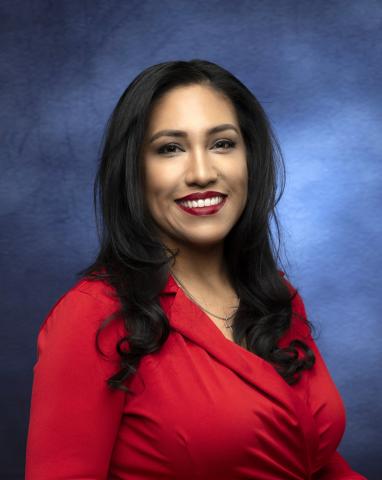
Sen. Suzette Valladares
Sponsored bills
Existing law makes it unlawful to dump waste matter in certain locations, such as upon a public or private highway or road, upon private property without the consent of the owner, or in or upon a public park or other public property, as specified. Existing law also makes it unlawful to place, deposit, or dump rocks, concrete, asphalt, or dirt in certain locations, as specified. A person violating these provisions is guilty of an infraction, as specified. Existing law makes a violation of these provisions in commercial quantities, as defined, a misdemeanor punishable by imprisonment in a county jail and by a fine, as specified. This bill would make technical, nonsubstantive changes to these provisions.
(1) Existing property tax law, except as provided, establishes a rebuttable presumption regarding the burden of proof in favor of a taxpayer or assessee who has supplied the required information to the assessor in an administrative hearing involving, among other things, the imposition of a tax on, or an assessment of, an owner-occupied single-family dwelling, as defined. This bill would, instead, establish a rebuttable presumption, as described above, in an administrative hearing involving, among other things, the imposition of a tax on, or assessment of, residential real property. The bill would define residential real property to mean real property improved with one or more units used or intended for human habitation, including single-family residences, condominiums, cooperative units, duplexes, and multifamily residential property with fewer than 4 units, and any land and appurtenant improvements thereon. (2) Existing property tax law prohibits a reduction in an assessment on the local roll from being made unless the party affected or the party's agent makes and files with the county board a verified, written application showing the facts claimed to require the reduction and the applicant's opinion of the full value of the property. This bill would prohibit an assessor, tax collector, or auditor from charging or collecting a fee for that application for homes valued less than $2,500,000. (3) Existing property tax law, subject to certain exceptions, makes the applicant's opinion of value, as reflected on an application for reduction in assessment of property, the value upon which taxes are to be levied for the tax year or tax years covered by the application if the county board fails to hear evidence and fails to make a final determination on the application within 2 years of the timely filing of the application. This bill would reduce that time period to hear evidence and to make a final determination to within 6 months of the timely filing of the application. The bill would also make conforming changes. Existing property tax law prohibits a reduction in assessment reflecting the applicant's opinion of value from being made until 2 years after the close of the filing period during which the timely application was filed. Existing property law, notwithstanding the 2-year time period to hear evidence and make a final determination described above, or any other law, retroactively extends the 2-year deadline by which a county board is required to render a final determination on a qualified application, as defined, until December 31, 2021, as provided. This bill would remove those provisions. (4) By increasing the duties of local officials, this bill would impose a state-mandated local program. (5) This bill would include findings that changes proposed by this bill address a matter of statewide concern and, therefore, apply to all counties, including charter counties. (6) The California Constitution requires the state to reimburse local agencies and school districts for certain costs mandated by the state. Statutory provisions establish procedures for making that reimbursement. This bill would provide that no reimbursement is required by this act for a specified reason.

Maddy summaryThis resolution designates February 6, 2026, as "Wear Red Day" in California to raise public awareness about heart health, aligning with the national Heart Disease Awareness initiative. It does not create new laws or requirements but formally recognizes the day for voluntary public observance by California residents. The measure is ceremonial and procedural, solely intended to highlight heart health awareness through state-level acknowledgment.
Existing law, the Motor Vehicle Fuel Tax Law, imposes a tax upon each gallon of motor vehicle fuel removed from a refinery or terminal rack in this state, entered into this state, or sold in this state, at a specified rate per gallon. Existing unfair competition laws establish a statutory cause of action for unfair competition, including any unlawful, unfair, or fraudulent business act or practice and unfair, deceptive, untrue, or misleading advertising and acts prohibited by false advertisement laws. This bill would suspend the imposition of the tax on motor vehicle fuels for one year. The bill would require that all savings realized based on the suspension of the motor vehicle fuels tax by a person other than an end consumer, as defined, be passed on to the end consumer, and would make the violation of this requirement an unfair business practice, in violation of unfair competition laws, as provided. The bill would require a seller of motor vehicle fuels to provide a receipt to a purchaser that indicates the amount of tax that would have otherwise applied to the transaction. This bill would also direct the Controller to transfer a specified amount from the General Fund to the Motor Vehicle Fuel Account in the Transportation Tax Fund. By transferring General Fund moneys to a continuously appropriated account, this bill would make an appropriation. This bill would declare that it is to take effect immediately as an urgency statute.
The California Environmental Quality Act (CEQA) requires a lead agency, as defined, to prepare, or cause to be prepared, and certify the completion of, an environmental impact report on a project that it proposes to carry out or approve that may have a significant effect on the environment or to adopt a negative declaration if it finds that the project will not have that effect. CEQA also requires a lead agency to prepare a mitigated negative declaration for a project that may have a significant effect on the environment if revisions in the project would avoid or mitigate that effect and there is no substantial evidence that the project, as revised, would have a significant effect on the environment. CEQA, until January 1, 2040, exempts from its requirements certain projects for the improvement, institution, or increase of passenger rail service, including the maintenance, construction, or rehabilitation of stations, terminals, or existing operations facilities, which will be exclusively used by zero-emission trains or certified Tier 4 or cleaner rolling stock or locomotives, as provided. CEQA requires, for purposes of this exemption, that the project be located entirely within an existing rail right-of-way or existing highway right-of-way, as provided. This bill would instead eliminate the condition that the public project be exclusively used by zero-emission trains or certified Tier 4 or cleaner rolling stock or locomotives, thereby expanding the scope of the exemption. The bill would require, for purposes of the exemption, the mainline rail of the project, instead of the whole project, to be located entirely within an existing right-of-way or existing highway right-of-way. As part of the above-described exemption, CEQA prohibits a public project from being eligible for that exemption if used by certified Tier 4 or cleaner rolling stock or locomotives that are not zero-emission rolling stock or locomotives and the project is located in an air basin designated as a serious, severe, or extreme nonattainment area for particulate matter and ozone. This bill would instead authorize an otherwise ineligible project, as described above, to be eligible for the exemption if the project would provide daily passenger rail service between termini more than 5 miles apart where none exists as of January 1, 2027, and the rail service would run parallel to a state highway or interstate highway corridor. Because a lead agency would be required to determine whether a project qualifies for these expanded exemptions, the bill would impose a state-mandated local program. The California Constitution requires the state to reimburse local agencies and school districts for certain costs mandated by the state. Statutory provisions establish procedures for making that reimbursement. This bill would provide that no reimbursement is required by this act for a specified reason.

Maddy summarySCR 106 designates January 13, 2026, as Korean American Day within the state. This ceremonial resolution officially recognizes the contributions of Korean Americans to the state's cultural and social fabric. It affects state records and calendar designations, adding a specific date for commemoration. The bill became law on February 3, 2026, as Chapter 2 of the Statutes of 2026.
The California Global Warming Solutions Act of 2006 designates the State Air Resources Board as the state agency charged with monitoring and regulating sources of emissions of greenhouse gases. The state board is required to adopt rules and regulations to achieve the maximum technologically feasible and cost-effective greenhouse gas emissions reductions to ensure that the statewide greenhouse gas emissions are reduced to at least 40% below the statewide greenhouse gas emissions limit, as defined, no later than December 31, 2030. The act requires the state board to prepare and approve a scoping plan for achieving the maximum technologically feasible and cost-effective reductions in greenhouse gas emissions and to update the scoping plan at least once every 5 years. This bill would require the state board to include greenhouse gas emissions from wildlands and forest fires in the scoping plan.
Existing law, the California Community Care Facilities Act, provides for the licensing and regulation of community care facilities, including short-term residential therapeutic programs, by the State Department of Social Services, and defines a short-term residential therapeutic program as a residential facility licensed by the department and operated by any public agency or private organization that provides an integrated program of specialized and intensive care and supervision, services and supports, treatment, and short-term, 24-hour care and supervision to children that is trauma-informed. Existing law requires a short-term residential therapeutic program to prepare and maintain a current, written plan of operation that includes a program statement containing, among other things, a description of how the short-term residential therapeutic program will meet specified standards established by the department in collaboration with the State Department of Health Care Services. Existing law requires a short-term residential therapeutic plan to ensure the availability of licensed nursing staff, as specified. This bill would make technical, nonsubstantive changes to those provisions.
Existing law, the Knox-Keene Health Care Service Plan Act of 1975, provides for the licensure and regulation of health care service plans by the Department of Managed Health Care. Existing law requires a health care service plan to meet specified requirements, and requires a health care service plan contract to provide to subscribers and enrollees specified basic health care services. This bill would make technical, nonsubstantive changes to those provisions.