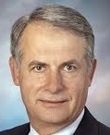
Photo of Bill Emmerson
R California Senate · District 23

Sen. Bill Emmerson

Compare
Total votes
18,837
all sessions
Attendance
81%
2,892 missed
Lower than 87% of chamber peers
With party
97%
of cast votes
Near the chamber average
Bipartisan score
2%
crosses aisle rarely
Near the chamber average
Sponsored
473
bills & resolutions
Higher than 80% of chamber peers
Committees
0
assignments
473 bills and resolutions

Sponsored bills

Total
473
Primary
140
Co-sponsor
333
This page
473
matching current filters
Co-sponsor SCR 82
Signed into law · California Senate · Co-sponsor
Relative to California veterans who served in Iraq or Afghanistan.

This measure would commemorate and honor the service and sacrifice of the members of the United States Armed Forces who supported the operations in Iraq, and their families, as the official combat mission in Iraq draws to a close. This measure would encourage mayors and communities across the State of California to honor veterans who served in Iraq and Afghanistan on November 11, 2012, in Veterans Day parades, ceremonies, and other displays of our state's gratitude for their service and sacrifice. This measure would also request that the Department of General Services work with appropriate 3rd parties to advise and oversee the creation of a memorial for the California veterans who fought and served in Iraq and, upon receiving donations from nonstate sources covering the design, construction, and maintenance costs and ensuring that the memorial is in the best interest of the State Capitol Park, erect that memorial, in accordance with California law, in the State Capitol Park. This measure would state the intent of the Legislature to enact future legislation authorizing the creation of a larger memorial commemorating and thanking those who served in both Iraq and Afghanistan.

Signed into law Aug 24, 2012 1 co-sponsor
Co-sponsor AB 391
Signed into law · California House · Co-sponsor
Secondhand dealers and pawnbrokers: electronic reporting.

(1) Existing law generally requires secondhand dealers and coin dealers, as defined, to report specified transactions involving tangible personal property, on forms provided or approved by the Department of Justice, to the local law enforcement agency where their businesses are located. Existing law defines "tangible personal property" for these purposes, and excludes from that definition, among other items, commercial grade ingots defined to include, among other items, 0.99 fine ingots of gold, silver, or platinum. This bill would revise the definition of commercial grade ingots to include 0.99 fine or finer ingots of gold, silver, palladium, or platinum. Under existing law, secondhand dealers and coin dealers are required to report the information described above using an electronic reporting system 12 months after the Department of Justice develops that system. This bill would eliminate the electronic filing requirements for coin dealers, and would instead require that secondhand dealers report this information using the single, statewide, uniform electronic reporting system on and after the date that the system is implemented, as specified. (2) Existing law requires a local law enforcement agency to issue a license to engage in the business of a secondhand dealer or pawnbroker to an applicant who meets designated criteria. Existing law authorizes the local licensing authority and the Department of Justice to charge an initial licensure fee and a renewal fee, as specified. This bill would require the Department of Justice to charge a licensure fee and a renewal fee of no more than $300, as specified. The bill would also require licensees issued a license before the effective date of this bill to pay an additional fee of no more than $288 for the purpose of funding the single, statewide, uniform electronic reporting system, with payment due within 120 days of the enactment of this bill. The bill would require that the fees assessed by the department be deposited in the Secondhand Dealer and Pawnbroker Fund, which the bill would create in the State Treasury. The bill would require that the money in the fund be used by the department, upon appropriation by the Legislature, for the purpose of paying for specified regulatory costs, including the cost of implementing, operating, and maintaining the single, statewide, uniform electronic reporting system. The bill would also require applicants for a license to submit fingerprint images relative to a required criminal background check, with associated fee revenue to be deposited in the Fingerprint Fee Account, and would make those revenues available to the Department of Justice, upon appropriation by the Legislature, for these purposes. This bill would make findings and declarations of the Legislature, and state the intent of the Legislature, with regard to these matters. The bill would make other related conforming changes. The bill would declare that it is to take effect immediately as an urgency statute.


Signed into law Aug 17, 2012 1 co-sponsor
Co-sponsor AB 1309
Passed · California House · Co-sponsor
University of California: UC Riverside Medical School.

Existing provisions of the California Constitution establish the University of California as a public trust under the administration of the Regents of the University of California. The University of California (UC) system includes 10 campuses, which are respectively located in Berkeley, Davis, Irvine, Los Angeles, Merced, Riverside, San Diego, San Francisco, Santa Barbara, and Santa Cruz. This bill would express findings and declarations of the Legislature relating to, among other things, the role of the UC Riverside Medical School in supporting California's health care infrastructure. The bill would, from any amount paid to the State of California as a result of an investigation into possible overpayments of state funds to the Senior Care Action Network (SCAN) Health Plan and available for expenditure for the purposes of the bill, as the highest priority for the use of these funds, transfer $15,000,000 to the Regents of the University of California for allocation to the School of Medicine at the University of California, Riverside, thereby making an appropriation. This bill would declare that it is to take effect immediately as an urgency statute.
Passed Aug 16, 2012 1 co-sponsor
Co-sponsor SB 694
Passed · California Senate · Co-sponsor
Dental care.

Existing law requires the State Department of Public Health to maintain a dental program that includes, but is not limited to, development of comprehensive dental health plans within the framework of a specified state plan. This bill would make these provisions inoperative for a specified period of time upon the creation of a Statewide Office of Oral Health within the State Department of Public Health with a licensed dentist who serves as the dental director. The bill would provide that the office would be established only upon receipt of sufficient funds, as specified, for the purposes of performing various duties relating to the oversight of dental care in California. This bill would prohibit General Fund moneys from being used to implement the provisions creating the office. This bill would authorize, until January 1, 2017, the dental director or, in the absence of a dental director, the Secretary of California Health and Human Services or his or her designee to provide administrative oversight with respect to a specified study conducted under described circumstances.

Passed Aug 16, 2012 1 co-sponsor
Co-sponsor SCA 2
In committee · California Senate · Co-sponsor
A resolution to propose to the people of the State of California an amendment to the Constitution of the State, by amending, repealing, and adding Sections 3 and 12 of Article IV thereof, relating to legislative sessions.

(1) The California Constitution requires the Legislature to convene in regular biennial session at noon on the first Monday in December of each even-numbered year to consider legislation and the Budget Bill. This measure would require the Legislature to convene in regular biennial session, but would require, commencing on December 1, 2014, that the sessions held in odd-numbered years be budget sessions, and that the sessions held in even-numbered years be general sessions. The measure would require the Legislature in the budget session to adopt Budget Bills for each of the 2 subsequent fiscal years. While the Legislature would be authorized to conduct any other business during a budget session, the measure would require the Legislature, during a budget session, to consider Budget Bills and budget implementation bills, as defined. The measure would further require the Legislature, during a budget session, to conduct oversight and review of state revenues and expenditures and, in that connection, to establish an oversight and program review process for evaluating public programs supported with state funds, as specified. (2) The California Constitution requires that a budget be submitted by the Governor, and that the Legislature pass a Budget Act on or before June 15. Funds may be expended from the State Treasury for support of the state government only through an appropriation made by law. This measure would require, in each odd-numbered calendar year, commencing in 2015, that the Governor submit to the Legislature a proposed budget for each of the 2 subsequent fiscal years. The measure would require that the budget submitted by the Governor include a goal statement, description of outcome measures, and a historical report for each public program for which state funds are appropriated by that budget, as specified.

In committee Aug 6, 2012 1 co-sponsor
Co-sponsor AB 1548
Signed into law · California House · Co-sponsor
Practice of medicine: cosmetic surgery: employment of physicians and surgeons.

Existing law, the Medical Practice Act, establishes the Medical Board of California within the Department of Consumer Affairs, which licenses physicians and surgeons and regulates their practice. The Medical Practice Act restricts the employment of licensed physicians and surgeons and podiatrists by a corporation or other artificial legal entity, subject to specified exemptions. Existing law makes it unlawful to knowingly make, or cause to be made, any false or fraudulent claim for payment of a health care benefit, or to aid, abet, solicit, or conspire with any person to do so, and makes a violation of this prohibition a public offense. This bill, with respect to a business organization that provides outpatient elective cosmetic medical procedures or treatments, that is owned and operated in violation of the prohibition against employment of licensed physicians and surgeons and podiatrists, and that contracts with or employs these licensees to facilitate the offer or provision of procedures or treatments that may only be provided by these licensees, would make that business organization guilty of a violation of the prohibition against knowingly making or causing to be made any false or fraudulent claim for payment of a health care benefit. The bill would prohibit construing its provisions to alter or apply to any arrangements currently authorized by law. Because the bill would expand a public offense, it would impose a state-mandated local program. This bill would state that its provisions are declaratory of existing law. The California Constitution requires the state to reimburse local agencies and school districts for certain costs mandated by the state. Statutory provisions establish procedures for making that reimbursement. This bill would provide that no reimbursement is required by this act for a specified reason.

Signed into law Jul 17, 2012 1 co-sponsor
Primary SB 1164
Signed into law · California Senate · Lead sponsor
Insurance.

Existing law provides, only until January 1, 2013, that an insurer issuing professional liability insurance policies to health care providers is not liable for statements made in any of specified communications, including a written notice of nonrenewal or evidence submitted in a court proceeding or informal inquiry in which nonrenewal is an issue, unless the statement was made in bad faith. This bill would extend the operative date of that provision until January 1, 2016.

Signed into law Jul 13, 2012 0 co-sponsors
Showing 61 to 70 of 473 bills
Previous 1 6 7 8 48 Next