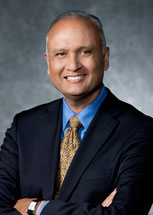
Photo of Ed Hernandez
D California Senate · District 22

Sen. Ed Hernandez

Compare
Total votes
26,650
all sessions
Attendance
96%
959 missed
Near the chamber average
With party
99%
of cast votes
Higher than 88% of chamber peers
Bipartisan score
0%
crosses aisle rarely
Lower than 89% of chamber peers
Sponsored
618
bills & resolutions
Lower than 89% of chamber peers
Committees
0
assignments
618 bills and resolutions

Sponsored bills

Total
618
Primary
247
Co-sponsor
371
This page
618
matching current filters
Primary ACA 23
Failed · California Assembly · Lead sponsor
A resolution to propose to the people of the State of California an amendment to the Constitution of the State, by amending Section 31 of Article I thereof, relating to public postsecondary education.

The California Constitution prohibits the state from discriminating against, or granting preferential treatment to, any individual or group on the basis of race, sex, color, ethnicity, or national origin in the operation of public employment, public education, or public contracting. This measure would provide that the above prohibition does not prevent state institutions of higher education, as defined, from implementing student recruitment and selection programs permissible under the Equal Protection Clause of the 14th Amendment of the United States Constitution.

Failed Nov 30, 2010 0 co-sponsors
Co-sponsor AJR 23
Failed · California Assembly · Co-sponsor
Relative to the economy.

This measure would urge the Congress of the United States and the federal administration to work with the Governor and the Legislature of the State of California to, among other things, provide federal loan guarantees, flexibility with respect to certain programs, and certain funding levels for vital programs, as specified.

Failed Nov 30, 2010 1 co-sponsor
Primary AB 1310
Failed · California Assembly · Lead sponsor
Healing arts: database.

Existing law provides for the licensure and regulation of various healing arts professions and vocations by boards within the Department of Consumer Affairs. Under existing law, there exists the Healthcare Workforce Development Division within the Office of Statewide Health Planning and Development (OSHPD) that supports health care accessibility through the promotion of a diverse and competent workforce and provides analysis of California's health care infrastructure. Under existing law, there is also the Health Care Workforce Clearinghouse, established by OSHPD, that serves as the central source for collection, analysis, and distribution of information on the health care workforce employment and educational data trends for the state. This bill would require certain healing arts boards to collect specified information from their licensees and would require those boards and the Department of Consumer Affairs to, as much as practicable, work with OSHPD to transfer that data to the Health Care Workforce Clearinghouse. The bill would further require OSHPD, in consultation with the division and the department, to select a database and to also add the collected data to the database. The bill would require the clearinghouse to prepare a written report relating to the data and to submit the report annually to the Legislature no later than March 1, commencing March 1, 2012.

Failed Nov 30, 2010 0 co-sponsors
Co-sponsor AJR 47
Failed · California Assembly · Co-sponsor
Relative to Women's Equality Day.

This measure would memorialize the Congress and the President of the United States to uphold protections of women's equality and to encourage all Americans to participate in the celebration of Women's Equality Day on August 26, 2010, the 90th anniversary of the passage of the Nineteenth Amendment to the United States Constitution, which gave women the right to vote.

Failed Nov 30, 2010 1 co-sponsor
Co-sponsor AB 125
Failed · California Assembly · Co-sponsor
Retirement: California Employee Savings Program.

Existing federal law provides for tax-qualified retirement plans and individual retirement accounts or individual retirement annuities by which private citizens may save money for retirement. This bill would create the California Employee Savings Program, which would be operative only upon a specified appropriation in the annual Budget Act or if sufficient funds are made available through a nonprofit or private entity or federal funding, as specified. The program would be administered by the Board of Administration of the Public Employees' Retirement System (PERS) , with the intent of promoting greater retirement savings for California private employees in a convenient, low-cost, and portable manner. The bill would require the board, under this program, to offer one or more individual retirement accounts or defined benefit plans, as specified, to eligible employees of participating eligible employers, as defined. The bill would specify that eligible employees of participating employers are not members of PERS. The bill would permit the board, in initiating and administering the program, to, among other things, employ staff and 3rd-party administrators, as necessary, collaborate with various entities in the private sector, recover expenses from contributions or investment returns, as specified, and evaluate and establish the process by which eligible employees who want to contribute a portion of their paycheck to an account offered by the program are able to notify their employers and require the employer to forward the contribution and related information to the program. The bill would require the Employment Development Department to cooperate in this regard. The bill would authorize the Employment Development Department to charge a fee for any administrative costs it incurs by reason of implementing and administering the program. The bill would require the board to make reports to employers on the progress and status of the program. The bill would also require the board to make specified reports to the Legislature, including a report upon determining that all specified conditions necessary to implement the program can be satisfied, a report if it finds that the program is not self-sustaining, and annual reports on the status of the program, as specified. The bill would require PERS, after specified acts have occurred, to request funding through a Budget Act appropriation or from a nonprofit or private entity or from federal funding for the purpose of implementing the program. The bill would require the board to keep program funds and accounts separate from those of PERS and would prohibit the use of funds in PERS, as specified, to initiate, develop, implement, or administer the program. In addition, the bill would require that all expenses and obligations created by the program be funded by its contributions, returns, and assets, except as the Legislature may appropriate funds for this purpose, to be deposited in the California Employee Savings Program Administrative Fund, which this bill would establish as a continuously appropriated fund. The bill would require PERS to obtain the necessary approvals from federal authorities for the program's implementation. The bill would prohibit any claim, tax lien, or other right of setoff from applying to funds or assets of the program, as specified. The bill would indemnify from the General Fund and hold harmless the present, former, and future board members, officers, employees of, and investment managers under contract with, PERS in connection with any decision or action related to the administration of the program. The bill would provide that the program may only be implemented if the board determines that certain conditions are satisfied, and would permit the board to discontinue the program on its determination, as specified. The bill would permit the board to adopt regulations in regard to the program, and would provide that the adoption, amendment, or repeal of a regulation is exempted from the rulemaking provisions of the Administrative Procedure Act. Subject to the availability of funds, as specified, the bill would require the board to report to Legislature regarding the feasibility of creating a defined benefit plan option to be available to employers. The bill would also make a statement of findings.


Failed Nov 30, 2010 1 co-sponsor
Primary AB 1932
Failed · California Assembly · Lead sponsor
Medi-Cal: ambulance transportation services: reimbursement: service levels.

Existing law provides for the Medi-Cal program, which is administered by the State Department of Health Care Services, under which health care services, including medical transportation services, are provided to qualified low-income persons. The Medi-Cal program is partially governed and funded under federal Medicaid provisions. Existing law and regulations prescribe various requirements governing payment policies and reimbursement rates for these services. This bill would authorize the department to utilize certain service levels for purposes of determining billing codes for emergency and nonemergency basic life and advance life support transportation and specialty care transportation. If the department utilizes the aforementioned service levels to determine billing codes, this bill would require the department to, by June 30, 2011, adopt the definitions and Healthcare Common Procedure Coding System codes for those service levels that have been established by the federal Centers for Medicare and Medicaid Services, and to determine the above described billing codes in a revenue-neutral manner.

Failed Nov 30, 2010 0 co-sponsors
Primary AB 790
died · California Assembly · Lead sponsor
State employees: compensation.

The California Constitution requires the Legislature to pass a Budget Bill by June 15 of each year for the fiscal year commencing on July 1. Existing law provides that no state officer or employee shall be deemed to have a break in service or to have terminated his or her employment, for any purpose, or to have incurred any change in his or her authority, status, or jurisdiction or in his or her salary or other conditions of employment, solely because of the failure to enact a Budget Act for a fiscal year prior to the beginning of that fiscal year. Under the California Constitution, money may be drawn from the State Treasury only through an appropriation made by law and upon a Controller's duly drawn warrant. This bill would continuously appropriate from the General Fund and other specified funds to the Controller an amount necessary for the payment of compensation and employee benefits to state employees, as defined, for work performed on or after July 1 of a fiscal year for which no budget has been enacted. This bill would specify, if a memorandum of understanding is in effect that has been approved by the Legislature, that the compensation and contribution for employee benefits for represented state employees be at a rate consistent with the memorandum of understanding and, for state employees excluded from collective bargaining, at the rate approved by the Department of Personnel Administration prior to the commencement of the fiscal year for which a Budget Act has not been enacted. The bill would require, if a memorandum of understanding is not in effect for represented state employees and the department has not approved a compensation package for state employees excluded from collective bargaining, that the compensation and contribution for employee benefits for represented state employees and state employees excluded from collective bargaining be at the rate in effect at the expiration of the last fiscal year for which a budget was enacted. This bill would declare that it is to take effect immediately as an urgency statute.

died Nov 30, 2010 0 co-sponsors
Co-sponsor ACR 46
Failed · California Assembly · Co-sponsor
Relative to the Girl Scouts.

This measure would commend the Girl Scouts for 98 years of service and for inspiring millions of girls with the highest ideals of confidence, courage, and character.

Failed Nov 30, 2010 1 co-sponsor
Showing 291 to 300 of 618 bills
Previous 1 … 29 30 31 … 62 Next