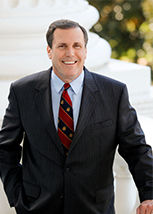
Photo of Scott Wilk
R California Senate · District 21

Sen. Scott Wilk

Contact Email
Compare
Total votes
25,318
all sessions
Attendance
96%
859 missed
Near the chamber average
With party
95%
of cast votes
Near the chamber average
Bipartisan score
3%
crosses aisle rarely
Near the chamber average
Sponsored
1,250
bills & resolutions
Near the chamber average
Committees
0
assignments
1,250 bills and resolutions

Sponsored bills

Total
1,250
Primary
196
Co-sponsor
1,054
This page
1,250
matching current filters
Co-sponsor AB 2576
Failed · California Assembly · Co-sponsor
Income tax: health savings accounts.

The Personal Income Tax Law authorizes various deductions in computing income that is subject to tax under that law. This bill would, for taxable years beginning on or after January 1, 2014, allow a deduction in connection with health savings accounts in conformity with federal law. In general, the deduction would be an amount equal to the aggregate amount paid in cash during the taxable year by, or on behalf of, an eligible individual, as defined, to a health savings account of that individual, as provided. This bill would, for taxable years beginning on or after January 1, 2014, also provide related conformity to that federal law with respect to the allowance of rollovers from Archer Medical Savings Accounts, health flexible spending arrangements, or health reimbursement accounts to a health savings account, and penalties in connection therewith. This bill would take effect immediately as a tax levy.

Failed Nov 30, 2014 1 co-sponsor
Co-sponsor AB 1868
Failed · California Assembly · Co-sponsor
Medi-Cal: optional benefits: podiatric medicine.

Existing law provides for the Medi-Cal program, which is administered by the State Department of Health Care Services and under which qualified low-income persons receive health care benefits. The Medi-Cal program is, in part, governed and funded by federal Medicaid provisions. Existing law provides that optional podiatric services are excluded from coverage under the Medi-Cal program. This bill would cover medical and surgical services provided by a doctor of podiatric medicine within his or her scope of practice that, if provided by a physician, would be considered physician services, and which services may be provided by either a physician or a podiatrist in the state.

Failed Nov 30, 2014 1 co-sponsor
Co-sponsor AB 2651
Failed · California Assembly · Co-sponsor
Vehicle weight fees: transportation bond debt service.

Existing law imposes weight fees on the registration of commercial motor vehicles and provides for the deposit of net weight fee revenues into the State Highway Account. Existing law provides for the transfer of certain weight fee revenues from the State Highway Account to the Transportation Debt Service Account to reimburse the General Fund for payment of debt service on general obligation bonds issued for transportation purposes. Existing law also provides for the transfer of certain weight fee revenues to the Transportation Bond Direct Payment Account for direct payment of debt service on designated bonds, which are defined to be certain transportation general obligation bonds issued pursuant to Proposition 1B of 2006. This bill, notwithstanding these provisions or any other law, effective January 1, 2016, would prohibit weight fee revenue from being transferred from the State Highway Account to the Transportation Debt Service Fund or to the Transportation Bond Direct Payment Account, and from being used to pay the debt service on transportation general obligation bonds.

Failed Nov 30, 2014 1 co-sponsor
Primary AB 2333
died · California Assembly · Lead sponsor
School employees: discipline: suspension and dismissal.

Existing law authorizes the governing board of a school district to give notice to a permanent employee of its intention to dismiss or suspend him or her for specified causes at the expiration of 30 days from the date of service of the notice, unless the employee demands a hearing. Existing law prohibits that notice from being given between May 15th and September 15th in any year. This bill would make nonsubstantive changes to the provision that prohibits the notice from being given between May 15th and September 15th in any year.

died Nov 30, 2014 0 co-sponsors
Co-sponsor SB 1079
Failed · California Senate · Co-sponsor
California Global Warming Solutions Act of 2006: market-based compliance mechanisms: exemption.

The California Global Warming Solutions Act of 2006 designates the State Air Resources Board as the state agency charged with monitoring and regulating sources of emissions of greenhouse gases. The state board is required to adopt a statewide greenhouse gas emissions limit equivalent to the statewide greenhouse gas emissions level in 1990 to be achieved by 2020, and to adopt rules and regulations in an open public process to achieve the maximum, technologically feasible, and cost-effective greenhouse gas emissions reductions. The act authorizes the state board to include the use of market-based compliance mechanisms. Existing state board regulations require specified entities to comply with a market-based compliance mechanism beginning January 1, 2013, and require additional specified entities to comply with that market-based compliance mechanism beginning January 1, 2015. This bill instead would exempt categories of persons or entities that did not have a compliance obligation, as defined, under a market-based compliance mechanism beginning January 1, 2013, from being subject to that market-based compliance mechanism through December 31, 2020. This bill would declare that it is to take effect immediately as an urgency statute.

Failed Nov 30, 2014 1 co-sponsor
Co-sponsor AB 2466
Failed · California Assembly · Co-sponsor
Minimum franchise tax: annual tax: exemption: veterans small businesses.

Existing law imposes an annual minimum franchise tax, except as provided, on every corporation incorporated in this state, qualified to transact intrastate business in this state, or doing business in this state. Existing law exempts a corporation that incorporates or qualifies to do business in this state from the payment of the minimum franchise tax in its first taxable year. Existing law imposes an annual tax in an amount equal to the minimum franchise tax on every limited liability company doing business in this state. In addition, existing law requires every limited liability company if the articles of organization have been accepted by, or a certificate of registration has been issued by, the Secretary of State to pay an annual tax in an amount equal to the minimum franchise tax. This bill would, for taxable years beginning on or after January 1, 2015, and before January 1, 2018, reduce that minimum franchise tax for a corporation and that annual tax for a limited liability company, as provided, that is a new veteran-owned small business, as defined, and would eliminate the tax if the business operates at a loss or ceases operation. This bill would take effect immediately as a tax levy.

Failed Nov 30, 2014 1 co-sponsor
Co-sponsor AB 1451
Failed · California Assembly · Co-sponsor
Public schools: concurrent enrollment in secondary school and community college.

Existing law authorizes the governing board of a school district to allow pupils whom the district has determined would benefit from advanced scholastic or vocational work to attend community college as special part-time or full-time students, subject to parental permission. Existing law, until January 1, 2014, required credit to be awarded to these pupils, as specified, made the authority of a school principal to recommend a pupil for community college summer session contingent upon a determination that the pupil met various criteria, and prohibited the principal from recommending more than 5% of the total number of pupils from any particular grade level who completed that grade immediately before the time of recommendation for summer session attendance, except as specified. This bill would reinstate these provisions until January 1, 2017. The bill would, until July 1, 2020, authorize the governing board of a school district to enter into a concurrent enrollment partnership agreement with a community college district located within its immediate service area to allow pupils to attend community college. The bill would require a community college district and a school district, as a condition of, and before adopting, a concurrent enrollment partnership agreement, to take testimony from the public and approve or disapprove the proposed agreement at a regularly scheduled open public hearing of its respective governing board after having presented the agreement at a prior open public hearing. The bill would require the concurrent enrollment partnership agreement to outline the terms of the partnership, as specified. The bill would prohibit a school district from receiving a state allowance or apportionment for an instructional activity for which a community college district has been, or will be, paid an allowance or apportionment under a concurrent enrollment partnership agreement. The bill would authorize a participating high school to monitor the progress of its pupils attending a community college and to obtain the pupils' records from a community college district to do so. The bill would require, for each concurrent enrollment partnership agreement entered into under the bill, the affected community college district and school district to file an annual report, containing specified data, with the Office of the Chancellor of the California Community Colleges. The bill would also authorize the governing board of a community college district to enter into a partnership with the governing board of a school district located within its service area with the goal of developing seamless pathways from high school to community college for career technical education or preparation for transfer. The bill would require the partnership agreement to outline the terms of the partnership, as specified, and would require copies of the partnership agreement to be filed with the Chancellor of the California Community Colleges and the Superintendent of Public Instruction. The bill would authorize a community college district to limit enrollment in a community college course to solely high school pupils under specified circumstances. The bill would authorize specified high school pupils to enroll in up to 15 units if those units are required for these pupils' partnership programs and specified circumstances are satisfied, and would authorize a community college district to exempt special part-time and full-time students taking up to a maximum of 15 units per term from specified fee requirements. The bill would prohibit a community college district from receiving a state allowance or apportionment for an instructional activity for which a school district has been, or will be, paid an allowance or apportionment under a concurrent enrollment partnership agreement. The bill would require, for each partnership agreement entered into under the bill, the affected community college district and school district to file an annual report, containing specified data, with the Office of the Chancellor of the California Community Colleges. The bill would also make related and conforming changes.


Failed Nov 30, 2014 1 co-sponsor
Co-sponsor AB 1519
Failed · California Assembly · Co-sponsor
State responsibility areas: fire prevention fees.

Existing law requires the state to have the primary financial responsibility for preventing and suppressing fires in areas that the State Board of Forestry and Fire Protection has determined are state responsibility areas, as defined. Existing law requires the State Board of Equalization to collect a fire prevention fee not to exceed $150 to be charged on each structure on a parcel that is within a state responsibility area. Existing law specifies that the fire prevention fee determined to be due by the Department of Forestry and Fire Protection is due and payable at the time it becomes final, and imposes a specified civil penalty for each 30-day period during which the fee remains unpaid. This bill would eliminate the specified civil penalty imposed for unpaid fire prevention fees.

Failed Nov 30, 2014 1 co-sponsor
Primary AB 2551
Signed into law · California Assembly · Lead sponsor
Local ballot measures: bond issues.

Existing law requires all bond issues proposed by a county, city and county, city, district, or other political subdivision, or by any agency, department, or board thereof, to be submitted to the voters for approval. Existing law requires all official materials for the bond issue proposal to contain a statement of specified tax rate data. This bill would require the statement to include the best estimate from official sources of the total debt service that would be required to be repaid if all the bonds are issued and sold.

Signed into law Sep 30, 2014 0 co-sponsors
Showing 981 to 990 of 1,250 bills
Previous 1 … 98 99 100 … 125 Next